
News
Moragoda seeks bilateral cooperation with India’s transport sector

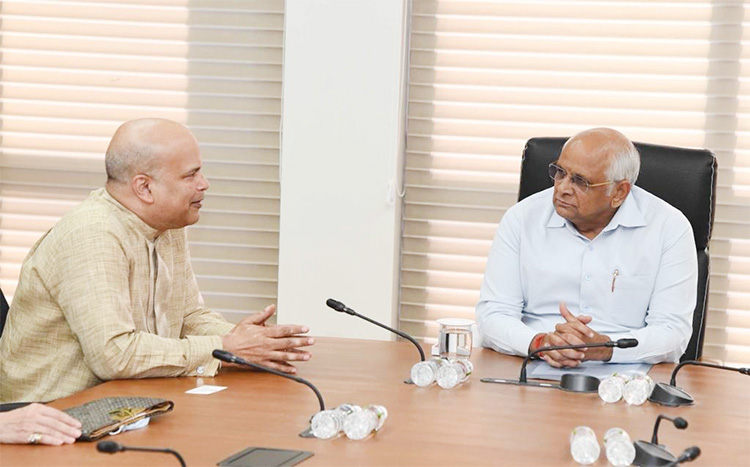
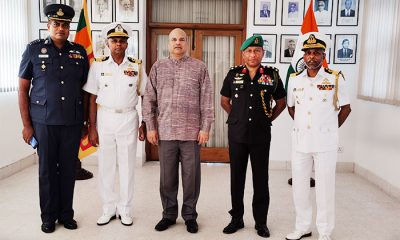
High Commissioner Milinda Moragoda Friday met India’s Minister of Road Transport and Highways Nitin Gadkari in New Delhi to discuss bilateral cooperation in the transport sector, Moragoda’s office announced.
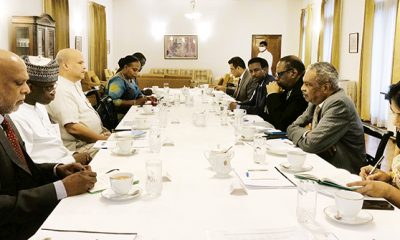
The cordial discussion focused on collaboration and partnership between the two countries in the transport sector with Moragoda requesting Gadkari’s assistance in sharing India’s experience in public-private partnerships in highways with Sri Lanka through a platform set up for this purpose.
He suggested that Indian investors could be encouraged to positively look at investment opportunities in Sri Lanka’s infrastructure. Minister Gadkari expressed his support to these proposals.
As India aims to become a developed economy by 2047, its government has focused on boosting infrastructure, including highways and the road network. India’s spending on infrastructure has gone up several times over the last decade to hit a record Rs 10 trillion for the next financial year.
The discussion included the electrified mobility sector with India sharing with Sri Lanka its experience, expertise and best practices in the electrical vehicle industry. Moragoda also sought the minister’s assistance in encouraging Indian private companies from this sector to invest in Sri Lanka.
The interaction included Moragoda briefing the Indian minister on the economic revival programme in Sri Lanka and observing that India is playing a pivotal role in it. He also presented a copy of his policy roadmap the ” Integrated Country Strategy for Sri Lanka Diplomatic Missions in India 2021/2023″ to Gadkari who in turn presented a copy of his latest book ‘Unmasking India’ to the High Commissioner.
Hailing from the State of Maharashtra, Shri Nitin Gadkari is the longest serving Minister for Road Transport and Highways of India with a tenure running for over eight years in this post since 2014.
He also served as the President of the Bhartiya Janata Party (BJP) from 2009 to 2013. Previously, he has held the ministerial portfolios of Micro, Small & Medium Enterprises; Shipping; Water Resources, River Development & Ganga Rejuvenation; and Rural Development & Panchayati Raj. He has authored several books as well.






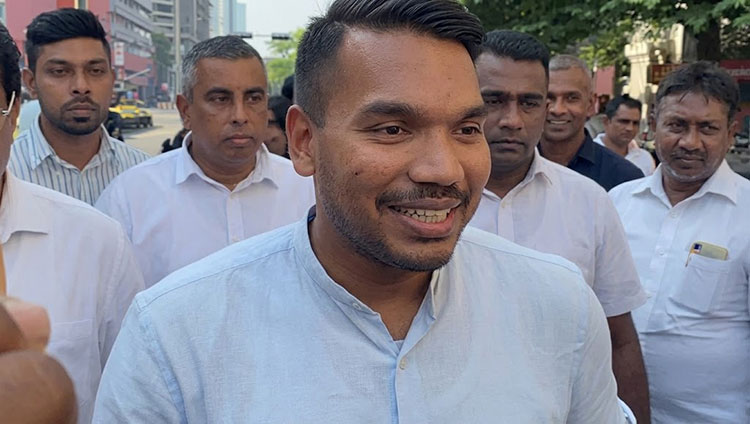
Sri Lanka Podujana Peramuna (SLPP) Member of Parliament Namal Rajapaksa has been arrested by the Commission to Investigate Allegations of Bribery or Corruption (CIABOC).
Namal Rajapaksa had been summoned by CIABOC to provide a statement in connection with investigations into the controversial Airbus deal. He was subsequently arrested by CIABOC after recording his statement for over 5 hours.
Latest News
Sun directly overhead Nittambuwa, Algama, Malwana, Aranayake, Meegahakiula and Panamkadu about 12.09 noon today (04)


The sun is going to be directly over the latitudes of Sri Lanka from 28th of August to 07th of September due to its apparent southward relative motion.
The nearest places of Sri Lanka over which the sun is overhead today (04) are Nittambuwa, Algama, Malwana, Aranayake, Meegahakiula and Panamkadu about 12.09 noon.

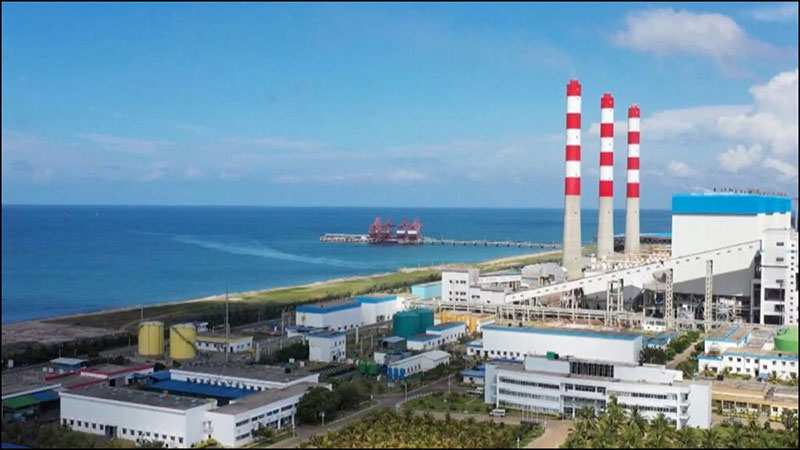
Plant’s output cut from 270 MW to 140 MW amidst dwindling stocks; energy analysts warn system remains “at a razor’s edge”
By Ifham Nizam
The Norochcholai coal-fired power plant is now digging into the last dredges of its coal stock, with two operational units forced to slash generation from around 270 MW to just 140 MW on Sunday as the plant ran critically short of fuel, according to independent energy analysts and sources familiar with the National System Operator (NSO).
The sudden reduction of approximately 130 MW in coal generation has once again exposed the fragile state of the country’s power supply arrangements, with the plant understood to have coal stocks sufficient only until Friday night.
“This is not how a coal plant is expected to operate. They are digging up the last dredges of coal from the plant,” an independent energy analyst told The Island.
The analyst questioned why the units had been allowed to reach this stage without earlier intervention, arguing that at least one unit should have been deloaded around 10 days ago to conserve the remaining coal.
Had that been done, the analyst said, the country could also have reduced its dependence on more expensive diesel-fired generation during the period when
coal stocks were being conserved.
The latest NSO generation figures highlight the continuing pressure on the system.
Around 7 p.m. on Sunday, when the night peak was reached, total demand stood at 2,552.7 MW. Coal contributed only 282 MW, while major hydro accounted for 1,215.8 MW and thermal-oil generation for 791.9 MW.
The night peak of 2,552.7 MW was substantially higher than the daytime peak of 2,246 MW, according to the NSO Generation Summary for August 30.
The most immediate concern is the remaining coal stock at Norochcholai.
Sources said the plant has coal only to Friday night, making the timing of the next shipment critical.
The first shipment under the emergency arrangement is expected to arrive on Friday, September 4, but the coal unloading will have to begin on the same day if
the power plant is to continue operating without further significant deloading.
That creates another potential vulnerability, with rough sea conditions posing an additional challenge to unloading operations.
Energy sector sources said that even the arrival of the September 4 shipment would not completely eliminate the danger.
The next shipment under the new coal tender would need to commence unloading around September 15. Any significant delay beyond that could again force the Norochcholai units to operate at reduced output.
“We are still at a razor’s edge”
The independent energy analyst said the situation should not be viewed merely as a question of whether a particular vessel arrives on time.
The situation also means that any further reduction in coal generation could have a direct impact on the use of oil-fired power generation, potentially increasing the cost of electricity generation.
The latest NSO figures already show the important role being played by thermal-oil generation during the evening peak, when demand rises sharply.
The analyst questioned the rationale behind allowing the coal units to continue operating at higher loading until stocks reached critically low levels instead of taking measures earlier to stretch the available inventory.

SLPP MP Namal Rajapaksa arrested by CIABOC

Devapathiraja clinch U15 Division I title with 33-run win over Royal

Mandhana’s record ton powers India into semi-finals

Sun directly overhead Nittambuwa, Algama, Malwana, Aranayake, Meegahakiula and Panamkadu about 12.09 noon today (04)

Showers expected in the Uva, Central and Eastern provinces and in Polonnaruwa and Mullaittivu districts after 2.00 p.m

Norochcholai digs into dwindling coal stocks, two units slash generation

‘Dates have the highest sugar content to fight Coronavirus’

Sunday Island 27 December – Headlines

#SundayIsland 17th December – Headlines

Sunday Island – 28th March

Sunday Island Headlines – 21 March

Sunday Island – 21st February – Headlines
-

 Features6 days ago
“Wrap Me Up in My Blazer”— A Gentlemanly Bradby Reminiscence
-

 Features5 days ago
When Sri Lankan stories find their own voice
-
 Features6 days ago
JVP/NPP government as seen from outside by Lionel Bopage now domiciled in Australia
-

 News5 days ago
BASL takes exception to Justice Ganepola being denied a place in SC
-

 Editorial7 days ago
Govt. trying to dupe UN Rapporteur?
-
 Features6 days ago
Prof. Savitri Goonesekere: What has she done?
-

 News2 days ago
Denied of promotion to SC despite vacancies, justice Gurusinghe retires
-

 Features6 days ago
World Trade Politics: Canada rebuffs Trump’s tariff blackmail