
Life style
A plunge of three decades and more

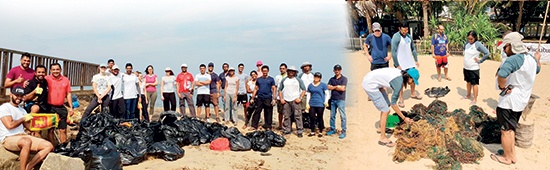
Sri Lanka Sub Aqua Club credited for producing some of country’s top divers, several of them internationally recognized today, turns 35
by Randima Attygalle
Piling the diving gear into their cars and filling the empty seats with fellow divers, the founder members of the Sri Lanka Sub Aqua Club (SLSAC) in its formative years would head south to Hikkaduwa or Galle. They would fill their cylinders with a compressor, cast their own lead weights from lead pipes bought in Panchikawatte and purchase second-hand equipment whenever they appeared in the market. As the Founder Chairman of the Club, veteran diver, Dr. Malik Fernando recollects more than three decades later, “those who were fortunate enough to travel abroad brought back accessories and sold them at cost and we even serviced our own regulators.”
The Sri Lanka Sub-Aqua Club was formed in 1985 by a group of diving enthusiasts led by the marine biologist, Dr. M.W.R.N de Silva (Dr. Ranjith de Silva). What was envisaged by the Club says Dr. Fernando was to train Sri Lankans in SCUBA diving for both recreation and more importantly, for scientific research. He was supported by Arjan Rajasuriya, presently the Coordinator, Coastal and Marine Programme, International Union for Conservation of Nature (IUCN) Sri Lanka Country Office. The idea of the Club germinated in the mind of the founder, Dr. Ranjith de Silva following his establishment of the Coral Unit at the National Aquatic Resources and Research Agency (NARA). The core group consisted of a few British Sub Aqua (BSAC) qualified divers such as Dr. Fernando, himself and those who have been involved in various diving-related pursuits.
The SLSAC, modelled on the BSAC, had produced several internationally reputed divers along its 35-year journey. The SLSAC-certified divers are today recognized by many local recreational dive stations. “Although we sought to form a branch of the BSAC once we got established, the cost was prohibitive, thus we initiated our independent certification scheme,” notes its founder chairman. The Club’s training courses, Dr. Fernando recollects, were very popular and many divers were trained by senior members. “However, it was eventually recognised that the BSAC curriculum was too comprehensive, too time consuming and too detailed for beginners. With the popularisation of the compact PADI course that a number of us followed, the club curriculum was modified and simplified changing from a BSAC model to a PADI model, with much less theory and drills reduced to basic essentials. The instruction was still by club members, some of whom had BSAC qualification and experience in instructing in their original clubs. We were only able to give a club certification, but after we had established our credentials by producing well trained divers, that certification came to be recognised by some of the recreational dive stations.”
The SLSAC was also one of the chief catalysts in driving the now well-established Maritime Archaelogy Unit (MAU) in Galle, and the contribution made by the Club members towards its expansion is notable. Recovery of several porcelain and glass artefacts by them from the shipwrecks lying in Galle spurred this initiative, says Dr. Fernando. Further, th
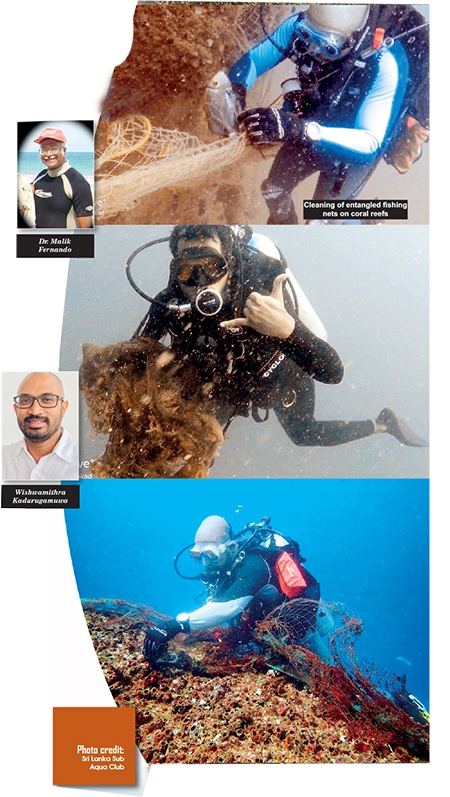
e club has also contributed to maritime archaeology and preservation of artefacts by contributing to the establishment of a shipwreck database and actively lobbying against shipwreck salvaging, especially of ancient shipwrecks.
A medical doctor, Fernando attributes his ‘physician gene’ to his illustrious father, Dr. Cyril Fernando and his penchant for nature to his artistic mother. An adventurous family, they would seize every opportunity to travel out of Colombo fuelling the budding physician-cum diver son’s exploring spirits. Taking to water at the age of seven, young Malik’s imagination was fired by the National Geographic Magazine. With a pair of flippers and a second-hand mask he would head towards Mount Lavinia and recollect his earliest experience of Hikkaduwa as “going deep down into an aquarium.” Further inspired by the celebrated diver Rodney Jonklaas, a family acquaintance as well, the freshly graduated doctor would spend more time diving than passing his higher exams in the UK!
“Today the greater accent is on tuition and passing exams with little emphasis on sports and even if children do engage in sports, it is largely for competition. Sadly the value of sports as a leisure activity and a health gain is largely undermined today,” observes Dr. Fernando who urges school authorities to take more interest in water-sports. “Learning to swim and dive is only means to an end. Not only can a person discover new places but he/she can also become a partner is conservation,” says the expert diver who has walked the talk. Encouraging the budding swimmers and divers to become partners of the marine eco-system true to the mandate of the Club, Dr. Fernando urges them to rally around it in a bid to produce ‘responsible’ divers with scientific insights.
“Diving enables connectivity with the entire eco-system from which we are sadly very detached right now. It provides one of the best windows to the polluted environment, for which man is responsible,” reflects Wishwamithra Kadurugamuwa, present President of the Club. The monthly ‘sharing of knowledge’ exercise initiated by the Club facilitates this process, he adds. The experience and stories of the experienced divers shared on this platform inspire the younger members, he says. “For us, diving is much more than sight-seeing, it is about moulding divers who would perceive things scientifically,” says Kadurugamuwa who is a corporate lawyer .
The ‘Citizen Science Project’ which was launched by the Club early this year in collaboration with the IUCN (International Union for Conservation of Nature) is a progressive move which provides the divers a portal to document their dives. The exercise is envisaged to be a vehicle of future research and a facilitator in conservation. “The end purpose of this endeavour is to have a record after each dive as to where the reefs are dying, the extent of the damage, how can they be salvaged etc. To record all this, divers need to perceive through a scientific lens for which training is provided by experts,” said Kadurugamuwa.
The opportunities within the marine eco-system which lay before an island nation such as ours are enormous, yet hardly tapped, he noted. He cites water sports and newer tourism products such as shipwreck tourism in this regard. “Sadly there is not much attention paid to the marine environment in the magnitude it ought to happen,” adding that entangled fishing nets, empty plastic bottles and yoghurt cups floating besides the coral reefs do not support the idyllic picture any underwater explorer would want to see. The Club’s intervention to clean fishing nets entangled on coral reefs and lobbying for legislation against unethical fishing practices are moves towards realizing a sustainable marine environment.
Dynamite fishing and spear-fishing are very destructive forms of fishing and whilst there is active legislation prohibiting dynamite fishing, it is practiced widely and the club has played a very active role in reporting infractions to authorities leading to curtail of such activity. In addition the club was instrumental in bringing about legislation to prohibit spear-fishing in Sri Lanka – again a very destructive practice as spear fishermen in SCUBA gear have caused localized extinction of key species.



In the quiet, rain-washed village of Boralugoda, where narrow streams slip silently through thick green undergrowth and the air carries the scent of wet earth, a remarkable story of science, persistence, and quiet resistance has been unfolding for decades.
At its centre is Research Scientist and artist Shantha Jayaweera—a man who has spent nearly 40 years studying, documenting, and defending one of the richest freshwater ecosystems in the island. His life’s work is not just about fish, but about a fragile world that exists beneath the surface of flowing water—often unseen, frequently misunderstood, and increasingly under threat.
“Sri Lanka holds a very special place in global freshwater biodiversity,” Jayaweera says, reflecting on decades of fieldwork. “But even within the island, there are pockets that are extraordinarily rich. Boralugoda is one of them.”
A Global Context, A Local Wonder
Sri Lanka is part of the Oriental region—one of the most biologically diverse freshwater zones in the world. Within the island, the lowland wet zone stands out as the most species-rich area, nurtured by year-round rainfall and dense vegetation.
But Boralugoda, located within this wet zone, is exceptional even by those standards.
“Out of about 94 true freshwater fish species recorded in the country, around 84 are found in the lowland wet zone,” Jayaweera explains. “What is remarkable is that Boralugoda alone supports 53 species. That is the highest number recorded in any inland location.”
He pauses before adding a sobering detail.
“Of those 53 species, 26 are endemic. And 23 are threatened—ranging from vulnerable to critically endangered. That’s a very serious signal.”
-

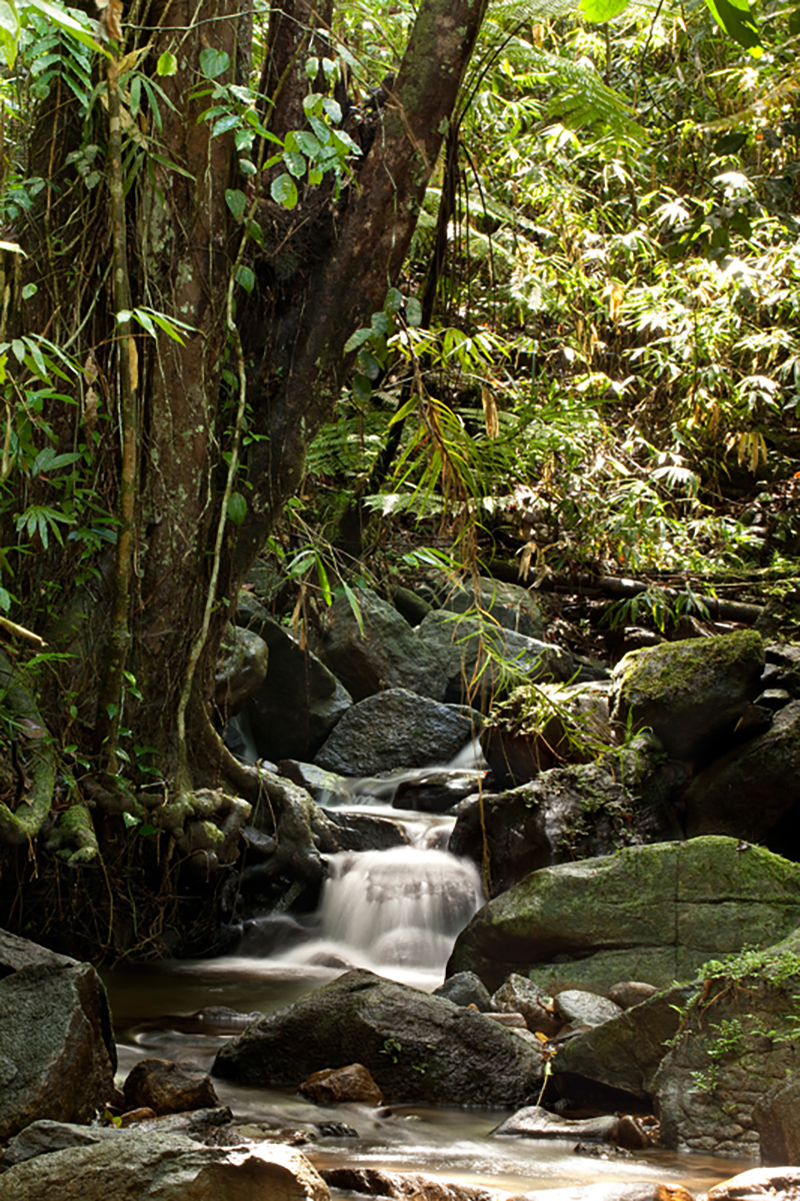
- Boralugoda Ella
The Secret of the Maguru
Flowing through this biodiversity hotspot is the Maguru River—a relatively small river with an outsized ecological role. Originating in the rainforest-covered Morapitiya area, it carries with it the ecological signature of its pristine beginnings.
“What makes the Maguru unique is its clarity,” Jayaweera says. “Most rivers turn brown as they carry sediment downstream. But this river remains clear, which allows sunlight to penetrate and sustain aquatic life.”
The river’s structure adds another layer of ecological complexity.
“It starts with fast-flowing, rocky sections and then gradually shifts to sandy, slow-moving areas,” he explains. “Different species are adapted to each of these habitats. Some are highly specialised and cannot survive outside the rocky zones.”
This diversity of microhabitats is one of the key reasons for the area’s richness.

Banded mountain loach

Red neck goby – endangerd now extinct from the area due to sand mining
“Fish like certain gobies and barbs are restricted to fast-flowing rocky areas,” he notes. “If those habitats are disturbed, the species simply disappear.”
Streams That Sustain Life
Beyond the main river, Boralugoda is crisscrossed by an intricate network of streams—fed by rainfall, forest cover, and underground springs.
“This area has one of the highest stream densities in the Western Province,” Jayaweera says. “These streams act as nurseries, refuges, and migration pathways for many species.”
The surrounding landscape further enhances this ecological mosaic.
“You have a mix of rainforest patches, home gardens, tea estates, and cultivated lands,” he explains. “Each of these contributes in some way to the overall habitat diversity.”
However, this delicate balance is increasingly being pushed to its limits.
Sand Mining: A River Reshaped
One of the most destructive forces to hit the Maguru River has been large-scale sand mining, particularly since the early 2000s.
“The riverbed has been completely altered,” Jayaweera says, his tone turning grave. “We’ve lost aquatic plants, native riverbank trees, and entire habitats.”
The ecological consequences have been severe.
“The endangered Red Neck Goby has become locally extinct,” he reveals. “And the Ocellated Pipefish has not been recorded for years, largely due to the loss of specific aquatic plants it depends on.”
The physical damage to the river is equally alarming.
“Sand mining has deepened the river unnaturally,” he explains. “This leads to bank erosion, collapse, and long-term instability. It changes the entire character of the river.”
Although recent policy changes have halted new permits, the damage done over decades cannot be easily reversed.
-
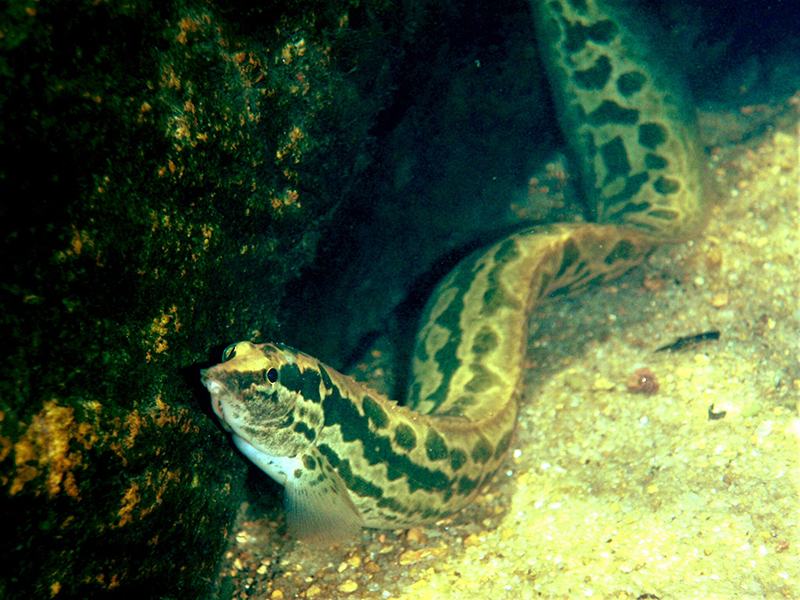
- Marbled spiny eel
-
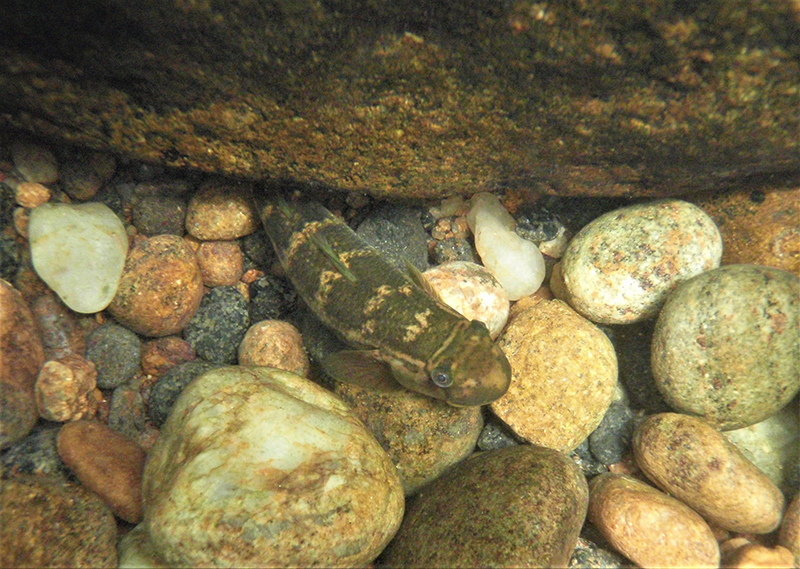
- Red tailed goby – endangered
Tea Expansion and Vanishing Buffers
Another major pressure comes from agricultural expansion—particularly the spread of lowland tea cultivation.
“Since the 1990s, we’ve seen a steady conversion of home gardens and even forest patches into tea plantations,” Jayaweera says. “In some cases, even rubber lands have been cleared.”
This transformation has not only reduced biodiversity on land but has also affected water systems.
“Riverbank vegetation is often cleared to make way for cultivation,” he explains. “But these trees are critical—they stabilise banks, filter runoff, and provide shade.”
What is particularly troubling is the disregard for existing environmental regulations.
“There are clear laws requiring buffer zones along rivers and streams,” he says. “But many local authorities are either unaware or do not enforce them. As a result, these protective areas are disappearing.”
A Life Dedicated to Observation and Action
For Jayaweera, these changes are not abstract trends—they are deeply personal.
“I’ve been observing this ecosystem for nearly four decades,” he says. “I’ve seen species decline, habitats shrink, and patterns change.”
But his work has never been limited to observation alone.
Through the Organisation for Aquatic Resources Management (OARM), he has led numerous conservation and restoration efforts.
“We’ve worked on replanting rainforest species in degraded areas, restoring stream banks, and raising awareness among local communities,” he explains. “In some places, we’ve seen encouraging signs of recovery.”
His approach combines science with grassroots engagement.
“Conservation cannot happen in isolation,” he says. “You need the community to be involved.”
Where Science Meets Art
What sets Jayaweera apart is his ability to translate science into art.
As an accomplished artist, he uses illustrations and visual storytelling to bring freshwater ecosystems to life.
“Art can reach people in ways that science sometimes cannot,” he says. “It creates an emotional connection.”
His paintings often depict the intricate beauty of fish species, aquatic plants, and flowing streams—capturing not just their form, but their essence.
“When people see what is at stake, they are more likely to care,” he adds.
A Community at a Crossroads
Despite decades of work, challenges remain at the community level.
“Some people still treat rivers as dumping grounds,” Jayaweera says with frustration. “Plastic and waste continue to find their way into these waters.”
Yet, there are also signs of hope.
“A group of committed individuals regularly organise clean-up campaigns,” he notes. “They collect waste and display it publicly to raise awareness. It’s a simple but powerful act.”
These grassroots efforts, he believes, are crucial.
“Real change begins at the local level,” he says.
A Fragile Future
For Jayaweera, Boralugoda is more than just a field site—it is a symbol of what is at stake.
“If we lose ecosystems like this, we lose something irreplaceable,” he warns. “These species are found nowhere else in the world.”
His message is both urgent and measured.
“We need stronger enforcement of environmental laws, better awareness, and a genuine commitment to conservation,” he says.
“Otherwise, the damage will become irreversible.”
As the clear waters of the Maguru River continue to flow through Boralugoda—past rocks, roots, and remnants of a once-pristine landscape—they carry with them a quiet story of resilience.
And alongside that flow stands Shantha Jayaweera—scientist, artist, and guardian of a hidden world—still watching, still working, and still hoping that it is not too late.
By Ifham Nizam
Pictures by Shantha Jayaweera
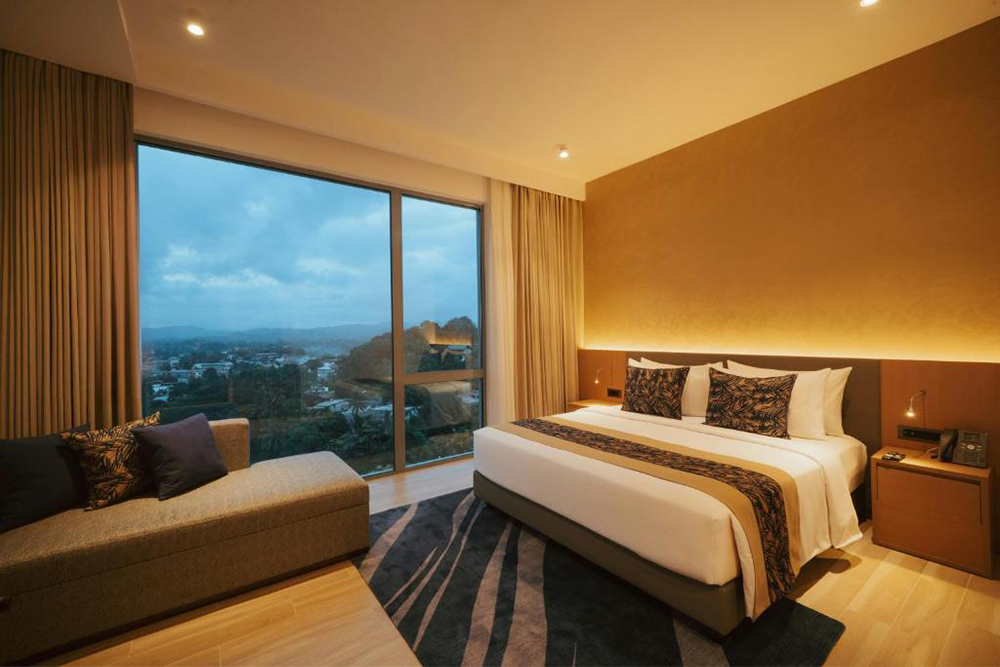
Perched in the heart of Sri Lanka’s hill capital, Kandy Myst by Cinnamon recently marked its first anniversary, celebrating a year of redefining modern hospitality in the historic City of Kandy. Since opening its doors on February 12, 2025, the hotel has quickly established itself as a vibrant lifestyle destination that blend contemporary comfort with the cultural charm of the region.
This property was designed to bring a fresh energy to the city’s hospitality scene with 215 modern rooms, the largest room inventory in Kandy. The hotel caters to both leisure and business travellers seeking comfort, convenience and stylish surrounding close to the city’s key attraction.
Within the first year, the hotel has achieved notable milestones, including become the first hotel in Kandy to receive Leed Gold Certificate reflecting its commitment to sustainable and responsible development. Beyond accommodation and dining, the property has also emerged as a hub for cultural events.
As Kandy Myst by Cinnamon enters its second year, the hotel continues to position itself as more than a place to stay. With its lively dining venues, social spaces and commitment to sustainability and community engagement, it is steadily shaping a new chapter in Kandy’s evolving hospitality landscape – one where tradition meets contemporary style.


Over the months the restaurant has hosted themed culinary events, special promotions and vibrant social evenings, further strengthening its place as a lively hub in Kandy’s hospitality scene. Guests have been drawn not only by the flavours on the plate but also by the inviting atmosphere that captures the essence of city’s elegance.
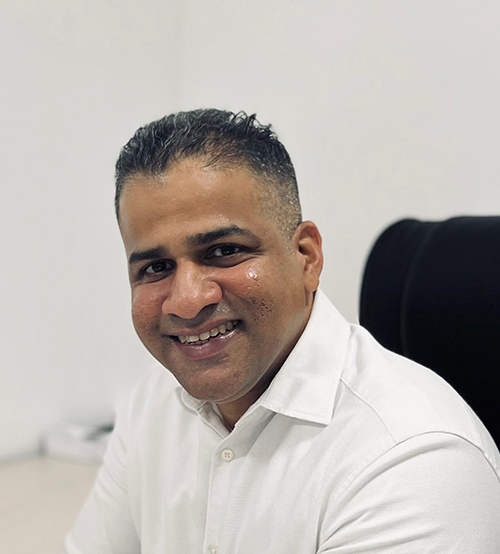
General Manager – Dhinal Perera
Kandy Myst by Cinnamon celebrates its first anniversary, marking a year as Kandy’s contemporary hospitality destination that brings energy, culture, and lifestyle experiences to the city. Opened through a partnership between Cinnamon Hotels & Resorts and Indra Traders (Pvt) Ltd, the hotel blends hospitality expertise with local insight to deliver a modern, energetic and lifestyle driven offering.
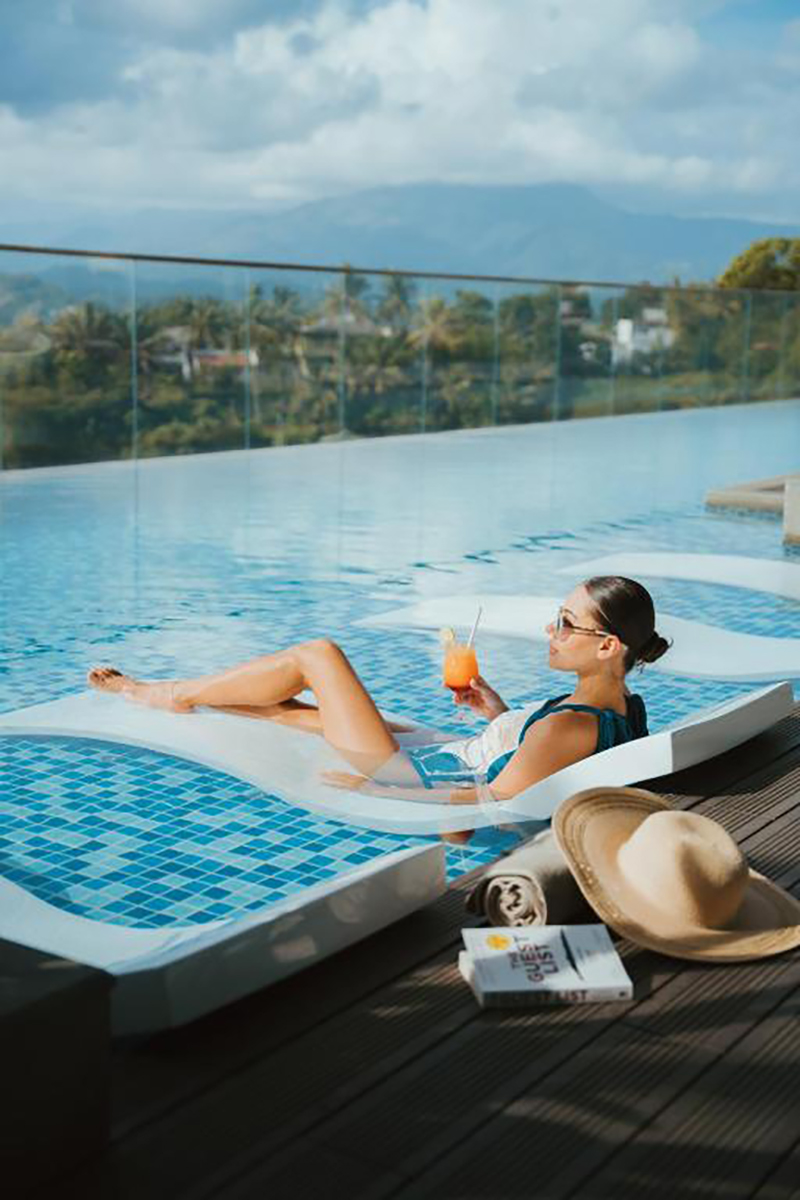
With the highest room inventory in Kandy, comprising 215 contemporary rooms, Kandy Myst by Cinnamon caters to both leisure and business travellers, offering modern comfort in close proximity to the city’s key attractions and transport routes. Its dynamic dining and social spaces; Grains Dining, Terra Lounge, and the rooftop Kosmos Sky Bar with heated infinity pool, invite guests and locals to engage, with panoramic city views, curated entertainment, and vibrant social experiences. Grains Dining, the buffet restaurant, serves an extensive selection of local and international cuisine, while Terra Lounge provides a welcoming café-style hub for casual meetups and social gatherings.
In its inaugural year, the hotel achieved significant milestones, becoming the first hotel in Kandy to receive LEED Gold certification, demonstrating a commitment to responsible, future-ready development. Reinforcing its culturally connected and globally relevant positioning, Kandy Myst by Cinnamon hosted globally celebrated icons such as Alpha Blondy and a series of high-profile local and international events, including the official trophy unveiling of the inaugural New Zealand U85kg Rugby Tour of Sri Lanka in May 2025.
Throughout the year, the hotel brought guests and the community together through seasonal activations, curated experiences, and loyalty-driven offers, contributing to strong engagement while supporting Kandy’s tourism economy through local partnerships and community initiatives.
As it enters its second year, Kandy Myst by Cinnamon continues to invite international and local guests alike to experience its vibrant dining, social, and lifestyle spaces, while reinforcing its role in shaping Kandy’s modern hospitality and cultural landscape. (Zanita )

Internationally renowned luxury Maison Montblanc has introduced its latest fragrance, Montblanc Explorer Extreme, to the Sri Lankan market through Exclusive Lines, the sole authorised agent for the brand in the country.
The launch event was hosted at Virticle by Jetwing, where guests were invited to experience the newest addition to the bestselling Explorer line in a setting that reflected the Maison’s enduring themes of adventure, refinement and craftsmanship.
Montblanc Explorer Extreme represents a significant evolution of the Explorer franchise and is the first Parfum concentration within the collection. Conceived as an ode to vast landscapes and the world’s most remote desert terrains, the fragrance delivers a deeper, more intense interpretation of the original Explorer Eau de Parfum. Its woody, ambery and leathery composition is crafted to embody courage, ambition and the drive to push beyond limits.
Hiru Surtani, Managing Director and CEO of Exclusive Lines, said the launch reinforces the company’s commitment to bringing globally celebrated luxury brands to Sri Lanka. “Montblanc Explorer Extreme Parfum stands for courage, ambition and the determination to surpass boundaries, values that strongly resonate with us at Exclusive Lines. We are proud to present this remarkable fragrance to Sri Lanka’s discerning consumers, offering a scent that captures the essence of adventurous living,” he stated.
-

- Treshan and Senuri
-

- Thiyasha
-

- Roshan Ranawana
Inspired by dramatic desert landscapes such as Saudi Arabia’s AlUla, the fragrance reflects the bold spirit of modern exploration. It opens with fresh green notes of bergamot blended with clary sage, creating an immediate sense of vitality. The heart reveals patchouli layered with Ambrofix™, delivering warmth and depth, while the base combines rich amber, leather accords and refined vetiver to leave a powerful and lasting impression.
The bottle design draws inspiration from the Montblanc Extreme 3.0 Collection, echoing its distinctive textured motif associated with modern travel and dynamism. Crafted from fully black lacquered glass and topped with a polished black cap, the design underscores the intensity of the parfum. Production and assembly take place at Montblanc’s dedicated Pelleteria workshop in Florence, Italy, with elements crafted across Germany and France, a testament to the Maison’s European craftsmanship.
The global campaign features American actor, model and musician Justice Joslin as the contemporary Explorer, set against striking desert landscapes that symbolise ambition and achievement.
Montblanc Explorer Extreme joins Montblanc Explorer and Montblanc Explorer Platinum in the line-up and is now available exclusively in Sri Lanka through Exclusive Lines outlets and authorised retail partners nationwide.

Courtesy call by the Heads of Mission- Designate on Prime Minister

Three dead after helicopter crash in Hawaii

Woods charged with driving under influence after crash

Showers may occur at a few places in the Rathnapura, Kaluthara, Galle, and Matara districts during the evening or night

SC finds Keheliya, others, guilty of violating FRs of public through corrupt drug procurement deal

Sajith nudges govt. to follow India’s example in giving relief to consumers by slashing taxes on fuel

‘Dates have the highest sugar content to fight Coronavirus’

Sunday Island 27 December – Headlines

#SundayIsland 17th December – Headlines

Sunday Island – 28th March

Sunday Island Headlines – 21 March

Sunday Island – 21st February – Headlines
-

 News3 days ago
Senior citizens above 70 years to receive March allowances on Thursday (26)
-

 Features5 days ago
Trincomalee oil tank farm: An engineering marvel
-

 News1 day ago
Energy Minister indicted on corruption charges ahead of no-faith motion against him
-

 News2 days ago
US dodges question on AKD’s claim SL denied permission for military aircraft to land
-

 Features5 days ago
The scientist who was finally heard
-

 Business2 days ago
Dialog Unveils Dialog Play Mini with Netflix and Apple TV
-

 Sports1 day ago
SLC to hold EGM in April
-

 News3 days ago
CEB Engineers warn public to be prepared for power cuts after New Year