
Editorial
Is Sri Lanka ready?


Thursday 23rd March, 2023
The IMF is ready to help Sri Lanka tackle its economic crisis, President Ranil Wickremesinghe has told Parliament. This is good news. But is Sri Lanka ready to help others help it? Its bilateral creditors are united in trying to assist it in restructuring its staggering debt, and rebuilding its economy, we are told but, sadly, the domestic stakeholders, especially politicians, are at daggers drawn, and their clashes will only erode the confidence of prospective investors, and put paid to efforts being made to revive the economy.
President Wickremesinghe, making a special statement in Parliament, yesterday, did not forget to pat himself on the back for having come forward to bring order out of chaos while the country was teetering on the verge of anarchy, last year. He deserves praise for that. But for his decisive action, violent hordes would have marched on Parliament and set the place on fire. He ordered the military to stop them, and Parliament, nay the country was saved. (If he had acted similarly in the early noughties, when a UNP-led government was in power, and ordered the military to take on the LTTE with might and main, he would have been elected President in 2004!)
President Wickremesinghe spelt out how the government intended to resolve the economic crisis, and his speech was devoid of rhetoric, theatrics and animosity. He sounded conciliatory and serious about enlisting everyone’s help to revive the economy. He invited the Opposition to work with the government to enable the country to resolve the economic crisis. This, we believe, is the way forward, but the government should not hold out an olive branch with one hand to the Opposition and deliver killer hooks with the other. There are some contentious issues that have stood in the way of a rapprochement between the government and its political rivals, and they should be sorted out.
President Wickremesinghe yesterday promised action to eliminate corruption, which is bound to impede the country’s economic recovery. He will have his work cut out, for he is dependent on a bunch of corrupt politicians for parliamentary support, and it is only natural that he is seen to be defending them and serving their interests. Perhaps, the Opposition can lessen his dependence on the corrupt by offering support for his programmes that are beneficial to the public.
Trade unions are on the warpath. Most of their grievances are legitimate, and they deserve a patient hearing and reassurance from the government. They must not be driven to take industrial action, which adversely impacts the ailing economy and political stability. They are resentful that the government politicians are living the high life at their expense while they are paying high taxes. Pakistan Prime Minister Shehbaz Sharif has announced that his ministers and their special advisers will forgo their salaries and perks in view of their country’s economic situation. If the members of the SLPP-UNP administration emulate their Pakistani counterparts, perhaps the protesting workers will simmer down. These politicians and their kith and kin have amassed colossal amounts of ill-gotten wealth and bankrupted the country, and there is no reason why they cannot make some sacrifices. The government can increase the state tax revenue without increasing the PAYE tax exponentially, some Opposition economists have argued, and their views should be taken on board.
The government must stop suppressing the people’s rights and freedoms if public resentment is to subside. Elections are the lifeblood of democracy, and must not be put off for political reasons. There is a public outcry over the postponement of the local government polls. This is not an issue the government can wish away or tackle by resorting to strong-arm tactics. It has to talk to the Opposition and other stakeholders, and explain its position instead of riding roughshod over its political opponents, the judiciary and the Election Commission. The SLPP-UNP combine has made a huge blunder by summoning some Supreme Court judges before a parliamentary committee over an interim order they have issued. The judiciary is the linchpin of democracy, and must not be trifled with in this manner.
Only a course correction will enable the government to secure the much-needed support of other stakeholders for its efforts to sort out the economy with IMF assistance.


Wednesday 2nd September, 2026
Five suspects have been arrested over the recent detection of more than 471 kg of ‘ICE’ (crystal methamphetamine) concealed in a freight container. Three of the suspects are Pakistani nationals, and the others are Sri Lankans. The container carrying drugs came from Pakistan for onward shipment to Cameroon.
Given the sheer cargo volumes handled by ports around the world, there is reason to believe that a large number of shipping containers carrying narcotics go undetected. Freight containers have become a major conduit for the global trafficking of narcotics because millions of them move through ports with enormous volumes of legitimate cargo, and therefore drugs hidden in them often go undetected.
It may be recalled that last year, a World Customs Organization analysis of more than 2,600 drug seizures revealed that shipping containers accounted for 85% of detections and 80% of the narcotics seized by volume. Criminal networks exploit legitimate consignments, container structures and vulnerabilities in the maritime supply chain, sometimes with the help of insiders and powerful politicians in some countries. Cocaine reportedly dominates drug trafficking in containers though heroin, etc., are also smuggled by sea.
During the past one and a half decades or so, several major narcotics detections have involved freight containers in Sri Lanka. In 2010, a consignment of 35 kg of heroin was detected at the Port of Colombo in a container from Pakistan; in 2013, Customs seized 131 kg of heroin concealed in a 40-foot container from Karachi. In 2014, another haul of 93 kg of heroin was found in a container shipped from Pakistan. In 2017, a huge consignment of 218 kg of cocaine was detected in a shipping container carrying sugar. In 2023, Customs seized 16 kg of heroin concealed in a refrigerated container that had arrived from Karachi. These narcotics detections indicate that Sri Lanka has become a transit point for drugs trafficked among Asia, Europe and other destinations. Sri Lanka Customs itself has noted that narcotics are smuggled into the country not only for domestic consumption but also in transit to other countries linking Europe and Asia.
Narcotics as well as other illegal materials have been found even in shipping containers released by the Customs after inspections. The aforementioned stock of cocaine weighing 218 kilos was detected in a cargo container carrying imported sugar, delivered to the Ratmalana Economic Centre. Besides, in 2019, as many as 263 shipping containers were found to carry hospital waste from the UK. It was revealed that a considerable number of such containers had previously entered the country. This is why containers must not be released through the green channel.
Prudence demands that the Customs thoroughly inspect all containers for which politicians seek priority clearance. The haul of 131 kilos of heroin detected in 2013 had been smuggled in a shipping container that the Office of the then Prime Minister D. M. Jayaratne requested the Customs to green-channel on a priority basis.
In January 2025, the incumbent government made use of a port delay to have 323 red-flagged containers released without mandatory Customs checks. The possibility of racketeers making the most of that situation to secure the release of containers carrying contraband through the green channel cannot be ruled out.
The then Additional Director General of Customs Seevali Arukgoda, addressing the media, took great pains to convince the public that there had been no illegal cargo in the 323 containers. He said the Customs had perused all documents pertaining to them, and they had carried goods such as cement, textiles, motor spares, solar panels and pesticides. Smugglers do not mention illegal goods in the documents submitted to the Customs, do they? Most of all, how can the Customs say for sure that there were no illegal goods concealed in those containers that were not inspected at all? It was obvious that Arukgoda was defending the government. He was appointed Director General of Customs, and after his retirement, he was appointed to a senior post in the President’s Office.
The issue of green-channelling so many red-flagged containers will not go away; it is bound to be probed under a future government. The Commission to Investigate Allegations of Bribery or Corruption and the CID arrest former ministers and ex-bureaucrats for lesser offences.
Tuesday 1st September, 2026
Minister of Public Security Ananda Wijepala recently claimed that efforts to bring back former Central Bank Governor Arjuna Mahendran, a citizen of Singapore, wanted in connection with the 2015 Treasury bond scam, had run into a brick wall as the latter was living under a different name in Singapore. According to information received by the Criminal Investigation Department (CID), Mahendran had changed his name to Harjan Alexander, Wijepala said.
Mahendran has denied Minister Wijepala’s claim as baseless. He has issued a rebuttal, signing it as Arjuna Mahendran, and giving his residential address in Singapore. Has the CID got it wrong? Has Mahendran sought to mislead investigators? Has Singapore refused to extradite Mahendran? If so, why? What legal hurdles stand in the way of Mahendran’s extradition? The government should provide answers to these questions.
Following the conclusion of a special presidential commission probe into the bond scam, Mahendran left the country quietly when it became clear that the UNP-led Yahapalana government and the then Prime Minister Ranil Wickremesinghe, who had brought him as the Central Bank Governor, could no longer shield him. Political parties have since used the Treasury bond scam as a political slogan during election campaigns, but none of them is obviously keen to go to the extent of having Mahendran extradited.
When the SLPP made a solemn pledge, in the run-up to the 2019 regime change, to bring back Mahendran from Singapore expeditiously, if it was voted into power, we argued that he would be safe under an SLPP government as well, given his political connections. The SLPP government reneged on its promise after winning elections. As actor-turned-politician Ranjan Ramanayake has famously said, friendship transcends politics in Sri Lanka.
A brief look at political dynamics and alignments during the Yahapalana period may help one understand why the successors of the UNP-led government (2015-2019) have not pulled out all the stops in trying to have Mahendran extradited. It is doubtful whether there is any political party that has not benefited from the bond scammers’ largesse. Many MPs also received funds from the company involved in the bond scam.
The Yahapalana government’s survival, after losing a working majority due to the breakaway of the SLFP, with the then President Maithripala Sirisena turning hostile towards PM Wickremesinghe, was mainly due to successful political and legal interventions made by the JVP and the ITAK; they propped up that beleaguered administration, effectively frustrating the efforts of President Sirisena and former President Mahinda Rajapaksa to muster a working parliamentary majority after sacking Wickremesinghe as the PM and to dissolve Parliament when their plan went awry.
The NPP government, led by the JVP, does not want to open a can of worms by bringing Mahendran back to stand trial, for it was honeymooning with the UNP when the Treasury bond scam was committed in early 2015. The JVP was even represented on the Yahapalana government’s National Executive Council, at the time of the bond scam. One may recall that the COPE (Committee on Public Enterprises) under the then JVP MP Sunil Handunetti’s chairmanship, refrained from apportioning the blame for the bond scam to PM Wickremesinghe, as evident from its final report although the JVP is now castigating him.
The SJB bigwigs who have embarked on an anti-corruption crusade took great pains to cover up the bond scam in and outside Parliament, as members of the Yahapalana government. Some of them were members of the COPE; they even sought to dilute the COPE report on the bond scam by having a slew of footnotes incorporated into it. Unsurprisingly, the SJB leaders are not demanding Mahendran’s extradition. In fact, they pretend that the Treasury bond scam never happened, and Mahendran does not exist. So much for their commitment to upholding accountability.
Nothing could be more naïve than to expect any government to have Mahendran extradited. It is a textbook example of waiting for Godot.


Monday 31st August, 2026
It never rains but it pours. While taking a huge political gamble by trying to amend the Constitution to raise the retirement ages of the judges of the Superior Courts and grappling with numerous problems caused by an unfolding El Niño event, the JVP-NPP government has another potential issue to contend with; it is likely to come under intense pressure to grant the public sector employees a substantial pay hike and some tangible relief to other salaried workers.
Sri Lanka ranks 120th out of 130 countries in the latest Visual Capitalist (VC) global minimum wage comparison, based on data from the International Labour Organisation. The VC report puts Sri Lanka’s monthly minimum wage, measured in purchasing-power terms, at the equivalent of USD 200, placing it among the lowest in the world. Sri Lanka also ranks last among the South Asian countries covered by the index. Pakistan ranks 68th with USD 570, followed by Nepal at 78th with USD 490, Bangladesh at 89th with USD 379 and India at 111th with USD 233.
Sri Lanka’s appallingly low ranking in the VC minimum age index could not have come at a worse time for the JVP-NPP government, which is now in the process of preparing Budget 2027. It will prompt the state sector trade unions which have been up in arms against the high cost of living to demand higher pay.
One may recall that among the numerous relief measures the NPP promised the public in the run-up to the 2024 elections were biannual pay hikes for state employees, a 30% power tariff decrease, substantial fuel price reductions, and tax exemptions for essential goods. The NPP leaders said funds would not be a problem because they would eliminate corruption and recover the country’s stolen assets. There is no way the government can claim that it is without adequate funds to meet workers’ demand for pay hikes. Its leaders have been boasting that the Treasury is overflowing with funds. After all, in 2025, President Anura Kumara declared in Parliament that a household would receive as much as one million rupees even if a single roofing sheet had been blown away by Cyclone Ditwah.
Taxes of one kind or another already take a sizeable bite out of household incomes. The government is doing its best to convince the IMF that there is no need for a property tax as the country’s tax revenue has increased significantly. However, whether its efforts will reach fruition remains to be seen. While fighting for power, leftist movements like the JVP frequently project themselves as Robin Hood and his Merry Men, promising to champion the rights of the poor, fight corruption, and redistribute wealth through progressive or “Robin Hood” taxes, but the JVP/NPP, ensconced in power, is behaving like Prince John and the Sheriff of Nottingham, squeezing the taxpayers dry to raise government revenue.
Sri Lankans are facing a double whammy of falling purchasing power and a soaring cost of living. Prices of some essential food items have increased again. Millers exploit farmers and consumers alike with impunity. They make huge profits and buy helicopters and Rolls-Royces while farmers are selling their movable and immovable assets to repay loans and consumers are pawning their valuables as they have no other way of dulling the pangs of hunger, under a government of self-proclaimed Marxists who coined pithy political slogans, such as ‘unta Lamborghini, apita badagini—’Lamborghinis for them and hunger for us’ to muster popular support, while out of power.
Going by World Bank data, Sri Lanka’s poverty rate is likely to remain above 22% through the current year. People are struggling to make ends meet. Needless to say, pecuniary woes have made them extremely unhappy. This fact is borne out by the 2026 World Happiness Report, wherein Nepal ranks 99th, Pakistan 104th, India 116th, Bangladesh 127th and Sri Lanka 134th out of 147 countries. The countries ranked below Sri Lanka are Ethiopia, Comoros, Eswatini, Tanzania, Egypt, the Democratic Republic of the Congo, Lebanon, Yemen, Botswana, Zimbabwe and Afghanistan.
It is said that in ancient Rome, rulers used bread and circuses or panem et circenses to distract people from political problems and loss of freedom. In this country, people are apparently being treated to only circuses to distract them from food issues and serious politico-economic problems. There are frequent arrests, which receive wide publicity, and government politicians bellow rhetoric, vowing to eliminate corruption, while people are demanding relief.
It may be said that when the wolf is at the door, people’s love for a government flies out of the window, as we saw during the SLFP-led United Front government (1970-1977) and the SLPP government (2019-2024). Both those administrations had two-thirds majorities. Huge parliamentary majorities of governments count for nothing when people are struggling to keep their heads above water and their pleas for relief go unheeded.

Malta businessman acquitted of plotting journalist Caruana Galizia murder

Nilakshika fifty, Athapaththu seven-for rescue Sri Lanka against Indonesia

Winners to receive medals at Western Province School Games after many years

MoU signed for technology to prevent wild elephant-train collisions

Grade 5 scholarship exam results released

Prime Minister participates in Global Conscious Food Systems Summit in Bhutan

‘Dates have the highest sugar content to fight Coronavirus’

Sunday Island 27 December – Headlines

#SundayIsland 17th December – Headlines

Sunday Island – 28th March

Sunday Island Headlines – 21 March

Sunday Island – 21st February – Headlines
-

 News6 days ago
Eight politicians in drug kingpin probe
-

 Features4 days ago
“Wrap Me Up in My Blazer”— A Gentlemanly Bradby Reminiscence
-

 Business6 days ago
Sri Lanka opens up: A new season of direct connectivity
-

 Features3 days ago
When Sri Lankan stories find their own voice
-
 Latest News7 days ago
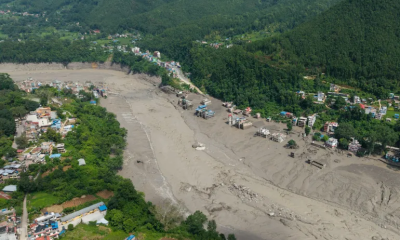
Nepal-Tibet floods: What happened, what caused them and who is missing?
-

 Features6 days ago
Redefining ageing in Sri Lanka
-

 Editorial7 days ago
Unfolding El Niño and burning issues
-

 Editorial6 days ago
The toxic legacy of two lakes