
Foreign News
Japan retrial for world’s longest-serving death row inmate


BBC reported that a Japanese man who was on death row for nearly half a century has been granted a retrial.
Iwao Hakamada, now 87, is the wold’s longest-serving death row inmate according to Amnesty International.
He was sentenced to death in 1968 for murdering his boss, the man’s wife and their two children in 1966.
The former professional boxer confessed after 20 days of interrogation during which he said he was beaten. He later retracted the confession in court. Rights groups have criticised Japan’s reliance on confessions, which they say police often obtain by force. In the retrial, judges will rule on whether DNA from blood stains found on clothing alleged to have been worn by the killer matches Mr Hakamada’s. His lawyers had argued that it did not and that the evidence was fabricated.
Iwao Hakamada was arrested and accused of robbing and killing his employer and his family at a miso or soybean processing factory in Shizuoka west of Tokyo in 1966. They were found stabbed to death after a fire. In 2014, Hakamada was released from jail and granted a retrial by a district court, which found investigators could have planted evidence. The decision was then overturned by Tokyo’s high court.
But, following an appeal, Supreme Court judges directed the high court to reconsider, leading to the ruling that a retrial should now go ahead.

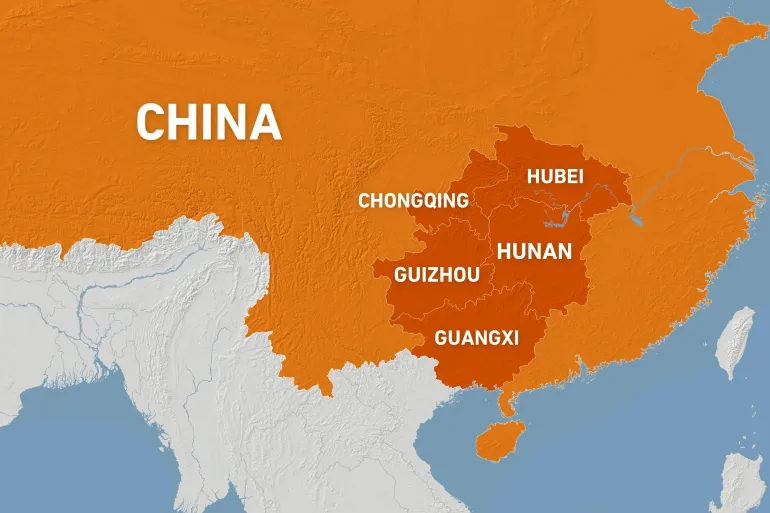
At least 10 people have died after heavy rains caused widespread flooding and landslides across southern and central China.
The China Meteorological Administration (CMA) maintained elevated orange alerts on Tuesday for heavy rain and severe stormy weather, warning that the huge precipitation system has entered its strongest, most destructive stage.
China’s State Flood Control and Drought Relief Headquarters officially activated a Level-IV emergency response, the initial tier to accelerate state-level disaster relief for floods, in Hunan and Guangxi, while maintaining the same emergency tier for Hubei, Chongqing, and Guizhou.
The torrential downpours have shattered multiple local historical records, particularly in the central Hubei province. State broadcaster CCTV reported that 337 townships in Hubei recorded more than 100mm of rain within a 48-hour window.
In Guangxi, six people died after a pick-up truck carrying 15 passengers fell into a swollen river amid heavy rainfall, CCTV said. In Hubei, three people were killed by flash floods in a low-lying village, while another death was recorded in southern Hunan province.
Images on the Chinese social media platform Douyin showed residents in Jingzhou, Hubei, standing knee-deep in floodwater, with some catching fish swimming in submerged streets. Several cars were almost entirely underwater.
Authorities have suspended schools, businesses, and transport services in affected areas. Emergency responses are under way, and residents in parts of Hubei and Hunan are actively being relocated.
Meteorologists attributed the unusually large area of intense rainfall to the convergence of moisture from the Bay of Bengal, the South China Sea, and the Pacific Ocean. They said the slow-moving nature of the weather system had exacerbated cumulative rainfall totals.
The National Meteorological Centre expects severe weather to move east and south over the next two days, with the heaviest rainfall forecast along the middle and lower reaches of the Yangtze River from Wednesday.
[Aljazeera]
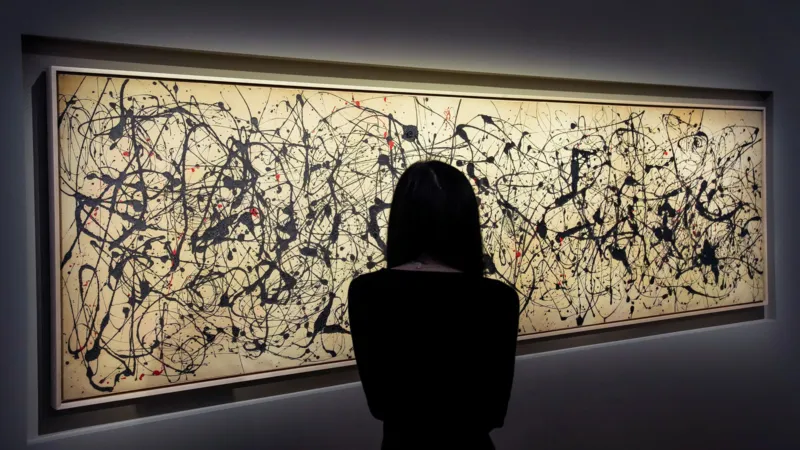
A Jackson Pollock artwork, described as one of history’s “first truly abstract paintings”, has sold at auction for $181m (£135m) in New York.
Number 7A, 1948, which went under the hammer at the renowned Christie’s auction house on Monday, smashed the previous record for the most a work by the late American artist has taken at auction.
The painting, which came from the private collection of media magnate SI Newhouse, is also now the fourth most expensive artwork ever sold at auction, according to ARTnews.
Also in the collection was a bronze sculpture by Romanian artist Constantin Brancusi, which sold for $107.6m – the second highest amount a sculpture has ever gone for at auction.

Pollock, who died in 1956, was a major figure in the abstract expressionist art movement. His drip painting technique is one the art world’s most recognisable and often imitated.
The previous auction record for one of Pollock’s artworks was $61.2m for his Number 17, 1951 painting, which was sold in 2021. Other pieces have sold for higher prices in private sales.
Christie’s called Number 7A, 1948, which depicts black drips of paint with touches of red on a huge canvas spanning more than three metres, a key piece of art history.
“It is with this work that Pollock finally frees himself from the shackles of conventional easel painting and produces one of the first truly abstract paintings in the history of art,” it wrote in its description of the piece online.
Other artworks sold at the Christie’s auction included pieces by Mark Rothko and Joan Miro, which also both broke previous records for works by the artists at auction.
[BBC]
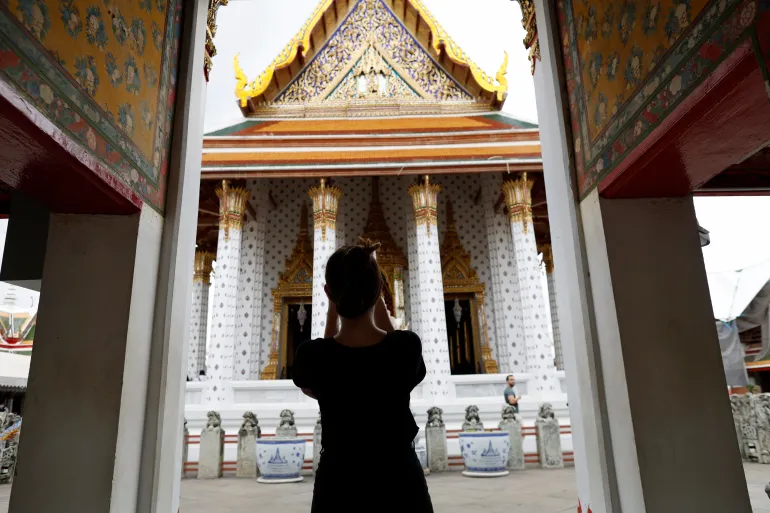
Thailand’s cabinet has approved a drastic reduction to its visa-free entry scheme for tourists from more than 90 countries.
The decision, issued on Tuesday, shifts the country away from a sweeping 60-day visa exemption introduced in July 2024 to stimulate its post-pandemic recovery. That exemption was for areas that included the United States, Israel, parts of South America and Europe’s 29-nation Schengen zone.
Under the new framework, the government will revert to a tiered system, capping visa-free stays at 30 days while shortening permission for citizens of some countries to just 15 days.
“The current scheme has allowed some people to exploit it,” government spokesperson Rachada Dhanadirek told reporters in Bangkok, noting that while tourism remains an indispensable pillar of the Thai economy, security concerns have taken priority.
Thai officials acknowledged the generous 60-day window had inadvertently opened loopholes, paving the way for a surge in illicit grey-market enterprises, unauthorised foreign workers and online scam operations. Policymakers now view a 30-day ceiling as an adequate timeframe to accommodate genuine, high-value travellers.
The policy reversal follows a series of high-profile arrests involving foreign nationals engaged in drug trafficking, human smuggling and running unauthorised local businesses, such as hotels and language schools.
Foreign Minister Sihasak Phuangketkeow said the measure does not target any specific nationality but rather individuals abusing the visa system to evade law enforcement.
To prevent systemic abuse, the Ministry of Foreign Affairs said it will also enforce a strict cap of two visa-free entries per calendar year via land borders for the standard 30-day tier, mirroring protocols used before the 2024 expansion.
The government has not yet announced when the changes will take effect, but they were decided at a sensitive time for Southeast Asia’s second-largest economy, where tourism accounts for more than 10 percent of its gross domestic product. Government data revealed a 3.4 percent year-on-year drop in foreign arrivals during the first quarter, driven largely by a nearly 30 percent plunge in Middle Eastern travellers.
Despite the downturn, officials maintained their annual target of attracting 33.5 million foreign tourists this year.
[Aljazeera]

Taijul takes six as Bangladesh complete 2-0 sweep

At least 10 dead as huge floods sweep southern and central China

Ebola outbreak may be spreading faster than first thought, WHO doctor warns

Sooryavanshi’s stunning 93 takes Rajasthan Royals closer to IPL playoffs

Showers in the Western, Sabaragamuwa, Northern, North-western and Southern provinces and in Anuradhapura, Kandy and Nuwara-Eliya districts

Govt. committed to fulfilling aspirations of war heroes who liberated country: AKD

‘Dates have the highest sugar content to fight Coronavirus’

Sunday Island 27 December – Headlines

#SundayIsland 17th December – Headlines

Sunday Island – 28th March

Sunday Island Headlines – 21 March

Sunday Island – 21st February – Headlines
-

 Features3 days ago
Sri Lankan Airlines Airbus Scandal and the Death of Kapila Chandrasena and my Brother Rajeewa
-
 News4 days ago
Lanka’s eligibility to draw next IMF tranche of USD 700 mn hinges on ‘restoration of cost-recovery pricing for electricity and fuel’
-

 News3 days ago
Kapila Chandrasena case: GN phone records under court scrutiny
-

 News3 days ago
Rupee slide rekindles 2022 crisis fears as inflation risks mount
-
 Opinion6 days ago
Electricity tariffs have skyrocketed: Can further increases be prevented?
-

 Business3 days ago
Expansion of PayPal services in Sri Lanka officially announced
-

 Features5 days ago
Mysterious Death of United Nations Secretary General Hammarskjöld
-

 News3 days ago
Court orders further arrests in alleged USD 42 Mn NDB fraud case