
Life style
Benefits of green tea


Green tea is a type of tea that is made from Camellia sinensis leaves and buds that have not undergone the same withering and oxidation process which is used to make oolong teas and black teas.[1] Green tea originated in China, and since then its production and manufacture has spread to other countries in East Asia. Several varieties of green tea exist, which differ substantially based on the variety of C. sinensis used, growing conditions, horticultural methods, production processing, and time of harvest.
The health benefits of green tea
Is green better for you than black? Does it contain caffeine? Can it help ward off disease? Nutritionist Jo Lewin examines the dietary benefits of green tea. All types of tea, even your regular cup of builder’s, come from the Camellia sinensis plant. Green tea gets its name from the emerald green colour created when brewing unprocessed, unfermented tea leaves. With origins going back as far as 5,000 years, green tea is commonly drunk and widely grown in the Far East where the health properties are well regarded.
Different varieties of green tea
The difference between green and black tea results from the manufacturing process. Black tea undergoes fermentation which transforms its colour and flavour, whereas green tea remains unprocessed and retains its colour. Green tea is grown in higher altitudes, more specifically the mountainous regions of East Asia. Some green tea is still picked by hand, and it is thought that handpicked teas are less bitter and yield a sweeter, more robust taste. Other factors such as the climate and soil can also affect the flavour.
Sencha is the most popular of Japan’s green teas. There are numerous grades which can affect the price and quality. Sencha leaves are first steamed and then shaped. Sencha tea produces a clear yellow/green tea with a sweet, grassy but slightly astringent flavour.
Matcha is made from green tea leaves grown in the shade. The leaves have a higher chlorophyll content which makes them a vibrant green colour. To make matcha, the entire leaf is ground down into a powder. The powder is mixed with boiling water and gently whisked before being served. The flavour is light and sweet and so is now added to desserts and sweet drinks.
Green tea can be found as fresh leaves or in tea bags, frequently
blended with other flavours such as lemon, lime or ginger.When buying tea leaves, avoid older leaves. This is the same principle as with coffee beans. Allegedly, whole leaves are the highest grade and leaves that are older than four months are past their level of peak freshness. Once purchased and opened, keep leaves in an airtight container that can be resealed and store in a cool place to help slow down the reactions that can reduce the tea’s phytonutrient content and impact on flavour.
Nutritional highlights
There are many health claims surrounding green tea from a reduced risk of cancer to weight loss. The evidence to support these claims is largely inconclusive. Some of the health claims are based on ancient Eastern traditions, where green tea has been used to treat symptoms of disease for years. Because of the proposed benefits, many ‘health’ products now include traces of green tea. However, there is limited evidence to suggest these products are effective. If you are hoping to use green tea for medicinal purposes, make sure to consult your doctor first.
Green tea does have more health benefits than black tea which can be attributed to its lack of processing. Green tea is higher in protective polyphenols. The major polyphenols in green tea are flavonoids, the most active of which are catechins and epigallocatechin gallate (EGCG) which function as powerful antioxidants. Antioxidants are known to protect the body against disease and are an important part of a healthy diet. Antioxidants can be found in a range of fruits, vegetables and other unprocessed foods. As part of a balanced diet, green tea can be a good source of antioxidants.

How much caffeine does green tea contain?
Green tea does contain caffeine, although varieties and brands may differ. An equal quantity of green tea contains less caffeine than coffee (one cup of green tea contains approximately 35-80 mg compared to approximately 100-400 mg in the same size cup of coffee), but it can still act as a stimulant. As a result, some people find that drinking green tea increases energy levels, concentration and mood, but this effect may vary between individuals.
If you are sensitive to caffeine, it is advisable to limit the total number of cups of green tea you drink in a day. Too much caffeine can disrupt sleep patterns. If this affects you, try cutting back on caffeinated drinks after lunchtime.
Can green tea affect iron levels?
Like all types of tea, green tea contains tannins. Tannins can interfere with the absorption of iron so try not to drink tea with an iron-rich meal and leave at least one hour before drinking tea after an iron-rich meal.
Proven Health Benefits of Green Tea
Green tea is considered as one of the healthiest beverages across the world. This delightful and aromatic drink has tonnes of health benefits and can do wonders to enable a long and healthy life.
Green tea is more potent than any other tea simply because it is processed differently. Green tea is dried and steamed – this minimal processing leaves it with its green color, more antioxidants, nutrients and thus contributes to its wealth of benefits. For this reason, green tea makes for a daily cup full of fantastic health benefits:
Fights Allergies:
If you suffer from seasonal allergies, be it stuffy nose or itchy eyes, you might be surprised to learn that a cup of green tea may help you overcome your symptoms.
Studies suggest that a compound in green tea can effectively block receptors responsible for triggering allergic responses. EGCG, the abundant antioxidant compound in green tea, may help stop your body from mounting an immune response to a wide range of allergens, including pollen, pet dander, and dust.
. Reduce Body Fat:
Green tea contains caffeine and a type of flavonoid called catechin, which is an antioxidant. Research suggests that both of these compounds can speed up metabolism, increase the amount of energy the body uses and decrease fat content of the body. The consumption of green tea as a weight loss strategy must be supplemented by other healthy weight loss methods, such as exercising and eating a healthy diet with plenty of vegetables. Green tea used alongside these methods may increase and enhance the positive results. Green tea is easily available online and offer a plethora of flavors to chose from. You can say goodbye to that extra flab!

Improves Skin Health:
When it comes to skin care, we urge you to be in a committed relationship with green tea! Drinking green tea may fight skin damage in many ways:
Green tea contains powerful antioxidants that fight damage from UV rays to prevent freckles, dark spots and pigmentation. It is a potent anti-aging ingredient that combats signs of aging when consumed regularly.Green tea has anti-inflammatory properties. The catechins in green tea reduce and soothe irritation, redness, and swelling on the skin Green tea is a powerful antibacterial agent against acne. Polyphenols in green tea can fight infection, and thus it can help treating bacterial growth that causes acne
Green tea is chock full of Vitamin B2 and Vitamin E, both essential for smoother and toned skin and its maintenancePro tip – after a delicious cup of green tea, refrigerate the used tea bags. Grab these cooled tea bags, lie down and rest them on your eyes after a long day. Say good-bye to tired baggy eyes and dark circles!
Fights off Depression:
Too much stress can increase depression and anxiety. Some people find relaxation in the ritual of filling the kettle, bringing it to a boil, watching the tea steep, and then sitting quietly while sipping their warm cup of tea. But the body also reacts to the ingredients of tea.
Many studies have found that drinking a cup of green tea daily lowers levels of the stress hormone cortisol, and thus lower the risk of developing depression and keep you in a good mood. Green tea also contains amino acid L-theanine that increases the activity of inhibitory neurotransmitters that have anti- anxiety effects. If you are prone to mood swings, pick up this delicious cup of happy and healthy beverage daily!
Improves Memory:
If you tried various alternatives to boost your mental alertness but still cant be as mentally active and alert as you would love to be, then you need to try green tea. The main component, which has been shown to improve brain function, is caffeine?which can be found at different levels in all green teas. Green tea ensures that neurons in the brain are stimulated for longer periods of time and neurotransmitters, which play a major role in attention, problem solving, memory, attention and learning?become fired up.
. Keeps Blood Sugar Level in Check:
Research shows that the alkaline nature of green tea can help control blood sugar levels and improve insulin sensitivity. Thus 1-2 cups of green tea daily may help prevent the development of type 2 diabetes in the long run, provided the green tea is consumed without sugar. Researchers encourage the inclusion of green tea in daily diet for those with high blood sugar problems, but this must be paired with regular exercise and a healthy diet.
A regular cup of green tea will boost your memory, give you a healthy skin and keep you happy. Green teas are available in a range of gourmet flavors that you can easily buy online. Try to pick the Green Tea that contains 100% natural ingredients, is least processed and blended with ingredients for the best possible health benefits. So kicks start your healthy lifestyle with this cup of green magic. BBC


By Zanita Careem
With Sri Lanka tourism entering a new phase of growth, the Deputy Minister of Foreign Affairs, Foreign Employment and Tourism, Professor Ruwan Ranasinghe outlined the Government’s forward looking approach, stressing that Sri Lanka must move forward, and must move beyond short term promotional efforts and build a tourism industry backed by clear strategy, stronger planning and measurable results. At the recent Press Conference, held at the SLTPB, Sri Lanka Tourism launched two World Bank supported consultancy assignments to develop a national tourism strategy and global promotional campaign road map, as the country seeks to attract high spending visitors and generate greater economic reforms. The National Tourism strategy planning consultancy for 2026-2031 will prepare a five-year framework, covering a forward looking approach, centred on transforming tourism into a more competitive sustainable and high value sector. For Sri Lanka, this initiative marks an important shift towards strategic, sustainable and inclusive tourism development with the aim of giving greater economic opportunities to the people. The Deputy Minister said the country does possess the natural beauty, cultural heritage and hospitality needed to compete globally. What is required now, he emphasised, is a coordinated approach that brings together government, industry stakeholders and international expertise.
For Professor Ranasinghe the way forward is not simply about bringing more tourists to Sri Lanka but about creating greater value from every visitor, diversifying markets, encouraging investment, strengthening the tourism institutions and developing a destination that can complete confidentially on the world stage. His speech reflected a clear message, Sri Lanka has the attraction, diversity and potential to compete with the world’s best destinations, but must be driven by stronger strategy, sharper global marketing and co-ordinated action.
He emphasised that Sri Lanka has not lacked tourism plans in the past. Previous governments and tourism authorities had undertaken considerable work and developed important plans but the challenges was that these efforts had not given the strength, continuity and implementation mechanisms needed to produce the desired results. The new approach, he stressed, is about giving tourism greater teeth through stronger planning, better governance, targeted investment, sustainable development and a much aggressive presence in the international markets.
(Q) Why is the launch of the National Strategies Planning Consultancy a major milestone for Sri Lanka’s tourism industry?
(A) The launch marks a turning point because it introduces a structured, evidence-based framework for tourism development. For years, Sri Lanka focused primarily on increasing visitor numbers, but despite strong arrivals, revenue growth lagged. This consultancy, supported by the World Bank, ensures that future strategies emphasise value creation, sustainability, and inclusivity. It is the first time Sri Lanka’s tourism industry is being aligned with global best practices, institutional reforms, and a clear roadmap for implementation, making it a landmark initiative.
(Q) What are key priorities that the new national tourism strategy will focus on?
(A) The new strategy prioritises enhancing visitor spending and length of stay, reducing revenue leakage by strengthening local supply chains, modernising institutions and regulations, and embedding sustainability across all tourism activities. It also emphasises skills development through curriculum modernisation at SLOTH, digital transformation of tourism data systems, and diversification of tourism products to attract high-value segments such as wellness, eco-tourism, and cultural tourism.
(Q) What major gaps in Sri Lanka’s existing tourism strategy do you hope to address?
(A) Previous strategies were heavily arrival-driven, with limited focus on yield per visitor. There was weak differentiation among destinations, limited integration with local communities, and insufficient institutional coordination. The new plan addresses these gaps by embedding sustainability, strengthening provincial tourism bureaus, diversifying products, and ensuring that tourism revenue benefits local communities more directly.
(Q) What is the vision behind Sri Lanka’s new global promotional campaign road map?
(A) The vision is to reposition Sri Lanka as a premier global destination by highlighting its unique blend of culture, nature, and wellness. The campaign, developed with international expertise, will use data-driven marketing, influencer collaborations, and destination storytelling to reach high-value markets. It aims to move beyond generic promotion and instead create a strong, differentiated brand identity for Sri Lanka.
(Q) How will this campaign change the way Sri Lanka is positioned and marketed internationally?
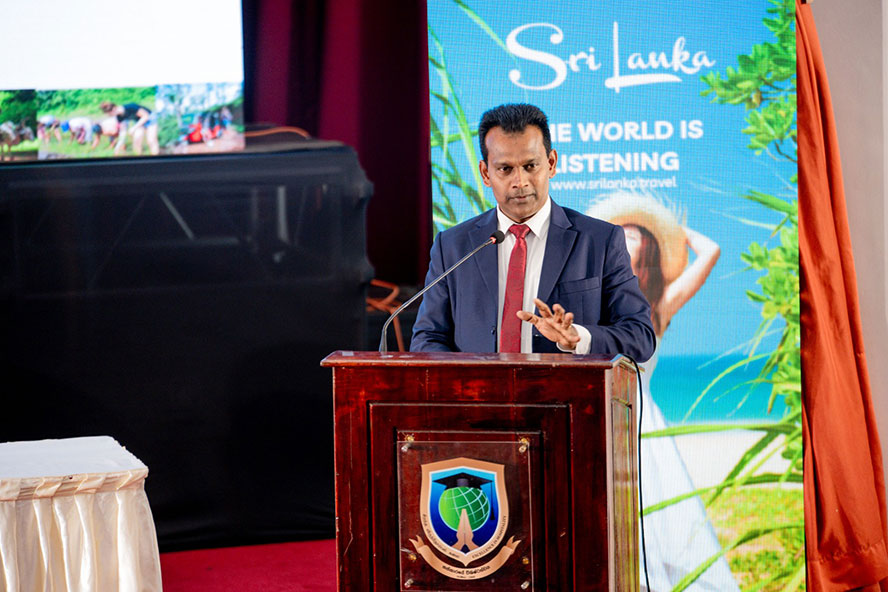
Professor Ruwan Ranasinghe: New international narrative for Sri Lanka
(A) Sri Lanka will be marketed not just as a tropical island but as a destination offering diverse, high-value experiences. The campaign will highlight wellness retreats, heritage tourism, eco-adventures, and community-based experiences. This repositioning will attract discerning travellers who seek authenticity and are willing to spend more, thereby increasing tourism’s contribution to the economy.
(Q) How will the Ministry ensure that the strategy does not remain another document, but is actually implemented?
(A) The consultancy includes costed action plans, institutional reforms, and monitoring mechanisms to ensure accountability. Stakeholder workshops and validation sessions will embed ownership across government, private sector, and communities. The Ministry is committed to ensuring that this strategy translates into tangible outcomes through structured implementation and regular progress reviews.
(Q) Are we ready to market Sri Lanka to the world at a much bigger level or do you first need to fix the gaps in the visitor experience before spending heavily on promotion?
(A) Both aspects must go hand in hand. While global promotion is essential to reposition Sri Lanka, the visitor experience must be strengthened to ensure repeat visitation and positive word-of-mouth. The strategy priorities service standards, infrastructure, and product diversification so that promotional spending translates into genuine value for visitors and communities alike.
(Q) What does the World Bank’s involvement bring to Sri Lanka’s tourism strategy that was missing from previous initiatives?
(A) The World Bank brings international expertise, credibility, and funding support. Its involvement ensures that Sri Lanka’s strategy is benchmarked against global best practices, with stronger institutional frameworks and better data systems. Unlike past initiatives, this partnership emphasizes sustainability, inclusivity, and value-driven growth, ensuring long-term resilience for the industry.
(Q) Will the World Bank’s expertise help Sri Lanka move from simply increasing tourist arrivals to attracting high-value tourists?
(A) Yes, the World Bank’s guidance is focused on shifting from volume-driven growth to yield-driven growth. By strengthening product development, diversifying markets, and embedding sustainability, Sri Lanka will attract high-value tourists who spend more, stay longer, and contribute positively to local communities and conservation efforts.
(Q) Will the new strategy place greater emphasis on sustainable and responsible tourism?
(A) Absolutely. Sustainability is at the heart of the new strategy. ECT-tourism, community-based tourism, and conservation initiatives will be scaled up to protect Sri Lanka’s fragile ecosystems and heritage. Responsible tourism practices will be embedded across the industry to ensure that growth does not come at the expense of the environment or local communities.
(Q) With the World Bank bringing international expertise to Sri Lanka’s tourism strategy, what is the one major transformation for the world to see in Sri Lanka as a tourism destination?
(A) The major transformation will be Sri Lanka’s repositioning as a high-value, sustainable destination. The world will see Sri Lanka move beyond being a volume-driven market to becoming a model of responsible tourism, where visitors enjoy authentic experiences while contributing to local prosperity and environmental conservation. This shift will redefine Sri Lanka’s global image and ensure long-term competitiveness.

By Zanita Careem
Behind every memorable dining experience is a chef whose passion transforms ingredients into something extraordinary. At Taj Samudra Colombo, the hotel’s Executive Chef, Sajesh Nair brings culinary artistry, precision and a deep understanding of flavours, curating dishes that are as refined as they are memorable.
With his passion for quality ingredients, attention to details and commitment to culinary excellence, Chef Nair continues to create flavours, turning the finest ingredients into culinary masterpieces, and transforming the dining table into a stage of indulgence.
Behind every memorable dining experience is a Chef who understands that food is more than what appears on a plate. For Chef Sajesh Nair cooking has been a lifelong journey, shaped by tradition, discipline, curiosity and a passion for authentic flavours.
With an impressive 30 years in the culinary tradition, including 17 years with Taj Hotels, Chef Sajesh Nair has built a career round creating a distinctive dining experience, while remaining deeply connected to the heritage of the cuisines he represented.
His journey with Taj has taken him through some of the group’s most prestigious properties. He was the Executive Chef at the celebrated Taj Falakruma, in Hyderabad, where he became particularly recognised for his expertise in Hyderabad and Nizami cuisine. “My philosophy was rooted in preserving traditional techniques while presenting them with refinement and creativity.” My passion for cooking began at an early age, “My journey was shaped by an early and lasting influence of my father.’’ It was through him that Sajesh developed an appreciation for food, discipline and dedication behind creating something truly special.

Turning ingredients into memorable experiences
His culinary credentials also came into spotlight when he led the team preparing an elaborate royal inspired menu for a high profile dinner at Taj Falakuma Palace, attended by Prime Minister Narendra Modi and Ivanka Trump.
At Taj Samudra Colombo, Chef Sajesh brought his wealth of experience to Sri Lanka’s hospitality scene. His culinary leadership extended to many restaurents, including the revamped Indian Restaurant Navaratne where he has created an experience, centred around cuisines from all parts of India. Adding depth to this culinary journey, Chef Sajesh philosophy fits naturally into the restaurant’s identity, offering guests an introduction to India’s culinary traditions while maintaining the standard of Taj hospitality. Navaratne has become more than an Indian restaurant, it’s a culinary passage to India with Sajesh Nair’s experience in helping bringing its flavours, traditions and stories to the table. Chef Sajesh Nair has a long Taj Hotel career and in Sri Lanka, as the Executive Chef of Golden Dragon – one of the hotel’s specialist restaurant, where he has brought his expertise and creativity to the kitchen, creating flavours that have delighted diners from all walks of life. His association with Golden Dragon, the Chinese restaurant, began in India where he worked at the restaurant as part of his early Taj Samudra hotel’s career. That experience gave him the exposure to the Chinese wider culinary techniques at the Golden Dragon Colombo.

Chef Sajesh Nair: Executive Chef, Taj Samudra, Colombo. Maestro behind flavours
At Taj Samudra Colombo, the Yumi Japanese restaurant is one of the hotel’s speciality dining outlets, His strength lies in creating dishes that balance authentic flavours with contemporary presentation, while his attention to detail and understanding of ingredients gave each creation its distinctive character. He embraced a wider gastronomic repertoire, mastering flavours and techniques from across the world. Chef Sajesh Nair’s culinary canvas extended beyond Indian cuisine. Nair’s role was not simply about mastering one cuisine but about creating different dining experience to suit different tastes. He curated extensive festive menus at Ports of Call and worked across the hotel’s speciality restaurants .
Chef Sajesh Nair’s journey extends beyond the restaurant kitchen with his career giving him opportunities to prepare food for celebrations, distinguished personalities and high profile guests in Sri Lanka and abroad. His work at the Golden Dragon and at the Yumi restaurent further reflect his versatility as a executive. Chef Nair led the culinary team at Taj Falaknuma Palace when a dinner was hosted for Narendra Modi.
Chef Nair and his team prepared the elaborate five-course royal Hyderabad/Nizami menu for Ivanka Trump during her Hyderabad visit. Mukesh Ambani and Ratan Tata both were among the prominent. Indian business leaders who attended the gala dinner. Among the distinguished personalities to experience Chef’s culinary artistry was Cherie Blair, who was among the guests at the glittering banquet at Taj Falaknuma Palace in Hyderbad during the 2017 Global Entrepreneurship Summit. He also curated menus for Mohamed Azharuddin’s wedding reception at Taj Mahal Palace. At this wedding he worked as a young Chef de Partie at the hotel where he won rave reviews. Later he steadily worked his way through the demanding hierachy of professional kitchens.
In Sri Lanka he has created menus for cricketers, both Sri Lankans and Indians. He was also the part of the team when he created various menus during PM Narendra Modi’s visit to Sri Lanka when he stayed at the Taj Samudra. He has also curated menus for all the higher profile personalities, like corporate clients and political figureheads, including the PM of Sri Lanka, Harini Amarasuriya.
From royal banquests in India to distinguished tables in Sri Lanka, Chef Sajesh Nair’s culinary journey is one marked by experience, versatility and an enduring passion for creating memorable dining experiences. His career reflects a Chef who has continually evolved with the times, while remaining rooted in the craft.
He quipped “For me food is more than what is served on a plate it is a way of connecting people.”
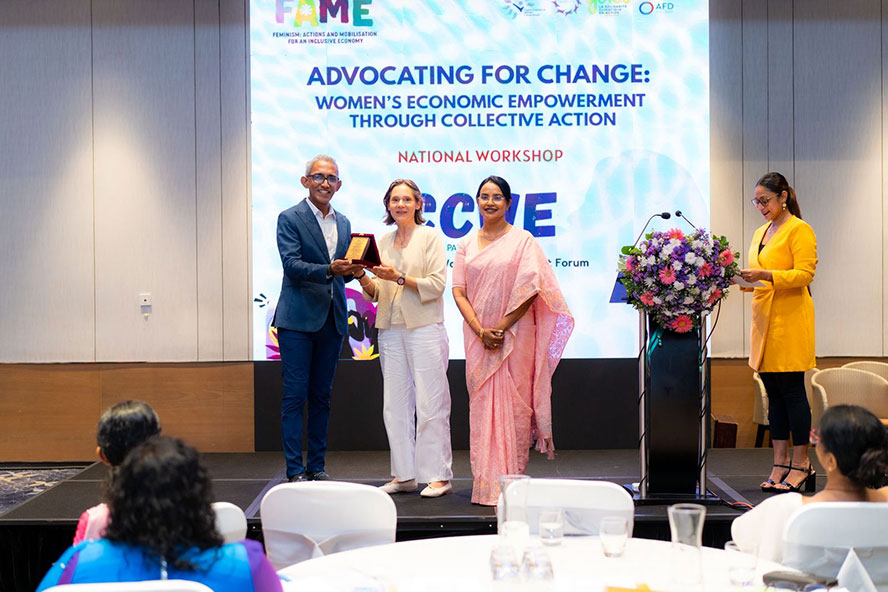
The Ceylon Chamber of Women Entrepreneurs (CCWE), in collaboration with the University of Kelaniya, brought together policymakers, development partners, private-sector leaders, academics, civil society organisations and women entrepreneurs at the National Workshop “Advocating for Change: Women’s Economic Empowerment through Collective Action.”
The workshop formed part of the FAME – Feminism: Action and Mobilisation for an Inclusive Economy Project, supported by the Agence Française de Développement (AFD), and focused on identifying practical pathways to create a more inclusive and enabling entrepreneurial ecosystem for women in Sri Lanka.
The national dialogue provided a platform to bring together policy-level perspectives with the experiences of women entrepreneurs and grassroots organisations, while presenting research evidence on the barriers, opportunities and institutional changes required to strengthen women’s participation in entrepreneurship and economic development.
Welcoming participants, Dr. Ayanthi Gurusinghe, President of the Ceylon Chamber of Women Entrepreneurs, emphasised that women’s economic empowerment cannot be achieved through isolated interventions or training programmes alone. She highlighted the importance of connecting women entrepreneurs with finance, technology, markets, knowledge, networks and policy-making institutions, while ensuring that the voices of women, at community level, are represented in national discussions. She noted that the purpose of “Advocating for Change” is to bring these different voices together and move from identifying challenges towards practical and sustainable solutions.
Dr. Gurusinghe further stressed the importance of collective action among government institutions, development partners, academia, the private sector, women’s chambers and community organisations to create meaningful economic opportunities for women across Sri Lanka.
Partnerships for Progress:
France’s Continued Support for Women’s Economic Empowerment, Matthieu John, Deputy Ambassador of the Embassy of France, highlighted the importance of partnerships in advancing inclusive economic development and reflected on the contribution of the FAME partnership in Sri Lanka.
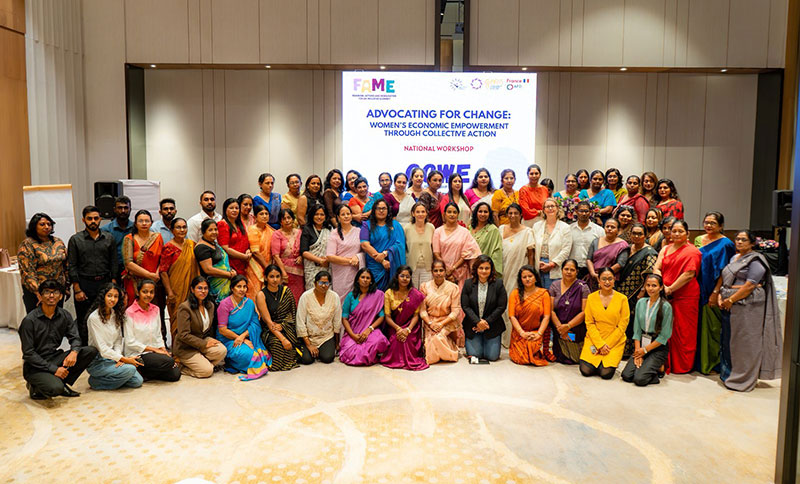
Together we rise: power of collective action
He emphasised the value of strengthening women’s participation in economic decision-making and creating opportunities that enable women not only to establish enterprises but also to build sustainable businesses capable of contributing to employment, innovation and economic growth.The participation of France and AFD in the programme reinforced the importance of international development partnerships that support locally led initiatives, research, advocacy and collective action for women’s economic empowerment.
Creating an Enabling Ecosystem for Women Entrepreneurs:
Delivering the keynote address, Yasas Hewage, Chairman of the Industrial Development Board (IDB), focused on the importance of creating an enabling ecosystem in which women entrepreneurs can move beyond micro and livelihood-based enterprises towards sustainable, growth-oriented businesses. He highlighted the role of enterprise-development institutions in providing entrepreneurs with access to technical knowledge, technology, productivity improvement, business-development services, finance and markets.
Hewage also emphasised that strengthening women-owned enterprises should be viewed not merely as a gender or social-development intervention, but as an important component of Sri Lanka’s wider industrial and economic development
The National Workshop concluded with a call for stronger coordination and continued collective action among government, development partners, financial institutions, academia, the private sector, women’s organisations and entrepreneurs.
Among the broader priorities emerging from the dialogue were the need to strengthen access to finance and markets; improve technology, digital and business-development support; create stronger pathways from micro-enterprise to sustainable business growth; strengthen institutional coordination; improve access to opportunities for women outside Colombo; and ensure that women entrepreneurs have a stronger voice in policy and economic decision-making.
CCWE emphasised that the dialogue is intended to contribute to a wider process of evidence-based advocacy for women’s economic empowerment, ensuring that recommendations are informed not only by research and institutional perspectives but also by the lived experiences of women entrepreneurs themselves.
The workshop reaffirmed a central message: Women’s economic empowerment is not solely a women’s issue—it is fundamental to Sri Lanka’s inclusive economic growth, industrial development and long-term prosperity.

Shree Charani, Prema Rawat spin Pakistan out for 55 in one-sided contest

Sun directly overhead Bentota, Thiniyawala, Iththakanda, Udawalawe, and Kataragama about 12.08 noon t9day (06)

Showers above 75 mm are likely at some places in the Uva and Eastern provinces.

Tharanga creates history with Diamond League crown in Brussels

UN welcomes Lanka’s anti-graft drive, seeks end to impunity

Dispute which triggered listed company director being detained at BIA resolved

‘Dates have the highest sugar content to fight Coronavirus’

Sunday Island 27 December – Headlines

#SundayIsland 17th December – Headlines

Sunday Island – 28th March

Sunday Island Headlines – 21 March

Sunday Island – 21st February – Headlines
-

 Features6 days ago
When Sri Lankan stories find their own voice
-

 News6 days ago
BASL takes exception to Justice Ganepola being denied a place in SC
-

 News3 days ago
Denied of promotion to SC despite vacancies, justice Gurusinghe retires
-

 Latest News4 days ago
Grade 5 scholarship exam results released
-

 News3 days ago
22A: SC urged to suspend hearing, appoint full bench
-

 Midweek Review4 days ago
The local and global dynamics of Sri Lanka’s 22nd Amendment
-

 News4 days ago
Ai-CHA expands Lankan footprint with new Negombo outlet
-

 Business6 days ago
ADB-funded Thalaiyadi plant serves as blueprint for vulnerable dry zones in Sri Lanka