
Features
Feather-brained project of trading rights for growth


 It is welcome news for progressive opinion in the global South that some seven countries, thus far seen as having been among the poorest countries of the world, would be ‘graduating’ out of the Least Developing Country (LDC) category. Among them are; Bhutan, Bangladesh, Laos, Nepal and Angola. Hopefully, development researchers the world over would now focus on the factors that led to these countries bettering their economic prospects substantially over the years.
In the South Asian region countries such as Bangladesh have over the years proved that they are very much in the forefront of development. Therefore, it comes as no surprise that they have been divested of the LDC label by the UN.
Bangladesh has soared far ahead of Sri Lanka, for instance, and in an ironic turn of developments, Sri Lanka could be considered as having reverted to the condition of an LDC, while Bangladesh is proving that it is perhaps South Asia’s second most economically-dynamic country.
Bangladesh’s vital economic statistics speak for themselves. We have it on the authority of Bangladeshi Foreign Minister Dr. A.K. Abdul Momen that the per capita income of his country has tripled within a decade, poverty has been reduced from 41.5% to 20% over the last 14 years and that she is ranked as the world’s 5th best COVID-resilient country and South Asia’s best performer.
We need to add that equally importantly, Bangladesh is today a thriving democracy. That is, she is in no way sacrificing the rights of her people on the altar of economic growth. Unfortunately, this is not so in Sri Lanka, which is seen as one of Asia’s ‘oldest democracies’. Today, Sri Lanka’s rulers are not hesitating to compromise people’s rights for perceived short-term economic gain.
As could be seen, public protests in Sri Lanka growing out of keenly experienced economic grievances are being quashed brutally by the country’s authorities. It is the belief of the current regime that the rights of the people need to be in a veritable state of suspension until economic growth is achieved. ‘Wait until the IMF bailout arrives and sooner rather than later Sri Lanka will be out of the dire economic straits it is in’, is the official credo.
In short, the bailout is the ‘magic bullet’, so to speak. However, the seasoned development thinker would have none of this. Nowhere in the world has development, correctly understood, come at the cost of people’s rights. Sri Lanka’s rulers only need to study the world’s most flourishing democracies and they would learn, if they are sincerely educating themselves, that it is a people who are keenly desirous of exercising their fundamental rights who keep governments in check and thereby ensure that the country’s resources and assets are used for development and development only.
In successful democracies, it is the people, rights-conscious and eagle-eyed, who guard against the risk of its political class living-off public money, for instance, in the form of bribery and corruption. Accordingly, a regime that believes in repression could in no way be having the best interests of the country at heart. On the contrary, it could be focused only on perpetuating its power.
It is difficult to see how any IMF bailout money could be of use to Sri Lanka as long as nothing substantial is done by the authorities about corruption and resource-misuse in public life. In other words, what assurance does the public have that the dearly longed-for IMF bailout money would not end up in the private bank accounts of corrupt politicians and public officials?
While Sri Lanka’s rulers, hopefully, ponder on the above matters, it is all too plain to see that in parts of the world state repression is continuing to take a heavy toll on people’s rights. What Russia’s Putin regime is finally aiming at in Ukraine is anybody’s guess currently, but the progressive-minded watcher of international politics is likely to be disturbed by allegations that the Russian authorities are in the process of abducting some of Ukraine’s children and taking them away to Russia for what is described as ‘rehabilitation’.
Likewise, the allegation is being made in some sections of the international media that thousands of Iranian girls are being subjected to gas attacks. These are apparently revenge attacks on these girls for their participation in the recent wave of anti-government protests in Iran.
It is up to the Russian and Iranian authorities to put the record straight on the above allegations if they do not have any foundation in fact. They would need to work cooperatively with UN agencies, such as UNICEF, to establish their credibility and ensure that the best interests of the vulnerable population groups in question are served.
In fact, the current times should be seen as an opportunity for the UN to come to its own once again in the affairs of the world. Considering that the principal powers of both West and East are at present being seen as deficient in democratic development, it is up to the UN to ensure that states, both big and small, live up to their commitments towards their publics. Population groups, vulnerable or otherwise, must be protected by their governments and making this happen comes within the purview of the UN, since most states are signatories to the cardinal conventions of the UN.
The current focus on LCDs could also have the happy result of socially-conscious governments of the South in particular once again taking up for discussion issues at the heart of development, provided the UN continues to play a catalytic role in the process.
For some decades now, development in the true sense of the word has been all but forgotten. The world’s infatuation with economic liberalization and market-led growth since the crumbling of the Cold War in the nineties, has had the effect of exiting from public discussion the true meaning of development. The latter has by and large been equated with growth.
But economic growth or a mere increase in goods and services in a country, is not synonymous with development. Development occurs when a rise in goods and services combines with re-distributive justice. That is, when goods and services are equally and fairly distributed among a country’s populace.
The latter function needs to be carried by the state and by virtue of this responsibility the state plays a principal role in development. It is a catalyst in development, which in turn decides whether a desperately poor country would qualify to be divested of LCD status or not.

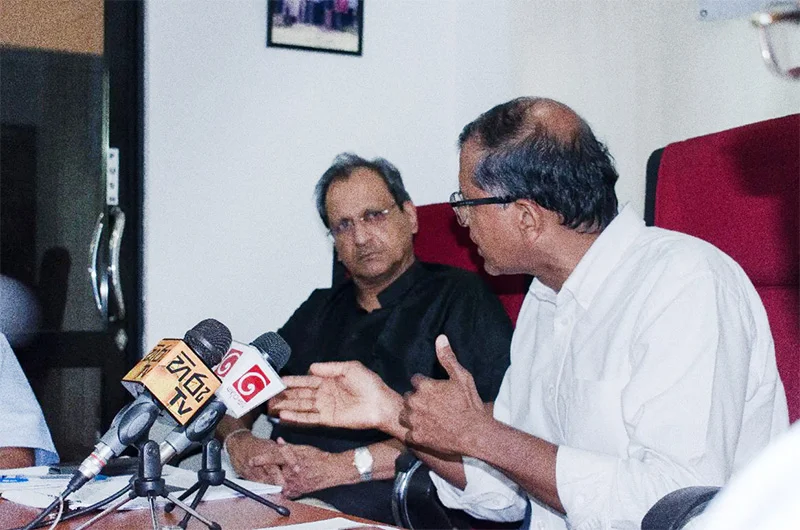
 Maldives President Dr. Mohamed Muizzu was in Sri Lanka recently on what was apparently a goodwill visit and this event, no doubt, bodes very well for Maldives-Sri Lanka relations. Besides, the visit would go some distance in strengthening Sri Lanka’s claims to Non-Alignment.
However, the commentator on regional politics could be accused of simplistic thinking if he/she glosses over or ignores the regional politics nuances or undertones of the Maldivian President’s visit. In Sri Lanka we currently have a government which is eager to solidify its bridges, so to speak, with China and which, given the chance, would be courting increasingly close relations with Russia. In other words, the NPP government is likely to see itself as a ‘natural ally’ of the East and would prefer to distance itself to the extent possible from the West, if that is a realistic proposition.
Given the foregoing backdrop, it would be in some of the NPP regime’s best interests to be on cordial terms with the Maldives which is a close ally of China in the South Asian region. However, the NPP government, given the utter financial helplessness of Sri Lanka, cannot afford to distance itself politically and diplomatically from India and the West. Sheer economic necessity compels Sri Lanka to adopt this foreign policy stance. In other words, the latter has no choice but to be ‘Non-Aligned.’
This columnist was led to the above observations on listening to a lucid and comprehensive presentation titled, ‘A Global Economy in the Shadow of the Iran War and implications for Sri Lanka’s debt recovery’, by Dr. Ganeshan Wignaraja, Visiting Senior Fellow, ODI Global London, at the Regional Centre for Strategic Studies (RCSS), Colombo on May 4th. The forum, RCSS Strategic Dialogue – 4, was moderated and presided over by RCSS Executive Director Ambassador (retd) Ravinatha Aryasinha.
The forum brought together a wide cross section of society, including diplomatic personnel, academicians, public and private sector personalities and the media. After the presentation a very lively and informative Q&A followed.
Ambassador Aryasinha at the outset set an appropriate backdrop to the presentation and discussion by stressing ‘the increasing interconnectedness of geopolitical and economic developments, noting how disruptions in the Middle East could have significant ramifications for global markets, trade flows, energy prices and broader economic stability, including Sri Lanka.’
Indeed, there are occurring currently very disruptive economic and material consequences for the world from ‘the Iran War’, and with US-Iran hostilities spiraling in West Asia it may not be wrong to surmise that the worst could be yet to come, unless a peace process materializes in earnest.
Meanwhile, ‘hurting countries’ such as Sri Lanka would need to summon their best economic management capabilities to remain materially and economically afloat. ‘Economic transformation’ is what is urgently needed and not mere management and some of the insights thrown up by Dr. Ganeshan Wignaraja should have the local polity thinking.
There was the following observation, for instance: ‘Sri Lanka has achieved remarkable cyclical stabilization but faces critical challenges in transitioning to transformative growth, with 2027-2028 debt repayments looming and only $5.4 billion usable reserves.’
Needless to say, the path ahead to ‘transformative growth’ for Sri Lanka is strewn with multiple challenges and meeting them effectively is of the first importance. Sri Lanka must soldier on towards even a semblance of development in the short and medium terms and such initiatives cannot be separated from its foreign policy choices since the country’s economic partners and their growth prowess have a close bearing on the country’s material fortunes.
As mentioned, Sri Lanka will be compelled to be ‘a friend of all countries and an enemy of none’ going forward but it cannot afford to be seen as cultivating China as a close growth partner at the expense of India and other major economies of the region.
This is primarily because while India is remaining a major economic power, the current West Asian crisis notwithstanding, China’s economy is being seen as ‘slowing’. Dr. Wignaraja singled out the following in the main as the factors causing this slow-down: a bursting property bubble, increasing state regulation, and weakening investor confidence. Besides, the speaker sees production cycles moving away from China and India replacing China and Hong Kong as ‘manufacturing hubs’.
Accordingly, the NPP regime in Sri Lanka would need to craft its regional policy in particular with the utmost far-sightedness. It will need to have close economic links with all the growth centres that matter.
On the question of authentic economic transformation, the following observations of Dr. Wignaraja on Sri Lanka’s economy are of the first importance as well: ‘Foreign reserves are now at $ 5.4 billion, the cost of living is high, an estimated 20 per cent of the population lives below the poverty line of $ 3.65 per day, the recent cyber security breach at the Treasury would affect some 10 payments.’ These factors were termed ‘critical vulnerabilities’.
It is difficult to conceive of an economic transformation worthy of the phrase minus a steady economic empowerment of the populace. The above data point to the considerable magnitude of the local poverty problem. Right now, the disruptive effects of the West Asian crisis render swift poverty alleviation a most difficult proposition.
One possible way out of the present economic debacle is the forging of a national consensus by the present government on all outstanding problems that have been bedeviling the country’s advancement. That is, there needs to be a meeting of minds across current political divides. Considering the present inflammatory political polarities in Sri Lanka this would prove an insurmountable challenge.
Unfortunately, conscience-filled and civic minded sections in Sri Lanka have chosen to be laid back rather than seize the initiative, come centre stage and impress on politicians the need for enlightened governance and progressive change. There needs to be a historic coming together of the right thinking to ensure that the best interests of the people and of the people only are served by governments. In the absence of such a process, might would be projected as right and brute force would come to increasingly rule politics and society.
Features
Australia funds project to restore climate-resilient vegetable livelihoods in cyclone-affected highlands
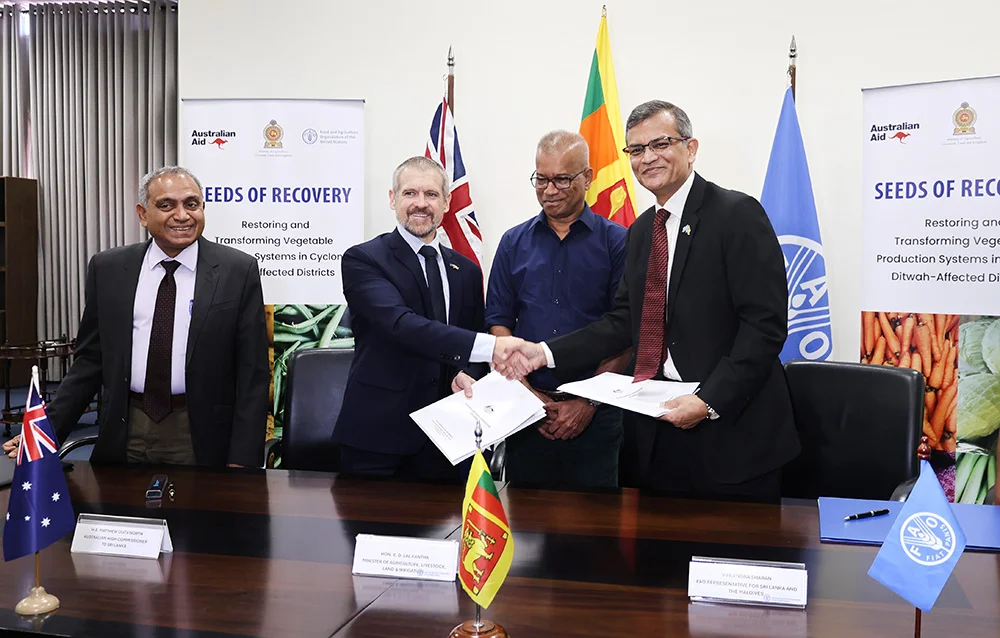
The Ministry of Agriculture, Livestock, Lands and Irrigation, the Government of Australia, and the Food and Agriculture Organization of the United Nations (FAO) have launched of a AUD 2 million (USD 1.4 million) recovery initiative to restore and transform vegetable production systems in the cyclone-affected districts of Nuwara Eliya and Badulla.
The FAO said yesterday (5) that the agreement was formalized through the signing of the grant agreement by Matthew Duckworth, Australian High Commissioner to Sri Lanka, and Vimlendra Sharan, FAO Representative for Sri Lanka and the Maldives, alongside the signing of the project document by D. P. Wickramasinghe, Secretary of Agriculture.
Cyclone Ditwah, which struck Sri Lanka in November 2025, caused widespread devastation across the country, severely disrupting agricultural production systems and livelihoods. The highland districts of Nuwara Eliya and Badulla, key suppliers of vegetables such as beans, carrots, leeks, cabbage, tomato and potato, were among the hardest hit, with thousands of smallholder farmers losing crops, seed stocks, and productive assets.
This 12-month initiative aims torestore and strengthen climate-resilient vegetable production systems, with a strong focus on empowering women farmers and supporting persons with disabilities. The project will directly benefit more than 2,400 smallholder farmers, through improved seed and seedling production systems, small machinery, training, and market linkages while indirectly supporting thousands more.
“This initiative is an important step not only in restoring what was lost, but in building a more resilient and self-reliant agricultural sector,” said Minister Lal Kantha. “By strengthening local seed systems and supporting smallholder farmers, particularly women and vulnerable groups, we are investing in the long-term sustainability of Sri Lanka’s food systems.”
“Australia stands alongside Sri Lanka in its ongoing recovery from Cyclone Ditwah,” said High Commissioner Duckworth. “Australia is a steadfast partner in the agriculture sector with its importance for food security, rural development and climate resilience. By focusing on climate smart practices, farmer-led solutions and inclusive economic opportunities, this project will deliver meaningful and lasting benefits to affected communities.
The project will prioritize the restoration of farmer-led seed systems for beans and potatoes, support the re-establishment of both open-field and protected cultivation systems and women led seedling supply nurseries while empowering all farmers with Climate-Smart Good Agricultural Practices (CSGAP) with small scale machinery and input support.
A key feature of the initiative is the establishment of six accessible and inclusive nurseries in Nuwara Eliya and Badulla. These nurseries will serve as sustainable agri-based enterprises, producing high-quality vegetable seedlings while creating new income opportunities and strengthening local input supply chains.
By combining recovery support with long-term resilience measures, the project will help stabilize vegetable production, improve household food security and nutrition, and reduce reliance on imported seeds.
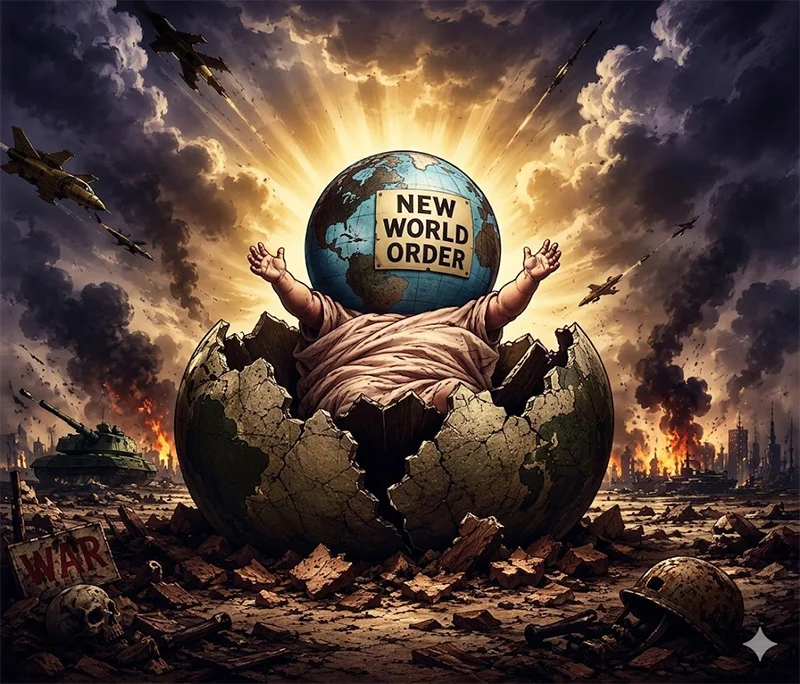
It took several decades for the US to realise it was losing the war in Vietnam. It took a bit shorter time in Afghanistan. And what is happening in the countries the US and Israel intervened and broke up? The US has been asked to leave Iraq. Syria is talking to Russia about establishing military bases, President al-Sharaa met with Vladimir Putin in Moscow to discuss the project, which is vital for Russian power projection in the Middle East. Libya has been divided into two competing administrative units with the Eastern section actively engaged with Russia in defence matters. The Sudanese government has finalised a 25-year deal to allow a Russian naval facility in the Red Sea in exchange for weapons, including anti-aircraft systems. On the Eastern side of the Red Sea, Yemen remains divided, with the main power center, the Houthis maintaining a staunchly anti-US, anti-Israel stance, while the internationally recognised government remains in exile.
When the Iranian Foreign Minister recently undertook a tour of Pakistan, Oman and Russia, the US wanted to meet him and got ready to send its negotiators Vice President J. D. Vance and his team to Pakistan, but Iranian FM snubbed them and left Pakistan, saying Iran did not want to talk to the US while a blockade of their ports were in place. The Iranian FM met President Putin, who congratulated Iran for courageously defending their country and then phoned US President Trump and told him further attacks on Iran would not be acceptable. During this conversation on April 27, 2026, Putin reportedly warned Trump that further U.S. or Israeli attacks on Iran would have dangerous consequences, according to Al Jazeera). Such a sequence of events would not have been possible in the unipolar world we had in the past.
Furthermore, the damage that Iran has inflicted on the US and Israel in this war would have been unimaginable in the late 20th Century and early 21st Century. Sixteen US military bases spread across Saudi Arabia, Qatar, UAE, Bahrain, Kuwait, Iraq, Jordan and Oman have been either destroyed or severely damaged. Advanced surveillance aircraft and radar systems worth more than $ 2.8 bn were destroyed. This had a far-reaching effect on the war as the US could not use these bases in the war against Iran and also in the defence of its allies in the Gulf.
The attacks on Israel have been equally damaging. In Central Israel and Tel Aviv area multiple attacks targeted military and intelligence assets, resulting in massive damage. Iranian missiles hit the Haifa oil refinery, causing a shutdown, and hit residential buildings, leading to injuries and structural damage. Residential and commercial areas were damaged in Bat Yam and Petah Tikva with significant casualties and destruction. Attacks in Dimona and Arad targeted the Negev Nuclear Research Center, with casualties reported in both towns. The Soroka Medical Center in Beersheba was hit in a strike. The strategic port and naval base in Eilat were targeted. In Rishon LeZion suburban residential areas suffered extensive damage.
Usually, Israel makes short work of its many enemies in the region, for example it took just six days to defeat the combined military of Egypt, Jordan and Syria in 1967 and grab their land as well. Hamas, Fatah and Palestinians would suffer ignominious defeats if they dare challenge Israel. However, the recent war against Hamas, following a daring wide scale invasion into Israel by Hamas in October 2023, went on for more than two years with no conclusive victory for Israel.
These significant massive military setbacks suffered by the combined forces of the US and Israel have been made possible by the unprecedented advancement in military technology achieved mainly by China and to a degree by Russia as well. Iran has been able to develop ballistic missile systems that could penetrate the “iron dome” that Israel boasted, with technological assistance from China and North Korea. Iran’s drones are very cheap yet very effective, requiring interceptors worth millions of dollars to counter them, thus making it much more costly for the US to fight this war than it is for Iran.
Further, Hezbollah in Lebanon, Houthies in Yemen and Hamas in Palestine are well equipped with advanced missiles and drones. Hezbollah has been able to destroy about hundred Israel tanks and stop their advance. According to Larry Johnson, former CIA intelligence analyst, Israel soldiers are much war weary and mentally affected and are being withdrawn. Netanyahu’s 40 year dream of a “Greater Israel” is telling on the poor soldiers.
If a person like Barack Obama had been the US President instead of the hyper egoistic, blustering, intellectually barren Trump, things may have been different. An attempt would have been made to reconcile with the fact that the world is changing, instead of trying to stop it and make “America Great Again”. Perhaps, it could be said that Trump is facilitating the emergence of the new world order by enabling the US citizens to see the reality, the futility of war and the fact that Israel is a liability because the US is fighting its war. Further, the war has enabled Iran to assert its place in the region and negotiate from a position of strength.
Perhaps, Israeli people may realise that the Palestine problem cannot be solved by militarily occupying their land, and that in a changing world a “Greater Israel” is a “pie in the sky”. They may have to agree to a two-state solution. US support may not always be forthcoming, certainly not at the level that Trump could extend, as this war is very unpopular and expensive. The other very significant fact is that Israeli settlers in the occupied lands feel insecure and one in three wants to leave and the numbers may grow when Palestinians and their sympathisers grow in strength in the new world order.
Moreover, the war on Iran has afforded China the opportunity to demonstrate with authority the fact that it stands for universal peace and does not tolerate illegal wars. Its message to the US conveyed its world view and its desire for peace in no uncertain terms. Trump cannot afford to disregard the Chinese position on the war on the eve of his visit to that country which may decide on future trade between the two countries as the US depends on China for several essential materials like rare earth minerals. Furthermore, China has shown that peace could be achieved by developing the economies of the underdeveloped countries irrespective of their alliances. It helps Iran as well as Saudi Arabia and try to build bridges between these foes. It welcomes Trump in the coming weeks and hopes to strengthen ties between the two countries despite the weaknesses of the latter.
Another important factor is the gradual decline of the critical value of the petro-dollar. Following the end of the gold standard in 1971, the US struck deals with Saudi Arabia and other OPEC nations (around 1974) to price oil exclusively in USD in exchange for military protection and arms sales. Dollars earned by selling oil came to be known as petro-dollar. Oil producers, holding large dollar surpluses, reinvest these funds in the US Treasury securities, real estate, and financial assets ensuring the recycling of petro-dollars. The system ensures a consistent global demand for US dollars, which helps fund the US budget deficit and maintains the currency’s dominance.
However, the petro-dollar system is on the decline and there are two main reasons for this, firstly the gradual rise of the new world order with organisations like BRICS, making a concerted effort to extricate from the dollar dominance by developing alternate currencies and methods to bypass the dollar. Secondly, the need felt by most countries to develop alternative energy sources to replace enormously harmful fossil fuel would eventually result in a decline in the demand for it and consequently the effectiveness of the petro-dollar. China is leading the world in both these endeavours; depolarisation process and renewable energy production. The war on Iran seems to have hastened the process of depolarisation as Iran insists that it will sell its oil for yuan only.
These revolutionary changes in the aftermath of the Iran war have their undeniable implications for the Global South, where more than 60% of the poor live.
by N. A. de S. Amaratunga

Showers above 75 mm are likely at some places in the Sabaragamuwa, Central, Uva, Southern and North-central provinces

Govt. draws flak over Rs. 500 mn excess Aswesuma payments

NDB fraud: Ravi asks govt. to appoint independent forensic auditor

Alleged suicide: SJB urges probe by Scotland Yard

Beautiful Nuwara Eliya reduced to massive waste land

Fast bowlers to get more opportunities as new format introduced for Under-15 Division I tourney

‘Dates have the highest sugar content to fight Coronavirus’

Sunday Island 27 December – Headlines

#SundayIsland 17th December – Headlines

Sunday Island – 28th March

Sunday Island Headlines – 21 March

Sunday Island – 21st February – Headlines
-
 News2 days ago
CJ urged to inquire into AKD’s remarks on May 25 court verdict
-
 News6 days ago
“Three-in-one blood pressure pill can significantly reduce risk of recurrent strokes”
-
 News3 days ago
USD 3.7 bn H’tota refinery: China won’t launch project without bigger local market share
-

 News6 days ago
Alarm raised over plan to share Lanka’s biometric data with blacklisted Indian firm
-
 News4 days ago
Easter Sunday Case: Ex-SIS Chief concealed intel, former Defence Secy tells court
-
 News5 days ago
Ten corruption cases set for court in May, verdict ordered in one case – President
-

 News6 days ago
USD 2.5 mn fraud probe: Interdicted MoF official found dead at home
-

 Editorial3 days ago
Deliver or perish