
Sports
Remembering Martin Crowe

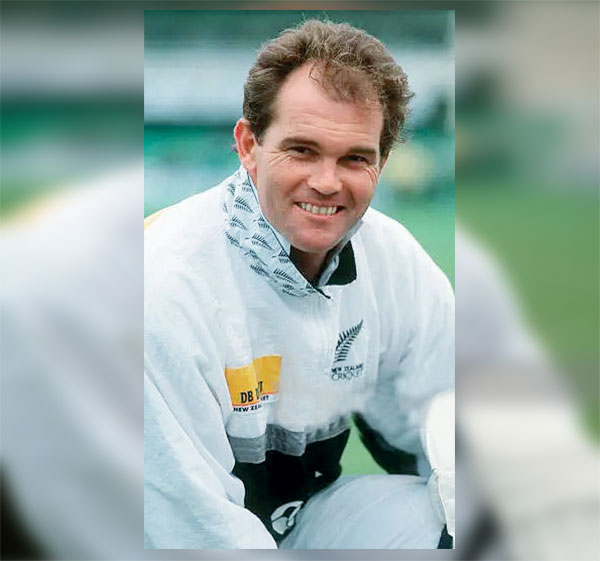
by Rex Clementine
Anyone who debuts as a teenager has got to be a special talent and to do it against the Aussies makes it even more special. Martin Crowe was 19 when he debuted against Greg Chappell’s side of which the attack was spearheaded by Dennis Lillee and Jeff Thomson.
Crowe was a natural. He had so much time to play his shots. Technically sound and so pleasant on the eyes.
Crowe was destined for greatness from a young age. He was 21 when Somerset picked him as the county’s overseas signing. Guess whom he replaced? A certain Viv Richards.
What made Martin Crowe a cut above the rest was not just his technique or stroke-play, he was a keen student of the game and a fierce competitor. Sri Lanka’s maiden Test win overseas should have come in 1991 in Wellington but Crowe’s competitive nature put an end to it. In the same game, he broke Glenn Turner’s record for the highest individual score (259) by a Kiwi in Tests. But cruelly was dismissed one run short of a triple hundred. That one run would have meant that he became the first New Zealander to score a triple hundred in Tests. The worst thing was that he was dismissed by the harmless medium pace of Arjuna Ranatunga.
Tactically, he was brilliant. New Zealand were cruising in the 1992 World Cup as Crowe used Mark Greatbatch as an opener during field restrictions and handed the new ball to spinner Dipak Patel surprising opponents.
By the time Crowe retired he was New Zealand’s highest run getter in both forms of the game. He could have done more but knee injuries restricted him. He quit at 33.
More than his batting exploits or captaincy skills, Sri Lankans will remember him for one thing, for saving the county from cricketing isolation.
There was no international cricket played in Sri Lanka from 1987 to 1991 due to the war. In 1991, Ian Pieris was President of Board of Control for Cricket and S. Skandakumar was the Secretary. They attended the ICC meeting and appealed to the rest of the cricketing word to tour Sri Lanka. Australia had given an undertaking to come in September 1992 followed by New Zealand later that year. Over the next 12 months, India, West Indies, England, Pakistan and South Africa were scheduled to come.
The Australian series was a grand success but when the Kiwis landed there was trouble. Navy Commander Clancy Fernando was killed in front of Taj Samudra hotel where the teams were putting up. Troubled by the suicide attack, just outside their team hotel, the New Zealand team wanted to go home.
Not only the tour but cricket’s future in Sri Lanka was in jeopardy.
It was captain Martin Crowe who decided to stay on and convinced his team to do so. Yet, all his team didn’t agree. Some players wanted to go back home. Crowe ensured replacements were flown in from New Zealand and the tour went on uninterrupted.
Sri Lanka owe it to Crowe for ensuring the tour went on. Had it been interrupted, the country would have faced another long isolation without cricket.
In 2016, Martin Crowe lost his battle with cancer and died at the age of 53 sending the cricketing world into mourning. He was certainly someone ahead of his time and the World Test Championship that’s currently in play was first mooted by him. Crowe certainly was a friend of Sri Lanka. Impressed by cheerleader Percy Abeysekara’s passion for the game, Crowe once gave away his Man of the Match award to the cheerleader. Several years later upon hearing that Crowe was unwell uncle Percy organized a bodi pooja. He called up journalists asking them to put a reminder in the papers so that fans could turn up for the event. He promoted the event with these words, ‘I crow, you crow, we all crow, for Martin Crowe.’

Latest News
Australia, India, South Africa and Great Britain qualify for women’s event at LA28 Olympics

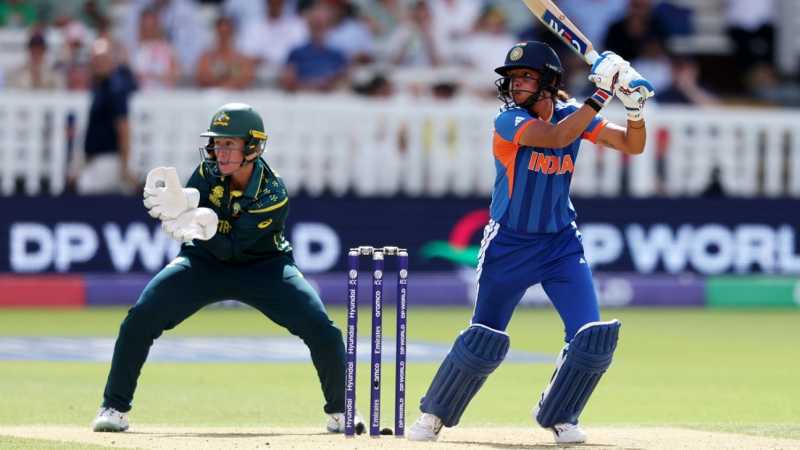
Australia, India, South Africa and Great Britain – courtesy of England – have qualified as four of the six teams for the women’s cricket event at the LA28 Olympics through their performances in the Women’s T20 World Cup 2026. They sealed their berths as they were the highest-placed eligible finishers from Oceania, Asia, Africa and Europe respectively in the competition.
West Indies, one of the semi-finalists at the T20 World Cup, are ineligible to participate in the Olympics as a composite of nations, since they are not recognised as an IOC National Olympic Committee. But they can do so via a newly formed ICC Olympics Qualifier event, which will take place in 2027.
The four spots for the men’s event will be decided by the ICC T20I rankings, with the highest-placed eligible teams from Africa, Asia, Europe and Oceania on December 31, 2026 progressing to the Olympics.
For the fifth spot, USA, as hosts, are eligible to qualify for both men’s and women’s events but they have to appear in the top 15 of the respective ICC T20I rankings at any time during the qualification period from June 30, 2026 to December 31, 2026. Since USA men’s team is currently ranked 13th, they are all but through.
The women’s team, meanwhile, is ranked 20th. Should they not meet that criteria, a fifth automatic qualification spot will be awarded to the highest-placed non-qualified nation in the T20I rankings from any continent as of March 1, 2027.
The sixth team for each event will be decided by the Qualifier event, which will feature eight nations in each of the men’s and women’s competitions. The teams will be decided by the ICC T20I rankings.
If West Indies’ men’s and women’s teams are among the eight highest-ranked teams not yet qualified by December 31 2026, there will be a dedicated Caribbean Qualifier event to determine which region will participate at the Olympics Qualifier.
At the Olympics, the six qualified teams in each event will be divided into two groups of three. Each team will play each other once before playing two further matches against teams in the opposite group who did not finish in the same position. The final top two will contest for gold and silver medals, with the third- and fourth-highest nations competing for bronze.
In all, there will be 28 matches across both events, and all matches will be played at the purpose-built cricket venue in Pomona.
(Cricinfo)
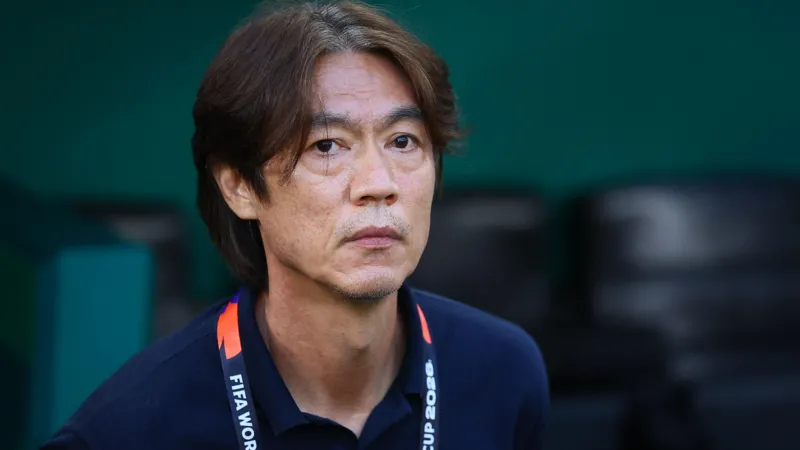
Hong Myung-bo has resigned as head coach of South Korea’s men’s national football team after they failed to advance to the World Cup knockout stage.
The team had hoped they could still qualify for the next round of the tournament as one of the best third-placed teams, but that hope was quashed on Saturday.
The early exit has prompted widespread criticism at home, with President Lee Jae Myung calling for an investigation into reasons behind the team’s disappointing performance.
Hong apologised to fans on Sunday and said the responsibility “rests entirely with me as head coach”.
Ranked 32nd in FIFA’s men’s rankings and led by star player Son Heung-min, South Korea recorded two losses and one win at the World Cup, finishing behind Mexico and South Africa, who are ranked 15th and 60th respectively.
Criticism had mounted quickly after the team’s last match with South Africa on Thursday, which South Korea lost 1-0.
The defeat left them third in Group A. It still gave them hope to qualify for the next round under a new rule introduced with this tournament’s expansion from 32 to 48 teams, which allows the eight best third-placed teams in the group stage to progress to the knockout round. But on Saturday, they were knocked out because of the other teams’ final scores.
Fans blame Hong, who has been coaching the team for the past two years. On Monday, the national team’s official fan club Red Devils issued a statement calling on Hong to “kneel before the entire nation and leave the football world forever”.
Announcing his resignation at a news conference in Mexico on Sunday, Hong said that “we didn’t deliver the results that our fans expected”.
“Even though I am leaving the national team, I am not abandoning Korean football altogether,” Hong said. “I will cheer for the national team from the bottom of my heart and hope that the team will be trusted and loved by the people once again.”
The announcement came after President Lee said that he felt “not just confusion but utter bewilderment at the unexpected outcome”.
In a post on X, Lee said that the early exit of the team “appears to be a failure of organisation and personnel”.
“When favouritism and cronyism take precedence over competence in selecting a commander, the result is as predictable as fire burning paper,” he said.
Hong’s appointment to the head coach post was controversial from the start. The former defender was a hero of South Korea’s 2002 World Cup success, having captained the team to a historic semi-final finish. But when he led the team as a coach in 2014, they failed to advance beyond the group stage – or win a single match.
When Hong was appointed to the same job again in 2024, it was met with harsh uproar. Many football fans criticised the appointment as football association’s old guards giving the top job to their friend, as the KFA passed on a few foreign-born candidates who had undergone a rigorous vetting process.
On Sunday, Hong said that “accepting the job was not an easy choice”. “I cannot say every decision has been the right one, but I can tell you that I have made every decision with Korean football in mind,” he added.
South Korea police say that they are watching for security threats at Incheon Airport and other locations after a death threat was made online against Hong on his return to Korea over the weekend, local media reported.
[BBC]
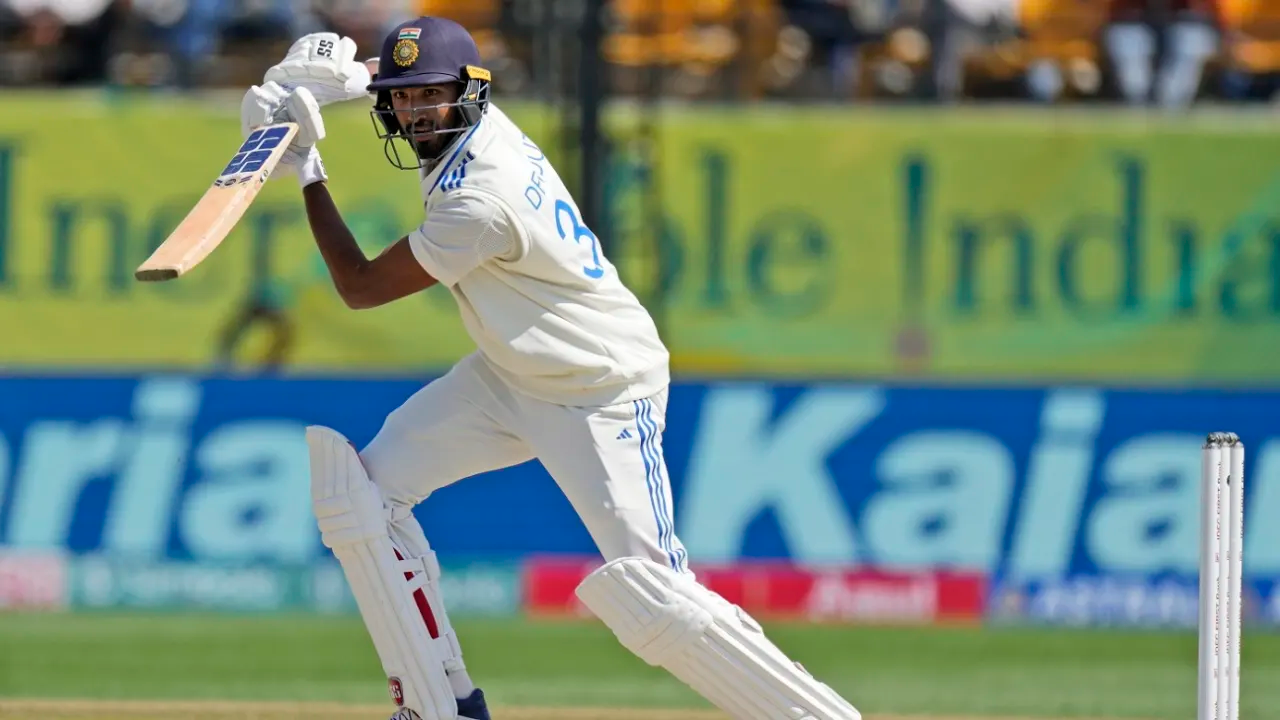
Devdutt Padikkal’s half-century and left-arm spinner Dilum Sudeera’s five-wicket haul were the highlights on day four as the first unofficial Test between India A and Sri Lanka A petered to a draw.
India A declared for the second time in the game after setting Sri Lanka A a target north of 300, but were only able to take two wickets in the 15 overs they managed to get in.
India began the day on 48 for no loss and a lead of 170, although B Sai Sudharsan had retired hurt on the third day. Padikkal and Aayush Pandey added 42 runs on the fourth morning before Sudeera removed the latter for 38 for his first wicket. Two balls later, Ravindu Fernando trapped Ruturaj Gaikwad for 1 off 2.
Padikkal went on to make 67 in a knock laced with five boundaries before Sudeera struck in consecutive overs to remove him and Jurel. Shaik Rasheed and Harsh Dubey then added 47 runs for the fifth wicket before Dubey was caught behind off Chamika Gunasekara. Sudeera then snared Rasheed, Saransh Jain and Auqib Nabi in the next over, when India A decided to declare 311 runs ahead. Sudharsan did not return to bat for India A.
Sri Lanka A’s openers had brisk and solid start, but it slightly came apart when Nabi cleaned up Pawantha Weerasinghe for 20 off 19 in the fifth over and Dubey trapped Niroshan Dickwella lbw.
Nuwanidu Fernando and Ashen Bandara then saw the day out, with India A unable to inflict any further damage.
Scores:
India A 452 for 6 dec in 111.4 overs (Sai Sudharsan 132, Dhruv Jurel 141*, Shaik Rasheed 63; Chamika Gunasekara 3-84, Dilum Sudeera 2-143) and 189 for 8 dec in 57 overs (Devdutt Padikkal 67; Dilum Sudeera 5-49) vs Sri Lanka A 330 in 101.4 overs (Nuwanidu Fernando 84, Ashen Bandara 70, Sahan Arachchige 72; Auqib Nabi 4-58) and 70 for 2 (Pawantha Weerasinghe 20; Auqib Nabi 1-18, Harsh Dubey 1-25). Match ended in a draw
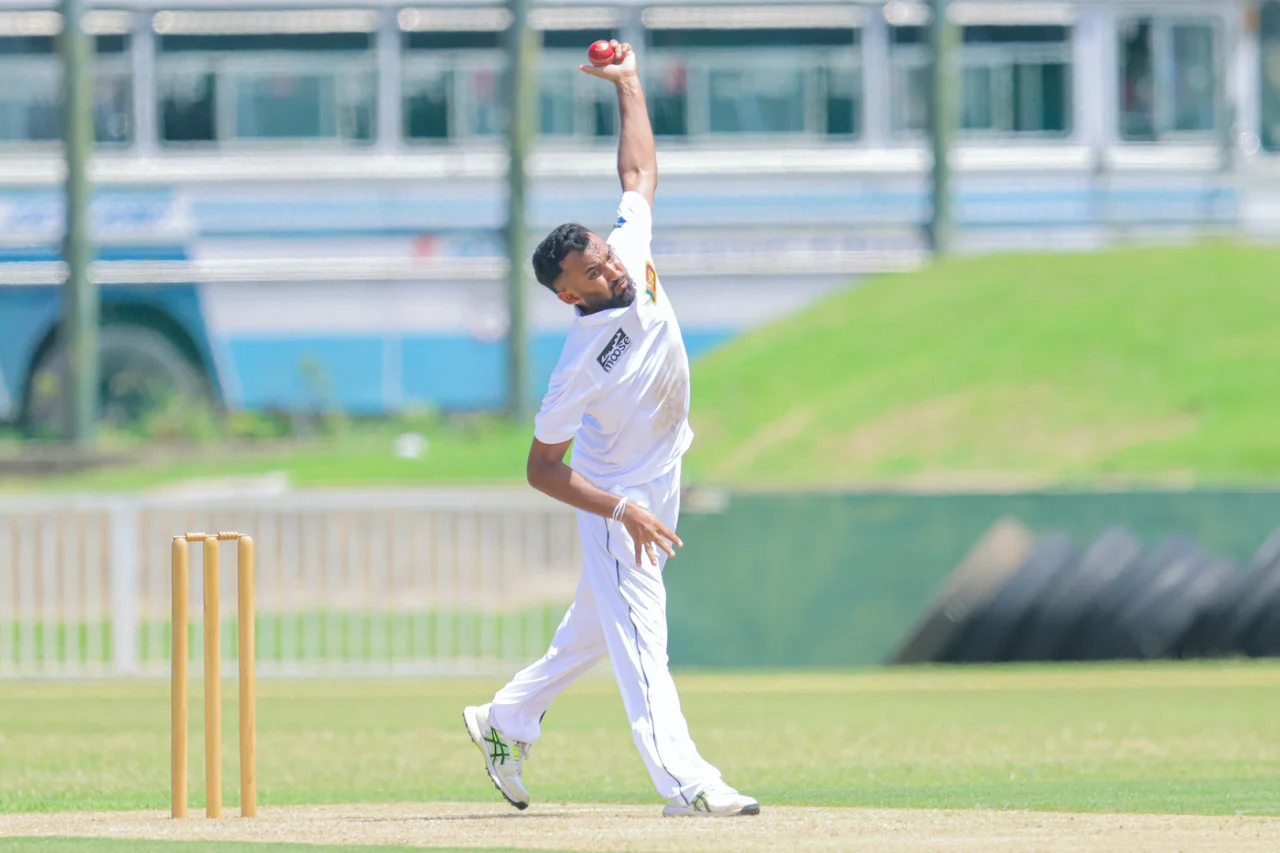
Dilum Sudeera captured five wickets [Cricinfo]
[Cricinfo]

US says it has agreed to ‘stand down’ after exchange of strikes with Iran

Australia, India, South Africa and Great Britain qualify for women’s event at LA28 Olympics

South Korea football coach quits as president calls for probe into World Cup loss

Europe’s heatwave linked to 1,300 deaths, WHO says, as Germany hits record 41.7C

Padikkal fifty, Sudeera five-for before India A, Sri Lanka A settle for draw

“May this sacred Poson Festival illuminate every heart with compassion, loving-kindness and wisdom”- President

‘Dates have the highest sugar content to fight Coronavirus’

Sunday Island 27 December – Headlines

#SundayIsland 17th December – Headlines

Sunday Island – 28th March

Sunday Island Headlines – 21 March

Sunday Island – 21st February – Headlines
-
 News16 hours ago
LAWASIA warns against ad hoc initiative to increase judges’ retirement ages
-
 Opinion7 days ago
Ranasinghe Premadasa: The man who would not take ‘No’ for an answer
-
 News2 days ago
Another 1,132 Sri Lankan Personnel to be deployed for United Nations Peacekeeping Missions
-

 Opinion6 days ago
Sri Lanka’s national security: Justice, reconciliation, and forward-looking vigilance
-

 News4 days ago
Kelaniya emerges as highest ranked Lankan uni in Times Higher Education Sustainability Impact Ratings
-

 News6 days ago
US Assistant Secretary of State for South and Central Asian Affairs meets President
-
 Opinion5 days ago
A triumph for Pakistan’s skilled diplomacy at Iran-US talks
-

 Features2 days ago
People’s Bank expands digital banking network with 125th cheque deposit kiosk