
News
‘48 extremist Muslim groups active in Sri Lanka’

By Rathindra Kuruwita
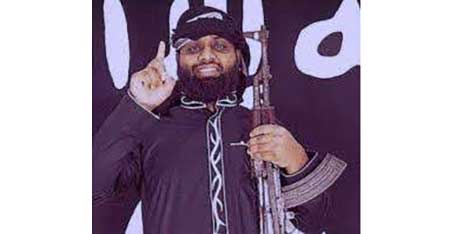
Globally 72 extremist Muslim groups operated against traditional Islam believers, and of them 48 were active in Sri Lanka, a Sufi moulavi who wished to remain anonymous told the Presidential Commission of Inquiry (PCoI) investigating the Easter Sunday attacks on Wednesday.
The moulavi said that he had been under serious and continuous threats because he had been speaking out against fanatical Wahabism. The witness said that he had received higher education on Sufi Islam in India and Egypt.
He said that while Sufis were traditionally dominant in Sri Lanka, Wahabist groups, such as Tablighi Jamaat, Thowheed jamaat, Jamaat-e-Islami, Shabab, and Salafi had spread rapidly as they were well funded.
Those groups had first entered Sri Lanka after 1945, when members of extremist groups arrived from India and Pakistan. The witness said that although those groups operated under different names, they believed in Wahhabis ideology.
Wahabist groups misinterpreted the Quran, Hadith and Qiyas, the Moulavi said, adding that those who followed Wahabism had tried to silence him, using force on many occasions. “In 1991, I was assaulted by members of Tablighi Jamaat during a pilgrimage to Mecca for speaking out against Wahabists. I was stabbed, punched and kicked while I was on my way to have dinner. At that time late Alavi Moulana, trade unionist and politician, was also in Mecca. I went to a police station with him to lodge a complaint. But the Saudi police refused to accept the complaint, saying that they had received reports that I was working against them in Sri Lanka. Later, I came to know that the All Ceylon Jamiyyathul Ulama (ACJU) had complained against me.”
The moulavi said that on another occasion he had been abducted at Kohuwala in 2007 and kept in an undisclosed location for three days before being dumped somewhere near his house.
“I spoke to a Muslim intelligence officer and he observed me for several weeks and told me that my abductors were members of the Tabligh Jamaat. He asked me not to criticize the Wahabists,” he said.
When a commissioner asked whether a complaint had been lodged with the Police about the abduction, the witness said that they didn’t complain as extremist Muslims had more power in the country at that time. The witness said that he had been shot at when he was preaching at a Mosque in Akkaraipattu.
Members of the PCoI also questioned him on the Jamiah Naleemiah Islamic Institute, Beruwala. The witness said that Wahhabism was taught in the institution and Yusuf al-Qaradawi, the controversial Egyptian theologian, who justified suicide bombers, had visited the school.
“I also learned that NTJ leader Zahran Hashim had visited the school on three occasions,” the witness said.

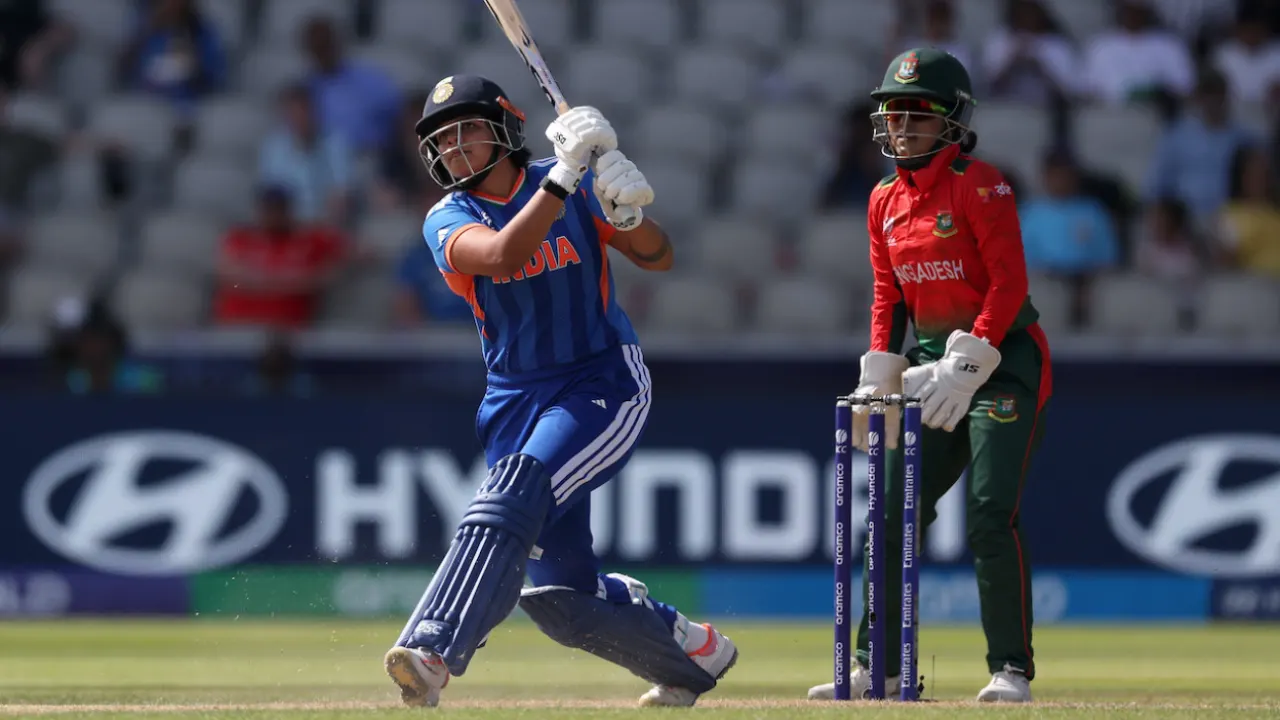
If Bangladesh take the route of seeking inspiration from the past to bring down heavyweights India on Thursday, they will have to squint their eyes and go back to pre-Covid times for their last victory against them in the Women’s Asia Cup. India have had the better of their neighbours over their last eight meetings, and last lost to Bangladesh in a T20I three years ago, when a very similar-looking Indian batting line-up was kept to 102 for 9.
Before that, Bangladesh had shocked India with back-to-back wins that culminated in their maiden Asia Cup title, by again stifling India to an underwhelming 112 for 9.
The Bangladesh team of today – as their recent fights have shown over the last two World Cups – is a version far improved from the ones of 2018 and 2023. They have scared teams like Australia and England (ODI World Cup) and India (T20 World Cup) in the last 12 months and they recently beat the higher ranked Pakistan in the UK by keeping them to 100 for 8.
It is this bowling strength that Bangladesh must bank on to try and bring down India, whose batting has stuttered every now and then, including a collapse of 8 for 46 against Thailand earlier in the tournament. India have had middle-order issues for a while now – it’s one of the things that kept them from a knockout berth in the last T20 World Cup – and Bangladesh will be itching to strike while the iron is hot.
They have laid the foundations in the last 10 days by routing Indonesia for 58, making Sri Lanka sweat in a chase of 115, and suffocating UAE’s batters to 69 for 9 with semi-finals qualification on the line.
Pratika Rawal, India’s No. 3 for this tournament in place of the injured Jemimah Rodrigues, hasn’t quite shown the promise in this format that she has in ODIs. Her 36 runs in three innings have come at a strike rate of just 109.09, against some of the lower-ranked teams in the world. Now into the knockouts, the time is ripe for Rawal to step up against one of the stronger bowling attacks of the tournament, especially if one of the openers doesn’t get going.
Swing bowler Marufa Akter is doing Marufa Akter things at this Asia Cup. She has struck in her opening spell in each of her three games so far – including the big scalp of Chamari Athapathuthu for 1. She has made the ball talk with her prodigious swing, and is the top wicket-taker in this Asia Cup among pace bowlers, with an economy rate of 3.27. She will hold the key for Bangladesh as they come up against a top order comprising Smriti Mandhana, Shafali Verma and Rawal.
Team news
After constant chopping and changing during the T20 World Cup in the UK, India have gone unchanged in the three games of this tournament. They will be expected to field the same XI again.
India (probable): Smriti Mandhana, Shafali Verma, Pratika Rawal, Harmanpreet Kaur (capt), Richa Ghosh (wk), Bharti Fulmali, Deepti Sharma, Prema Rawat, Kranti Gaud, N Shree Charani, Nandani Sharma.
Bangladesh have used 14 players, in comparison, including a debut for 17-year-old allrounder Farjana Easmin. They may not make too many changes this time as the two players who came into the XI on Tuesday – Rabeya Khan and Sharmin Akter – played starring roles in beating UAE.
Bangladesh (probable): Juairiya Ferdous, Nigar Sultana (capt & wk), Sobhana Mostary, Dilara Akter, Shorna Akter, Rabeya Khan, Sharmin Akter, Nahida Akter, Sultana Khatun, Marufa Akter, Fahima Khatun.
[Cricinfo]
News
Establishment of National Trade Negotiation Committee (NTFC) and Trade Policy Consultation Committee.

Approval has been granted at the cabinet meeting held on 24-08-2026 to implement the recommendations submitted by the committee appointed to review Sri Lanka’s current Free Trade Agreements and future course of Free Trade Agreements in Sri Lanka.
Taking into account these recommendations, it has been
recognized the necessity of establishing a National Trade Negotiation Committee and Trade Policy Consultation Committee enabling Sri Lanka to follow a more targeted, sequential, and evidence-based approach in conducting negotiations for Sri Lanka’s future Free Trade Agreements and to ensure a sustainable and meaningful stakeholder consultation process.
The Cabinet of Ministers has approved the resolution furnished by the Minister of Trade, Commercial, Food Security, and Cooperative Development to act as follows.
• Establishment of a National Trade Negotiation Committee to guide trade discussions conducted with potential bilateral or regional trade partners
• Appointment of the Secretary to the Ministry of Trade, Commerce, Food Security, and Cooperative Development as the Chairman of the National Trade Negotiation Committee and
the Chief National Trade Negotiator.
• Establishment of 12 subject specific sub- committees with the required technical working groups under the National Trade Negotiation Committee
• Appointment of Trade Policy Consultative Committee comprising of trade experts, researchers engaged in research relevant to trade field, business community, unions, civil societies and relevant public officers to instruct the National Trade Negotiation Committee on active and technical sectors, to submit the policy recommendations to the Cabinet of Ministers regarding the matters relevant to the trade agreements, to inquire sustainable ideas regarding the Free Trade Agreements, and to ensure the communication mechanism.
• The Minister in charge of the Subject international trade and the Minister in charge of the subject of Industry to serve as Co-Chairpersons of the Trade Policy Advisory Committee.
By Saman Indrajith
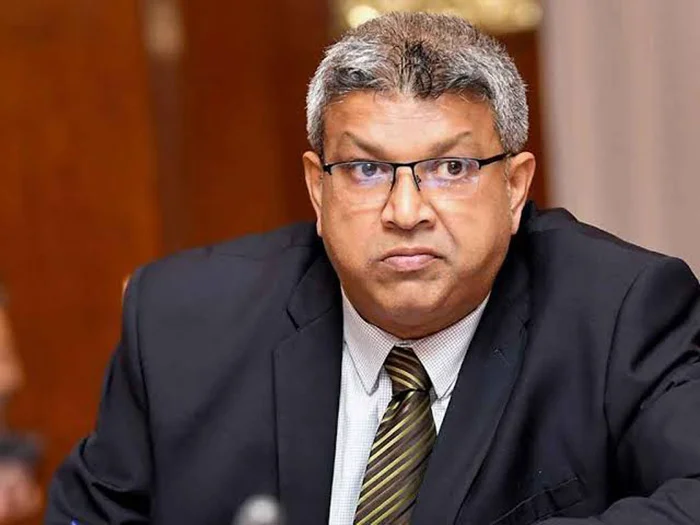
Justice Minister Harshana Nanayakkara yesterday told Parliament that the Commonwealth Lawyers’ Association (CLA) was not an organisation officially recognised or registered under the Commonwealth Secretariat, but a fee-levying private association.
Responding to a question by Opposition and SJB Leader Sajith Premadasa on why he had failed to meet CLA representatives, who recently visited Sri Lanka, Nanayakkara said he had offered them a date and time for a meeting, but they had been unable to attend.
The Commonwealth Lawyers Association (CLA) has questioned procedural fairness and other matters of concern in a report that deals with the Supreme Court hearing petitions against the 22nd Amendment to the Constitution. Among the issues raised by CLA President Steven Thiru, is the composition of the five-member bench.
The Minister said the CLA representatives subsequently requested another date, but he had already scheduled official engagements for the proposed day.
Nanayakkara said it was, therefore, incorrect to claim that he had refused to meet the CLA delegation.
“The CLA is not an official body accepted or admitted into the Commonwealth of countries. It is a private club whose members pay fees for membership,” he said.
However, the Minister said he was not suggesting that the organisation was “a bad organisation”, adding that the accuracy of several statements made by CLA members during their visit to Sri Lanka had yet to be established.
Nanayakkara identified lawyer Upul Jayasuriya as the CLA’s local representative and said Jayasuriya had sought a meeting with him.
“I gave him the opportunity, but he came up with the excuse that he could not make it as he was not in Colombo. Therefore, it is wrong to state that I did not give them time,” the Minister said.

Bangladesh bank on bowlers in bid to bring India down

Avindu makes history with first World University gold for Sri Lanka

Establishment of National Trade Negotiation Committee (NTFC) and Trade Policy Consultation Committee.

Showers will occur in the Western and Sabaragamuwa provinces and in Galle and Matara districts

Justice Minister hits back at CLA

First visit by an Indian Defence Minister since IPKF deployment

‘Dates have the highest sugar content to fight Coronavirus’

Sunday Island 27 December – Headlines

#SundayIsland 17th December – Headlines

Sunday Island – 28th March

Sunday Island Headlines – 21 March

Sunday Island – 21st February – Headlines
-

 News6 days ago
Denied of promotion to SC despite vacancies, justice Gurusinghe retires
-

 News6 days ago
22A: SC urged to suspend hearing, appoint full bench
-

 News4 days ago
Namal remanded until Sept. 18 over Airbus deal investigation
-

 Latest News3 days ago
Tharanga creates history with Diamond League crown in Brussels
-
 News6 days ago
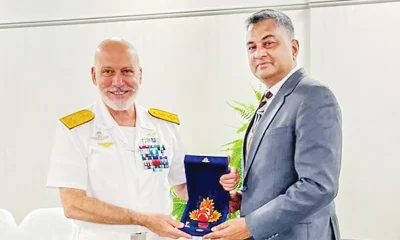
Govt. seeks NATO assistance
-

 Editorial6 days ago
Strange arithmetic goes unchallenged
-

 News3 days ago
Dispute which triggered listed company director being detained at BIA resolved
-

 Features2 days ago
After the parade: What a traffic OIC’s walk-out tells us