
News
362 naval recruits pass out from Boossa upon completion of basic training

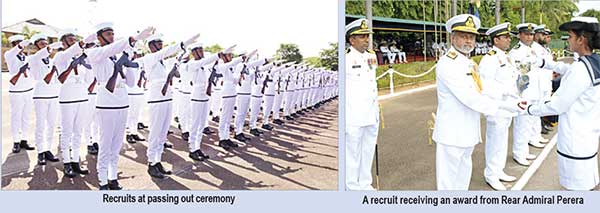
The passing out parade of the 240th intake of Professional and Volunteer recruits the Sri Lanka Navy was held at the parade ground of SLNS Nipuna in Boossa last Friday (21).
Director General Training, Rear Admiral A.A.R.K. Perera was the Chief Guest.
During the passing out ceremony, outstanding recruits during the basic training period, received awards in recognition of their performances. Accordingly, Recruit E.A.C Rohitha (XS 118180) was adjudged the Best Recruit and recruit K.M.S.K.K Chandrasekara (WM 118376) won the award for the Recruit with the Highest Aggregate in all subjects. Meanwhile, recruit K.R.E.K. Perera (LLLR 118342) secured the title as the Best Marksman and recruit L.G.S.D. Kumara (XH 118235) and recruit G.B.H.B. Dharmashri (WH 118385) won the awards for Best Sportsman and Best Sportswoman respectively. The ‘Mihikatha’ Division was selected as the Best Division of the 240th intake.

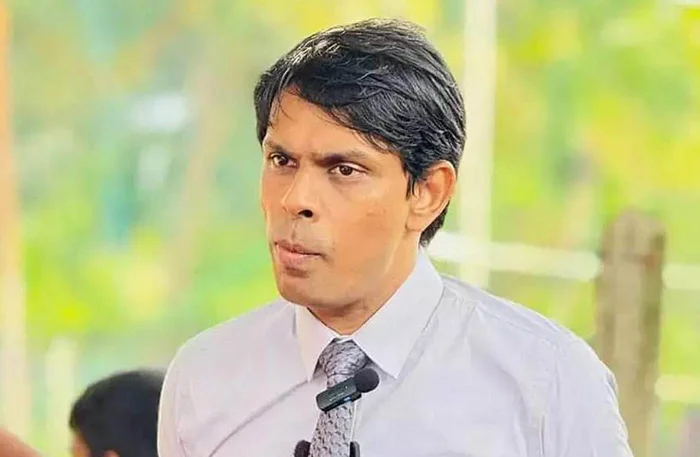
The Fort Magistrate yesterday (23) issued a warrant for the arrest of Jaffna District MP Ramanathan Archchuna as he failed to appear in court during the hearing of a case against him for alleged obstruction of police duties.
This happened when the Fort Magistrate took up a case regarding an incident involving the MP and Fort police during a public demonstration in September this year.
Police said that at the time the MP was arrested on allegations of obstructing a police officer in the execution of their duties.

Collective for Social Media Declaration (CSMD) has strongly opposed the proposed Protection of the State from Terrorism Act, No. of 2026 (PSTA).
The following is the text of the statement issued by Sampath Samarakoon on behalf of CSMD: “The Protection of the State from Terrorism Act, No. of 2026 (PSTA) presents itself as an improvement on the existing Prevention of Terrorism Act (PTA). This framing obscures the reality that its core architecture, including administrative detention, military powers, proscription regimes, and broad speech offences, replicates the essential features that made the PTA objectionable for over four decades.
The Bill replicates the fundamental architecture that made the PTA objectionable. Rather than using the ordinary criminal law regime for terrorism offences alongside emergency powers when genuinely required, the PSTA creates parallel criminal jurisdictions with reduced safeguards and expanded executive authority. Its scheme maintains extraordinary arrest and detention powers, grants the Attorney General potentially coercive mechanisms to compel admissions without trial, and empowers the President, senior police officers, and the Defence Secretary to issue proscription orders, restriction orders, curfews, and prohibited place declarations with limited judicial oversight. As the title suggests, the Bill’s fundamental purpose is to protect the state rather than to protect civilians from violence, a framing that offers little resistance to treating public dissent, political disruption, and threats to political power as terrorism in themselves. Though the Bill includes carve-outs for protest and industrial action, these sit in tension with other provisions and may prove ineffective in practice.
Section 78 defines “confidential information” so broadly that it could capture online content, and social media posts documenting military checkpoints, photographs of army deployments during civilian protests, or tweets noting the presence of intelligence personnel at public events. Tamil civil society organisations, and activists documenting enduring militarisation in their communities face particular exposure. Section 15 criminalises failure to report information about terrorism offences with penalties of up to seven years imprisonment, placing journalists, lawyers, doctors, and religious figures in impossible positions where professional ethics conflict with criminal liability. This provision effectively conscripts recipients of information as state informants, creating a chilling effect on communication without requiring any technical interception.
Journalists, civil society activists, and ordinary social media users face particular exposure under this Bill. The predictable consequence is self-censorship driven by fear rather than any genuine security benefit. The Bill’s extended detention provisions, which permit up to two years of combined remand and detention without charge, provide a repressive mechanism for silencing dissent. Meanwhile, the surveillance and decryption powers granted under sections 53 and 55 threaten to eliminate private digital communication entirely, depriving citizens of secure channels for democratic dialogue and exposing them to monitoring that bears no reasonable relationship to legitimate counter-terrorism objectives.
We want to particularly stress the Bill’s impact on privileged, and encrypted communications, that go far beyond the PTA. Section 55 grants magistrates authority to order the unlocking of encrypted communications, yet assumes technical capability that simply does not exist with genuine end-to-end encryption (E2EE) systems. The extension of police powers to military personnel under section 19 creates a 24-hour window before handover to civilian authorities during which device contents could be accessed without procedural safeguards. Given documented patterns of abuse during military detention, including custodial torture, particularly affecting Tamil communities, the risk of coerced access to encrypted communications is not theoretical.
National security cannot serve as a blank cheque to erode democratic values. We urge the government to withdraw this Bill, engage in meaningful consultation with civil society, and affected communities, and develop fit-for-purpose legislation that meets international human rights standards while addressing legitimate national, and human security concerns.”

Mahara Magistrate’s court has ordered the destruction of a stock of illegal float valve stock, apprehended in Kadawatha, after finding that the products were sold without mandatory labeling and certification, the Consumer Affairs Authority said.
The court ordered that the seized valves, valued at approximately Rs. 500,000, be destroyed after determining they violated labelling regulations under consumer protection laws.
The Consumer Affairs Authority had taken legal action against two business establishments, in the Eldeniya area of Kadawatha, for selling float operated valves without displaying the Sri Lanka Standards Institution (SLS) registration number, a requirement for such products.
In one case, a hardware store pleaded guilty to selling and displaying float valves without the required SLS registration number. The court imposed a fine of Rs. 20,000 for the offence.
In a separate case, a company was accused of misleading consumers by using the official logo of the Industrial Technology Institute without authorisation. The court released the accused company on personal bail of Rs. 100,000 and fixed the case for further hearing.
As part of its ruling, the court ordered the destruction of the seized valve stock, citing violations of labelling regulations and consumer protection standards.
The Consumer Affairs Authority warned consumers to avoid purchasing plumbing fittings and other hardware items that do not carry proper labels or certification details, noting that substandard products can lead to water leaks, higher water bills and the wastage of treated drinking water.
Authorities said the wastage of purified water, which is produced at significant cost, poses a broader economic and environmental concern for the country.
The CAA said it will continue enforcement action against businesses that sell uncertified or misleading products and urged traders to comply with national standards and consumer protection laws.

Fort Magistrate issues arrest warrant for MP Archchuna

The Aesthetics and the Visual Politics of an Artisanal Community

New anti-terror law opposed by social media collective

Dialog & University of Moratuwa launch open-source Sinhala Voice Model

Dhammaloka Central College overall champs at Biyagama Swimming meet

Spoils of Power

‘Dates have the highest sugar content to fight Coronavirus’

Sunday Island 27 December – Headlines

#SundayIsland 17th December – Headlines

Sunday Island – 28th March

Sunday Island Headlines – 21 March

Sunday Island – 21st February – Headlines
-

 News24 hours ago
Members of Lankan Community in Washington D.C. donates to ‘Rebuilding Sri Lanka’ Flood Relief Fund
-

 News6 days ago
Pope fires broadside: ‘The Holy See won’t be a silent bystander to the grave disparities, injustices, and fundamental human rights violations’
-

 News6 days ago
Pakistan hands over 200 tonnes of humanitarian aid to Lanka
-

 Business5 days ago
Unlocking Sri Lanka’s hidden wealth: A $2 billion mineral opportunity awaits
-

 News7 days ago
Burnt elephant dies after delayed rescue; activists demand arrests
-

 Editorial7 days ago
Colombo Port facing strategic neglect
-

 News5 days ago
Army engineers set up new Nayaru emergency bridge
-

 News6 days ago
Officials of NMRA, SPC, and Health Minister under pressure to resign as drug safety concerns mount