
Foreign News
Canada highway crash near Winnipeg leaves at least 15 dead


At least 15 people have died after a “very serious” crash in the Canadian province of Manitoba, the Royal Canadian Mounted Police (RCMP) said.
The crash was between a semi-trailer truck and a handi-transit vehicle, which was carrying mostly seniors.
Police said the crash happened on the Trans-Canada Highway near Carberry, two hours west of Winnipeg. Emergency crews and air ambulances have responded to the crash, reports said.
In several tweets, the Royal Canadian Mounted Police (RCMP) in Manitoba said it was responding to a “very serious… mass causality” collision, and that all of its resources, including its major crime unit, had been deployed to the scene.
The incident happened around 12:35 local time on Thursday (18:35 BST), according to a provincial advisory. The RCMP had asked motorists to avoid the area as a several kilometers of the highway were closed near the crash site.
(BBC)

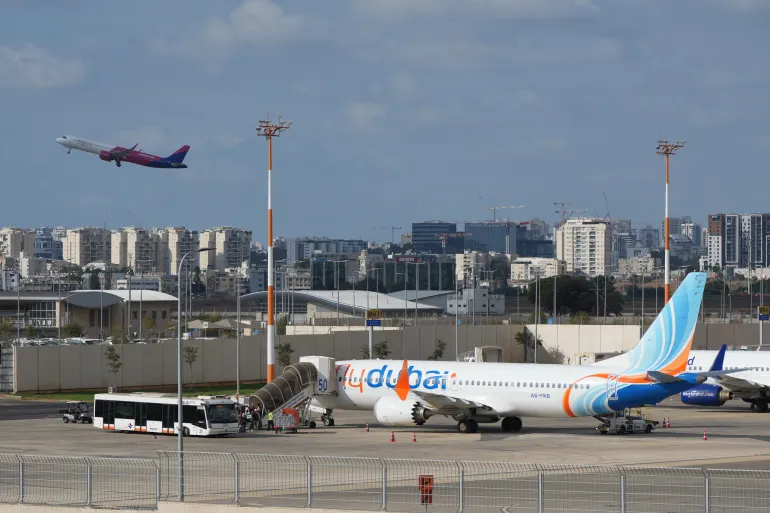
A flight from the United Arab Emirates to Israel was diverted to Saudi Arabia after issuing a distress signal, in what appeared to be a hijacking attempt, on Wednesday.
The Flydubai flight FZ1073 was diverted as it flew from Dubai to Tel Aviv through Jordanian airspace, prompting Israel to deploy warplanes, the Reuters news agency reported.
Israeli Prime Minister Benjamin Netanyahu said one of the pilots had stabbed the other and then tried to crash the plane. He added that Israel was preparing for other “potential threats” after the incident.
There has been no official confirmation of a hijacking attempt, however.
Flydubai said an altercation had occurred on the flight deck and that all passengers were safe and accounted for. The plane was secured by on-duty crew travelling onboard, it added.
At Saudi Arabia’s Tabuk airport, where the plane landed, officials said both the plane’s captain and the first officer had been hospitalised after sustaining injuries. Both were taken to the hospital, according to a statement from the Prince Sultan bin Abdulaziz International Airport in Tabuk carried by the Saudi state-run Alekhbariya television.
The UAE has become a popular vacation destination for Israeli tourists since the countries normalised ties in 2020. Here’s what we know about what happened.
Footage taken onboard the plane appears to show the captain of the aircraft lying on the ground with several stab wounds, and a passenger with a bloody wound to the head.
In another video, passengers weep and cry out in distress as the aircraft shakes.
Yasmin Abukasis, the mother of one of the passengers onboard, said her daughter Miriam thought she was going to die. “The plane started to lose control,” she told journalists at Israel’s Ben Gurion Airport, before other pilots onboard took control of the aircraft.
Flight tracking data indicated the plane descended over 14,000 feet in less than 30 seconds around two and a half hours after leaving Dubai. Flightradar24 said on X that an initial general emergency signal designated by code 7700 was issued at around 05:31 UTC and was later changed to another emergency signal with code 7500 declaring “unlawful interference”.
Passenger Dalia Shpigel told Israeli newspaper Haaretz that some people seated towards the front of the plane broke into the cockpit after the plane began to descend and they realised something was wrong.
“An hour before landing, we felt that there was no control over the plane, that it was starting to jump,” she said. “The guys saw that the plane had begun to dive and broke into the cockpit.”
Netanyahu said he later spoke to one of the Israeli passengers who broke into the cockpit and overpowered one of the pilots who was reportedly trying to sabotage the aircraft’s systems.
“I salute these heroes who demonstrated extraordinary resourcefulness and courage,” Netanyahu said in a statement. “They saved many lives and prevented a major disaster.”
Timeline of events
03:05 – Flight FZ1073 takes off from Dubai05:21 – Altitude fluctuations begin05:22 – Aircraft drops more than 14,000 ft in under 30 seconds05:31 – Signal from aircraft changes to 7700 (general emergency)05:38 – Signal changes to 7500 (unlawful interference)06:45 – Aircraft lands at Tabuk Regional Airport
[Aljazeera]
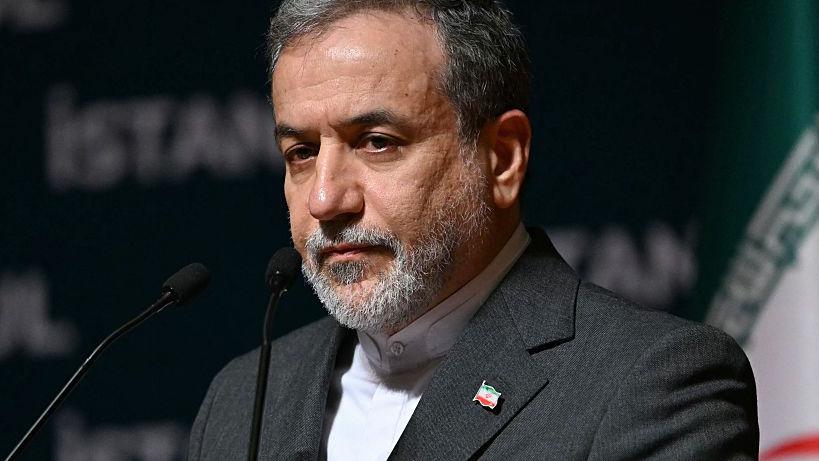
Iran’s Foreign Minister Abbas Araghchi has met with Qatari mediators in New York to discuss a proposal to reopen the Strait of Hormuz, while a United States official said there would be no agreement to end the war unless Tehran’s nuclear programme is addressed.
Araghchi told Iranian state media on Monday that the Qatari mediators would carry the ideas discussed at the meeting to the US and that he hoped to receive Washington’s final response by Tuesday.
“We talked about ideas and how to find solutions to fulfil Iran’s conditions and how to implement those conditions,” he said. “They had some ideas, and we had a discussion that they will also present to the American side.”
Asked whether he would stay in New York to await the reply, Araghchi said he would fly to Tehran within hours.
“Whenever the Qataris have a response, they know how to get it to us,” he said.
He described the meetings as part of an existing exchange of messages through Qatari and Pakistani mediators, which he said had taken on “a more serious form” since Iran submitted its proposal.
The Iranian plan , announced on Friday at the United Nations General Assembly in New York City, calls on the US to release frozen Iranian funds, lift sanctions and end its naval blockade of Iranian ports. Araghchi said those steps could be completed within four or five days, allowing the strait to reopen and negotiations on a final agreement, including on Iran’s nuclear programme, to begin by the seventh day.
US President Donald Trump, however, rejected the proposal on Saturday, calling it “unacceptable”
The US official, who spoke to Al Jazeera, said indirect discussions were continuing.
The talks were “positive and constructive”, the official said, but stressed there would be no agreement unless Iran’s nuclear programme is addressed. The official said Trump is willing to relieve sanctions and release Iran’s frozen funds in exchange for progress on nuclear issues.
“Iran has indicated they are flexible on the nuclear issues, but the sides still remain apart on the timing of the commitments and who takes which steps first,” the official said.
The official also expressed scepticism of Iran, saying it had broken the memorandum of understanding signed in June by firing on commercial vessels. Tehran denies the accusation and says it was Washington that broke its commitments by failing to halt Israel’s attacks on Lebanon and by seeking to establish alternate shipping routes through the Strait of Hormuz.
Iran had closed the strait, which handled roughly 20 percent of the world’s oil and gas supplies before the war, shortly after the US and Israel launched their offensive on February 28. Iranian attacks on vessels since have sharply curtailed shipping, and oil prices have risen above $100 a barrel.
Even so, crude exports from major Middle East producers rebounded in September to 12.8 million barrels per day, their highest level since the war began, the Reuters news agency reported, citing data from the maritime intelligence firm Kpler.
That is still well below the 18.8 million bpd exported in February.
Some ships have used the US military-supervised route hugging the coast of Oman, travelling at night with tracking systems off and offloading oil to tankers outside the strait. Admiral Brad Cooper, the head of US Central Command, said on Saturday that American forces had assisted 2,000 transits and more than 1 billion barrels of oil in recent months.
The US has also imposed a blockade on Iranian ports and threatened secondary sanctions against airports and companies that do business with Iranian airlines. The United Arab Emirates, Iraq and Oman have already cancelled related flights.
(Aljazeera)

Like every year, Pushpraj Rimal, a tour planner and taxi driver in Nepal’s capital, Kathmandu, was looking forward to September for his business to boom.
But what he got instead was a series of cancellations by tourists after catastrophic floods last month killed more than 1,450 people and destroyed key highways, deeply impacting the Himalayan nation heavily dependent on tourism.
“It is still a lockdown kind of situation,” the 42-year-old told Al Jazeera nearly a month after the disaster.
Pushpraj, who speaks Nepali and Hindi, works on commission for several hotels and trekking companies in Kathmandu and the scenic town of Pokhara, known for its lake nestled in the Annapurna mountain range. Pokhara also serves as a base for Himalayan trekkers.
Nepal’s tourist season peaks after the monsoon ends in August and the skies are clearer. Tourism attracts thousands of international travellers, accounting for nearly 8 percent of Nepal’s gross domestic product and employs more than 1 million people.
Last year, Nepal saw more than 1.15 million tourists visiting the country, nearly a third of them during the September-November season.
But the floods this year, triggered by a glacial mountain collapse along the Nepal-Tibet border in the north, have pushed tourists away from the unaffected areas as well.
“I had rented two cars for two months, but I have done one fourth of the business I usually do in a season. Tourists generally start pouring in from September, but most of them have cancelled this year,” he said.
“I will get no commissions from the hotels or trek organisers, nor has the taxi business worked well. … I am now waiting for the season to end.”
Rimal has two children, Hema, 14, and Rahul, 12, whom he had promised a tablet this Dussain, a prominent Hindu festival that usually falls in October. “But it seems impossible now. I will have to break their hearts and my promise to them for the very first time.”
(Aljazeera)

What happened on diverted Flydubai flight from Dubai to Tel Aviv?

“Vishishta Seva Vibhushana” medals presented under President’s patronage

Hindu Priests Seek State Intervention for Sivarasa Anojan

“A Nation United” National Steering Committee meets under President’s Chairmanship

PM declares open 2nd Day of National AI Expo 2026

Waste management and recycling to receive priority in the 2027 Budget – PM

‘Dates have the highest sugar content to fight Coronavirus’

Sunday Island 27 December – Headlines

#SundayIsland 17th December – Headlines

Sunday Island – 28th March

Sunday Island Headlines – 21 March

Sunday Island – 21st February – Headlines
-

 Latest News7 days ago
Showers above 100 mm are likely at some places in the Western, Sabaragamuwa, Central and North-western provinces and in Galle and Matara Districts
-

 Editorial7 days ago
Crimes punished and unpunished
-

 Features6 days ago
Beyond traditional jobs: Why Sri Lanka needs to facilitate the gig economy
-

 Editorial5 days ago
Birth of a bad law
-

 News3 days ago
Police remove Thileepan statue in Jaffna
-

 Latest News6 days ago
Kusal, Wellalage star as Sri Lanka defend 322 in Headingley thriller
-

 News5 days ago
TIN mandatory for key transactions from Nov. 1
-

 Features3 days ago
The 22nd Amendment, constitutional recovery and illiberal slippage