
News
Zahran et al exploited yahapalana chaos to advance sinister political strategy – SLPP MP

‘Those who practised Wahhabism almost succeeded in achieving their dreadful objectives’
By Shamindra Ferdinando
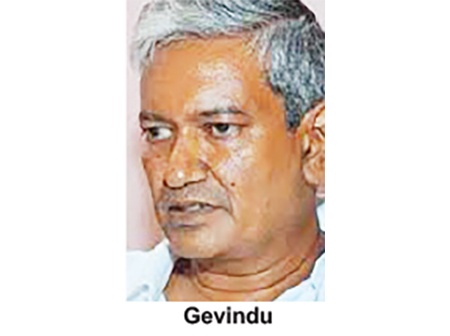
SLPP National List lawmaker Gevindu Cumaratunga says if the then President Maithripala Sirisena and Prime Minister Ranil Wickremesinghe parted ways in the wake of the heavy defeat suffered by the yahapalana partners, the SLFP and the UNP, at the Feb 10, 2018 Local Government election, Easter Sunday carnage could have been avoided.
Continuation of the sharply divided political marriage, regardless of the consequences, created an environment conducive for those who followed Wahhabism to plan terror attacks as part of their overall strategy, MP Cumaratunga said in response to a query by The Island. The lawmaker, who also heads the Yuthukama civil society organization, said that he discussed the issue at hand during the recent debate on the report of the Presidential Commission of Inquiry (P CoI) on the 2019 Easter Sunday terror attacks.
Nearly 270 people perished in suicide attacks whereas 500 received injuries. Lawmaker Cumaratunga explained that the PCoI dealt quite comprehensively with the deterioration of national security in the wake of the 2015 change of government. The PCoI highlighted how alarming and rapid the spread of Wahhabism coincided with unprecedented irresponsible conduct on the part of the political leadership as well as the security apparatus. The country couldn’t bear such treacherous behaviour, the MP stressed, pointing out how even two years after the heinous crime the public struggled to cope up with the situation.
Yuthukama is represented in Parliament by two members, with Anupa Pasquel, who successfully contested the Kalutara district at the August 2020 general election being the other member.
Lawmaker Cumaratunga asked whether those who had brought about the 2015 change of government that paved the way for the 19th Amendment to the Constitution facilitated the National Thowheed Jamaat (NTJ) terror project. Calling the 19th Amendment enacted in 2015 with the backing of over 200 members, a constitutional-religious bomb, the MP alleged that the much-touted political exercise was meant to weaken the Sri Lankan State. In the aftermath of the 2015 presidential election, the appointment of a minority UNP government that didn’t have at least 50 MPs in Parliament and the resultant 19th Amendment rapidly eroded political stability achieved at the previous general election, the MP said.
The Joint Opposition (now SLPP in power) too voted for the 19th Amendment with the blessings of the defeated presidential candidate Mahinda Rajapaksa. Only retired Rear Admiral Sarath Weerasekera, the current Public Security Minister, refused to back the 19th Amendment in spite of the then President and the SLFP leader Maithripala Sirisena pushing for the JO’s undivided support.
Cumaratunga said that Local Government polls in Feb 2018 signalled the failure of the yahapalana political arrangement. Therefore, the UNP and the SLFP should have parted ways to bring political deterioration to a halt and the restoration of political stability, expeditiously.
Responding to another query, he explained how the TNA and the JVP worked overtime to save UNP leader Wickremesinghe after President Sirisena sacked the Cabinet in the last week of Oct 2018. The civil society activist recalled the TNA and the JVP throwing their combined weight behind the UNP, in Parliament, and outside, and then successfully moving court to thwart President Sirisena’s move. Had President Sirisena succeeded, the NTJ terror project could have been averted, MP Cumaratunga said. However, those who had external backing prevailed over President Sirisena’s political project thereby ensuring the continuing deterioration of national security under the yahapalana leadership until it was too late. The Yuthukama Chief said that external forces revealed their hand by sending their diplomatic representatives for high profile visits to Parliament during the conflict in the run-up to a court verdict in favour of the UNP-led grouping. How could those who had unreservedly backed the restoration of the UNP administration at the expense of much needed political stability absolve themselves of the responsibility for subsequent developments, Cumaratunga asked. The UNP-led fight back compelled President Sirisena to roll back the move to conduct a general election on Jan 5, 2019.
MP Cumaratunga, during his brief address to Parliament, last week, rapped the TNA’s stand on the Easter Sunday carnage. Having contributed to the deterioration of security, by way of the 19th Amendment to the Constitution, that allowed the NTJ followers to cause mayhem, TNA MP M.A. Sumanthiran, PC recently called Sri Lanka a failed state on the basis of its alleged failure to protect its own citizens, the MP pointed out.
The TNA spokesperson had conveniently forgotten how he justified the the Easter Sunday massacre at an event organized at the BMICH within a week after the carnage, MP Cumaratunga said. The TNA had no qualms in speaking on behalf of Easter Sunday attackers in the presence of the then HRCSL Chairperson Dr. Deepika Udagama and among the audience were Speaker Karu Jayasuriya, former President Chandrika Bandaranaike Kumaratunga and Elections Commission Chairman Mahinda Deshapriya.
Acknowledging the parliamentary Opposition, namely the SJB, TNA and JVP, hadn’t been happy with the PCoI report, lawmaker Cumaratunga decried alleged attempts to propagate the new lie that President Gotabaya Rajapaksa had a possible hand in the Easter Sunday carnage. Alleging that politics had deteriorated to a new low, MP Cumaratunga questioned the rationale in them rejecting the PCoI on the basis it failed to expose the Easter Sunday mastermind. Lawmaker Cumaratunga pointed out the UNP appointed Parliamentary Select Committee (PSC), that probed the Easter Sunday attacks, failed badly in its endeavor. The MP said that those who represented the PSC and now in Parliament Dr. Rajitha Senaratne, Sarath Fonseka, M.A. Sumanthiran and Rauff Hakeem and defeated JVP candidate Dr. Nalinda Jayatissa, owed an explanation without further delay. The Yuthukama Chief emphasized that the PCoI had achieved its objectives whereas the PSC engaged in a futile exercise to whitewash certain people.
Appreciating the services rendered by the PCoI, MP Cumaratunga said that the report encompassed the alleged Easter Sunday attacker Zahran Hashim views on the terror project (page 528) and the recommendation of further investigations against the backdrop of its failure to secure credible evidence as regards a foreign hand. Referring to the PCoI comment on one-time National Security Minister Lalith Athulathmdali’s assassination in 1993, MP Cumaratunga discussed in Parliament during the adjournment debate the circumstances leading to Ranil Wickremesinghe receiving the leadership of the UNP. Faulting those who had examined Athulathmudali’s assassination through a political lens though he was assassinated by the LTTE, MP Cumaratunga questioned the way some reacted to the LTTE killing State Defence Minister Ranjan Wijeratne, Gamini Dissanayake and Ranasinghe Premadasa.
Cumaratunga asked what would have happened if the military and the police failed to thwart the second wave of NTJ suicide attacks and also defuse vehicle bombs, including one in close proximity to St. Anthony’s Church, Kochchikade. The SLPP MP recollected how a driver of a vehicle used by Zahran’s gang to move a large consignment of explosives to the East helped thwart the second wave by alerting the police. Unfortunately, those who played with national security pursued an entirely different agenda, the MP alleged. Had Zahran’s followers succeeded, the presidential poll, too, could have been off indefinitely, lawmaker Cumaratunga said, underscoring the need for the thorough examination of the political strategy adopted by those who spearheaded the yahapalana project.
MP Cumaratunga also made reference to a national referendum conducted in late Dec 1982 to put off a scheduled general election by six years and Digana violence soon after the Feb 2018 Local Government polls defeat suffered by those in power to highlight what he called despicable UNP strategies.
MP Cumaratunga said that the PCoI had made several extremely important recommendations, including the defense portfolio to be under the President (page 486). The 20th Amendment to the Constitution enacted in Oct 2020 addressed that particular issue, the MP said. The MP pointed out further a spate of recommendations made by the PCoI to strengthen the monitoring of funds received through the banking and various other proposals such as to do away with the Proportional Representation system (changes in the electoral system) to ensure political stability.



The Commissioner General of Essential Services, Prabath Chandrakeerthi has announced that, after taking into consideration the current fuel situation in Sri Lanka, the Government has decided to declare Wednesdays of every week as a holiday for government sector employees, all government schools, universities, and courts with effect from March 18, 2026, until further notice
The holiday will not apply to essential service sectors including Healthcare, Ports, Water Supply and Customs.
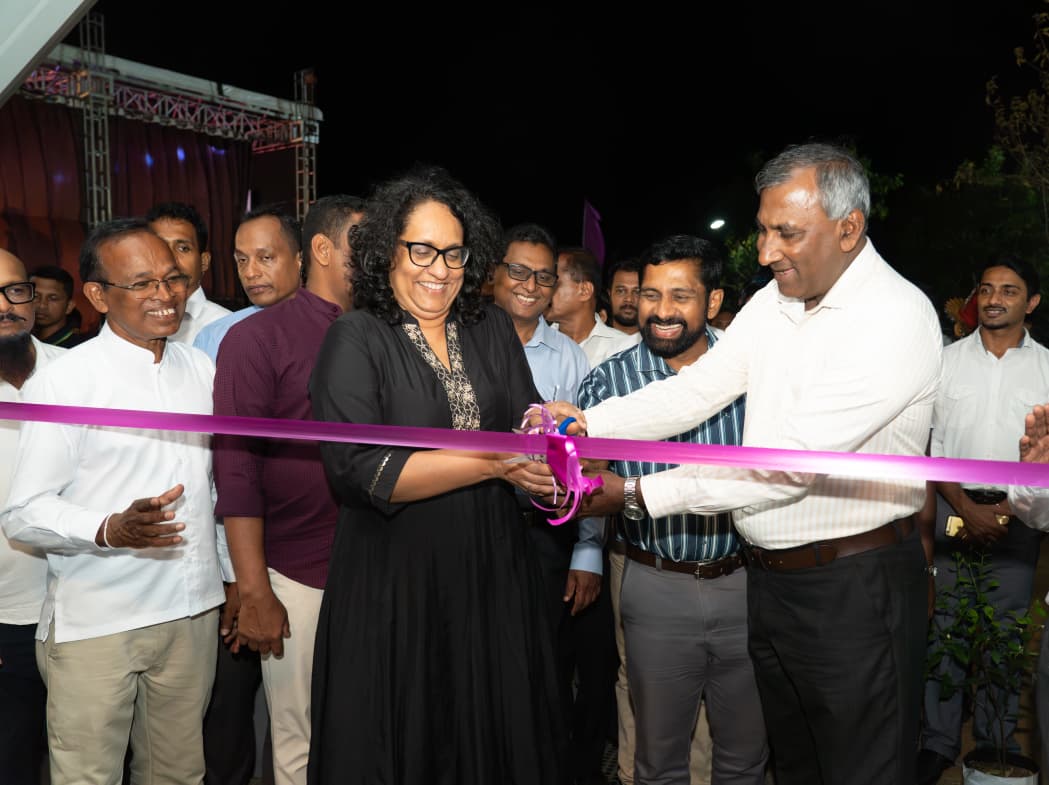
Prime Minister Dr. Harini Amarasuriya stated that leisure had long been limited to only a privileged segment of society, and that the government’s objective is to create opportunities for all citizens to equally experience and enjoy that leisure.
The Prime Minister made these remarks on Sunday (15th of March) while opening the multi-purpose development project associated with the Angunakolapelessa Tank, developed under the “Pohosath Gamak” programme of the Ministry of Rural Development, Social Security and Community Empowerment for the public.
In parallel with the multi-purpose development project carried out associating the Angunakolapelessa Leisure Island, a boating facility and the Leisure Island cafeteria were also officially opened.
Addressing the gathering the Prime Minister stated:
“The multi-purpose development project associated with the Angunakolapelessa Tank has received voluntary support from the community of more than 700 days.
With the funding from the Ministry of Rural Development, Social Security and Community Empowerment, the Angunakolapelessa Pradeshiya Sabha, together with the divisional councils, public safety committees, youth societies, trade associations, and many others in the community, was able to transform this site into a major development project within a remarkably short period of time.
This project serves as a powerful example of what can be achieved when people unite collectively for a noble purpose. Developing a country is not a task that the government alone can accomplish.
When intellectuals, religious leaders, youth, entrepreneurs, and the public come together with strong and responsible leadership, we can build a nation so resilient that no hostile force will be able to weaken it.
People in rural communities who live demanding and hardworking lives also deserve to enjoy. For a long time, leisure was limited to only a privileged segment of society. As a government committed to fostering a dignified cultural life for all citizens, it is important to create more spaces like this where people can relax, walk, enjoy themselves, and spend time with peace of mind.
The occasion was graced by the presence of the members of the Maha Sangha, and attended by the Minister of Rural Development, Social Security and Community Empowerment Upali Pannilage, other ministers and parliamentarians, government officials, and local residents.

(Prime Minister’s Media Division)

As a key frontline stakeholder in the national mission, ‘A Nation United,’ the Navy continues to conduct maritime operations in the waters surrounding the island, in coordination with other law enforcement agencies.
During a recent successful operation on the high seas south of Sri Lanka, the Navy intercepted a local multi-day fishing trawler and apprehended five suspects (05) in connection with the smuggling of a stock of suspected drugs.
During a special inspection at the Dickowita fisheries harbour today (16 Mar26), the Police Narcotic Bureau (PNB) confirmed the presence of over one hundred and thirty-three (133)
kilograms of heroin.
The Deputy Minister of Defence, Major General Aruna Jayasekara (Retd), accompanied by the Commander of the Navy, Vice Admiral Kanchana Banagoda, was present in Dickowita to inspect the seized items.
Addressing the media, the Deputy Minister stated that the tri-forces, particularly the Navy, along with the Coast Guard, Police, and other law enforcement agencies, are executing the
government’s vision for national security. He noted that the recent naval operation in the southern seas, which seized a large consignment of narcotics and weapons, demonstrates the government’s success in combating criminal networks involved in narcotics, arms and human trafficking.
He added that such successful outcomes result from the Navy’s meticulous planning, surveillance, intelligence analysis, and inter-agency coordination. He affirmed that no leniency will be shown to drug trafficking networks, and conveyed admiration, on behalf of the President, for the distinctive contribution made by the Sri Lanka Navy, in collaboration with other stakeholders,
towards ensuring public safety and protecting the younger generation from the menace of drugs.
Highlighting the scale of the Navy’s impact, he revealed that naval operations in 2025 seized narcotics valued over Rs. 75 billion, and operations so far in 2026 have seized over Rs. 20 billion worth of drugs.
The Deputy Minister warned that traffickers are increasingly using the guise of legitimate fishing activities to smuggle narcotics. Besides, he emphasized that the responsibility lies not only with law enforcement agencies but with all sectors of society to eradicate the networks associated with drug trafficking. He issued a firm directive to traffickers, dealers, and distributors to “quit,” asserting that there is no loophole, whether by sea or air, that the security forces cannot close. He
further urged drug users to abandon this destructive habit.
He announced plans for legal amendments to impose stricter penalties for drug offenses. Noting that law enforcement agencies have operational autonomy, he appealed to the public to report information on drug trafficking to hotlines 1818 and 1997.
He also commended the media for their responsible reporting in educating the public on the drug menace.
The trawler, the suspects, the communication equipment and the stock of narcotics held in this operation were handed over to the PNB for onward investigation and legal proceedings.

Wednesdays declared a government holiday with effect from 18th March

Iran hits key UAE oil port and Dubai airport

PM declares open Angunukolapelessa Leisure Island

Navy’s successful high-seas bust nets over 133kg haul of heroin

Chinnaswamy stadium receives government clearance to host IPL 2026 final

Tanzid 107, Taskin four-for trump Agha 106 to give Bangladesh series

‘Dates have the highest sugar content to fight Coronavirus’

Sunday Island 27 December – Headlines

#SundayIsland 17th December – Headlines

Sunday Island – 28th March

Sunday Island Headlines – 21 March

Sunday Island – 21st February – Headlines
-

 News7 days ago
Prof. Dunusinghe warns Lanka at serious risk due to ME war
-

 News5 days ago
Historic address by BASL President at the Supreme Court of India
-

 Business6 days ago
BOI launches ‘Invest in Sri Lanka’ forum
-

 Sports6 days ago
Royal start favourites in historic Battle of the Blues
-

 Sports5 days ago
The 147th Royal–Thomian and 175 Years of the School by the Sea
-

 News6 days ago
CEBEU warns of operational disruptions amid uncertainty over CEB restructuring
-
 Features6 days ago
Indian Ocean zone of peace torpedoed!
-
 News5 days ago
Power sector reforms jolted by 40% pay hike demand