
News
Women judges should assure patriarchal attitudes do not lead to victim blaming in court proceedings – Justice Wickremasinghe

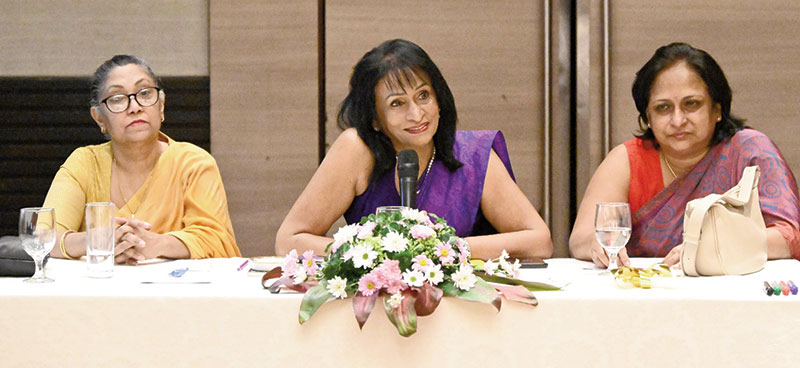
Sri Lanka Association of Women Judges holds inaugural meeting
Twenty-six (26) sitting and retired women judges came together for the inaugural meeting of the Sri Lanka Association of Women Judges (SLAWJ) which was held recently (08), in line with International Women’s Day. While Supreme Court Justices Kumudini Wickremasinghe and Menaka Jayasudara were appointed as President and Vice President of the Association respectively, retired Supreme Court Justice Shiranee Tilakawardane was appointed as the Patron of SLAWJ.
Delivering her opening remarks, Justice Kumudini Wickremasinghe stated, “This gathering marks not only the beginning of an organisation but a collective commitment to advancing gender equality, strengthening judicial integrity, and fostering an inclusive legal system that empowers women within the judiciary.”
Explaining their role, she said, “As women judges, we have a significant role in providing comfort to vulnerable witnesses, focusing on support rather than favouritism in court and ensuring that patriarchal attitudes do not lead to victim blaming in court proceedings.”
Justice Wickremasinghe emphasised that the SLAWJ will strive to encourage more women to pursue careers in the judiciary by challenging societal stigmas and demonstrating that a woman can successfully balance both her professional and personal responsibilities.
The formation of the Association marks a significant step in addressing gender disparities in the Justice Sector of Sri Lanka. This inaugural meeting was supported under UNDP’s ongoing project, titled ‘Ensuring Justice for Victim-survivors of SGBV in Sri Lanka,’ implemented with the generous support of the Government of Canada and in collaboration with the United Nations Population Fund (UNFPA) and the Government of Sri Lanka.
The Association complements efforts supported by the project to increase the capacity of justice sector actors to respond effectively to the issues of SGBV victims.
Underscoring the importance of this Association, Azusa Kubota, Resident Representative of UNDP Sri Lanka, stated “Upon learning about the objectives of the Association, I was deeply inspired. This partnership amplifies our collective efforts towards improving access to justice amongst the most vulnerable. Their mission to drive systemic reforms within the judiciary—tackling biases and obstacles that hinder the professional growth of women judges—is both timely and essential. Moreover, their commitment to advocating for legislative changes that promote gender-responsive laws and policies will have a lasting impact on women’s access to justice that is fair and timely.”
Chief Guest of the event, retired Supreme Court Justice Shiranee Tilakawardane stated “Having a network of women judges to support, encourage and mentor each other, to share in the achievements and challenges of being women judges in their judicial systems has proven to play a real role for women judges throughout the years from the kernel of the idea to the present day. Being affiliated to the IAWJ has been transformational, providing opportunities to learn, understand and grasp the importance of substantive equality in law and in life.”
The Sri Lanka Association of Women Judges seeks to become an affiliate of the International Association of Women Judges, a global network of women judges to advance gender equality and human rights. Commenting on the importance of women representation in the judiciary, Judge Robyn Tupman, Secretary and Treasurer of the International Association of Women Judges, stated that “It seems to me is that the judiciary in any one country, if it’s doing its job properly, must always be reflective of the population it serves. To repeat that old adage, ‘you can’t be what you can’t see’, and so it’s important that we as women judges continue to promote a positive role model for young girls and women thinking of and in the legal profession, that they can rise to the higher levels of judicial appointment and to the higher levels of the judiciary. Therefore, we should encourage women to become members of the judiciary and to remain in those positions and to achieve the highest possible level that they can reach.”



The foundation stone laying ceremony for the proposed seven-storey Sadaham Mandiraya at the historic Sri Jayewardenepura Kotte Rajamaha Viharaya was held on 03rd of January with the participation of Prime Minister Dr. Harini Amarasuriya.
The religious programme, organised to coincide with the Duruthu Full Moon Poya Day, commenced with the chanting of Seth Pirith by the Maha Sangha.
Subsequently, the Prime Minister participated in laying of the foundation stone, formally marking the commencement of construction of the seven-storey Sadaham Mandiraya.
The Sadaham Mandiraya will be constructed as a centre dedicated to the preservation of Buddhist heritage while providing Dhamma education and spiritual guidance for future generations.
The event was graced by the presence of Chief Incumbent of the Kotte Rajamaha Viharaya, Venerable Aluth Nuwara Anuruddha Thero, together with members of the Maha Sangha; and attended by the Deputy Minister of Industry and Entrepreneurship Development, Chathuranga Abeysinghe, local political representatives, state officials, and a large gathering of devotees.

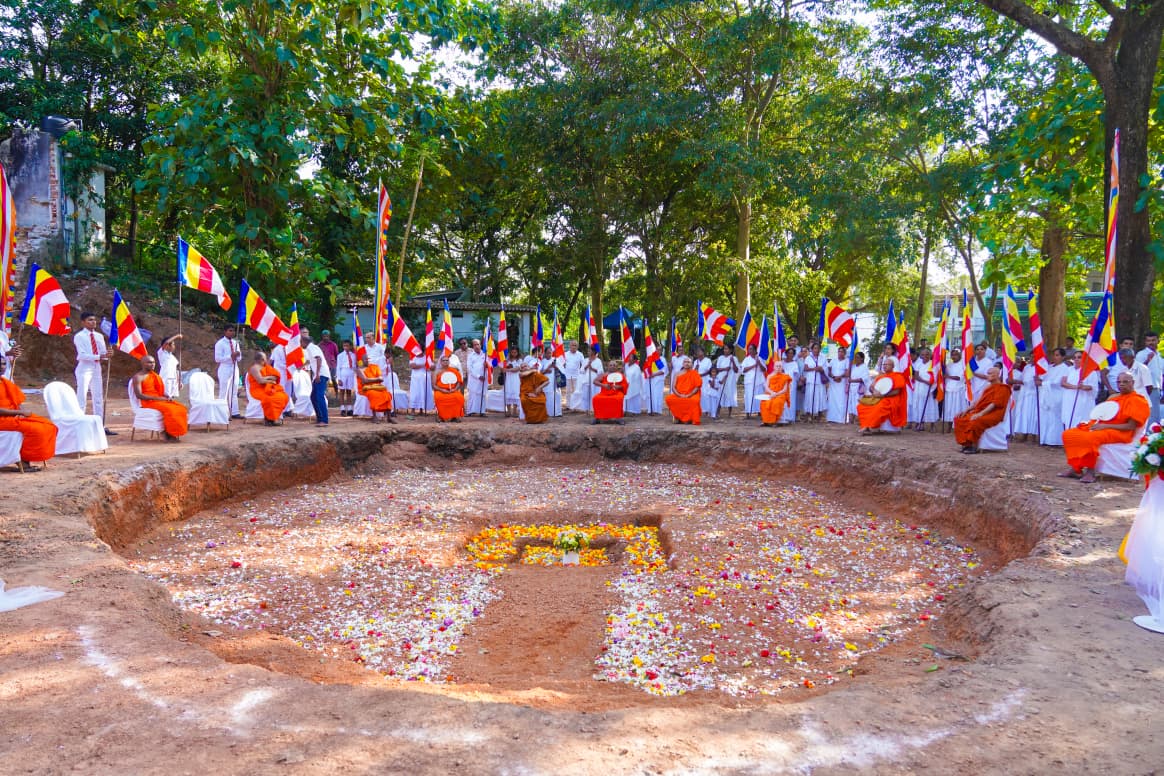
(Prime Minister’s Media Division)

The Public Utilities Commission of Sri Lanka (PUCSL) and the Treasury are facing heightened scrutiny as the Ceylon Electricity Board (CEB) presses for an 11.5 percent electricity tariff increase, a move closely tied to IMF-driven state-owned enterprise (SOE) reforms aimed at curbing losses and easing fiscal pressure on the State.
The proposed hike comes as the Treasury intensifies efforts to reduce the budgetary burden of loss-making SOEs under Sri Lanka’s IMF programme, which places strong emphasis on cost-reflective pricing, improved governance and the elimination of quasi-fiscal deficits.
Power sector sources said the PUCSL has completed its technical evaluation of the CEB proposal and is expected to announce its determination shortly.
The decision is being closely watched not only as a test of regulatory independence, but also as an indicator of how Treasury-backed fiscal discipline is being enforced through independent regulators.Under the IMF agreement, Sri Lanka has committed to restructuring key SOEs, such as, the CEB to prevent recurring losses from spilling over into public finances.
Treasury officials have repeatedly warned that continued operational losses at the utility could ultimately require state intervention, undermining fiscal consolidation targets agreed with the IMF.
The CEB has justified the proposed 11.5 percent hike by citing high generation costs, foreign currency loan repayments and accumulated legacy losses, arguing that further tariff adjustments are necessary to stabilise finances and avoid a return to Treasury support.
However, critics argue that IMF-aligned reforms should not translate into routine tariff hikes without meaningful improvements in efficiency, cost controls and governance within the utility.
Trade unions and consumer groups have urged the PUCSL to resist pressure from both the CEB and fiscal authorities to simply pass costs on to consumers.
They also note that improved hydropower availability should reduce dependence on expensive thermal generation, easing cost pressures and giving the regulator room to moderate any tariff increase.
Energy analysts say the PUCSL’s ruling will reflect how effectively the Treasury’s fiscal objectives are being balanced against the regulator’s statutory duty to protect consumers, warning that over-reliance on tariff increases could erode public support for IMF-backed reforms.
Business chambers have cautioned that another electricity price hike could weaken industrial competitiveness and slow economic recovery, particularly in export-oriented and energy-intensive sectors already grappling with elevated costs.
Electricity tariffs remain one of the most politically sensitive aspects of IMF-linked restructuring, with previous hikes triggering widespread public discontent and raising concerns over social impact.
The PUCSL is expected to outline the basis of its decision, including whether the proposed 11.5 percent increase will be approved in full, scaled down, or restructured through slab-based mechanisms to cushion low-income households.
An energy expert stressed that Sri Lanka navigates IMF-mandated fiscal and SOE reforms, the forthcoming ruling is widely seen as a defining moment—testing not only the independence of the regulator, but also the Treasury’s ability to pursue reform without deepening the burden on consumers.
By Ifham Nizam ✍️

Massive waste, corruption, irregularities and mismanagement at laboratories of the country’s premier hospital, revealed by the National Audit Office (NAO), couldn’t be suppressed by sacking or accusing him of issuing death threats to Health Secretary Dr. Anil Jasinghe, recently sacked Director of the National Hospital of Sri Lanka (NHSL) Dr. Rukshan Bellana told The Island.
Dr. Bellana said so responding to Dr. Jasinghe’s request for police protection claiming that he (Bellana) was directly responsible for threatening him.
The NPP government owed an explanation without further delay as the queries raised by NAO pertained to Rs 900 mn fraud/loss caused as a result of procurement of chemical reagents for the 2022 to 2024 period remained unanswered, Dr. Bellana said, pointing out that NAO raised the issue in June last year.
Having accused all other political parties of corruption at all levels, the NPP couldn’t under any circumstances remain mum on NAO’s audit query, DR. Bellana said, claiming that he heard of attempts by certain interested parties to settle the matter outside legal procedures.
The former GMOA official said that the NPP’s reputation was at stake. Perhaps President Anura Kumara Dissanayake should look into this matter and ensure proper investigation. Dr. Bellana alleged that those who had been implicated in the NAO inquiry were making an attempt to depict procurement of shelf time expired chemical reagents as a minor matter.
By Shamindra Ferdinando ✍️

PM lays foundation stone for seven-storey Sadaham Mandiraya

Showers will occur at times in the Eastern and Uva provinces and in Nuwara-Eliya, Matale, Polonnaruwa, and Mullaittivu districts

Curran, bowlers lead Desert Vipers to maiden ILT20 title

PUCSL and Treasury under IMF spotlight as CEB seeks 11.5% power tariff hike

Bellana says Rs 900 mn fraud at NHSL cannot be suppressed by moving CID against him

First harvest of rice offered to Dalada Maligawa

‘Dates have the highest sugar content to fight Coronavirus’

Sunday Island 27 December – Headlines

#SundayIsland 17th December – Headlines

Sunday Island – 28th March

Sunday Island Headlines – 21 March

Sunday Island – 21st February – Headlines
-

 News2 days ago
Health Minister sends letter of demand for one billion rupees in damages
-

 Features6 days ago
It’s all over for Maxi Rozairo
-
 News5 days ago
Leading the Nation’s Connectivity Recovery Amid Unprecedented Challenges
-

 Opinion4 days ago
Remembering Douglas Devananda on New Year’s Day 2026
-

 News10 hours ago
Private airline crew member nabbed with contraband gold
-
 News6 days ago
Dr. Bellana: “I was removed as NHSL Deputy Director for exposing Rs. 900 mn fraud”
-
 News5 days ago
Dons on warpath over alleged undue interference in university governance
-

 Features6 days ago
Rebuilding Sri Lanka Through Inclusive Governance