
News
VFS Global backs flood relief efforts


VFS Global has reaffirmed its solidarity with the people of Sri Lanka as the country faces severe flooding and landslides across multiple districts. Reflecting its longstanding partnership with Sri Lanka, the organisation has contributed to the Government’s official Flood Relief Fund, established by the Ministry of Foreign Affairs, to support urgent relief and recovery efforts, the company said in a statement issued recently.
It said: This contribution will assist the provision of essential resources, including temporary shelter, medical supplies, and logistical support, helping affected families rebuild in the aftermath of the disaster.
VFS Global has been operating in Sri Lanka since 2004 and employs local colleagues across Colombo and Jaffna.
As part of the ongoing relief efforts, employees have come together to provide essential supplies for affected families, further strengthening VFS Global’s community-centred support during times of urgent need.
Yummi Talwar, Chief Operating Officer – South Asia, said: “Our thoughts are with the families who are experiencing immense hardship. As a long-term partner to the country, we stand with the people of Sri Lanka during this challenging time. Our support reflects our commitment to responding with care, compassion, and solidarity whenever communities need us the most.”

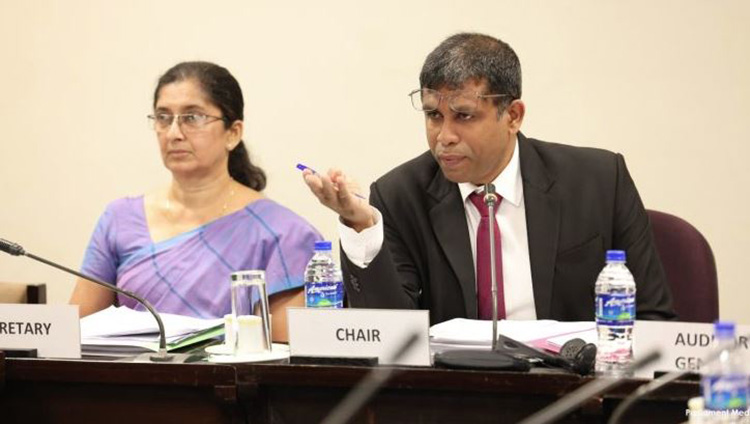
The Committee on Public Finance (COPF), which met on 03 December, 2025, considered several important matters, including the regulations issued under the National Medicines Regulatory Authority Act, No. 05 of 2015, published in Gazette Extraordinary No. 2452/39 of 04 September 2025, the Annual Work Programme for 2026 of the National Audit Office, and the Final Report prepared under Standing Order 121(5)(ii) on the Appropriation Bill for the financial year 2026.
The meeting was held under the chairmanship of MP Dr. Harsha de Silva.
During the discussion on the NMRA regulations, the Committee recommended enhancing system transparency and visibility in the medicine registration process. Accordingly, the Regulations under the National Medicines Regulatory Authority Act, No. 05 of 2015 published in the Gazette Extraordinary No. 2452/39 was approved by the Committee following consideration.
The Committee also considered the 2026 Annual Work Programme of the National Audit Office. According to the Programme, 3,508 audits will be carried out in 2026. These include 3,484 Financial Audits, 11 Performance Audits, 1 Environmental Audit, 12 Special Audits.
As presented, audits of Samurdhi Community-Based Banks and Samurdhi Community-Based Bank Societies have been newly assigned to the Auditor General from 2026 onwards.
The Committee raised concerns regarding the staff capacity required to carry out the Samurdhi audits. The acting Auditor General stated that an additional 10%–15% staff would be required beyond the current cadre. He informed the Committee that pilot audits are being conducted through regional offices and will continue until the end of February, after which the actual capacity requirements, whether through recruitment or outsourcing, will be determined.
It was also noted that the annual work Programme will be forwarded to Parliament, as provided for in the Audit Act, which requires that any review or recommendation be submitted to the Speaker and the relevant authorities. Followed by extensive discussion, the Committee agreed to make an observation to the Speaker that it supports the possible outsourcing of the additional Samurdhi-related audit work, subject to the Auditor General’s evaluation. Accordingly, the Committee directed the National Audit Office to do a pilot project and report back to the Committee by the end of February 2026.
In addition, COPF deliberated on the Final Report prepared under Standing Order 121(5)(ii) relating to the Appropriation Bill for the financial year 2026. The report reflected the Committee’s observations and recommendations following its review of ministerial budget proposals and financial allocations for the upcoming year.
In extension, the Committee on Public Finance, under the Chairmanship of Dr. Harsha de Silva, also conducted a special meeting on 05th December, 2025, to consider the Resolution for the provision of allocations for restoration of the disrupted lives of the people affected by the emergency disaster situation through a supplementary estimate.
This resolves that, an additional sum not exceeding Rupees Fifty Thousand Million (Rs. 50,000,000,000) shall be payable out of the Consolidated Fund of the Democratic Socialist Republic of Sri Lanka or any other fund or finances possessed by the Government or any loan obtained by the Government at the discretion of the Democratic Socialist Republic of Sri Lanka, for the services of the financial year commencing on January 01, 2025 and ending on December 31, 2025 and the manner that the said sum may be expended.
Moreover, Regulations under Section 71 of the Value Added Tax Act, No. 14 of 2002 published in the Gazette Extraordinary No. 2460/44 which was also approved following consideration.
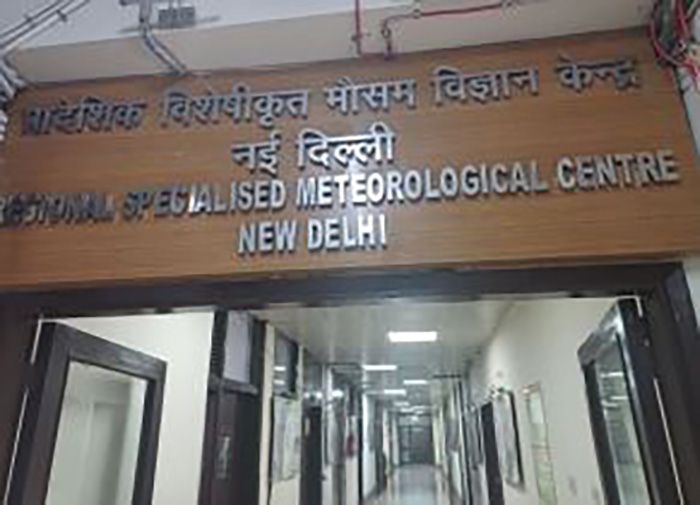
The India Meteorological Department (IMD), which runs the Regional Specialised Meteorological Centre (RMSC) responsible for monitoring the oceans in this region and issuing warnings of cyclones, alerted Sri Lanka regarding the impending developments, according to an online report posted by The Indian Express. The report, headlined ‘Why Cyclone Ditwah caused large-scale damage in Sri Lanka,’ and dated 03 December, dealt with Sri Lanka’s failure to take adequate precautions. The report has exposed lapses on the part of Sri Lanka.
The Indian Express has reported that the IMD first predicted the formation of a depression, as early as 13 November, and issued an alert over the possibility of cyclogenesis on 20 November. From 23 November onwards, IMD issued three-hourly and six-hourly weather updates of the system, indicating its development around 26 November. All the information was shared with Sri Lanka in a routine manner.
Ditwah struck Sri Lanka two weeks later.The IMD serves all the regional countries — Bangladesh, the Maldives, Myanmar, Oman, Pakistan, Sri Lanka and Thailand.
The Indian Express has reported Sri Lanka does not have an elaborate evacuation mechanism that can shift hundreds of thousands of people at short notice. Despite the early warning and advance knowledge of the cyclone’s movement, it could only do a limited evacuation.
Director General of Meteorology Department, Athula Karunanayaka, appearing on Derana ‘Big Focus,’ warned of severe weather warning on 12 November, morning, though he stopped short of declaring a cyclone. Karunanayake said that he wouldn’t call it a cyclone at that moment.
Areas flooded 1.1 hectares
Population exposed 2.3 mn
Landslides recorded 1.2 k = Buildings exposed 919 k
The UNDP has estimated that almost 720 thousand buildings were exposed to cyclone-related flooding across Sri Lanka. According to UNDP analysis, this includes 243 hospitals (as estimated by the Sri Lankan Ministry of Health) and hundreds of educational facilities. Overall, about 1 in every 12 buildings in Sri Lanka was exposed to flooding during Cyclone Ditwah, the UNDP stated.
At the level of divisional secretariats, Ja-Ela in the Gampaha district recorded the highest number of affected buildings with more than 44 thousand structures exposed. Kolonnawa and Kaduwela in the Colombo District as well as Katana and Wattala in the Gampaha District also recorded over 35 thousand exposed buildings each, according to the UNDP.
The flooding was so severe Cyclone Ditwah resulted in 1.1 million hectares of flooding across Sri Lanka – equal to about 20% of Sri Lanka’s land mass, the UN agency stated.
Based on the Department of Surveys’ 2024 national road dataset, the UNDP analysis estimated that more than 16 thousand kilometers of roads were exposed to flooding across the country, enough to circle Sri Lanka’s coastline 12 times over. The cyclone has also exposed over 480 road bridges nationwide.
At the level of divisional secretariats, Katana, Gampaha, and Ja Ela in the Gampaha District all recorded over 300 km of exposed roads each. Other secretariats like Kaduwela in the Colombo District and Wattala in the Gampaha District also registered high levels of road exposure.
Railways and railway bridges (railroad system), too, suffered significant damages according to the UNDP analysis. Accordingly, over 278 km of railways were exposed to cyclone-related flooding, including 35 railroad bridges nationwide. The UNDP emphasized that this figure reflected flooding only, but other hazards (such as localized debris, landslides, or damage to a single bridge) could also disrupt operations, meaning that even relatively small obstructions could render long stretches of railway non-operational. Like road exposure, railway exposure limits mobility and the capacity of affected populations to access key services and infrastructure.
At the level of divisional secretariats, Colombo and Thimbirigasyaya in the Colombo District, Ja Ela in the Gampaha District, as well as Mannar Town and Nanaddan in the Mannar District all registered over 10 km of exposed railways each.
The UNDP has warned the removal of debris posed quite a challenge with preliminary estimates indicating that Cyclone Ditwah generated more than 240,000 tonnes of non-construction waste and over 60,000 m³ of construction-related debris. These figures were expected to increase and evolve as field verification advances and more areas become accessible, the UNDP stated.
The UNDP dealt with the crisis experienced by the agriculture sector.
The UNDP stated: “It is estimated that Cyclone Ditwah has exposed over 530 thousand hectares of paddy lands to flooding across Sri Lanka. The most impacted divisional secretariat is Dimbulagala (Polonnaruwa District) with almost 19 thousand hectares of exposed paddy lands. Other secretariats like Welikanda and Medirigiriya, also in the Polonnaruwa District, as well as Horowpathana (Anuradhapura District) and Dehiattakandiya (Ampara District) have also been heavily affected by cyclone-related flooding. There are also areas where 20 to 30% of households do not have sufficient stocks of dry food (such as rice) to last at least a week. Therefore, it is clear that the cyclone’s agricultural impacts are also located in areas with a high degree of food-related vulnerability.”
A key finding of latest UNDP analysis is that over half of the people in flooding areas were already living in households facing multiple vulnerabilities before Cyclone Ditwah, including unstable income, high debt, and a limited capacity to cope with disasters. These communities face heightened challenges in recovery, underscoring the need for targeted interventions.
According to the UNDP major recovery needs were concentrated in areas where cyclone impacts intersect with preexisting multidimensional vulnerability. “This pattern is evident across the central highlands and the northern, western, eastern, and central regions. Among the divisional secretariats with the highest recovery needs are Mundel and Arachchikattuwa in the Puttalam District, as well as Kandavalai in the Kilinochchi District.”

COPF examines NMRA regulations, NAO annual work programme, etc.

India-based Regional Specialised Meteorological Centre issued weather warning on 13 Nov.

Disaster relief and dirty politics

Why TV debates won’t stop the killing

Wealth Trust Securities to raise Rs. 500.8 million via IPO

Handunnetti and Colonial Shackles of English in Sri Lanka

‘Dates have the highest sugar content to fight Coronavirus’

Sunday Island 27 December – Headlines

#SundayIsland 17th December – Headlines

Sunday Island – 28th March

Sunday Island Headlines – 21 March

Sunday Island – 21st February – Headlines
-

 News2 days ago
Over 35,000 drug offenders nabbed in 36 days
-
 News6 days ago
Level III landslide early warning continue to be in force in the districts of Kandy, Kegalle, Kurunegala and Matale
-

 Business4 days ago
LOLC Finance Factoring powers business growth
-

 News4 days ago
CPC delegation meets JVP for talks on disaster response
-

 News4 days ago
A 6th Year Accolade: The Eternal Opulence of My Fair Lady
-

 News2 days ago
Rising water level in Malwathu Oya triggers alert in Thanthirimale
-
 Latest News4 days ago
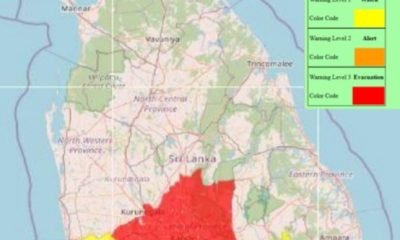
Landslide RED warnings continue to be in force for the Districts of Kandy, Kegalle, Kurunegala, Matale and Nuwara Eliya
-

 Editorial6 days ago
Disaster, relief, and challenges