
Life style
Vanishing Voices in the Mist: How Tea Country’s Birds Are Losing Their Sky


High above sea level, where Sri Lanka’s tea country meets the clouds, the Central Highlands once echoed with the calls of endemic birds. These mist-clad slopes were more than a landscape; they were a living sanctuary, revered by ancient communities who believed the forests were sacred protectors of water and life.
Today, the picture is starkly different. The calls of the Sri Lanka Whistling Thrush grow quieter, and sightings of the Kashmir Flycatcher, a jewel-toned migrant, are now rare. “People see green hillsides covered in tea and think they are pristine,” says Rajika Gamage, Conservation Biologist at the Tea Research Institute (TRI) in Talawakelle.
He told The Sunday Island:”But ecologically, these are disturbed environments, and bird diversity is collapsing.”
A Landscape Transformed
The Central Highlands were once blanketed in dense montane forests, alive with species found nowhere else in the world. Colonial expansion in the 19th century changed this forever. Forested slopes were cleared for coffee plantations, and when coffee blight struck, tea took its place. Over time, this mosaic of plantations replaced much of the original forest.
Yet birds, remarkably, adapted. Shade trees, open glades, and remnants of native forests allowed species like the Sri Lanka White-eye, Pied Bushchat, and Yellow-eared Bulbul to survive. Surveys conducted near Shanthakum and Mattakelle tea estates recorded over 80 bird species, a testament to the resilience of nature.

Sri Lanka Dull Blue Flycatcher
-

- Crows at Horton Plains National Park
-

- Pied Bushchat

Kashmir Flycatcher
That fragile coexistence is now unraveling. The Silent Invasion
Introduced trees such as Eucalyptus grandis (Rose Gum), Toona sinensis (Toona), and the Ice-cream Bean (Inga edulis) have become widespread across tea landscapes. They were chosen for shade and fast growth, but their ecological consequences are stark. “They offer no nectar, fruit, or seeds for native birds, and they alter soil chemistry, reducing biodiversity,” Gamage explains.
Ground cover invasions are even more destructive. Crofton Weed (Eupatorium inulifolium), Gini Grass (Panicum maximum), Koster’s Curse (Miconia crenata), and Himalayan Knotweed (Persicaria wallichii) have smothered hillsides. These alien plants may appear lush, but they form dense mats that outcompete native flora.

Horton Plains awareness programme
“These invasive plants create a silent desert for birds,” Gamage says. “They look green, but they are ecological dead zones.
The Disappearance of the Kashmir Flycatcher
Few stories capture this transformation more vividly than that of the Kashmir Flycatcher. This delicate migrant, which winters in Sri Lanka, once thrived in the Central Highlands’ open glades and tea slopes, perching on low branches and darting after insects. Today, sightings are rare.
“The Flycatcher relied on open habitats rich with native vegetation and insects,” Gamage explains. “Dense invasive undergrowth has destroyed its feeding grounds.”

Yellow-eared Bulbul
The Sri Lanka White-eye, a highland icon, is also in decline. Its place has been taken by the Oriental White-eye, a hardy and aggressive cousin that thrives in disturbed environments. “It’s like losing a family heirloom and replacing it with a factory-made replica,” Gamage laments.
Invaders Rule the Skies
As native birds decline, aggressive generalists flourish. The Large-billed Crow, once confined to lower elevations, is now a permanent highland resident. It raids nests, preys on reptiles, and even hunts amphibians.
The common Myna and Yellow-billed Babbler have also surged in numbers, displacing smaller species. “Mynas dominate tree-hole nesting sites, leaving no space for birds like barbets or flycatchers,” Gamage says.
Even frugivorous species such as the Rose-ringed Parakeet and Red-vented Bulbul, once allies in seed dispersal, now serve invasive plants. “They spread seeds of alien weeds like Koster’s Curse,” he adds, “accelerating ecosystem collapse.”
Perhaps the most surprising newcomer is the Indian Peafowl. Once rarely seen in these misty landscapes, it is now a common sight in tea gardens and even Horton Plains National Park. “We’ve observed up to five individuals there,” Gamage reveals. “Peafowl are ground predators, so their rise is a serious threat to amphibians and nesting birds.”
Climate Stressors Intensify the Crisis
The Central Highlands are warming. Cloud belts that once cloaked the forests year-round now shift unpredictably. Rainfall has become erratic. These changes affect every layer of the ecosystem.
But Gamage argues that while climate change plays a role, habitat mismanagement is the greater threat. “We’ve effectively replaced native ecosystems with alien landscapes. Birds already under stress are now being pushed to extinction. Climate change just speeds up what poor land management started.”
Tea’s Unseen Dependence on Biodiversity
Ironically, the very crop at the heart of these landscapes—Ceylon tea—depends on healthy ecosystems. Montane forests regulate rainfall, protect watersheds, and stabilize soil. Without them, tea cultivation itself faces long-term risks.
“People see conservation and agriculture as opposing forces, but biodiversity safeguards tea,” Gamage says. “If you lose the forest, you lose the water. If you lose the water, you lose the tea.”
Tea estates, he believes, could become powerful conservation allies. “Even small patches of native trees can act as biodiversity refuges. Managing invasive plants, restoring native shade species, and training estate workers to value wildlife could make a huge difference.”
A Call to Action
Reversing this decline will require a bold, science-driven effort. Experts recommend:
1. Replanting native tree species such as Ceylon Oak, Rhododendron, and Stemonoporus to restore food sources for birds.
2. Targeted removal of invasive ground covers to bring back native plant diversity.
3. Establishing biodiversity corridors linking isolated forest patches with protected areas like Horton Plains.
4. Training estate managers and workers on eco-friendly plantation management.
5. Countrywide awareness campaigns to show the economic link between biodiversity and agriculture.
“This is not just about saving birds,” Gamage stresses. “It’s about safeguarding water security, livelihoods, and our heritage.”
Walking through the highlands today is like stepping into a muted version of history. The sharp whistles of the Whistling Thrush are faint; the Pied Bushchat’s cheerful song has faded. In their place come the harsh calls of crows and mynas. Even the vibrant Indian Peafowl—a symbol of royalty—feels out of place strutting across tea gardens where delicate flycatchers once ruled.
Still, Gamage remains cautiously hopeful. “We have a window,” he says. “If we act now—restore native vegetation, manage plantations sustainably, and curb invasives—we can bring back these birds. The Central Highlands are a national treasure, and we can’t afford to let them slip away.”
This isn’t just a story about birds. It’s a story about Sri Lanka’s cultural and ecological heritage, a landscape where plantations and wildlife have shared space for over a century. Whether future generations will wake to the whistle of a thrush or the caw of a crow depends on choices made today.
By Ifham Nizam ✍️
(Pictures courtesy Rajika Gamage)


Last chapter in Colombo
Elegant, articulate and amiable, U.S. Ambassador to Sri Lanka Julie Chung reaches the end of her term, with the quiet confidence of a woman who has shaped diplomacy across continents.
In this interview, she speaks with emotional clarity and stately restraint, offering insights shaped by memory, responsibility and a deep respect for the human stories behind public life.
A diplomat of distinction and a fashion icon in her own right, she embodies a modern elegance where intellect meets instinct and presence becomes power. She speaks of her time in Sri Lanka not as a posting, but as a chapter of memory, reflecting with grace on the experiences she will carry forward—memories woven with diplomacy, style and a deep affection for a place that became more than a destination.
As she says goodbye, Julie Chung carries with her not just memories but the very essence of the island: the warmth of its people, the quiet beauty of its moments, and a grace that will remain long after she has left. With an international career spanning Asia, Latin America, the Middle East and Washington D.C., she embodies modern diplomacy—polished, perceptive and quietly powerful. She leaves Colombo shaped by its people, moments and connections.
Q: Ambassador, as your tenure in Sri Lanka comes to a close, what moments during your posting stand out the most for you personally and professionally?
A: Celebrating the 75th anniversary of our bilateral relationship was a watershed moment and a time to reflect upon all that we’ve accomplished together- from maritime security partnerships to trade to youth engagement. Opening a beautiful, new U.S. Embassy building was also a highlight, a place where we could really come together and build a community, host our American Centre, and a physical symbol of our efforts to deepen our presence in Sri Lanka. A personal highlight was scuba diving at various wreck sites, including the Godawaya shipwreck from which artifacts were preserved through the U.S. Ambassadors Fund for Cultural Preservation, and marveling at the underwater heritage of Sri Lanka.
Q: How would you describe your overall experience living and working in Sri Lanka?
A: I’ve seen many challenges and difficulties that Sri Lanka has gone through during my tenure, but so much joy, resilience, and pride too. Sri Lankans are very proud of their tourism sites, foods, and cultural heritage- and rightfully so! I saw my role as a bridge builder between our two countries professionally, and I absorbed everything I could personally as well to delve into Sri Lankan culture. And the food–anyone who knows me knows that I have traversed the island trying and loving the amazing food here. From Jaffna crab to lamprais, I am going to go through serious spice withdrawal when I leave. My family enjoyed exploring so much of Sri Lanka with me, and even Martha, my dog loved her walks around Colombo!
-

- At the top of Pidurutalagala enjoying the amazing view of Sigiriya

Batik U.S. flag created by U.S. Embassy staff
Q What challenges did you face in strengthening US-Lanka relations and how were they overcome?
A: One of the challenges was to overcome misperceptions and misinformation about the United States and personal attacks on me. Holding this position invites a lot of attention and scrutiny, and I got my fair share of that while navigating through the public spotlight. I tried to share my personal stories, relay official positions clearly, and be authentic to the Sri Lankan public, not just as an ambassador but as a human being, a wife, and mother. I sought to engage directly with many communities across the island, not just government-to-government but truly people-to-people, speaking directly with farmers, entrepreneurs, students, speaking to them on my role and the United States role in Sri Lanka. It was not always easy, but I appreciated the candidness of everyone I met. As a Christian, it was also important for me to find places of worship to have fellowship which helped me stay faithful and resilient during the challenging times.
Q: Can you share an example of a cultural exchange, a people-to-people initiative that particularly resonated with you?
A: The return of the Peace Corps to Sri Lanka after a long hiatus was one of my proudest moments. I met young Americans willing to put in the work to learn Sinhala and Tamil, assimilate with local families, teach English at local schools—and in the process, learn from their students, too. It goes to the heart of what the Peace Corps was created to do–bringing Americans and communities together through service, learning, and shared understanding.
Q: Sri Lanka is known for its vibrant culture. Did your experience here influence your personal life or style?
A: I loved learning about the arts in Sri Lanka. I’ve attended the annual Kala Pola art fair where I could interact with both seasoned and up and coming artists and made a few purchases myself. I learned about Sri Lanka’s unique batik making culture and integrated various modern takes to batik design in clothes I wear. Our embassy community visited Sonali Dharmawardena’s batik workshop to learn first-hand about batik making and created a beautiful American flag artwork that hangs inside our embassy now.
-

- Selfie with Sri Lankan student basketball players during the U.S. Embassy sports envoy program
-
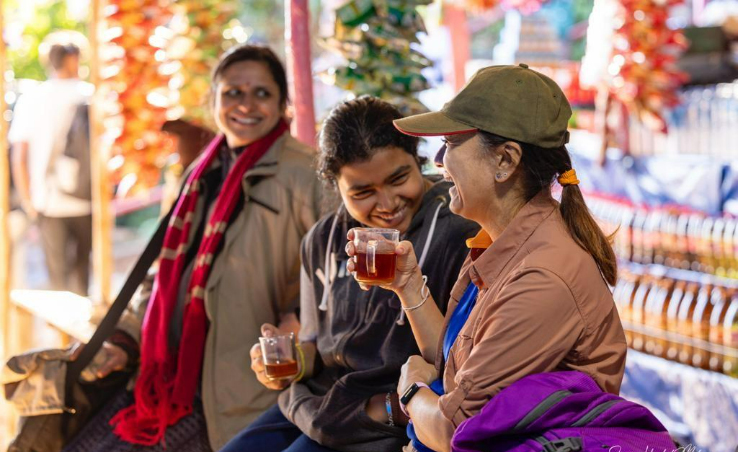
- Enjoying a cup of tea with fellow climbers at Sri Pada
-
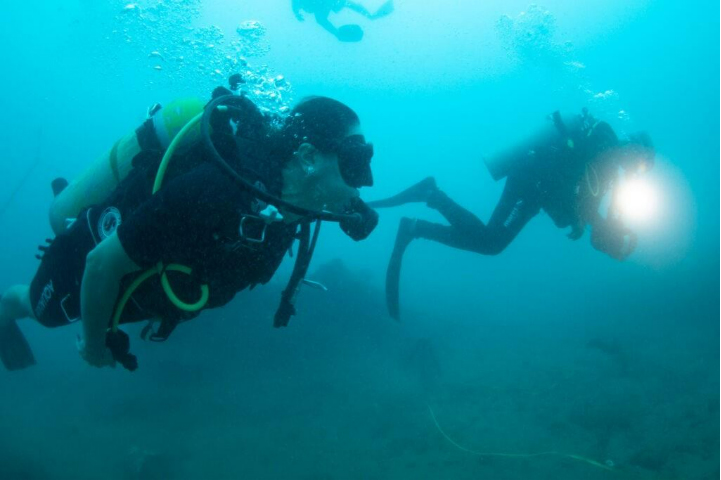
- Diving at the Godawaya shipwreck which was conserved through U.S. support
Q: Who were your favourite designers or fashion experiences that stood out to you during your time here?
A I’ve loved admiring and showcasing so many talented local designers here, who also became my close friends. I consider them artists more than designers because it really is artistry and it comes from their hearts, reflecting who they are as individuals. Sonali Dharmawardhana, Charini Suriyage, Darshi Keerthisena, Kamil Hewavitharana, and Sammani Pathiranagama have been some of my favorites! I leave with a very full suitcase and I can’t wait to share my love of Sri Lankan design with Americans.
Q How did participating in Sri Lanka’s cultural and social events help in strengthening diplomatic relationships?
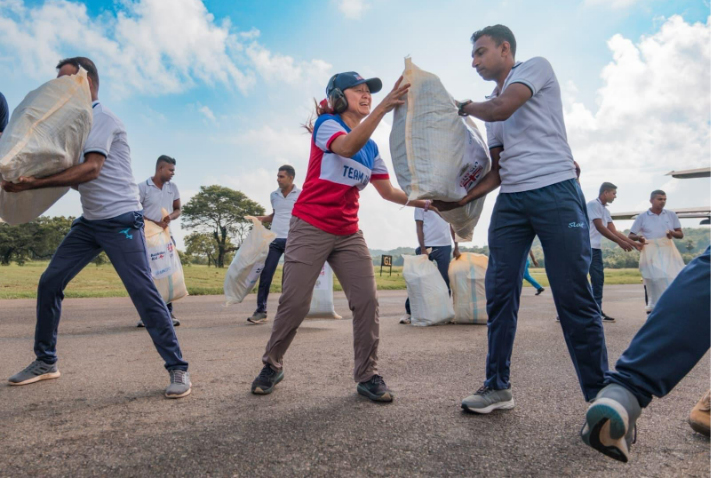
Two U.S. C-130s supported cyclone Ditwah response by transporting donated goods across the country
A Diplomacy is not just about having official meetings but diving into a country’s culture and personality; it provides us a deeper understanding and at the same time offers an opportunity to share the immense richness of American culture as well. When we invited our sports diplomacy ambassadors and arts envoys to come to Sri Lanka, it created avenues for more people-to-people connections. Every conversation I had, every trip I took, and every photo I snapped created that tapestry that led to my love for Sri Lanka. I took part in Sri Lanka’s social and cultural events while also creating opportunities for others to engage with American arts and culture.
Q: Were there moments in Colombo’s social scene that brought you joy or surprise?
A: I really enjoyed attending the Royal Thomian cricket match! It was my first ever cricket match and was so exciting to see the fans, the festive mood, and I joined along with the dancing, too. It was nice to see people from all walks of life and political factions come together in such a way for the love of the game.
Q: What memory of Sri Lanka will you carry with you forever?
A: One memory I will always carry with me is how Sri Lankans came together to support one another during the tragic period following Cyclone Ditwah. I was deeply moved by the compassion and solidarity shown at the community level. When we were able to offer $2 million in humanitarian aid and bring two C130 airplanes to deliver supplies, it really made me proud. Personally taking part in some of those flights and talking to the military forces and local communities was memorable. As a diplomat, I believe it’s important we get involved hands-on and not just watch from afar. Seeing Americans and Sri Lankans working side by side, physically unloading goods off of our planes was a powerful reminder that in difficult moments, our partnership is strongest, and that the friendship between our two countries is built on ordinary people and shared values.
Q: If you could relive one day of your tenure here, which day would it be and why?
A: It would be to climb back up to the peak of Sri Pada again with my husband and see the sun rising above the mountains and the shadows of the temple, and take in the natural glory of that moment in such a special cultural place. It was not just the natural beauty, but the friendliness of the pilgrims and fellow climbers who encouraged each other, even me, as I took on that climb. Moments along the journey—sharing a cup of tea or listening to someone’s story—kept me energized.
Q: What are the strongest impressions of Sri Lanka that you will take back with you?
A: Sri Lanka is such a diverse island- from its landscape and tourism sites to its religions, ethnicities, and cuisines. I say this often, it is a magical island that bursts with passion, energy, and a richness that makes every part of the country feel distinct yet deeply connected. I travelled throughout Sri Lanka, by boats, cars, planes, and trains – the sounds, smells, and beauty will stay with me forever.
Q: How would you describe the spirit of the Sri Lankan people to friends and colleagues abroad?
A: The spirit of Sri Lankans is definitely something I’ve come to learn about and admire so much – it goes beyond resilience during tough periods and is reflected in the humor and creativity of its people and traditions. That can be seen through the arts, literature, and even political cartoons. The Sri Lankan people are amazing and have given me memories that will last a lifetime. I am grateful for my time here and will carry it with me always.
By Zanita Careem ✍️
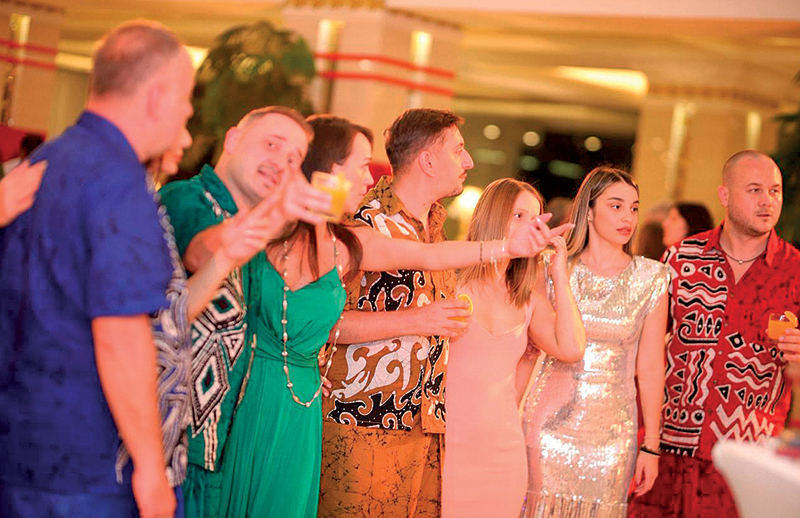
The Grand Kandyan transformed into a sanctuary of elegance this past New Year’s Eve, hosting a spectacular gala dinner dance that seamlessly blended tradition with high-energy celebration.
From the moment guests arrived, they were swept into a world of luxury. The hotel and ballroom were meticulously decorated, setting a festive tone that promised an unforgettable night. The evening commenced with a sophisticated cocktail hour in the lobby, where guests mingled before being ushered into the majestic Royal Peacock Ballroom for the main event.
A Symphony of Black and Gold
The ballroom was a sight to behold, draped in a striking theme of black and gold. The color palette exuded sophistication, providing a glittering backdrop for the night’s festivities.
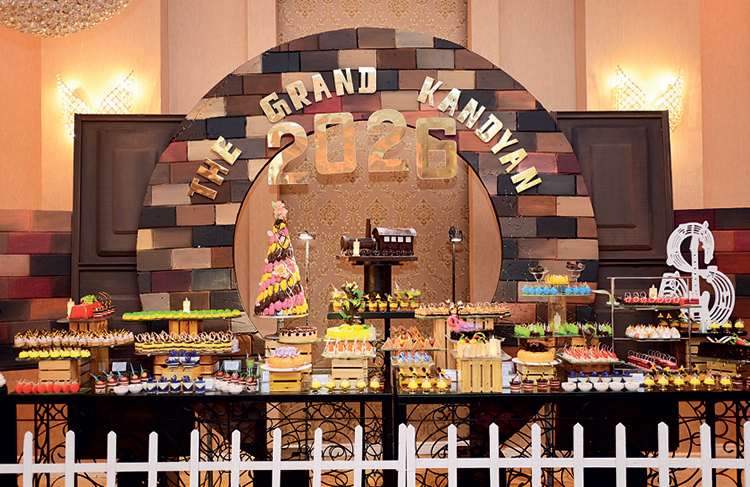
Lavish international buffet
Taking charge of the evening’s proceedings was the charismatic Javed Bongso, whose expert compering kept the energy high. The musical heartbeat of the night was provided by the popular band Lunu Dehi, whose infectious performance immediately filled the dance floor. As the night progressed, DJ Harsha took over the decks, keeping the crowd moving with a seamless mix of floor-fillers.
Prizes and Pageantry
The gala was punctuated by moments of excitement and engagement. Beyond the music, guests participated in:
Multiple Raffle Draws: Featuring a variety of high-value prizes.
Interactive Games: Engaging the audience and adding a touch of playful competition.
Grand Giveaways: Ensuring many guests walked away with more than just memories.
A highlight of the evening was the prestigious crowning of the “Grand Kandyan Queen,” a moment of true pageantry that added a layer of classic glamour to the night’s program.
A Culinary Masterpiece
No celebration at The Grand Kandyan would be complete without a culinary showcase. Guests were treated to a lavish international buffet, specifically decorated for the occasion.
A Global Family Celebration
The Grand Kandyan hotel General Manager, . Thusith Samaraweera, remarked on how wonderful it was to see a vibrant mixture of local and foreign guests coming together. He noted that seeing everyone ushering in the New Year alongside the “Grand Kandyan family” was the perfect embodiment of the hotel’s spirit of hospitality.
The night concluded as a resounding success, marking the start of 2026 with style, spirit, and community.

Jetwing Saman Villas, part of Jetwing Luxury Reserves, has been awarded “Best International Hotel for Weddings” at the 14th edition of Travel+Leisure India & South Asia’s Best Awards, held on December 16, 2025, in New Delhi. This prestigious accolade celebrates the resort’s exceptional ability to create unforgettable wedding experiences, placing Sri Lanka firmly on the global map as a leading destination for romance.
The annual India’s Best Awards, driven by reader votes, honours excellence across the travel spectrum, from hotels and destinations to wellness retreats and culinary experiences. This year’s theme, “Passports to Possibility,” highlighted the transformative power of travel and brought together global hospitality leaders for an evening of recognition and inspiration.
Perched on a dramatic cliff overlooking the Indian Ocean, the 27-suite resort is Sri Lanka’s pioneering luxury boutique hotel and a haven for intimate celebrations. The property offers one of the most unique settings on the island: a garden on a rock surrounded by nothing but incredible ocean views. From pre-wedding rituals to gourmet receptions, the property specializes in intimate weddings that feel truly exclusive and deeply personal. Beyond the ceremony, Jetwing Saman Villas doubles as an idyllic honeymoon retreat, offering luxurious private-pool suites, indulgent spa rituals, and romantic dining experiences under starlit skies, making it the perfect beginning to a lifelong journey together.
“We are truly honoured to bring this recognition to Sri Lanka,” said Hashan Cooray, Director of Marketing and Development at Jetwing Hotels. “As the country’s first and leading boutique hotel, this award reinforces Sri Lanka’s true potential as a premier destination for romance and weddings.”
Farrel Blom, General Manager of Jetwing Saman Villas, added, “Weddings are deeply personal, and for us, it’s never just about one evening, but it’s about creating an experience that feels like home. Many couples stay with us for several days, allowing us to be part of their story. Seeing them return for holidays and hearing their heartfelt feedback is the greatest reward.”
With a legacy spanning over half a century in the tourism industry, Jetwing Hotels has established itself as a pioneer in curating unique experiences and offering the best of legendary Sri Lankan hospitality, with the values of passion, humility, tenacity, and the spirit of family being at its core. As a family-owned brand, Jetwing Hotels continues to be a leading advocate for sustainability and responsible tourism, with ongoing initiatives focused on community upliftment, environmental conservation, and resource efficiency. With over 35 properties across the island, the brand’s diverse portfolio includes a range of Luxury Reserves, Premium Hotels, Select Hotels, and Essentials, each offering a unique perspective on Sri Lanka’s rich cultural heritage and natural beauty.
-

 News3 days ago
Sajith: Ashoka Chakra replaces Dharmachakra in Buddhism textbook
-

 Business3 days ago
Dialog and UnionPay International Join Forces to Elevate Sri Lanka’s Digital Payment Landscape
-

 Features3 days ago
The Paradox of Trump Power: Contested Authoritarian at Home, Uncontested Bully Abroad
-

 Features3 days ago
Subject:Whatever happened to (my) three million dollars?
-

 News3 days ago
Level I landslide early warnings issued to the Districts of Badulla, Kandy, Matale and Nuwara-Eliya extended
-

 News3 days ago
National Communication Programme for Child Health Promotion (SBCC) has been launched. – PM
-

 News3 days ago
65 withdrawn cases re-filed by Govt, PM tells Parliament
-

 Opinion5 days ago
The minstrel monk and Rafiki, the old mandrill in The Lion King – II