


Connect with us

News

UNP’s ‘Yowunpura’: National Youth Services Council bid to hinder audit revealed

Published

on

‘Disputes among govt. appointees major obstacle’

By Shamindra Ferdinando

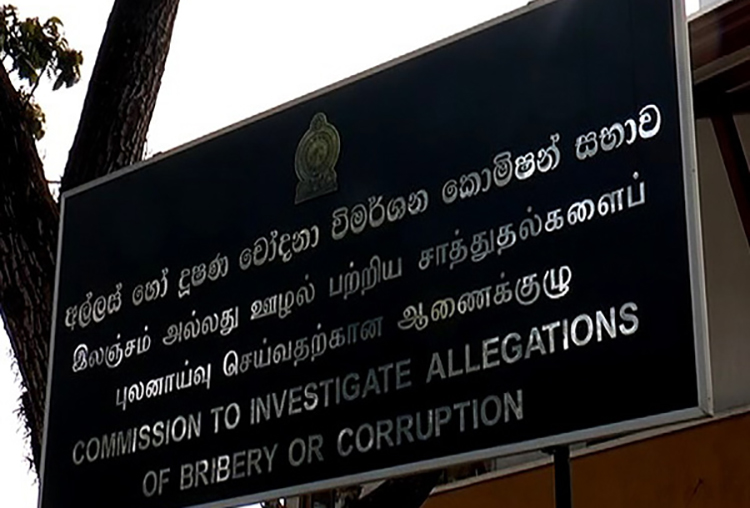
The parliamentary watchdog committee on public enterprises-COPE has called for an explanation as regards unauthorised expenditure on ‘Yowunpura’ in 2018 and 2019.

A recent COPE investigation has revealed huge losses and a bid to suppress the government auditing process.

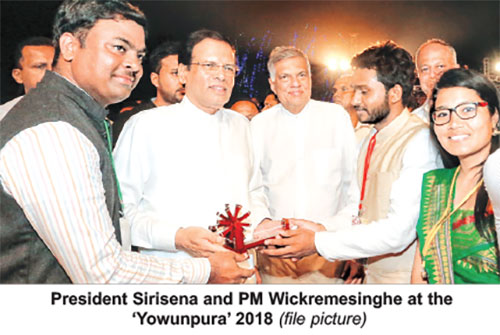
According to COPE, the yahapalana government had spent Rs. 80,560,914 over the estimated cost of Rs. 350 mn. The then President Maithripala Sirisena and Preme Minister Ranil Wickremesinghe attended the 2018 event; the President skipped the event the following year.

The then minister Sagala Ratnayaka played a key role in organising the UNP’s flagship project ‘Yowunpura’ to attract the youth. COPE probe has revealed that public funds had been spent, sans proper procedures

COPE has revealed the violation of the procurement process in respect of ‘Yowunpura’ 2019 an additional payment to the tune of Rs. 2,227,400 had to be made. COPE Chairman Prof. Charitha Herath presided over the meeting. In addition to the Chairman, Minister Mahinda Amaraweera (SLPP), State Minister Susil Premajayantha (SLPP) and Madhura Withanage, MP and Premnath C. Dolawatte, MP, attended it. Those COPE members who had been with the UNP at that time and now represented the Samagi Jana Balavegaya (SJB) skipped the relevant meeting. The original COPE comprised Mahinda Amaraweera, Mahindananda Aluthgamage, Rohitha Abegunawardhana, Susil Premajayantha, Jayantha Samaraweera, Dilum Amunugama, Indika Anuruddha Herath, (Dr.) Sarath Weerasekara, D. V Chanaka, (Dr.) Nalaka Godahewa, Ajith Nivard Cabral (resigned to take up post of Central Bank Governor), Rauff Hakeem, Anura Dissanayaka, Patali Champika Ranawaka, Jagath Pushpakumara, Eran Wickramaratne, Ranjan Ramanayake (lost seat after being convicted by the Supreme Court for contempt of court), Nalin Bandara Jayamaha, S.M. Marikkar, Premnath C. Dolawatte, Shanakiyan Rajaputhrian Rasamanickam, and (Prof.) Charitha Herath.

The COPE also observed that Rs. 1,932,500 had been spent on 1,773 T-shirts for the distribution among youth after the conclusion of the ‘yowunpura,’ meet in 2016. The parliamentary watchdog committee pointed out that public funds had been spent without approval of a Technical Evaluation Committee (TEC).

It was also revealed at this Committee meeting that according to the report of the Survey Board, 268,000 leaflets had been discarded whereas the total cost of printing in 2017 was Rs. 1,822,400.

Although Sri Lanka Youth Services Pvt. Ltd. was established in 1981 with over 98% shareholding in the National Youth Services Council, it was disclosed at the Committee meeting that the joint financial had never been prepared.

Instructions pertaining to the non-disclosure of matters related to the National Youth Services Council and the Sri Lanka Youth Services Pvt. Ltd to outside parties by way of an Internal Circular issued by the Chairman of those institutions Dhammith Wickremesinghe to the Heads of Divisions on 08th October 2021 was also revealed at the COPE Committee. The Committee pointed out that it hindered the work of the National Audit Office and the Ministry of Youth & Sports.

Prof. Herath urged Sports Ministry Secretary Anuradha Wijekoon and Youth Services Chief Dhammith Wickremesinghe to stop fighting and work towards achieving government goals. Lawmaker Prof. Herath emphasized that cooperation among key state institutions was of pivotal importance.

The Secretary to the Ministry of Youth & Sports and the Chairman of the National Youth Services Council and the Sri Lanka Youth Services Pvt. Ltd. should co-operate or face the consequences, Prof. Hearth said. Their failure to do so would be a serious impediment to the government, Prof. Herath told the COPE meeting last Tuesday (16)

The COPE Chairman also instructed the Secretary to the Ministry of Youth & Sports, Anuradha Wijekoon, to take immediate action against officials who were found to be negligent and misbehaving.

The Committee also noted that the Sri Lanka Youth Services Pvt. Ltd. had not prepared a consolidated plan since 2017. The Committee also questioned the company for not preparing an action plan.

The Chairman of the Committee Prof. Charitha Herath stated that there was a delay in the submission of the Annual Reports of the National Youth Services Council to Parliament and also questioned the non-submission of the Annual Reports of the Sri Lanka Youth Services Pvt. Ltd. since 2015. The Committee also directed the Ministry of Youth & Sports to submit all such reports to Parliament expeditiously.

Although it was decided to construct the Nilwala Youth Park in Matara by a Cabinet decision, COPE pointed out that no feasibility study had been carried out in that regard. The Ministry of Skills Development and Vocational Training paid Rs. 142,810,543 as compensation and interest to the relevant land owners and Rs. 7,657,349 as advisory fees to the National Youth Services Council as at 31st December 2014.


News

National Communication Programme for Child Health Promotion (SBCC) has been launched. – PM

Published

on

By

Prime Minister Dr. Harini Amarasuriya stated that the Government has commenced necessary measures to maintain preschool education under a framework, align preschool education with a unified curriculum, conduct teacher training in a systematic manner, and ensure quality standards.

The Prime Minister made these remarks on Saturday (10) at the Temple Trees, participating in the launch of the National Communication Programme for Child Health Promotion, aimed at promoting social and behavioural change (SBCC) among early childhood children. The programme is jointly organized by the Health Promotion Bureau, the Ministry of Women and Child Affairs, the Ministry of Education, Higher Education and Vocational Education, UNICEF, and the Clean Sri Lanka Programme.

Addressing at the event, Prime Minister Dr. Harini Amarasuriya stated:

“Early Childhood Development (ECD) has a major impact on a country’s human development and future progress. It is a widely accepted fact that a child’s future depends largely on early childhood development. Many aspects essential for a child’s growth occur within the first five years of life. The experiences, care, and love a child receives during this period are decisive.

The social integration, relationships, and environmental influences experienced in early childhood form the foundation for shaping an individual as an adult. Early childhood development influences life to an extent that it becomes difficult to change when it grows into adulthood.

The responses of adults to children’s actions, the way they interact with them, and the care they provide are extremely important. Therefore, early childhood development should never be viewed as the sole responsibility of parents. It is a collective responsibility of all citizens.

No child can be raised into a good citizen by parents alone. In all our lives, beyond our parents, there have been many who influenced us, showed us love, and provided care. It is due to the collective support of all these individuals that we have reached where we are today. The government views child care as a social responsibility. Supporting a child, providing care, ensuring protection, education, and health facilities are social responsibilities. In this regard, the intervention of the Clean Sri Lanka Programme to communicate these values to the public is important.

The role of the preschool teachers plays a special and vital role for children. The love, care, attentive listening, and responses children receive during this stage are decisive for their development. Teachers carry out a crucial intervention in the lives of children. An education policy on early childhood development has been formulated, with UNICEF providing technical assistance. Steps are being taken to operate preschool education under a single framework, align it with a unified curriculum, systematically conduct teacher training, and ensure quality standards.

Recognising early childhood development as a specialised area within education, the Prime Minister affirmed that the relevant interventions will be made accordingly.

Addressing the event, Minister of Women and Child Affairs, Ms. Saroja Paulraj stated that the Ministry has identified the standardisation and development of early childhood development as a primary goal for the year 2026. She noted that children who leave the warmth of their mother’s embrace and father’s shoulder and come to preschool teachers expecting the same love and care from their teachers. Conveying that warmth through words and expressions is a responsibility entrusted to teachers. The love and safe environment children receive shape their ability to love the environment and respect others.

Minister of Health and Mass Media,  Nalinda Jayatissa, also addressed the gathering, stating that the goal of the government is to build a beautiful future generation capable of leading the country, free from the various hardships and challenges faced today.

He emphasised that creating a healthy population is a challenge, particularly in preventing non-communicable diseases. Children aged three to five today will become a generation aged 18 to 20 by 2040. Continuous and comprehensive programmes such as this are essential to protect that generation from non-communicable diseases. In some instances, interventions are required even during the preconception and prenatal stages.

He further highlighted that preschool and early childhood development centre teachers shoulder a tremendous responsibility in driving a major transformation in the country’s future.

The event was attended by the Governor of the Sabaragamuwa Province, Ms. Champa Janaki Rajarathne; the Governor of the Uva Province, Attorney-at-Law  Kapila Jayasekara; the Governor of the North Central Province,  Wasantha Jinadasa; the Governor of the North Western Province,  Thissa Kumarsiri Warnasuriya; the Deputy Minister of Women and Child Affairs, Dr. Namal Sudarshana; the Member of Parliament, Dr. Najith Indika; the Representative of the United Nations Children’s Fund (UNICEF) in Sri Lanka, Ms. Emma Brigham; the Secretary to the President, Dr. Nandika Sanath Kumanayake; the Senior Additional Secretary to the President (Finance and Economic Affairs), Mr. Russell Aponsu; the Additional Secretary to the President (Clean Sri Lanka), S. P. C. Sugishwara; Secretaries to Ministries; Provincial Chief Secretaries; the Commanders of the Tri-Forces; officials of subject-related ministries; provincial council officials; preschool teachers; preschool children; and parents.

(Prime Minister’s Media Division)

Continue Reading

News

Level I landslide early warnings issued to the Districts of Badulla, Kandy, Matale and Nuwara-Eliya extended

Published

on

By

The  Landslide Early Warning Centre of the National Building Research Organization (NBRO) has extended the landslide early warnings issued to the Districts of Badulla, Kandy,  Matale and Nuwara-Eliya till 1600hrs today (11).

Accordingly, the LEVEL I YELLOW early warnings issued to the Divisional Secetaries Divisions and surrounding areas of Lunugala, Meegahakiwula,Welimada, Kandaketiya, Hali_Ela, Badulla, Uva  Paranagama in the Badulla district,  Minipe and Ududumbara in the Kandy district, Wilgamuwa, Ukuwela, Ambanganga Korale, Rattota and Laggala_Pallegam in the Matale district, and Nildandahinna,  Walapane, Mathurata and Hanguranketha in the Nuwara-Eliya district will be in force until 1600hrs today (11)


Continue Reading

News

Experts: NPP education reforms unsuitable for SL

Published

on

Proposed education reforms have drawn sharp criticism from education professionals, teacher unions and student organisations, who warned on Thursday that the changes risk undermining child safety, widening inequality and imposing unaffordable costs on parents.

Addressing a press conference in Colombo, Dr Ayomi Irugalbandara of the Faculty of Education at the Open University of Sri Lanka said the proposed reforms appeared to be largely modelled on foreign education systems without adequate consideration of local realities.

She took particular issue with proposals to integrate social media use into the school curriculum, noting that several developed countries have moved in the opposite direction by preventing children under the age of 15 from accessing social media platforms.

“Most of these modules are not appropriate for this country,” Dr Irugalbandara said. “We warn parents that these reforms place children at risk.”

Concerns were also raised over digital content linked to the revised curriculum. Inter-University Students’ Federation Convener Madushan Chandrajith said the Grade Six Information and Communication Technology (ICT) module included QR codes that directed students to a controversial YouTube channel.

“Who will take responsibility for children accessing such content?” he asked, calling for clear accountability mechanisms for material linked through digital platforms used in schools.

Secretary of the Workers’ Struggle Centre, Duminda Nagamuwa, criticised the government’s approach to the reform process, comparing it to the fertiliser policy introduced under former President Gotabaya Rajapaksa. He alleged that the authorities were pushing ahead with education reforms despite opposition from academics, teachers and other stakeholders.

Nagamuwa also highlighted the economic burden on families, noting that Sri Lanka’s poverty rate had increased from 12.5 percent to 25 percent. He questioned how parents were expected to afford smartphones or tablet computers required for students to access QR code-linked educational content.

“The government is asking parents to bear costs they simply cannot afford,” he said.

Ceylon Teachers’ Union General Secretary Joseph Stalin said schools had already begun collecting money from parents in anticipation of the reforms, including funds to purchase smart boards.

Continue Reading

Trending