
Midweek Review
UNP-JVP political relationship and Wickremesinghe’s arrest


Ranil Wickremesinghe
UNP leader Ranil Wickremesinghe played a critical role in a US backed protest campaign directed at ousting President Gotabaya Rajapaksa. Wickremesinghe provided the required manpower and among those who can discuss the former President’s role are ex-parliamentarians Harin Fernando and Prof. Ashu Marasinghe. The UNP’s direct involvement facilitated the protest that created an environment helpful for the NPP’s agenda. But at a crucial point, Wickremesinghe, in his capacity as the stop gap President to complete the term of President Rajapaksa, after the latter was deposed by the foreign-backed violent protest campaign that also aimed at the NPP seizing control of Parliament, however, thwarted the plot half way after he was installed in power. Wickremesinghe’s intervention clearly obstructed the original Aragalaya strategy.
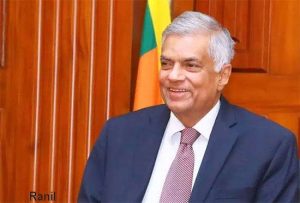
Former President and UNP leader Ranil Wickremesinghe’s recent arrest over alleged misuse of public funds caused irreparable damage to the once critically important political relationship between the UNP and the JVP, the main constituent of the ruling NPP.
President Anura Kumara Dissanayake is the leader of both the JVP, founded in 1965, and the NPP, formed in 2019. Both are registered political parties. The NPP parliamentary group consists of 159 members, whereas the UNP, founded in 1946, now for the first time, is not represented in Parliament.
The former President’s arrest on August 22 and being remanded till August 26 didn’t influence any spontaneous public reaction. The hapless UNP couldn’t even swiftly organise a well-attended protest against the government.
The Criminal Investigation Department (CID) arrested Wickremesinghe over spending public funds for his visit to the UK in September 2023 to attend a ceremony to confer the title of Professor on the then First Lady Prof. Wickremesinghe at the University of Wolverhampton, in Wolverhampton. Wickremesinghe has denied the accusation.
Wickremesinghe appeared to have misjudged the government’s intentions, possibly because of the two parties’ clandestine under the surface romance of the recent past. Leader of the House, Bimal Rathnayake, revealed their intention to go after Wickremesinghe on March 15, 2025, when he accused the former President of squandering public funds on a private visit to the UK. Minister Rathnayake disclosed that the visit cost the taxpayer as much as Rs 16.2 mn over a period of 48 hours. According to the Minister, Wickremesinghe’s delegation consisted of 10, including spouse Prof. Wickremesinghe.
Wickremesinghe appeared to have failed to realise that Minister Rathnayake made the disclosure in Parliament consequent to a comprehensive investigation. The declaration made by Minister Rathnayake, in Parliament, underscored two major factors, (i) the readiness on the part of the NPP government to go the whole hog and take Wickremesinghe into custody and (ii) the impending threat of humiliation more than anything else, on the former President.
Teflon coated Wickremesinghe with powerful friends in the West, was literally brought down to his knees, having led away in handcuffs to ride in the Black Maria to be a guest of the state, usually preserved for ‘bad’ ones and not for a crime, even if proven deserving probably nothing more than a fine and a suspended sentence, especially considering the man’s age.
Wickremesinghe’s arrest, first such action taken against a former President under the NPP administration, should be examined taking into consideration the UNP-JVP hidden relationship or unprecedented UNP-JVP combined plot to destroy the Rajapaksas to punish them for their biggest crime that of eradicating militarily the world’s most ruthless terrorist organisation against the wishes of the West.
The two political parties reached post-war consensus to thwart the then President Mahinda Rajapaksa from securing a second term at the 2010 national election on the strength of the eradication of separatist Tamil terrorism. By the time the now defunct UPFA brought the war to an end in May 2009, the UNP and the JVP resorted to an unthinkable coalition that also involved the Illankai Thamil Arasu Kadchi (ITAK), led Tamil National Alliance (TNA). Having recognised the LTTE as the sole representative of the Tamil-speaking people at a time the group dominated the Northern and Eastern provinces, the politically tarnished group joined the UNP-JVP alliance.
The UNP-led alliance impacted the political landscape and caused irreversible changes, leading to chaos.
The US Embassy facilitated the project that brought Wickremesinghe, the then JVP leader, the late Somawansa Amarasinghe, and the late R. Sampanthan of the TNA together. Their choice, and that of the US Embassy, was war-winning Army Chief the then General Sarath Fonseka, the only person who could have deprived Mahinda Rajapaksa of claiming credit for the war victory.
An unholy alliance
The Sinha Regiment veteran gleefully accepted the opportunity. The UNP-JVP-TNA campaigned for Fonseka. The US Embassy, during the tenure of Ambassador Patricia Butenis, played a pivotal role in the overall project that also involved the SLMC, as well as the CWC. They were quite confident of victory with the JVP spearheading a high profile campaign against Mahinda Rajapaksa.
Both the UNP and JVP, until the fall of Kilinochchi in early January 2009, remained confident that the LTTE could thwart the armed forces on the Vanni east front. The US Embassy, too, quite wrongly asserted that the armed forces couldn’t bring the war to a successful end, but changed its stance after the Army delivered a knockout blow to the LTTE, at Anandapuram, in the first week of April 2009.
The encirclement and destruction of a sizable LTTE fighting force by the 58 and 53 Divisions plus the Task Force 8 hastened the LTTE’s collapse.
The project to facilitate Fonseka’s victory at the 2010 presidential election went ahead in spite of Ambassador Butenis directly alleging that the main contenders, Mahinda Rajapaksa and Sarath Fonseka, perpetrated war crimes. Butenis also named wartime Defence Secretary Gotabaya Rajapaksa and Basil Rajapaksa, in the leaked diplomatic cable, dated January 15, 2009. Did Butenis share her assessment on Fonseka’s accountability with the UNP, JVP and TNA when she particularly prevailed on the TNA to accept the former Army Commander as the common candidate, despite having repeatedly tarred Fonseka and his Army as war criminals for crushing the LTTE that was considered by them and their Western backers as being militarily invincible?
Sampanthan had been deeply upset and disappointed by the US strategy and was reluctant to throw their weight behind Fonseka, but Butenis insisted that the TNA accepted the plan.
Wickremesinghe worked closely with the JVP, in the unprecedented and high profile project that brought them together to bring the Rajapaksa presidency to an end. It would be pertinent to mention that the JVP, under Somawansa Amarasinghe, made an abortive bid to deprive Mahinda Rajapaksa the premiership, following the 2004 April parliamentary election. The JVP demanded that the then President Chandrika Bandaranaike Kumaratunga appoint Lakshman Kadirgamar as the Premier and in case that was not possible to name either Anura Bandaranaike or Maithripala Sirisena for the premiership. Had the JVP succeeded in its despicable effort, perhaps the LTTE could have sustained the war and the country bankrupted for myriad of reasons.
Although the TNA easily delivered the Northern and Eastern districts to Fonseka, the rest of the country overwhelmingly rejected him. Fonseka suffered a humiliating defeat by losing the 2010 presidential election by over 1.8 million votes. Somawansa Amarasinghe stupidly declared that Mahinda Rajapaksa’s victory was due to, what he called, a computer ‘jilmart’ (jugglery). The JVP struggled to cope up with the heavy defeat suffered by Fonseka as Wickremesinghe drifted away from the alliance. The UNP and the JVP parted ways in the run-up to the 2010 general election. The general election, conducted in April 2010, further divided the country as the UPFA, having obtained a staggering 144 seats – just six seats short of the 2/3 majority – targeted their renegade war-winning military commander Fonseka.
Apparently Wickremesinghe lost interest in continuing with the JVP and that paved the way for the creation of the Democratic National Alliance (DNA) under Fonseka’s leadership. The top UPFA leadership resented this development. It felt Fonseka’s continuing presence on the political field, with his foul mouth, disadvantaged them. Hence the arrest of Fonseka, in early February 2010, soon after the presidential election, should be discussed, taking into consideration the Fonseka-JVP coalition that brought in businessman Tiran Alles into national politics. Alles was accommodated on the DNA’s National List. The other DNA MP (non-JVP) was ex-national cricket captain Arjuna Ranatunga.
The writer extensively covered the DNA campaign/activities at that time and Fonseka remained supremely confident of securing a sizable number of seats at the first parliamentary election after the conclusion of the conflict. The DNA consisted of the JVP, Democratic National Front, Democratic United National Front, People’s Tamil Congress and the Voice of Muslim Organisation. However, the DNA managed to win just seven seats, including two National List slots. The DNA parliamentary group included Anura Kumara Dissanayake. AKD was among four JVPers in that parliamentary group.
The 2010 outcome was nothing but a disaster for the JVP that had 39 seats in the previous Parliament. The party had suffered due to the breaking up of its parliamentary group, with a large group, led by Nandana Gunatilleke and Wimal Weerawansa, switching allegiance to Mahinda Rajapaksa. Having backed the war against the LTTE at the onset of Mahinda Rajapaksa’s presidency, the JVP changed its stance, undermining the war effort that contributed to the ultimate division of the party.
JVP in Yahapalana project
The JVP stood by Fonseka during that period of intense turmoil. At the behest of the UPFA, a court martial found Fonseka guilty of engaging in politics while on active service. The government ratified that somewhat shameless decision. Gen Fonseka, whose leadership ensured the annihilation of the LTTE, was stripped of his rank and medals.
The JVP relentlessly campaigned against Fonseka’s arrest. The JVP repeatedly alleged that accusations were politically motivated.
Fonseka faced a second court martial on alleged corrupt deals while in the Army. One of Gen Fonseka’s lawyers, Sunil Watagala, current Deputy Public Security Minister, told the BBC’s Charles Haviland that the case has been heard in the absence of the defence team during a court vacation.
BBC quoted Watagala as having alleged that it was irregular for a trial to be held under such circumstances.
President Mahinda Rajapaksa, however, granted Fonseka a pardon to coincide with the third anniversary of Sri Lanka’s triumph over Tamil separatist terrorists. Fonseka was released more than two years after he was jailed on corruption charges after an unsuccessful bid to unseat the president in 2010.
The DNA never functioned well. The grouping collapsed at the onset of that parliamentary term and soon the JVP again joined hands with the UNP. Having succeeded Somawansa Amarasinghe as the JVP’s leader at the National Convention of the party held in early February 2014, Anura Kumara Dissanayake threw their partry’s full weight behind the Yahapalana operation meant to thwart then incumbent Mahinda Rajapaksa securing a third term. The Yahapalana project thwarted Mahinda Rajapaksa’s bid. The UNP couldn’t have defeated Mahinda Rajapaksa on its own. The JVP in the South and the TNA in the Northern and Eastern provinces played significant roles to ensure betrayer Maithripala Sirisena’s victory at the 2015 presidential election. The SLMC and CWC, too, backed the Yahapalana project.
The Yahapalana project was meant to strip the Rajapaksas of political power by carrying out an intense anti-corruption campaign. The UNP-JVP combine established FCID (Financial Crimes Investigation Division) to go after the Rajapaksas and their associates. In spite of the high-profile launch of FCID and CID investigations, the Yahapalana government pathetically failed to make any breakthrough, possibly because Ranil still had some decency in him or he simply did not trust the blood thirsty comrades to go the whole hog.
No wonder later, the JVP/NPP accused Ranil Wickremesinghe of coming to the rescue of the Rajapaksas and their associates.
Having backed Fonseka and Maithripala Sirisena at the 2010 and 2015 presidential elections respectively, the JVP contested the 2019 presidential election on its own. The JVP formed the National People’s Power (NPP) in the run-up to 2019 presidential election conducted in November. Anura Kumara Dissanayake contested as the NPP candidate at that presidential election while in the following year, the NPP managed to secure just three seats at the parliamentary elections swept by the SLPP.
Dr. Harini Amarasuriya entered Parliament on the NPP ticket. The group comprised Anura Kumara Dissanayake and Vijitha Herath, in addition to Dr. Amarasuriya.
JVP defends RW
In spite of differences between the JVP and the UNP towards the tail end of yahapalana administration, the former unwaveringly backed Premier Wickremesinghe when President Maithripala Sirisena sacked him on October 26, 2018 and replaced him with opposition leader Mahinda Rajapaksa. Sirisena also suspended the parliament. The SLFP leader called for fresh parliamentary elections in January 2019. Like in 2010 and 2015, the TNA and JVP threw their combined weight behind the UNP. Sirisena’s despicable move may have succeeded if not for the VP and TNA joining the protest campaign against the Sirisena-Mahinda Rajapaksa coalition.
All 122 MPs – comprising members of the UNF, JVP and TNA – filed an application for a Writ of Quo Warranto against twice President Mahinda Rajapaksa being appointed Prime Minister by President Maithripala Sirisena on 26 October. President Sirisena and Mahinda Rajapaksa dismissed assertions by legal experts that the appointment violated the Constitution therefore it was an illegal power grab.
The Quo Warranto Writ challenged former President Rajapaksa to prove on what authority he holds office as Prime Minister after the legislature voted twice to defeat him on 14 and 16 November.
In mid-December, 2018, the Supreme Court ruled that President Sirisena acted illegally by dissolving parliament and calling snap polls. Ousted Prime Minister Ranil Wickremesinghe was sworn into office again, two months after being removed by the president.
During the UNP-JVP working relationship, the latter extended its full support to the UNP. The UNP cannot deny that. The JVP never really attacked the UNP over Treasury bond scams perpetrated in 2015 February and 2016 March and refrained from challenging the 2015 June dissolution of parliament by President Sirisena to prevent Committee on Public Enterprises (COPE) from handing over its damning report on the first Treasury bond scam.
Treasury bond scams and 2015 dissolution placed the JVP in an extremely embarrassing position. Having repeatedly vowed to stamp out corruption, the JVP found it difficult to work with the UNP but it did. The JVP-led NPP appeared to have struck Wickremesinghe unexpectedly thereby forcing the UNP to seek the assistance of those who had been overwhelmingly rejected by the electorate both at presidential and parliamentary polls last year.
Some of those who protested against Wickremesinghe’s arrest themselves are facing corruption charges. They obviously failed to accept for obvious reasons that the failure on the part of previous governments to take action against misuse of public funds didn’t mean the NPP, too, have to follow suit. They also turned a blind eye to the fact the country declared bankruptcy the year before Wickremesinghe joined Prof. Maithree Wickremesinghe at a university event. The SJB repeatedly ridiculed Wickremesinghe over foreign visits. In the run up to the presidential election, the SJB lambasted Wickremesinghe over such visits.
Let me remind the reader, SJB leader Sajith Premadasa in January 2024 alleged that President Ranil Wickremesinghe secured an additional Rs 200 mn through Parliament as funds allocated for him were not sufficient. These funds were to fund overseas jaunts, Premadasa alleged.
The accusation was made addressing a public rally at Naramala. The Opposition Leader said that in spite of the fact that a vast majority of people were experiencing untold hardships, Ranil Wickremesinghe, since he assumed presidency in July 2022, had been overseas 18 times.
Premadasa asked the President not to indulge in wasteful expenditure at a time the people were struggling to make ends meet.
Visiting the UK three times during 2023 is atrocious. Squandering of public funds under any circumstances cannot be condoned or justified regardless of political consequences. People haven’t forgotten that Wickremesinghe put off Local Government polls indefinitely claiming his government lacked funds to conduct crucial elections. Local Government elections couldn’t be held until the election of Anura Kumara Dissanayake as the President. If those protesting against Wickremesinghe’s arrest bothered to carefully read what Dileepa Peiris on behalf of the Attorney General told court the day the former President was remanded they may be compelled to reconsider their stand. The truth regarding Wickremesinghe’s visit to the UK cannot be suppressed.
By Shamindra Ferdinando


CC in dilemma over filling impending vacancies
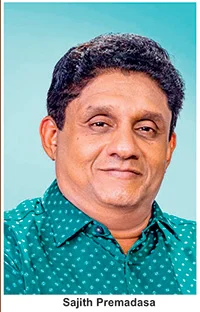
Sajith Premadasa
Amidst a simmering row over the controversial move to have Deshabandu Tennakoon as the IGP at the time of crucial presidential election, Opposition Leader Sajith Premadasa alleged: “The Speaker sent a letter to the President, recommending the appointment of Deshabandu Tennakoon as IGP. He distorted the Constitutional Council ruling by interpreting the two abstaining votes of civil society members as votes against Deshabandu and used his casting vote to recommend Deshabandu as the Constitutional Council decision. It is on the basis of the Speaker’s letter that the President made the appointment. The Speaker has blatantly violated the Constitution
.”
Speculation is rife about a possible attempt by the ruling National People’s Power (NPP) to take control of the 10-member Constitutional Council (CC). The only way to take command of the CC is to appoint those willing to pursue the NPP agenda as civil society representatives.
Against the backdrop of the NPP’s failure to obtain CC’s approval to finalise the appointment of the Auditor General, the government seems hell-bent on taking control of it. Civil society representatives, namely Dr. Prathap Ramanujam, Dr. (Mrs.) Dilkushi Anula Wijesundere and Dr. (Mrs.) Weligama Vidana Arachchige Dinesha Samararatne, whose tenure is coming to an end in January, blocked President Anura Kumara Dissanayake’s nominee receiving the AG’s position. They took a courageous stand in the greater interest of the nation.
Chulantha Wickramaratne, who served as AG for a period of six years, retired in April 2025. Following his retirement, President Anura Kumara Dissanayake first nominated H.T.P. Chandana, an audit officer at the Ceylon Petroleum Corporation. The CC rejected the nomination. Subsequently, President Dissanayake appointed the next senior-most official at the National Audit Office (NAO) Dharmapala Gammanpila, as Acting Auditor General for six months. Then, the President nominated Senior Deputy Auditor General L.S.I. Jayarathne to serve in an acting capacity, but her nomination, too, was also rejected.
Many an eyebrow was raised when the President nominated O.R. Rajasinghe, the Internal Audit Director of the Sri Lanka Army, for the top post. As a result, the vital position remains vacant since 07 December. Obviously the overzealous President does not take ‘No’ for an answer when filling key independent positions with his minions
The Bar Association of Sri Lanka (BASL) in a letter dated 22 December, addressed to President Dissanayake, who is the leader of the NPP and the JVP, Prime Minister Dr. Harini Amarasuriya, Speaker Dr. Jagath Wickremaratne and Opposition Leader Sajith Premadasa emphasised their collective responsibility in ensuring transparency in the appointment of civil society representatives.
Cabinet spokesperson and Health and Media Minister, Dr. Nalinda Jayatissa, is on record as having emphasised the urgent need to finalise the appointment. Minister Jayatissa alleged, at the post-Cabinet media briefing, that the President’s nominations had been rejected without giving explanation by certain members, including three representatives of civil society.
Parliament, on 18 January, 2023, approved the former Ministry Secretary Dr. Ramanujam, former Chairperson of the Sri Lanka Medical Association Dr. Wijesundere, and Dr. Samararatne of the University of Colombo as civil society representatives to the CC.
They were the first post-Aragalaya civil society members of the CC. The current CC was introduced by the 21 Amendment to the Constitution which was endorsed on 31st of October, 2022, during a time of grave uncertainty. UNP leader Ranil Wickremesinghe, who had been elected by the SLPP to complete the remainder of ousted President Gotabaya Rajapaksa’s five-year term, sought to manipulate the CC. Wickremesinghe received the SLPP’s backing though they fell out later.
During Wickremesinghe’s tenure as the President, civil society representatives earned the wrath of the then Rajapaksa-Wickremesinghe government by refusing to back Deshabandu Tennakoon’s appointment as the IGP. The then Speaker Mahinda Yapa Abeywardena was accused of manipulating CC’s ruling in respect of Deshabandu Tennakoon to suit Wickremesinghe’s agenda.
Amidst a simmering row over the controversial move to have Deshabandu Tennakoon as the IGP, at the time of crucial presidential election, Opposition Leader Sajith Premadasa alleged: “The Speaker sent a letter to the President, recommending the appointment of Deshabandu Tennakoon as IGP. He distorted the Constitutional Council ruling by interpreting the two abstaining votes of civil society members as votes against Deshabandu and used his casting vote to recommend Deshabandu as the Constitutional Council decision. It is on the basis of the Speaker’s letter that the President made the appointment. The Speaker has blatantly violated the Constitution.”
The NPP realises the urgent need to neutralise the CC. The composition of the CC does not give the Opposition an opportunity to challenge the government if the next three civil society representatives succumb to political pressure. The Speaker is the Chairman of the CC. The present composition of the Constitutional Council is as follows: Speaker (Dr) Jagath Wickramaratne, ex-officio, PM (Dr) Harini Amarasuriya, ex-officio, Leader of the Opposition Sajith Premadasa, ex-officio, Bimal Rathnayake, Aboobucker Athambawa, Ajith P. Perera, Sivagnanam Shritharan, Dr Prathap Ramanujam, Dr Dilkushi Anula Wijesundere and Dr Dinesha Samararatne.
In terms of Article 41E of the Constitution, the CC meets at least twice every month, and may meet as often as may be necessary.
The failure on the part of the NPP to take over Office of the AG must have compelled them to explore ways and means of somehow bringing CC under its influence. The end of the current civil society members’ term, has given the government a chance to fill the vacancies with henchmen.
BASL’s letters that dealt with the appointment of civil society representatives to the CC and the failure to appoint AG, both dated 22 December, paint a bleak picture of the NPP that throughout the presidential and parliamentary polls last year assured the country of a system change. The NPP’s strategy in respect of filling the AG’s vacancy and possible bid to manipulate the CC through the appointment of civil society representatives reminds us of the despicable manipulations undertaken by previous governments.
An appeal to goverment
BASL seems convinced that the NPP would make an attempt to appoint its own to the CC. BASL has urged the government to consult civil society and professional bodies, including them, regarding the forthcoming vacancies in the CC. It would be interesting to examine the NPP’s strategy as civil society, too, would face daunting challenges in choosing representatives.
Civil society representatives are nominated by the Speaker by agreement of the Prime Minister and the Leader of the Opposition.
If consensus cannot be reached swiftly, it would cause further political turmoil at a time the country is experiencing an unexpected burden of dealing with the post-Cyclone Ditwah recovery process.
The term of non-ex-officio members of the Council is three years from the date of appointment. In terms of the Constitution, the civil society representatives should be persons of eminence and integrity who have distinguished themselves in public or professional life and who are not members of any political party. Their nominations should be approved by Parliament.
In spite of the NPP having an absolute 2/3 majority in Parliament, the ruling party is under pressure. The composition of the CC is a big headache for NPP leaders struggling to cope up with rising dissent over a spate of wrongdoings and a plethora of broken promises. The furore over the inordinate delay in finalising AG’s appointment has made matters worse, particularly against the backdrop of the BASL, Transparency International Sri Lanka Chapter and Committee on Public Finance, taking a common stand.
Having been part of the clandestine regime change project in 2022; Western powers and India cannot turn a blind eye to what is going on. Some Colombo-based foreign envoys believe that there is no alternative to the NPP and the government should be given the opportunity to proceed with its action plan. The uncompromising stand taken by the NPP with regard to the appointment of permanent AG has exposed the ruling party.
In the wake of ongoing controversy over the appointment of the AG, the NPP’s integrity and its much-touted vow to tackle waste, corruption, irregularities and mismanagement seems hollow.
The government bigwigs must realise that appointment of those who campaigned for the party at the presidential and parliamentary polls caused deterioration of public confidence. The appointment of ex-top cops Sharnie Abeysekera and Ravi Seneviratne with black marks as Director, CID and Secretary to the Ministry of Public Security and Parliamentary Affairs, eroded public confidence in the NPP administration.
A vital role for CC
 The SLPP, reduced to just three lawmakers in the current Parliament, resented the CC. Having secured a near 2/3 majority in the House at the 2020 Parliamentary election, the SLPP made its move against the CC, in a strategy that was meant to strengthen President Gotabaya Rajapaksa’s hands at the expense of Parliament. Introduced in 2001 during Chandrika Bandaranaike Kumaratunga’s presidency, the 17th Amendment paved the way for the establishment of the CC. Those who wielded political power subjected the CC to critical changes through 18th, 19th and 20th amendments. Of them, perhaps, the 20th Amendment to the Constitution that had been passed in October 2020 is the worst. The SLPP replaced the CC with a Parliamentary Council. That project was meant to consolidate power in the Executive President, thereby allowing the appointment of key officials, like judges, the Attorney General, and heads of independent commissions.
People may have now forgotten the 20th Amendment removed civil society representatives from the so-called Parliamentary Council consisting of lawmakers who represented the interests of the government and the main Opposition. But such manipulations failed to neutralise the challenge (read Aragalaya) backed by external powers. The role played by the US and India in that project has been established and there cannot be any dispute over their intervention that forced Gotabaya Rajapaksa to flee the country.
Interestingly, Ranil Wickremesinghe, who had been picked by the SLPP to complete the remainder of Gotabaya Rajapaksa’s term, restored the CC through the passage of 21 Amendment on 31 October, 2022. Unfortunately, the NPP now wants to manipulate the CC by packing it with those willing to abide by its agenda.
It would be pertinent to mention that the 20th Amendment was aimed at neutralising dissent at any level. Those who formulated that piece of legislation went to the extent of proposing that the President could sack members appointed to the Parliamentary Council by the Prime Minister and the Opposition Leader without consulting anyone.
If not for the Aragalaya, the Parliamentary Council that didn’t serve any meaningful purpose could have paved the way for the President to fill all key positions with his nominees.
Recommendation of nominations to the President for the appointment of Chairpersons and Members of Commissions specified in the Schedule to Article 41B of the Constitution.
Commissions specified in the Schedule to Article 41B: The Election Commission, the Public Service Commission, the National Police Commission, the Audit Service Commission, the Human Rights Commission of Sri Lanka, the Commission to Investigate Allegations of Bribery or Corruption, the Finance Commission, the Delimitation Commission and the National Procurement Commission.
Approval/ Disapproval of recommendations by the President for the appointment to the Offices specified in the Schedule to Article 41C of the Constitution.
Offices specified in the Schedule to Article 41C: The Chief Justice and the Judges of the Supreme Court, the President and the Judges of the Court of Appeal, the Members of the Judicial Service Commission, other than the Chairman, the Attorney-General, the Governor of the Central Bank of Sri Lanka, the Auditor-General, the Inspector-General of Police, the Parliamentary Commissioner for Administration (Ombudsman) and the Secretary-General of Parliament.
NPP under pressure
In spite of having the executive presidency, a 2/3 majority in the legislature, and the bulk of Local Government authorities under its control, the NPP is under pressure. Their failure to muster sufficient support among the members of the Colombo Municipal Council (CMC) to pass its 2026 Budget underscored the gravity of the developing situation. The unexpected loss suffered at the CMC shook the ruling party.
But, the NPP faces a far bigger challenge in filling the AG’s vacancy as well as the new composition of the CC. If the NPP succeeds with its efforts to replace the current civil society representatives with rubber stamps, the ruling party may feel vindicated but such feelings are likely to be short-lived.
Having criticised the government over both contentious matters, the BASL may be forced to step up pressure on the government unless they can reach a consensus. It would be really interesting to know whether the government accepted the BASL’s request for consultations with the stakeholders. Unless consensus can be reached between the warring parties there is possibility of opening of a new front with the BASL and civil society being compelled to take a common stand against the government.
The developing scenario should be examined taking into consideration political parties and civil society confronting the government over the proposed Protection of the State from Terrorism Act (PSTA). Having promised to do away with the Prevention of Terrorism Act (PTA) in the run up to the presidential election, the NPP is trying to explain that it cannot do without anti-terrorism law. The civil society is deeply unhappy over the NPP’s change of heart.
The National Peace Council (NPP) that has been generally supportive and appreciative of the NPP’s efforts probably with the blessings of its benefactors in the West, too, has now found fault with the proposed PSTA. Dr. Jehan Perera, NPP’s Executive Director commented: “A preliminary review of the draft PSTA indicates that it retains core features of the PTA that have enabled serious abuse over decades. These include provisions permitting detention for up to two years without a person being charged before a court of law. In addition, the broad definition of terrorism under the draft law allows acts of dissent and civil disobedience to be labelled as terrorism, thereby permitting disproportionate and excessive responses by the state. Such provisions replicate the logic of the PTA rather than mark a clear break from it.”
Except the BASL, other professional bodies and political parties haven’t commented on the developing situation at the CC while taking into consideration the delay in appointing an AG. The issue at hand is whether the government intends to hold up AG’s appointment till the change of the CC’s composition in its favour. Whatever the specific reasons, a country that has suffered for want of accountability and transparency, enters 2026 without such an important person to guard against all types of financial shenanigans in the state.
All previous governments sought to influence the Office of the AG. The proposed establishment of NAO prompted the powers that be to undermine the effort. The Yahapalana administration diluted the National Audit Bill and what had been endorsed as National Audit Act, Nov. 19 of 2018 was definitely not the anti-corruption grouping originally proposed. That Act was amended this year but the Office of the AG remains vacant.
The NPP has caused itself immense harm by failing to reach consensus with the CC on filling the AG’s post. Unfortunately, the ruling party seems to be uninterested in addressing the issue expeditiously but is exploring the possibility of taking over control of the CC by stuffing it with civil society members favourable to the current ruling clique.
By Shamindra Ferdinando

‘Can Asians Think?’

I want to initiate this essay with several questions. That is, are we, in Sri Lanka and in our region, intellectually subservient to what is often referred to as the ‘West’? Specifically, can knowledge production in broad disciplinary areas such as social sciences and humanities be more creative, original and generated in response to local conditions and histories, particularly when it comes to practices such as formulating philosophy and theory as well as concepts and approaches? Why have we so far imported these from Western Europe and North America as has been the undisputed norm?
In exploring the responses and delving into this discussion, I will seek reference from the politics of the recently published book, Decolonial Keywords: South Asian Thoughts and Attitudes edited by Renny Thomas from the Department of Humanities and Social Sciences at the Indian Institute of Science Education and Research – Bhopal and me. The book was brought out by Delhi-based Tulika Publishers in December 2025.
Let me first unpack my anxiety over theory and philosophy, which I have talked about many times previously too. Any social science or humanities text we read here or elsewhere in South Asia invariably borrows concepts, theories and philosophical input generated mostly in Western Europe and North America. It almost appears as if our region is incapable of serious and abstract thinking. It is in this same context, but specifically with reference to India that Prathama Banerjee, Aditya Nigam and Rakesh Pandey have observed in their critical essay, ‘The Work of Theory Thinking across Traditions’ (2016), that for many “theory appears as a ready-made body of philosophical thought, produced in the West …” They argue, “the more theory-inclined among us simply pick the latest theory off-the-shelf and ‘apply’ it to our context, notwithstanding its provincial European origin, for we believe that ‘theory’ is by definition universal.”
Here, Banerjee et al make two important points. That is, there is an almost universal acceptability in the region that ‘theory’ is a kind of philosophical work that is exclusively produced in the West, followed by an almost blind and unreflective readiness among many of us to simply apply these ideas to local contexts. In doing so, they fail to take into serious consideration the initial temporal and historical contexts in which these bodies of knowledge were generated. However, theory or philosophy is not universal.
This knowledge is contextually linked to very specific social, political and historical conditions that allowed such knowledge to emanate in the first place. It therefore stands to reason that such knowledge cannot be applied haphazardly/ willy-nilly anywhere in the world without grave consequences. Of course, some ideas can be of universal validity as long as they are carefully placed in context. But to perceive theory or philosophy as all-weather universals is patently false even though this is the way they are often understood from universities to segments within society in general. This naiveté is part of the legacy of colonialism from which these disciplines as well as much of their theoretical and philosophical structures have been bequeathed to us.
It is in this context that I would like to discuss the politics our book, Decolonial Keywords: South Asian Thoughts and Attitudes entail. Here, thirty South Asian scholars from across disciplines in social sciences and humanities have come together to “discuss words and ideas from a variety of regional languages, ranging from Sinhala to Hebrew Malayalam” encapsulating “the region’s languages and its vast cultural landscape, crossing national borders.” To be more specific, these languages include Assamese, Arabic-Malayalam, Bengali, Hebrew Malayalam, Hindi, Nepali, Sanskrit, Sinhala, South Asian uses of English, Tamil-Arabic, Tamil, Urdu and concepts from indigenous languages of Nagaland and Arunachal Pradesh.
Each chapter, focuses on a selected word and “reiterates specific attitudes, ways of seeing and methods of doing that are embedded in the historical and contemporary experiences of the region” keeping in mind “the contexts of their production and how their meanings might have changed at different historical moments.”
In this exploration, the volume attempts to understand “if these words and concepts can infuse a certain intellectual rigour into reinventing social sciences and humanities in the region and beyond.” In short, what we have attempted is to offer a point of departure to a comprehensive and culturally, linguistically and politically inclusive effort at theory-building and conceptual fine-tuning based on South Asian experiences and histories. We assume these concepts from our region might be able to speak to the world in the same way schools of thought in politically dominant regions of the world have done so far to us. This is a matter of decolonizing our disciplines. But it is still not a claim for universality. After all, our main focus is to come up with a body of conceptual categories that might be useful in reading the region.
When Sri Lankan social sciences and humanities as well as the same disciplines elsewhere in the region thoughtlessly embrace knowledges imported in conditions of unequal power relations, it can never produce forums for discourse from which we can speak to the world with authority. In this book, Thomas and I have attempted, as an initial and self-conscious effort, to flip the script on theory-building and conceptualization in social sciences and humanities in South Asia in the region’s favour.
We are however mindful that this effort has its risks, intellectually speaking. That is, we are conscious this effort must be undertaken without succumbing to crude and parochial forms of nativism that are also politically powerful in the region including in Sri Lanka and India. This book presents an array of possibilities if we are serious about decolonizing our social sciences and humanities to infuse power into the discourses we generate and take them to the world instead of celebrating our parochiality like the proverbial frog in the well. Unfortunately, more often than not, we are trained to be intellectually subservient, and mere followers, not innovators and leaders bringing to mind the polemical title of Kishore Mahbubani’s 2002 book, Can Asians Think?
It is said that no man steps into the same river twice, for it is not the same river, and he is not the same man. These words came to mind upon reading Chandana Ruwan Jayanetti’s latest poetry collection, Poems from Galle, which inevitably invites comparison with his earlier work, particularly his first volume of poetry and prose, Reflections in Loneliness: A Collection of Poems and Prose (2015).
In this new collection, Jayanetti is demonstrably not the same poet he was a decade ago. His horizons have widened. his subject matter has diversified, and his thematic range has deepened. The earlier hallmarks of his work, including his empathetic attention to human experience, sensitivity to the natural world, and intimate, reflective tone, remain present. Yet they are now complemented by a stronger defiance, a more deliberate engagement with the political and the cosmic, and a broader mosaic of local and universal concerns. His poetic voice has evolved in scope, tonal range, and thematic ambition.
My own acquaintance with Jayanetti’s poetry dates back to our undergraduate days at Sabaragamuwa University of Sri Lanka, where we were classmates pursuing a BA in Languages (English Special). Even then, his work revealed precise observational skill coupled with profound sympathy for individuals. This early sensibility found fuller articulation in Reflections in Loneliness, a collection spanning nearly two decades of creative endeavor.
That inaugural volume traversed a wide thematic landscape: childhood memories; tender compassion toward humans and animals; tributes to the deserving; the joys and sorrows of young love; and reflections on Sri Lanka’s three-decade Northeast conflict, which concluded in 2009. Jayanetti’s verse, written with sincerity and empathy, moves fluidly from deeply personal to universally human. Moments of striking poignancy include the loss of his wife’s mother, the death of a young friend who marched unflinchingly to the warfront, and the bittersweet parting from a lover.
The prose section of Reflections in Loneliness offered a return to the rural simplicity of the 1970s and ’80s through the perspective of a schoolboy. Essays such as We Buy a Bicycle, Television Descends, The Village Goes to the Fair, Bathing Excursions and Hingurakanda evoke a bygone era with unvarnished authenticity. As literary critic Kamala Wijeratne noted, Jayanetti’s prose merited commendation for its perceptive and affectionate portrayal of rural life, written with the authority of lived experience. His meticulous attention to minute details revealed not only the flaws and frailties of human nature but also its loyalties and quiet virtues, articulated with unforced sympathy.
Consisting of 31 poems and five prose pieces, Reflections in Loneliness established Jayanetti as a writer of elegance, precision, and emotional depth. The current collection, however, confirms the Heraclitean and Buddhist insights: both the poet and his poetry have changed. The new work reflects an expansion from the personal to the cosmic, from the intimately local to the globally resonant, a testament to an artist in motion, carried forward by the ever-changing current of his creative life.
Jayanetti’s poetic corpus in the new book Poems from Galle, spanning thirty-five evocative works from They Heard the Cock Crow to A Birthday Celebration, reveals a profound and consistent artistic signature rooted in themes of humanity, nature, history, and social consciousness. Throughout these poems, Jayanetti demonstrates a distinctive voice that is simultaneously empathetic, contemplative, and alert to the complexities of his Sri Lankan heritage and the broader human condition. While maintaining a core of thematic and tonal consistency, each poem enriches this foundation by expanding into new dimensions of experience, whether personal, ecological, political, or historical.
A foundational element of Jayanetti’s poetry is the intimate relationship between humans and nature, frequently underscored by a deep ethical awareness. In poems like From a Herdman’s Life and My Neighbor, he gives voice to the quiet dignity of rural existence and animal companionship, portraying a symbiotic bond imbued with mutual care and respect. Similarly, Fallen Elephant and Inhumanity lament the cruelty inflicted upon majestic creatures, indicting human greed and violence. These poems articulate not only empathy for the natural world but also an implicit call for stewardship, threading a moral sensibility throughout the collection.
This concern extends to the socio-political sphere, as Jayanetti often situates his poems within the fraught realities of Sri Lanka’s history and struggles. Homage to Sir Henry Pedris honors a national martyr, while Confession of a Sri Lankan Cop exposes institutional corruption and personal integrity in tension. Hanuma Wannama and Gone Are They tackle political violence and social upheaval, reflecting the poet’s engagement with national trauma and collective memory. These works enrich the thematic landscape by connecting personal narrative to larger historical forces.

Jayanetti’s choice of subjects is remarkably diverse yet unified by a focus on lived experience—ranging from the intimate (To a Puppy That Departed, Benji) to the grand (Mekong, A Voyage). The poet’s attention to place, whether the Sri Lankan cityscape in City Morning and Evening from the College Terrace or the historic Ode to Galle Fort, anchors his work in locality while evoking universal themes of time, change, and belonging. Even poems centered on seemingly mundane moments, such as Staff Meeting or A Game, are elevated by the poet’s keen observational eye and capacity to find meaning in everyday rituals.
Moreover, Jayanetti often draws from historical and cultural memory, as seen in Ludowyk Remembered, Let Ho Chi Minh Guide You, and Rathna Sri Remembered, positioning his poetry as a dialogue between past and present. This choice expands his thematic range to include legacy, identity, and the power of remembrance, linking the individual to the collective consciousness.
Across the collection, Jayanetti’s tone is marked by a blend of gentle empathy and quiet strength. Poems such as A Companion Departed and To a Puppy That Departed convey tenderness and mourning with understated poignancy. His voice is intimate and accessible, inviting readers into personal reflections suffused with emotional depth.
Yet, this empathy is balanced by moments of stark realism and defiance.
In Corona and Hanuma Wannama, the tone shifts to urgent and accusatory, critiquing social injustice and political decay. A Ship Weeps mourns environmental devastation with an elegiac voice that is both sorrowful and admonitory. This tonal range reveals a poet capable of both consolation and confrontation, who embraces complexity rather than sentimentality.
While many poems explore specific moments or relationships, others invite contemplation on broader existential and cosmic themes. For instance, A Voyage and Mekong traverse spatial and temporal boundaries, evoking the interplay between human journeys and natural cycles. A Birthday Celebration reflects on legacy, learning, and the continuum of knowledge, blending personal homage with universal insight.
Even poems like A Bond and A Game gesture toward symbolic resonance, the former exploring interspecies loyalty as a metaphor for fidelity and duty, the latter invoking sport as a microcosm of life’s challenges and hopes. These works demonstrate Jayanetti’s ability to expand familiar motifs into metaphoric and philosophical territory, enriching his poetic landscape.
Jayanetti’s thirty-five poems in Poems from Galle collectively reveal a consistent and compelling artistic signature that intertwines compassionate engagement with nature and society, a profound sense of place, and an acute awareness of history and memory. His voice navigates seamlessly between moments of intimate reflection and urgent social commentary, creating a poetic landscape that resonates with both specificity and universality.
Each poem adds a distinct dimension to this mosaic. Historical and political awareness emerges strongly in poems like Let Ho Chi Minh Guide You and Homage to Sir Henry Pedris, where the sacrifices of national heroes and struggles for justice are evoked with reverence and clarity. Meanwhile, environmental consciousness is vividly articulated in works such as Abandoned Chena, Kottawa Forest, and Fallen Elephant, where the fragility of ecosystems and the human impact on nature are poignantly explored.
Jayanetti also delves deeply into themes of personal loss and companionship in poems like Benji, A Companion Departed, and In Memory of Brownie, tenderly capturing the bond between humans and animals. Poems like Confession of a Sri Lankan Cop and Hanuma Wannama offer raw social critique, revealing layers of political and moral complexity.
Through this interplay of historical, environmental, personal, and political themes, Jayanetti constructs a body of work that is distinctly Sri Lankan in its cultural and geographical grounding yet profoundly universal in its exploration of human experience. His poetry invites readers to reflect on the interconnected fates of humans, animals, and the natural world, urging a deeper awareness of our shared existence and responsibilities.
by Saman Indrajith

Around 40 dead in Swiss ski resort bar fire, police say

President pays homage to the Sacred Tooth Relic

Zohran Mamdani sworn in as New York City mayor

In pictures: New Year welcomed around the world

Foreign warships commended for their assistance during weather disaster in Sri Lanka

Machu Picchu train crash leaves one dead and dozens injured

‘Dates have the highest sugar content to fight Coronavirus’

Sunday Island 27 December – Headlines

#SundayIsland 17th December – Headlines

Sunday Island – 28th March

Sunday Island Headlines – 21 March

Sunday Island – 21st February – Headlines
-
 News7 days ago
Street vendors banned from Kandy City
-

 Sports4 days ago
Gurusinha’s Boxing Day hundred celebrated in Melbourne
-

 News7 days ago
Lankan aircrew fly daring UN Medevac in hostile conditions in Africa
-
 News2 days ago
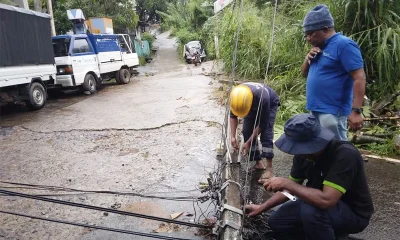
Leading the Nation’s Connectivity Recovery Amid Unprecedented Challenges
-

 Sports5 days ago
Time to close the Dickwella chapter
-

 Features3 days ago
It’s all over for Maxi Rozairo
-

 Features7 days ago
Rethinking post-disaster urban planning: Lessons from Peradeniya
-

 Opinion7 days ago
Are we reading the sky wrong?