
Features
University of Colombo confers honorary doctorate of laws on Romesh de Silva

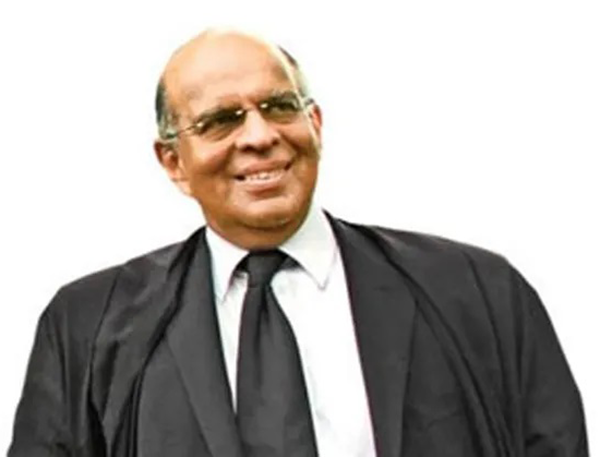
The following address was delivered by Prof. Sampath Punchihewam, Dean of the Faculty of Law of the University of Colombo, presenting Mr. Romesh de Silva, PC, for the conferment of the degree of Doctor of Laws, Honoris Causa, of the University of Colombo.
“It is with the greatest pleasure that I present to you for the Conferment of the degree of Doctor of Laws, Honoris Causa, Mr. Joseph Romesh de Silva, the youngest president’s Counsel ever to have been appointed in Sri Lanka and indisputably, a doyen among professionals in our country.
“Having taken his oaths as an Advocate of the Supreme Court of the Republic on June 16, 1971, he completed last year five decades in the practice of law. He can certainly 1ook back with profound satisfaction on a remarkable career, in the course of which he has made a contribution of signal value to the development of our law, the refinement of its seminal concepts and principles, filling in gaps to suit the needs of modern times, and nurturing the law as a potent instrument for accomplishment of the public good.
“There are compelling reasons for the honour which this University confers on him today. His career built on the anvil of conscience and equity, is a source of inspiration, especia1ly in the midst of the widespread cynicism accompanying the breakdown of values in our society today.
Romesh de Silva has been steadfast in his pursuit of justice, without the slightest tinge of fear or favour. He counts, among his clients over the years, the most illustrious as well as the humblest in the land. Of him, it can truly be said that he has walked with kings and not lost the common touch. He has had no hesitation, where the cause of justice requires it, to appear pro bono and to give of his best, with no expectation of monetary reward.
Among his striking attributes is the emphatic rejection of political partisanship in any form. He has represented political leaders across the spectrum, with exemplary commitment devoid of any semblance of obligation. In doing so, he has upheld with total consistency the highest traditions of the Bar and established a refreshing threshold for professional integrity and rectitude.
An acknowledged leader of the Bar, he leaves his indelible imprint on every branch of the law. His career offers eloquent testimony to the reality that the law is not a sterile body of rules, to be applied mechanically, but a living, evolving discipline, transformational at its core, responding with perception and constantly adapting to rapidly changing social and economic circumstances. In his hands and with unrivalled acumen and intellectual sensitivity, this challenge of adaptation and renewal has been met admirably.
Quintessentially, Romesh de Silva is a Renaissance personality. He is one of the handful of legal practitioners whose role has been not merely to interpret and apply, but indeed to create, the substance of the law. He has deeply influenced the development of the law in an awesome array of fields including medical negligence, injunctive relief in labour law and the law of defamation, the contours of writ jurisdiction, the mechanics of enforcement of orders of the Supreme Court in Fundamental Rights litigation, and a gamut of issues going to the very heart of individual liberty.
Overall, this represents a phenomenal contribution to the laws and legal system of our country.The call of public duty has unfailingly found in him a congenial chord. With the utmost generosity, he has given freely of his time and expertise to render yeoman service to our people.
He served as Chairman of the Committee of Experts appointed by His Excellency the President to formulate a new Constitution for the Repub1ic, responsive to contemporary priorities, to replace the current Constitution enacted almost half a century ago. He brought a wealth of experience to bear on his work in the Law Commission of Sri Lanka, to which he gave leadership as Chairman for a sustained period of seven years. A former President of the Bar Association of Sri Lanka —the youngest to have been elected to that prestigious position – Past Chairman of the Advisory Committee on Intellectual Property and Chairman of the Company Law Advisory Committee and the Registration of Title Advisory Committee both appointed by the Bar Association he has left the unmistakable mark of quality on the work of these vital institutions.
The fame and renown of Romesh de Silva has spread far beyond our shores. This is particularly true of his forte, commercial law, reflected inter alia in his participation, as arbitrator and as counsel, in a large number of complex international arbitrations in the United Kingdom, Switzerland, Singapore and other countries. He has certainly done his country and his profession proud.
Professional life, no less than life in any other sphere, is a flowing stream, never still or stagnant. Romesh de Silva has bequeathed to posterity an enviable reservoir of talent. At least seven President’s Counsel have derived benefit from the meticulous training which they received in his Chambers, where a firm foundation was laid for their future careers.
A well-rounded personality, he excelled in both academia and sports at his alma mater, St. Joseph’s College, Colombo, where his powers of articulation and his mastery of the spoken word, were amply demonstrated in his prowess as a debater par excellence. It is, indeed, a happy reflection that the indication of promise, manifested so early in life, has attained fulsome fruition in the span of a career which has enriched and invigorated the life of our nation.
As a fitting tribute to these achievements of the rarest character, it is my privilege to present Mr. Joseph Romesh de Silva to you for conferment of the degree of Doctor of Laws, honoris causa.



A positive feature of the government that is emerging is its responsiveness to public opinion. The manner in which it has been responding to the furore over the Grade 6 English Reader, in which a weblink to a gay dating site was inserted, has been constructive. Government leaders have taken pains to explain the mishap and reassure everyone concerned that it was not meant to be there and would be removed. They have been meeting religious prelates, educationists and community leaders. In a context where public trust in institutions has been badly eroded over many years, such responsiveness matters. It signals that the government sees itself as accountable to society, including to parents, teachers, and those concerned about the values transmitted through the school system.
This incident also appears to have strengthened unity within the government. The attempt by some opposition politicians and gender misogynists to pin responsibility for this lapse on Prime Minister Dr Harini Amarasuriya, who is also the Minister of Education, has prompted other senior members of the government to come to her defence. This is contrary to speculation that the powerful JVP component of the government is unhappy with the prime minister. More importantly, it demonstrates an understanding within the government that individual ministers should not be scapegoated for systemic shortcomings. Effective governance depends on collective responsibility and solidarity within the leadership, especially during moments of public controversy.
The continuing important role of the prime minister in the government is evident in her meetings with international dignitaries and also in addressing the general public. Last week she chaired the inaugural meeting of the Presidential Task Force to Rebuild Sri Lanka in the aftermath of Cyclone Ditwah. The composition of the task force once again reflects the responsiveness of the government to public opinion. Unlike previous mechanisms set up by governments, which were either all male or without ethnic minority representation, this one includes both, and also includes civil society representation. Decision-making bodies in which there is diversity are more likely to command public legitimacy.
Task Force
The Presidential Task Force to Rebuild Sri Lanka overlooks eight committees to manage different aspects of the recovery, each headed by a sector minister. These committees will focus on Needs Assessment, Restoration of Public Infrastructure, Housing, Local Economies and Livelihoods, Social Infrastructure, Finance and Funding, Data and Information Systems, and Public Communication. This structure appears comprehensive and well designed. However, experience from post-disaster reconstruction in countries such as Indonesia and Sri Lanka after the 2004 tsunami suggests that institutional design alone does not guarantee success. What matters equally is how far these committees engage with those on the ground and remain open to feedback that may complicate, slow down, or even challenge initial plans.
An option that the task force might wish to consider is to develop a linkage with civil society groups with expertise in the areas that the task force is expected to work. The CSO Collective for Emergency Relief has set up several committees that could be linked to the committees supervised by the task force. Such linkages would not weaken the government’s authority but strengthen it by grounding policy in lived realities. Recent findings emphasise the idea of “co-production”, where state and society jointly shape solutions in which sustainable outcomes often emerge when communities are treated not as passive beneficiaries but as partners in problem-solving.
Cyclone Ditwah destroyed more than physical infrastructure. It also destroyed communities. Some were swallowed by landslides and floods, while many others will need to be moved from their homes as they live in areas vulnerable to future disasters. The trauma of displacement is not merely material but social and psychological. Moving communities to new locations requires careful planning. It is not simply a matter of providing people with houses. They need to be relocated to locations and in a manner that permits communities to live together and to have livelihoods. This will require consultation with those who are displaced. Post-disaster evaluations have acknowledged that relocation schemes imposed without community consent often fail, leading to abandonment of new settlements or the emergence of new forms of marginalisation. Even today, abandoned tsunami housing is to be seen in various places that were affected by the 2004 tsunami.
Malaiyaha Tamils
The large-scale reconstruction that needs to take place in parts of the country most severely affected by Cyclone Ditwah also brings an opportunity to deal with the special problems of the Malaiyaha Tamil population. These are people of recent Indian origin who were unjustly treated at the time of Independence and denied rights of citizenship such as land ownership and the vote. This has been a festering problem and a blot on the conscience of the country. The need to resettle people living in those parts of the hill country which are vulnerable to landslides is an opportunity to do justice by the Malaiyaha Tamil community. Technocratic solutions such as high-rise apartments or English-style townhouses that have or are being contemplated may be cost-effective, but may also be culturally inappropriate and socially disruptive. The task is not simply to build houses but to rebuild communities.
The resettlement of people who have lost their homes and communities requires consultation with them. In the same manner, the education reform programme, of which the textbook controversy is only a small part, too needs to be discussed with concerned stakeholders including school teachers and university faculty. Opening up for discussion does not mean giving up one’s own position or values. Rather, it means recognising that better solutions emerge when different perspectives are heard and negotiated. Consultation takes time and can be frustrating, particularly in contexts of crisis where pressure for quick results is intense. However, solutions developed with stakeholder participation are more resilient and less costly in the long run.
Rebuilding after Cyclone Ditwah, addressing historical injustices faced by the Malaiyaha Tamil community, advancing education reform, changing the electoral system to hold provincial elections without further delay and other challenges facing the government, including national reconciliation, all require dialogue across differences and patience with disagreement. Opening up for discussion is not to give up on one’s own position or values, but to listen, to learn, and to arrive at solutions that have wider acceptance. Consultation needs to be treated as an investment in sustainability and legitimacy and not as an obstacle to rapid decisionmaking. Addressing the problems together, especially engagement with affected parties and those who work with them, offers the best chance of rebuilding not only physical infrastructure but also trust between the government and people in the year ahead.
by Jehan Perera

 When the government appointed a committee, led by Rienzie Arsekularatne, Senior President’s Counsel, to draft a new law to replace the Prevention of Terrorism Act (PTA), as promised by the ruling NPP, the writer, in an article published in this journal in July 2025, expressed optimism that, given Arsekularatne’s experience in criminal justice, he would be able to address issues from the perspectives of the State, criminal justice, human rights, suspects, accused, activists, and victims. The draft Protection of the State from Terrorism Act (PSTA), produced by the Committee, has been sharply criticised by individuals and organisations who expected a better outcome that aligns with modern criminal justice and human rights principles.
This article is limited to a discussion of the definition of terrorism. As the writer explained previously, the dangers of an overly broad definition go beyond conviction and increased punishment. Special laws on terrorism allow deviations from standard laws in areas such as preventive detention, arrest, administrative detention, restrictions on judicial decisions regarding bail, lengthy pre-trial detention, the use of confessions, superadded punishments, such as confiscation of property and cancellation of professional licences, banning organisations, and restrictions on publications, among others. The misuse of such laws is not uncommon. Drastic legislation, such as the PTA and emergency regulations, although intended to be used to curb intense violence and deal with emergencies, has been exploited to suppress political opposition.
International Standards
The writer’s basic premise is that, for an act to come within the definition of terrorism, it must either involve “terror” or a “state of intense or overwhelming fear” or be committed to achieve an objective of an individual or organisation that uses “terror” or a “state of intense or overwhelming fear” to realise its aims. The UN General Assembly has accepted that the threshold for a possible general offence of terrorism is the provocation of “a state of terror” (Resolution 60/43). The Parliamentary Assembly of the Council of Europe has taken a similar view, using the phrase “to create a climate of terror.”
In his 2023 report on the implementation of the UN Global Counter-Terrorism Strategy, the Secretary-General warned that vague and overly broad definitions of terrorism in domestic law, often lacking adequate safeguards, violate the principle of legality under international human rights law. He noted that such laws lead to heavy-handed, ineffective, and counterproductive counter-terrorism practices and are frequently misused to target civil society actors and human rights defenders by labelling them as terrorists to obstruct their work.
The United Nations Office on Drugs and Crime (UNODC) has stressed in its Handbook on Criminal Justice Responses to Terrorism that definitions of terrorist acts must use precise and unambiguous language, narrowly define punishable conduct and clearly distinguish it from non-punishable behaviour or offences subject to other penalties. The handbook was developed over several months by a team of international experts, including the writer, and was finalised at a workshop in Vienna.
Anti-Terrorism Bill, 2023
A five-member Bench of the Supreme Court that examined the Anti-Terrorism Bill, 2023, agreed with the petitioners that the definition of terrorism in the Bill was too broad and infringed Article 12(1) of the Constitution, and recommended that an exemption (“carve out”) similar to that used in New Zealand under which “the fact that a person engages in any protest, advocacy, or dissent, or engages in any strike, lockout, or other industrial action, is not, by itself, a sufficient basis for inferring that the person” committed the wrongful acts that would otherwise constitute terrorism.
While recognising the Court’s finding that the definition was too broad, the writer argued, in his previous article, that the political, administrative, and law enforcement cultures of the country concerned are crucial factors to consider. Countries such as New Zealand are well ahead of developing nations, where the risk of misuse is higher, and, therefore, definitions should be narrower, with broader and more precise exemptions. How such a “carve out” would play out in practice is uncertain.
In the Supreme Court, it was submitted that for an act to constitute an offence, under a special law on terrorism, there must be terror unleashed in the commission of the act, or it must be carried out in pursuance of the object of an organisation that uses terror to achieve its objectives. In general, only acts that aim at creating “terror” or a “state of intense or overwhelming fear” should come under the definition of terrorism. There can be terrorism-related acts without violence, for example, when a member of an extremist organisation remotely sabotages an electronic, automated or computerised system in pursuance of the organisation’s goal. But when the same act is committed by, say, a whizz-kid without such a connection, that would be illegal and should be punished, but not under a special law on terrorism. In its determination of the Bill, the Court did not address this submission.
PSTA Proposal
Proposed section 3(1) of the PSTA reads:
Any person who, intentionally or knowingly, commits any act which causes a consequence specified in subsection (2), for the purpose of-
(a) provoking a state of terror;
(b) intimidating the public or any section of the public;
(c) compelling the Government of Sri Lanka, or any other Government, or an international organisation, to do or to abstain from doing any act; or
(d) propagating war, or violating territorial integrity or infringing the sovereignty of Sri Lanka or any other sovereign country, commits the offence of terrorism.
The consequences listed in sub-section (2) include: death; hurt; hostage-taking; abduction or kidnapping; serious damage to any place of public use, any public property, any public or private transportation system or any infrastructure facility or environment; robbery, extortion or theft of public or private property; serious risk to the health and safety of the public or a section of the public; serious obstruction or damage to, or interference with, any electronic or automated or computerised system or network or cyber environment of domains assigned to, or websites registered with such domains assigned to Sri Lanka; destruction of, or serious damage to, religious or cultural property; serious obstruction or damage to, or interference with any electronic, analogue, digital or other wire-linked or wireless transmission system, including signal transmission and any other frequency-based transmission system; without lawful authority, importing, exporting, manufacturing, collecting, obtaining, supplying, trafficking, possessing or using firearms, offensive weapons, ammunition, explosives, articles or things used in the manufacture of explosives or combustible or corrosive substances and biological, chemical, electric, electronic or nuclear weapons, other nuclear explosive devices, nuclear material, radioactive substances, or radiation-emitting devices.
Under section 3(5), “any person who commits an act which constitutes an offence under the nine international treaties on terrorism, ratified by Sri Lanka, also commits the offence of terrorism.” No one would contest that.
The New Zealand “carve-out” is found in sub-section (4): “The fact that a person engages in any protest, advocacy or dissent or engages in any strike, lockout or other industrial action, is not by itself a sufficient basis for inferring that such person (a) commits or attempts, abets, conspires, or prepares to commit the act with the intention or knowledge specified in subsection (1); or (b) is intending to cause or knowingly causes an outcome specified in subsection (2).”
While the Arsekularatne Committee has proposed, including the New Zealand “carve out”, it has ignored a crucial qualification in section 5(2) of that country’s Terrorism Suppression Act, that for an act to be considered a terrorist act, it must be carried out for one or more purposes that are or include advancing “an ideological, political, or religious cause”, with the intention of either intimidating a population or coercing or forcing a government or an international organisation to do or abstain from doing any act.
When the Committee was appointed, the Human Rights Commission of Sri Lanka opined that any new offence with respect to “terrorism” should contain a specific and narrow definition of terrorism, such as the following: “Any person who by the use of force or violence unlawfully targets the civilian population or a segment of the civilian population with the intent to spread fear among such population or segment thereof in furtherance of a political, ideological, or religious cause commits the offence of terrorism”.
The writer submits that, rather than bringing in the requirement of “a political, ideological, or religious cause”, it would be prudent to qualify proposed section 3(1) by the requirement that only acts that aim at creating “terror” or a “state of intense or overwhelming fear” or are carried out to achieve a goal of an individual or organisation that employs “terror” or a “state of intense or overwhelming fear” to attain its objectives should come under the definition of terrorism. Such a threshold is recognised internationally; no “carve out” is then needed, and the concerns of the Human Rights Commission would also be addressed.
by Dr. Jayampathy Wickramaratne
President’s Counsel

 We generally have in our midst the famous JAYASRI twins, Rohitha and Rohan, who are based in Austria but make it a point to entertain their fans in Sri Lanka on a regular basis.
Well, rock and reggae fans get ready for a major happening on 28th February (Oops, a special day where I’m concerned!) as the much-awaited ROCK meets REGGAE event booms into action at the Nelum Pokuna outdoor theatre.
It was seven years ago, in 2019, that the last ROCK meets REGGAE concert was held in Colombo, and then the Covid scene cropped up.

Chitral Somapala with BLACK MAJESTY
This year’s event will feature our rock star Chitral Somapala with the Australian Rock+Metal band BLACK MAJESTY, and the reggae twins Rohitha and Rohan Jayalath with the original JAYASRI – the full band, with seven members from Vienna, Austria.
According to Rohitha, the JAYASRI outfit is enthusiastically looking forward to entertaining music lovers here with their brand of music.
Their playlist for 28th February will consist of the songs they do at festivals in Europe, as well as originals, and also English and Sinhala hits, and selected covers.
Says Rohitha: “We have put up a great team, here in Sri Lanka, to give this event an international setting and maintain high standards, and this will be a great experience for our Sri Lankan music lovers … not only for Rock and Reggae fans. Yes, there will be some opening acts, and many surprises, as well.”

Rohitha, Chitral and Rohan: Big scene at ROCK meets REGGAE
Rohitha and Rohan also conveyed their love and festive blessings to everyone in Sri Lanka, stating “This Christmas was different as our country faced a catastrophic situation and, indeed, it’s a great time to help and share the real love of Jesus Christ by helping the poor, the needy and the homeless people. Let’s RISE UP as a great nation in 2026.”

Lanka Premier League draft set to take place on March 22

Trump to meet Venezuelan opposition leader Machado at the White House

Festival advance for government officers to be increased
Providing underutilized lands/properties to suitable investors for optimal utilization.
Implementation of the National Fisheries and Aquaculture Policy

Expressions of Interest called to develop selected locations within the Pelawatte Sugar Factory premises

‘Dates have the highest sugar content to fight Coronavirus’

Sunday Island 27 December – Headlines

#SundayIsland 17th December – Headlines

Sunday Island – 28th March

Sunday Island Headlines – 21 March

Sunday Island – 21st February – Headlines
-
 News3 days ago
Sajith: Ashoka Chakra replaces Dharmachakra in Buddhism textbook
-

 Business3 days ago
Dialog and UnionPay International Join Forces to Elevate Sri Lanka’s Digital Payment Landscape
-

 Features3 days ago
The Paradox of Trump Power: Contested Authoritarian at Home, Uncontested Bully Abroad
-

 Features3 days ago
Subject:Whatever happened to (my) three million dollars?
-

 News3 days ago
Level I landslide early warnings issued to the Districts of Badulla, Kandy, Matale and Nuwara-Eliya extended
-

 News3 days ago
National Communication Programme for Child Health Promotion (SBCC) has been launched. – PM
-

 News3 days ago
65 withdrawn cases re-filed by Govt, PM tells Parliament
-

 Opinion5 days ago
The minstrel monk and Rafiki, the old mandrill in The Lion King – II