
News
UN concerned over Anti-Terrorism Bill and Online Safety Bill


The UN Human Rights Office has raised serious concerns over two bills under consideration in the Sri Lankan Parliament – the revised Anti-Terrorism Bill and the Online Safety Bill.
Issuing a statement, the UN Human Rights Office said the bills give the authorities a range of expansive powers and can also impose restrictions on human rights, not in line with international human rights law.
The Anti-Terrorism Bill is intended to replace the Prevention of Terrorism Act, which has long been of concern to the UN human rights mechanisms. While some positive revisions have been made in the draft, including the removal of the death penalty as a possible punishment, there are still major concerns about the scope and discriminatory effects of many provisions in the revised draft.
Restrictions to the rights to freedom of expression and peaceful assembly are very likely to fail to meet requirements of necessity and proportionality, it said.
The UN Human Rights Office further said the Bill still includes an overly broad definition of terrorism and grants wide powers to the police – and to the military – to stop, question and search, and to arrest and detain people, with inadequate judicial oversight.
Other issues remain over the imposition of curfews, restriction orders and the designation of prohibited places, all of which raise concerns about the scope of powers granted to the executive without sufficient checks and balances, it said.
With respect to the Online Safety Bill, the UN Human Rights Office said it believes it will severely regulate and restrict online communication, including by the general public and will give authorities unfettered discretion to label and restrict expressions they disagree with as “false statements”.
Many sections of the Bill contain vaguely defined terms and definitions of offences which leave significant room for arbitrary and subjective interpretation and could potentially criminalize nearly all forms of legitimate expression, creating an environment that has a chilling effect on freedom of expression, it said.
The UN Human Rights Office has urged the Government to undertake further meaningful consultation with civil society and UN independent experts and to make substantial revisions to the draft laws in order to bring them into full compliance with Sri Lanka’s international human rights obligations.










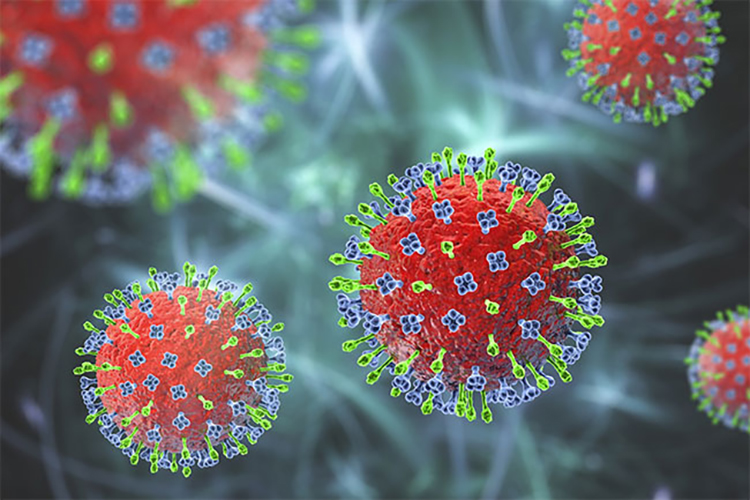
Sri Lanka has stepped up efforts to detect and respond to a potential outbreak of the deadly Nipah virus (NiV), with health authorities enhancing surveillance and laboratory readiness amid growing concerns in the region.
The Medical Research Institute (MRI), the country’s premier laboratory, has upgraded its testing capacity with the latest technology to identify the Nipah virus, enabling early detection of suspected cases, an MRI source said.
Nipah virus is a highly infectious zoonotic disease that can spread from animals
to humans and also through human-to-human contact. Fruit bats are the natural hosts of the virus.
First identified in Malaysia in 1988, the virus has since caused deadly outbreaks in countries including India and Bangladesh. Experts warn that Sri Lanka, with its close human-animal interactions and tropical climate, must remain vigilant against such emerging infectious diseases.
The case fatality rate of Nipah virus ranges from 40% to 75%, making it one of the most lethal viral infections affecting humans. There are currently no specific drugs or vaccines, with treatment relying mainly on intensive supportive care, health specialists say.
Symptoms of infection initially include fever, headaches, muscle pain, vomiting, and sore throat, followed by dizziness, drowsiness, altered consciousness, and neurological signs indicating acute encephalitis. Severe cases may progress to atypical pneumonia, acute respiratory distress, seizures, and coma within 24 to 48 hours.Authorities continue to urge heightened awareness and precautionary measures, emphasizing that early detection and rapid response are key to preventing outbreaks.
by Chaminda Silva ✍️
The Free Media Movement (FMM) has demanded government accountability on many freedom of expression issues referred to in a statement issued by the Human Rights Commission in a statement issued last week.
The statement under the hands of FMM Convener Lasantha De Silva and Secretary Dileesha Abeysundera says FMM has paid close attention to the statement issued by the Human Rights Commission (HRC) under reference number HRC/S/i/E/03/02/26. It has also informed that global stakeholders, including the International Federation of Journalists—of which it is a member—that are already closely monitoring this matter.
In its statement, HRC has elaborated at length on the issues that have arisen in Sri Lanka concerning freedom of expression and online safety. It specifically points out that the actions of the Sri Lanka Police have been a major contributing factor to these concerns. The Commission notes that recent conduct of the police has indirectly interfered even with the professional activities of journalists.
HRC has also drawn attention to the practice of summoning journalists and other activists before the police without providing clear reasons, in violation of circulars issued by the IGP. In certain instances, the police have stated that journalists were summoned due to alleged defamation arising from media activities.
However, freedom of expression guaranteed by the Constitution is restricted only within constitutionally prescribed limits. Accordingly, defamation that is no longer a criminal offence cannot be acted upon by the police. Such matters constitute civil offences that must be resolved before courts of law. The Commission further observes that attempts by politicians and others to lodge complaints with the Criminal Investigation Department regarding defamation are efforts to portray defamation as a criminal offence.
The HRC statement also addresses the Online Safety Act. While emphasizing the need to be mindful of online safety, the Commission points out that the current law does not address genuine needs. Therefore, as already demanded by many stakeholders, the government has the option to repeal this Act.
In addition, HRC has outlined a three-pronged approach that should be adopted to safeguard freedom of expression, as guaranteed by the Constitution and in line with Sri Lanka’s commitments under the Universal Declaration of Human Rights of the United Nations.
FMM said it is of the view that the Government of Sri Lanka must give serious consideration to this statement and to the recommendations emphasized therein. “This is a moment in which the accountability of the Sri Lankan government is being questioned. Accordingly, the Free Media Movement urges the government to take immediate steps to implement the recommendations set out in this statement,” it said.
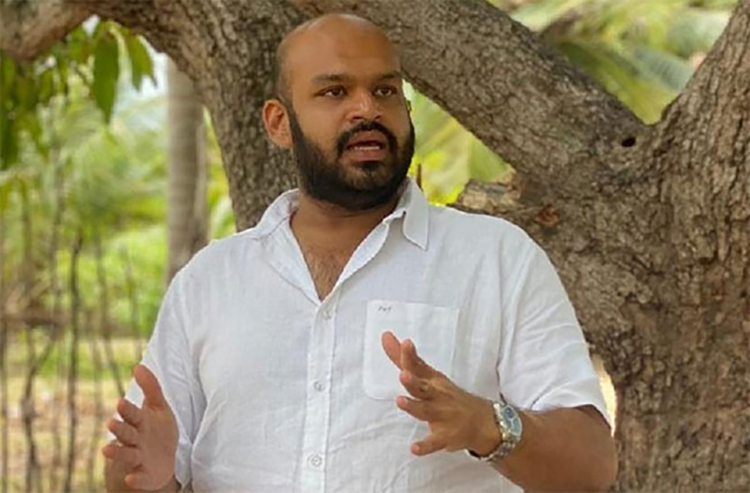
ITAK Batticaloa District MP Shanakiyan Rasamanickam accused the government in Parliament on Friday of deliberately delaying Provincial Council elections, pointing to its failure to nominate members to a Parliamentary Select Committee.
The committee, tasked with considering matters related to Provincial Council polls, was announced on 6 January 2026. Opposition parties submitted their nominees promptly.
However, a month later, the government has yet to name its eight members, preventing the committee from being constituted and from commencing its work, Rasamanickam alleged.
Opposition representatives argue that this delay represents intentional inaction aimed at postponing elections. They urged the government to appoint its nominees without further delay to allow the committee to proceed.

Shower may occur in the Western, Uva and Sabaragamuwa provinces and in Matale, Nuwara-Eliya, Ampara, Batticaloa, Galle, Matara and Polonnaruwa districts

King Charles to host Nigeria’s first UK state visit in 37 years

Health authorities on high alert over Nipah Virus threat

Free Media Movement demands govt. accountability on free speech issues

Opposition alleges Govt deliberately delaying PC polls

After stormy build up, Sri Lanka look for calm waters

‘Dates have the highest sugar content to fight Coronavirus’

Sunday Island 27 December – Headlines

#SundayIsland 17th December – Headlines

Sunday Island – 28th March

Sunday Island Headlines – 21 March

Sunday Island – 21st February – Headlines
-

 Business1 day ago
Zone24x7 enters 2026 with strong momentum, reinforcing its role as an enterprise AI and automation partner
-
 Business5 days ago
SLIM-Kantar People’s Awards 2026 to recognise Sri Lanka’s most trusted brands and personalities
-

 Business6 days ago
All set for Global Synergy Awards 2026 at Waters Edge
-
 Business1 day ago
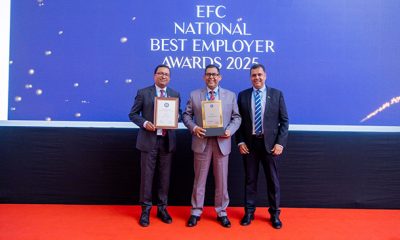
HNB recognized among Top 10 Best Employers of 2025 at the EFC National Best Employer Awards
-
 Business5 days ago
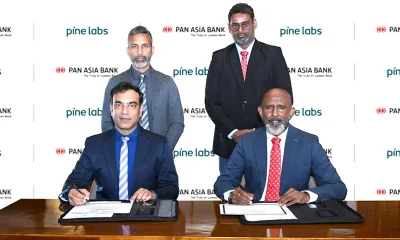
API-first card issuing and processing platform for Pan Asia Bank
-

 Editorial3 days ago
All’s not well that ends well?
-

 Business1 day ago
GREAT 2025–2030: Sri Lanka’s Green ambition meets a grid reality check
-

 Features3 days ago
Phew! The heat …