
Business
Traditional Hand Embroidery by Lakpahana

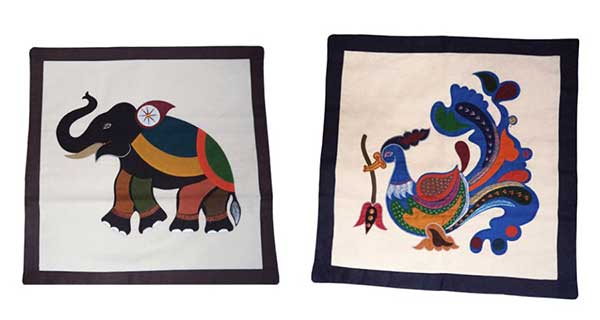
It was in the early 1960’s that Mrs. Siva Obeyesekere, who was passionate about all things handmade, started 15 sewing centers in the Attanagalle and Maligawa electorate. About 500 women attended the sewing centers.
Her husband Senator James Peter Obeyesekere was the Member of Parliament for Attanagalle at the time. The women could help improve their family income by using their leisure time in sewing at home. This became a popular cottage industry.
At the sewing centers, she and her friend, Mrs. Lorna Manukulasuriya, trained women to make the most exquisite hand embroidered handkerchieves, pillow cases and baby shirts. Made from French lawn, these beautifully embroidered items often embellished with handmade lace eschewed sentimentality, nostalgia and beauty. The designs were of a Victorian era. These beautiful items were very popular and found a ready market overseas.
Lakpahana now showcases the beautiful hand embroidered items. Handmade does not mean cheap, it means beautiful and well made. Carefully hand embroidered hankies make ideal mementos or gifts from a bygone age. The stitching is so well done that both sides are just as good.
A cotton hanky is ideal to use on hot humid days. There are gents’ hankies, childrens’ embroidered hankies and ladies’ hankies. They are deal to keep in the handbag and far classier than common tissue. It is a gift of love.
Kandyan embroidery fascinated Mrs. Obeyesekere. A great granddaughter of Iddamalgoda Kumarihamy, who was considered a princess in her time, Sabaragamuwa designs and embroidery occupied a special place in Siva’s heart. She drew all these vivid recollections to create a tapestry of colour.
Kandyan style embroidery using specific designs, colours and materials have been used to turn out beautiful cushion covers, table mats, flags and bags. The embroidered betel bags consists generally of a centre design, floral or otherwise framed by three or more borders parallel to the edge of the item of the borders.
The inner most is always “Pala peti”, the “Liya wela”, “Hawadiya” or “Gal bindu” patterns. Most of the Kandyan embroidery uses chain stitch, centipede stitch, buttonhole stitch, feather stitch and simple cross stitch.
Obeyesekere worked tirelessly to revive traditional handicrafts. Her efforts led her to start a small shop in front of the Horagolla Samadhi. This shop was the precursor to Laksala and finally Lakpahana. All the painstaking efforts of one woman who wanted to create a Sri Lankan identity. She spent endless hours with craftspeople and immersed herself in the country’s craft. Her work is a tribute to our country.
Lakpahana showcases all these embroidery and patchwork items together with a fantastic collection of all that is handmade. The past makes a beautiful present. Lakpahana has been at the forefront of doing things the traditional way.



Escalating geopolitical tensions in the Middle East involving Iran are beginning to raise concerns here, with analysts warning that the fallout could affect not only the island’s tourism industry but also its energy sector.
Tourism stakeholders say the first signs of a slowdown in visitor arrivals have begun to emerge as airlines and travel operators adjust to disruptions across key Middle Eastern aviation corridors.
According to Harsha Suriyapperuma, Chairman of the Sri Lanka Tourism Development Authority, the current tensions could temporarily influence travel flows mainly due to disruptions affecting major transit hubs in the Gulf region.
A significant share of travellers heading to Sri Lanka from Europe and other long-haul destinations transit through aviation hubs such as Dubai, Doha and Abu Dhabi.
Industry analysts say that when geopolitical tensions escalate in the Middle East, airlines often revise flight paths, cancel services or adjust schedules due to security concerns and airspace restrictions, which can slow tourism flows to destinations like Sri Lanka.
According to a Tourism industry leader, global travel demand is highly sensitive to geopolitical developments affecting major aviation corridors.
He noted that disruptions to Middle Eastern airspace could result in longer travel routes, higher airline operating costs and increased airfares, which may influence the travel decisions of tourists planning long-haul holidays.
At the same time, economists and energy analysts warn that the conflict could also create ripple effects in global energy markets.
Sri Lanka is heavily dependent on imported fuel, and any instability in the Middle East — particularly involving a major oil producer like Iran — could push global crude oil prices upward.
Energy sector sources said rising oil prices would increase the cost of fuel imports and place additional pressure on the country’s foreign exchange reserves.
Higher global oil prices could also raise operational costs in the power generation sector, particularly for thermal power plants operated by the Ceylon Electricity Board, which relies on fuel and coal imports to meet electricity demand.
Analysts say increased fuel costs could eventually translate into higher electricity generation costs and additional financial pressure on the national power utility.
The tourism sector had entered 2026 on a strong recovery trajectory after attracting more than two million visitors last year, with authorities targeting three million arrivals this year.
However, industry experts caution that prolonged geopolitical instability in the Middle East could slow the momentum of Sri Lanka’s tourism recovery while simultaneously creating new challenges for the country’s energy sector.
Despite these emerging risks, officials remain cautiously optimistic that the impact will be temporary if tensions in the region stabilise in the coming weeks.
They stress that Sri Lanka continues to be viewed internationally as a safe and attractive destination, while authorities are closely monitoring developments in global energy markets and aviation networks.
By Ifham Nizam

National Development Bank PLC (NDB/ the Bank) recently announced that it successfully raised LKR 16.0 billion through the issuance of Basel III-compliant Tier II Rated Unsecured Subordinated Redeemable GSS+ Bonds (the GSS+ Bonds), to be listed on the Colombo Stock Exchange (CSE). This issuance marks a major milestone in thematic fundraising within Sri Lanka’s capital markets landscape, signaling the country’s growing progress in the increasingly important segment of sustainable finance.
The GSS+ Bonds issue opened on 10 March 2026 and was oversubscribed within the same day, demonstrating strong demand from both retail and institutional investors. This response reaffirms the confidence investors place in NDB and its overall financial strength and stability. The issuance of the GSS+ Bonds reflects the Bank’s strong environmental and social considerations embedded in its lending practices. For many years, NDB has maintained a robust Environmental and Social Management System (ESMS) ensuring that funds are directed toward environmentally and socially responsible projects and causes.
NDB’s GSS+ Bonds will be deployed to finance eligible Green (including Blue), Social, Sustainability, and Sustainability-Linked projects, supporting environmentally responsible, socially impactful, and sustainable economic development.
Business
HNB General Insurance fastest in reaching LKR 11 Bn. revenue (GWP) within 10 years of operations

HNB General Insurance Limited (HNBGI) announced its financial results for the year ended 31 December 2025, marking a milestone year of accelerated growth, strengthened financial resilience, and sustained business momentum.
The Company recorded a Gross Written Premium (GWP) of LKR 11.0 billion for 2025, reflecting a robust 21% growth compared to LKR 9.1 billion in 2024. This performance significantly outpaced the industry’s growth of 15%, demonstrating the Company’s strong competitive positioning, disciplined execution, and continued customer confidence. With this achievement, HNBGI becomes the first general insurer in Sri Lanka to reach the LKR 11 billion GWP milestone within ten years of operations. The Company also improved its market position, moving up to 6th place from 7th in Sri Lanka’s general insurance sector.
The Fire segment emerged as a standout contributor with a 27% growth, reaching LKR 2.4 billion, while the Motor portfolio grew by 25% to LKR 6.0 billion. Marine recorded a steady 16% increase to LKR 378 million, and the Miscellaneous segment contributed LKR 2.2 billion. The broad-based growth across segments reflects HNB General Insurance’s balanced portfolio, effective distribution reach, and strong customer confidence.
The Company demonstrated its unwavering commitment to customers through timely and efficient claims management, committing LKR 2.5 billion towards Ditwa cyclone-related claims. In addition, a further LKR 4.7 billion was paid in claims across all other segments during the year, underscoring the Company’s financial strength and reliability in times of need.
The Company’s financial strength further consolidated during the year, with Total Assets growing by a significant 31% to LKR 13.38 billion, while Funds Under Management increased by 9% to LKR 6.74 billion. The Capital Adequacy Ratio remained well above regulatory requirements at 190%, reflecting a solid capital base to support future growth.

Pakistan lodge official complaint about Bangladesh’s review at end of chase

Showers or thundershowers will occur at several places in the Central, Sabaragamuwa, Southern and Uva provinces after 2.00 pm.

Government’s objective is to ensure the continuous functioning of the country’s economic activities and essential services through effective energy management – President

UN resolution on Iran ‘unbalanced’: FM Herath

Japan provides grant for reinforcement of Cyclone Ditwah damaged bridge

Australian HC debunks misleading travel risk claims for Sri Lanka

‘Dates have the highest sugar content to fight Coronavirus’

Sunday Island 27 December – Headlines

#SundayIsland 17th December – Headlines

Sunday Island – 28th March

Sunday Island Headlines – 21 March

Sunday Island – 21st February – Headlines
-
 Business6 days ago
BOI launches ‘Invest in Sri Lanka’ forum
-
 News5 days ago
Historic address by BASL President at the Supreme Court of India
-

 Sports5 days ago
The 147th Royal–Thomian and 175 Years of the School by the Sea
-

 Sports6 days ago
Royal start favourites in historic Battle of the Blues
-
 News6 days ago
CEBEU warns of operational disruptions amid uncertainty over CEB restructuring
-
 Features6 days ago
Indian Ocean zone of peace torpedoed!
-
 News5 days ago
Power sector reforms jolted by 40% pay hike demand
-

 News3 days ago
Crypto loopholes funnel Lankan funds abroad