
News
Trade unionist challenges Health Minister to debate

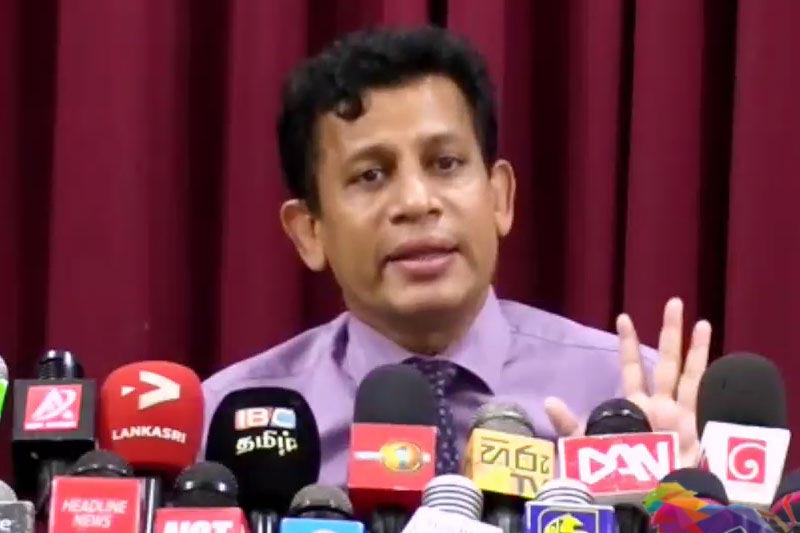
Ravi Kumudesh, Chairman of the Joint Council of Professions Supplementary to Medicine (JCPSM), has challenged Health and Mass Media Minister Dr. Nalinda Jayatissa to a telivision debate over the ongoing crisis affecting the professions supplementary to medicine.
Speaking to the media on Thursday, Kumudesh accused the Minister of avoiding critical discussions that could have resolved the issues currently gripping the healthcare sector. He said the JCPSM had launched a strike on June 5 in protest against what he described as politically biased decisions by Minister Jayatissa and Health Ministry Secretary Dr. Anil Jasinghe.
“Minister Jayatissa is deliberately avoiding engagement because he knows he has made a wrong decision,” Kumudesh said, warning that the strike, originally set to end on Friday, would now continue indefinitely.
He claimed the trade unions had been compelled to extend the strike due to the Minister’s “immature conduct” and lack of willingness to engage in dialogue. “No tangible action has been taken to fulfil promises made to the members of the professions supplementary of medicine regarding long-overdue promotions,” he said.
Kumudesh further accused the Minister of contradicting government policy in decisions concerning the Kotelawala Defence University (KDU). “The government’s decision on KDU medical graduates and the Minister’s contradictory stance on KDU public health graduates expose serious inconsistencies,” he charged. Calling for a high-level intervention, Kumudesh said that either the Prime Minister or the President must now step in to resolve the crisis. “If the Minister continues to avoid roundtable discussions, we challenge him to a public TV debate. Let him face the people and prove he’s right — if he can,” he added.Kumudesh said that the strike would not be called off unless formal discussions take place and concrete measures are taken to address their grievances.


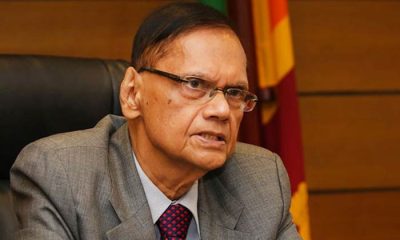



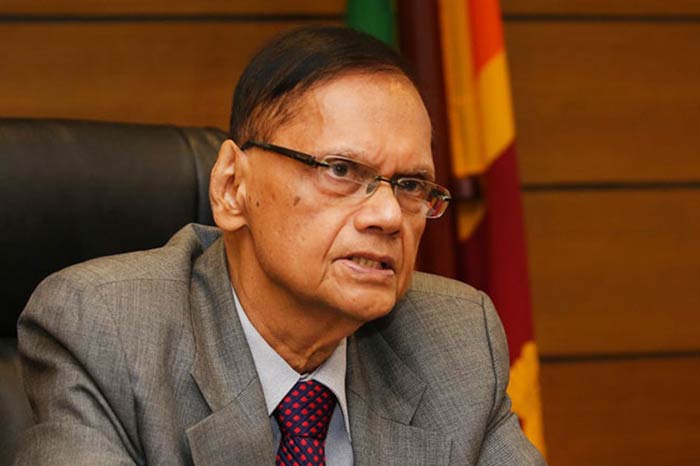
Former Foreign Minister Prof. G. L. Peiris, in a letter to President Anura Kumara Dissanayake, has asked how the NPP government intends to address the fallout from the ongoing war in the Middle East. Prof. Peiris has requested the President to place in the public domain some basic information in respect of the government’s approach to these troubling issues and enable informed participation by the public.
Text of the letter dated 03 March: “I am writing to you, as a former Foreign Minister, on behalf of concerned citizens in the country, to draw Your Excellency’s attention to the gravity of the consequences arising immediately for our country from the volatile situation currently developing in the Middle East.
“It is my strong conviction that the government should explain without delay to the country and to the international community its stand on the grave issues involved and its reaction to them.
“Clearly, the crisis has a direct impact on Sri Lanka in at least four major respects.
“Escalating oil prices in the world market will inevitably be reflected in local trends in the very near future, significantly increasing the cost of living and aggravating already serious economic hardship for the public of our country.
“Export revenues are likely to diminish, especially in respect of commodities like tea, because of difficulty of access to critical markets in the region engulfed by active military action.
“The hotels sector is already experiencing cancellation on a considerable scale from prospective tourists from Europe and North America and the Gulf, who are affected by difficulties relating to air travel across the affected region.
“The situation places in jeopardy the viability of remittances from Sri Lankan workers throughout the Gulf and the wider area.
“In handling these far-reaching repercussions, it is our firm resolve to offer the government whatever assistance we can in the broader national interest, in the face of a multi-faceted calamity.
There is continuing discussion among us, in depth, regarding practical measures to mitigate the effects of the crisis for our country, and we intend to hold a briefing for the information of the public in the near future.”
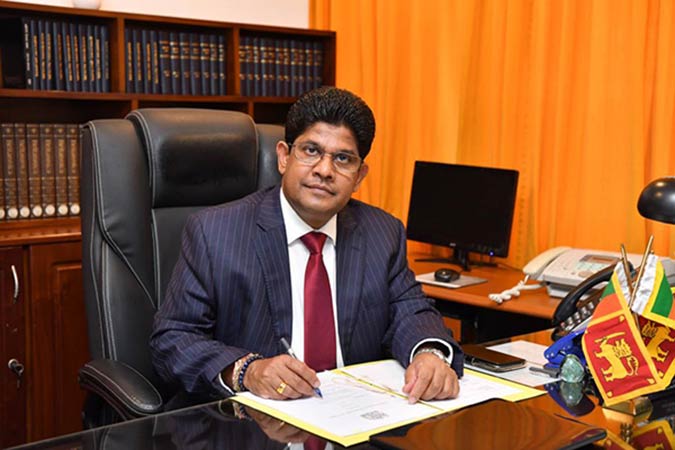
The Court of Appeal yesterday ordered that a petition filed by former Deputy Secretary General of Parliament, Chaminda Kularatne, seeking the issuance of a writ order to nullify the decision to suspend him without conducting a fair inquiry, be taken up for consideration on 18 March, 2026.
The petition was taken up yesterday (03) before a bench comprising President of the Court of Appeal Rohantha Abeysuriya and Justice Priyantha Fernando.
The petitioner, Chaminda Kularatne, was present in court when the plaint was called.
After considering the submissions made by counsel appearing for both the petitioner and the respondents, the bench ordered that the petition be taken up for consideration on 18 March, 2026, for the confirmation of facts.
The writ application highlighted several critical legal and procedural flaws:
Under the Parliamentary Staff Act, the Secretary General (1st Respondent) is the sole disciplinary authority.
The Parliamentary Staff Advisory Committee (PSAC) has no legal power to interdict staff, rendering its decision ultra vires and null and void.
The petitioner has alleged that the Speaker Dr. Jagath Wickramaratne acted out of malice to suspend him against the principles of administrative law and natural justice.
The petitioner has contended that the Speaker obtained a report containing false information from an unlawfully appointed inquiry officer and based the suspension on those findings.
The Speaker allegedly hand-picked an inquiry officer (8th Respondent) to conduct a preliminary inquiry without legal mandate, even though the Petitioner’s appointment and qualifications had already been officially confirmed and announced to the House in 2023.
At the time the decision was made, the PSAC was not lawfully constituted, as it lacked representatives from the Opposition and included members whose appointments did not meet statutory requirements.
Kularatne has petitioned the Court of Appeal, seeking Writs of Certiorari to quash the appointment of the investigating officer, the preliminary inquiry report, and the resulting interdiction imposed upon him. He further seeks the production and examination of records relating to the purported preliminary inquiry, together with relevant Right to Information (RTI) files, in order to expose the procedural irregularities, lack of lawful authority, and bias underlying the disciplinary process.
Kularatne is represented by a senior legal team, including President’s Counsel Sanjeeva Jayawardena.
In addition to the court case, further actions have been taken regarding alleged corruption. The suspended Deputy Secretary General has submitted a 7-page complaint to the Commission to Investigate Allegations of Bribery or Corruption. The complaint detailed eight alleged acts of corruption committed by Speaker Dr. Jagath Wickramaratne and his Private Secretary, Chameera Gallege. A group of opposition Members of Parliament also filed a complaint with the Bribery Commission against Chameera Gallege.
They claim that Mr. Gallege interfered with the investigation by requesting a report from the Secretary General of Parliament regarding the initial complaint, thereby exerting undue influence on the proceedings.
Condemning the US-Israel attack on Iran, the Frontline Socialist Party (FSP) pointed out that the new campaign was launched on the pretext of pre-emptive strikes in the face of nuclear threats. The FSP emphasised that military action was launched amid diplomatic engagement. Declaring that there was no credible evidence to suggest nuclear threat, the FSP stated US-Israel actions violated international laws and conventions.
The text of the letter: “The growing inter-imperialist contradictions and the desperate plans of U.S. imperialists to arbitrarily use military force to protect their dwindling economic hegemony have placed the world at risk of being drowned in rivers of blood. The brutal nature of this war was symbolised at its very onset by an airstrike on a girls’ school in Minab, Iran, which resulted in the deaths of about hundred girls. While these attacks take the form of targeted assassinations of political leaders and high-ranking military officials, the accompanying massive bombings have resulted in severe civilian casualties.
Following the collapse of the Soviet-led camp, the United States anticipated a unipolar world in which it would be the sole global superpower; however, this was a very short-lived reality. A multipolar world emerged rapidly, and inter-imperialist contradictions are now intensifying. The new tariff policies and trade wars declared by the Trump administration, along with acts of aggression in Ukraine, Palestine, Venezuela, and Iran, are reflections of these escalating contradictions.
The imperialist war, waged for the interests of monopoly capital, is bringing destruction to the entire world and has put humanity at risk from the very first step. Furthermore, the rising military tensions between nuclear powers have jeopardised the survival of the human race and the entire planet.
Against this backdrop, building international people’s power against imperialist war—centred on working class leadership—is essential to defending humanity’s future.
The imperialist attack on Iran cannot be justified by citing the repressive and fundamentalist nature of its ruling class. Only the Iranian people can determine regime change; we condemn the manipulation of their democratic aspirations to further imperialist interests. Democratic rights are not won through imperialist invasions, which only shrink those rights. As in Iraq, Syria, and Yemen, the goal is Iran’s subjugation to serve strategic interests, not to grant rights. If not resisted, Iran risks enduring civil war and becoming an imperialist puppet. We call on the Iranian people, led by the working class, to build broad people’s power and confront their ruling class without falling into the imperialist trap.
We encourage the Iranian people to link their struggle with the international working class to free themselves both from imperialist aggression and domestic repression.
Let us oppose the imperialist war seeking global hegemony and advancing monopoly capitalist interests.
Let us demand an immediate halt to the attacks on Iran and prevent escalation into a catastrophe.
Let us demand the immediate removal of U.S. military bases in the Middle East.
To achieve these measures, the working class and the proletariat must unite against imperialists and their domestic allies. We call upon all working people worldwide to build a broad anti-imperialist mass movement, including the people of Sri Lanka, to join global action against imperialist war.”

Holy Cross meet St. Aloysius’ in Battle of Dreams

Prof. Peiris seeks explanation from Prez regarding govt.’s response to ME war

Petition before CA against Speaker fixed for consideration on 18 March

US-Israel attacked Iran on false pretext of nuclear threat- FSP

Ranil says Iran leadership eviction methodology unacceptable

S. K. Sangakkara passes away

‘Dates have the highest sugar content to fight Coronavirus’

Sunday Island 27 December – Headlines

#SundayIsland 17th December – Headlines

Sunday Island – 28th March

Sunday Island Headlines – 21 March

Sunday Island – 21st February – Headlines
-

 Opinion5 days ago
Jamming and re-setting the world: What is the role of Donald Trump?
-

 Features5 days ago
An innocent bystander or a passive onlooker?
-

 Features2 days ago
Brilliant Navy officer no more
-
 Features6 days ago
Ratmalana Airport: The Truth, The Whole Truth, And Nothing But The Truth
-

 Features7 days ago
Building on Sand: The Indian market trap
-
 Opinion7 days ago
Future must be won
-

 Opinion2 days ago
Sri Lanka – world’s worst facilities for cricket fans
-
 Business6 days ago
IRCSL transforms Sri Lanka’s insurance industry with first-ever Centralized Insurance Data Repository