
News
TNA, allies call for outfit like IIIM in Syria to probe SL

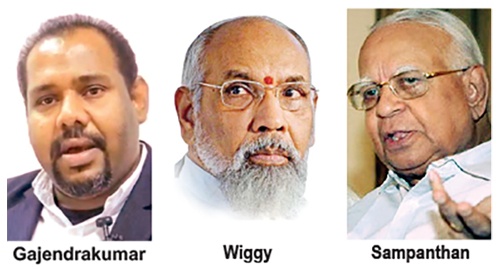
Three Tamil political parties represented in Parliament backed by several other civil society groups, have urged the Geneva-based United Nations Human Rights Council (UNHRC) to set up an evidence gathering mechanism, similar to the International Independent Investigatory Mechanism (IIIM), in relation to Syria, established as a subsidiary body of the UN General Assembly, with a strict time frame of 12 months duration to investigate Sri Lanka war crimes.
The following is the text of the letter addressed to UNHRC members by the TNA, TNPF and TMTK: “We, the elected representatives of the Tamil people in Sri Lanka, leaders of Tamil national political parties, members of the Tamil victim communities and Tamil civil society organizations write this letter in the lead up to the 46th Session of the United Nations Human Rights Council (UNHRC) when the situation in Sri Lanka is to be evaluated. We note that within a week of the end of the armed ethnic conflict in Sri Lanka, a joint communiqué by the Government of Sri Lanka and the United Nations was issued at the conclusion of UN Secretary-General’s visit to Sri Lanka on 23 May 2009 with the following: “Sri Lanka reiterated its strongest commitment to the promotion and protection of human rights, in keeping with international human rights standards and Sri Lanka’s international obligations. The Secretary-General underlined the importance of an accountability process for addressing violations of international humanitarian and human rights law. The Government will take measures to address those grievances” Upon Sri Lanka failing to take meaningful steps to address the above commitments, the UN Secretary General appointed on 22 June 2010, a three-member panel to look into human rights and accountability issues during the final stages of the armed ethnic conflict in Sri Lanka. This report of the Panel of Experts (POE) was handed over to the Secretary General in March 2011. Subsequently, the Secretary General referred the POE to the President of the UNHRC and the High Commissioner for Human Rights in September 2011. Thereafter, the UNHRC adopted Resolution 19/2 “Promoting Reconciliation and Accountability in Sri Lanka” in March 2012 and since then has been seized of the matter with several resolutions in March 2013 and March 2014. Subsequently, the Government of Sri Lanka co-sponsored Resolutions 30/1 (October 2015), 34/1 (March 2017) and 40/1 (March 2019). Leaders across the political spectrum in Sri Lanka including from both the major political parties have categorically and without exception stated that they will protect the Sri Lankan armed forces from prosecutions. It is now time for Member States to acknowledge that there is no scope for a domestic process that can genuinely deal with accountability in Sri Lanka.
“The continuing and intensifying oppression against the Tamils including militarisation, indefinite detention of political prisoners, land grab in the name of archaeological explorations, the denial of traditional, collective land rights like cattle grazing rights, intensifying surveillance of political and civil society activists, the denial of burial rights during COVID19 to our Muslim brethren and the denial of the right to memory underscore the urgency of addressing the deteriorating situation. As the UNHRC meets in February and March 2021 to evaluate the Sri Lankan Government’s commitments under Resolution 40/1 and plan further action, we urge that member states categorically come to this conclusion by way of a final Resolution. The Resolution must declare that Sri Lanka has failed in its obligations to investigate allegations of violations committed during the armed ethnic conflict and atrocity crimes including genocide, crimes against humanity and war crimes.
“In such a context the Resolution must acknowledge that there is no prospect for accountability in Sri Lanka by way of its own domestic mechanisms or through hybrid mechanisms.
We request the following: 1. Member States urge in the new resolution that other organs of the United Nations including the UN Security Council and the UN General Assembly take up the matter and take suitable action by reference to the International Criminal Court and any other appropriate and effective international accountability mechanisms to inquire into the crime of genocide, war crimes and crimes against humanity.
2. The President of the UNHRC refers matters on accountability in Sri Lanka back to the UN Secretary General for action as stated above.
3. Member States to mandate the Office of the High Commissioner for Human Rights (OHCHR) to continue to monitor Sri Lanka for ongoing violations and have an OHCHR field presence in country.
4. Without detracting from that which has been stated in point 1 above, take steps to establish an evidence gathering mechanism similar to the International Independent Investigatory Mechanism (IIIM) in relation to Syria established as a subsidiary body of the UN General Assembly with a strict time frame of twelve months duration.
We reiterate the need for concrete action with accountability and for the above the matter to be escalated to higher forums. Thus, we urge Member States to take decisive and timely action to grant redress to the people who have been denied justice thus far.”



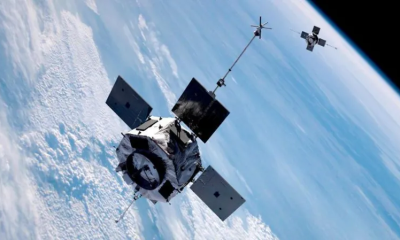

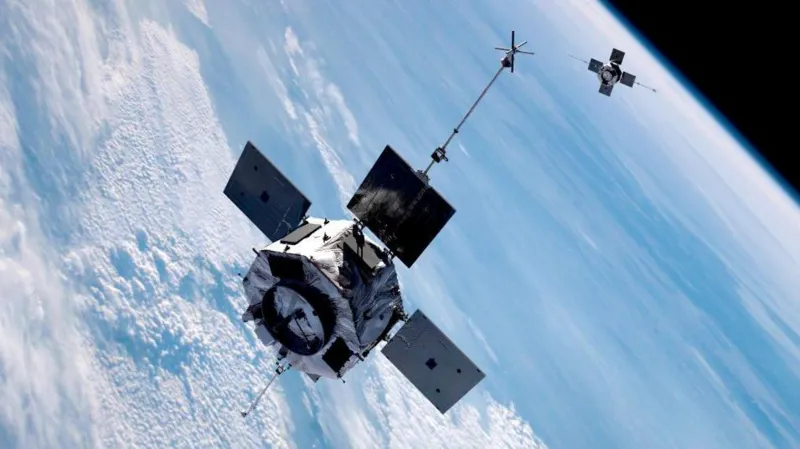
A Van Allen Probe spacecraft weighing more than 1,300lb (600kg) is expected to re-enter Earth’s atmosphere almost 14 years after its launch, Nasa says.
The spacecraft is projected to re-enter around 19:45 EDT (23:45 GMT) on Tuesday the US Space Force predicted, according to Nasa, though there is a 24-hour margin of “uncertainty” in the timing.
The Van Allen Probe A, which launched in 2012, is expected mostly to burn up as it travels through the atmosphere, though some components may survive.
The space agency said there is a one in 4,200 chance of being harmed by a piece of the probe, which it characterised as “low” risk.
The spacecraft and its twin, Van Allen Probe B, were on a mission to gather unprecedented data on Earth’s two permanent radiation belts.
It was not immediately clear where in Earth’s atmosphere the satellite is projected to re-enter. The BBC has contacted Nasa for further detail.
Nasa and the US Space Force have said they will monitor the re-entry and update any predictions.
The mission, which was originally designed to last two years, went on for almost seven. It ended after the spacecrafts ran out of fuel and were no longer able to orient themselves toward the Sun.
The probes flew through rings of charged particles trapped by Earth’s magnetic field from 2012 to 2019, in order to study how particles were gained and lost, per Nasa.
Those rings, called the Van Allen belts, shield Earth from cosmic radiation, solar storms and streaming solar wind, which are harmful to humans and can damage technology.
The mission made significant discoveries, including the first data that show the existence of a transient third radiation belt, which can form during times of intense solar activity, Nasa said.
Van Allen Probe B is not expected to re-enter the Earth’s atmosphere before 2030.
[BBC]

Prime Minister Dr. Harini Amarasuriya visited the International Rice Research Institute (IRRI) headquarters in Los Baños, Laguna, Philippines, on 11 March 2026, and held bilateral discussions with Yvonne Pinto, Director General of IRRI, focusing on strengthening cooperation in the field of rice research and sustainable agricultural development.
During the meeting, discussions centered on rice cultivation in Sri Lanka, including the key challenges faced by Sri Lankan paddy farmers. The Prime Minister highlighted issues affecting the sector such as productivity constraints, climate-related impacts, and the need to support farmers through improved agricultural practices and technological innovations.
Both sides also discussed the importance of introducing modern techniques and research-driven approaches to rice cultivation in order to enhance productivity and ensure long-term food security. In this regard, IRRI shared insights on ongoing global research initiatives aimed at improving rice varieties, strengthening climate resilience, and promoting sustainable farming practices.
The discussion further focused on the potential for expanded collaboration between Sri Lanka and IRRI, particularly in areas such as research partnerships, knowledge sharing, and capacity building for Sri Lankan agricultural institutions and farmers. The Prime Minister emphasized Sri Lanka’s interest in strengthening cooperation with IRRI to support the development of the country’s rice sector and to improve the livelihoods of paddy farmers.
The visit reaffirmed the importance of science-based agricultural innovation and international collaboration in addressing food security challenges and enhancing sustainable rice production in Sri Lanka.

(Prime Minister’s Media Division)
Latest News
Heat Index at ‘Caution level’ at some places in the Western, Sabaragamuwa, Southern and North-western provinces and in Monaragala and Mannar districts

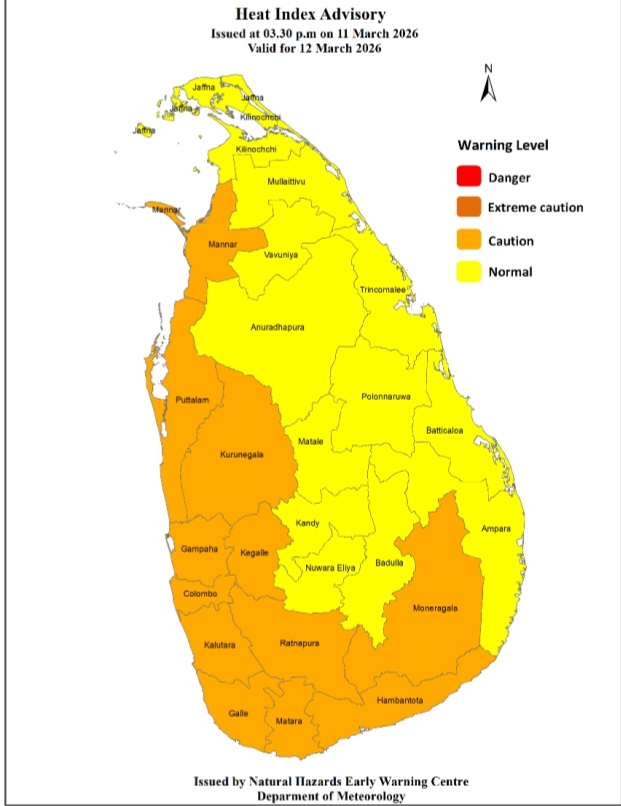
Warm Weather Advisory
Issued by the Natural Hazards Early Warning Centre of the Department of Meteorology at 3.30 p.m. on 11 March 2026, valid for 12 March 2026.
The public are warned that the Heat index, the temperature felt on human body is likely to increase up to ‘Caution level’ at
some places in the Western, Sabaragamuwa, Southern and North-western provinces and in Monaragala and Mannar districts.
The Heat Index Forecast is calculated by using relative humidity and maximum temperature and this is the condition that is felt on your body. This is not the forecast of maximum temperature. It is generated by the Department of Meteorology for the next day period and prepared by using global numerical weather prediction model data.

Effect of the heat index on human body is mentioned in the above table and it is prepared on the advice of the Ministry of Health and Indigenous Medical Services.
ACTION REQUIRED
Job sites: Stay hydrated and takes breaks in the shade as often as possible.
Indoors: Check up on the elderly and the sick.
Vehicles: Never leave children unattended.
Outdoors: Limit strenuous outdoor activities, find shade and stay hydrated.
Dress: Wear lightweight and white or light-colored clothing.
Note:
In addition, please refer to advisories issued by the Disaster Preparedness & Response Division, Ministry of Health in this regard as well.
For further clarifications please contact 011-744649

Jemimah Rodrigues, Harmanpreet Kaur, Mitchell Starc and Kuldeep Yadav among ESPNcricinfo award winners for 2025

China approves ‘ethnic unity’ law requiring minorities to learn Mandarin

Nasa spacecraft weighing 1,300lb due to re-enter Earth’s atmosphere

Chinese national arrested over attempt to smuggle 2,000 queen ants from Kenya

Attacks reported on three more cargo ships in Gulf, with oil price back near $100

PM Visits the International Rice Research Institute (IRRI)

‘Dates have the highest sugar content to fight Coronavirus’

Sunday Island 27 December – Headlines

#SundayIsland 17th December – Headlines

Sunday Island – 28th March

Sunday Island Headlines – 21 March

Sunday Island – 21st February – Headlines
-

 News7 days ago
University of Wolverhampton confirms Ranil was officially invited
-

 News6 days ago
Peradeniya Uni issues alert over leopards in its premises
-

 News7 days ago
Female lawyer given 12 years RI for preparing forged deeds for Borella land
-

 News4 days ago
Repatriation of Iranian naval personnel Sri Lanka’s call: Washington
-
 News7 days ago
Library crisis hits Pera university
-

 News6 days ago
Wife raises alarm over Sallay’s detention under PTA
-

 News7 days ago
‘IRIS Dena was Indian Navy guest, hit without warning’, Iran warns US of bitter regret
-
 Latest News7 days ago
Sri Lanka evacuates crew of second Iranian vessel after US sunk IRIS Dena