
Features
The Knuckles Range

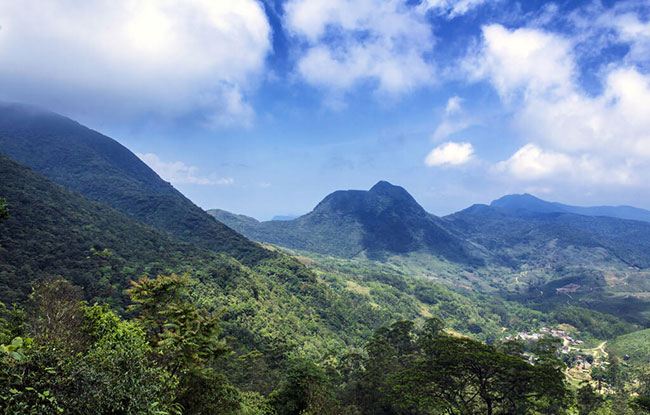
by Dishana H. Uragoda
My first jungle trips were made with the family. The very first, as far as my memory goes, was in the mid 1970s, when we travelled in an Austin A 60 car to Lahugala, Ampara, Batticaloa, Polonnaruva and Sigiriya. I was probably five years old at the time. Since then there were a number of such long trips we made as a family, until 1984 when we joined Mr. Meryl Fernando and his traveling companions on a trip to Rakwana.
It was on this trip that I made my first memorable jungle hike, which was to the famous Waulpane cave. Since that trip, we made a number of trips to Yala where we based ourselves at the Palatupana bungalow run by the Wildlife and Nature Protection Society. We used to make those trips in Uncle Meryl’s Mitsubishi J40 jeep and trailer, driven by the dear driver Simon, whose nephew Wimaladasa was in charge of the bungalow at Palatupana.
During this period, another anchorman to our trips stepped into our lives. He was Senath Abeygunawardena, who was a close friend of my brother. In subsequent years, we made many trips with a group of friends whom he introduced to our family, such as Bimal Perera, Niranjan Perera and Imaran Seneviratne. In fact, we still continue to go on trips with them, together with my sister’s father-in-law, Dr. Walter Gooneratne, Air Vice Marshall Paddy Mendis and the Vernon Edirisinghe family. In between, there was another group with whom I made a number of trips during the early 1990s, and it is one of these that I wish to elaborate on.
It all began when I joined an institute in Colombo to read for a degree in computer science in August 1990 shortly after leaving school. Here I came across a bunch of boys who developed a keen interest in sharing the thrills of traveling in Sri Lanka. Their interest may have been partly created by their seeing my photographs and listening to my narrations of interesting incidents of trips undertaken with my family. The interest so created resulted in altogether five trips being made during end-of-semester holidays to interesting places, namely Adam’s Peak, Horton Plains, Namunukula, Anuradhapura and the Knuckles. These trips were filled with laughter, gossip, bullying and idle talk. They were all budget trips leading a frugal existence, and that made them all the more interesting. After our three years at the institute, almost all of us joined universities in the USA and are now dispersed round the world, yet most of our links and friendships remain as before.
Planning the trip
At the institute we had two weeks holidays in between semesters, and had to squeeze in all the action and relaxation we could think of within that period. On this particular occasion, we decided on the Knuckles region as our destination. I had some experience of the area, having been there twice before on family trips, one of which was a successful attempt at reaching the famous Nitre Cave. The other trip was a total disaster, with heavy rains, strong winds, earthslips, floods and leeches. We planned the present trip in order to avoid the rainy season.
On one of these earlier visits, I happened to obtain the address of the Village Headman of Kumbukgolle off Meemure. He was Heenbanda alias Polgas Seeman Aiya, who was a respectable-looking, small built, lively man in his 50s. My brother and his friends had spent a few nights with him some years earlier on one of their trips; hence I knew we had a chance of spending a few nights with him. After a letter or two of correspondence, we were assured of a place to spend the nights. Our targets were the Nitro Cave and Lakegala Peak of the Knuckles range.
The former could be reached by using Heenbanda’s home as the base, but to get to Lakegala, we had to find accommodation in the more famous village of Meemure. Since we did not have any contacts there, we were considering either the school or the temple as our base. As a backup plan, we were contemplating the possibility of camping out. We had no idea where to camp, but we knew the river Heen Ganga wound through Mimure and it would be practical to camp on its bank.
Six persons agreed to make the trip, and they were Azard Barie, Chandima Wimalasena, Nishantha Nawalage, Tharaka de Silva, Udara Gunawardena and myself. We tried very hard to convince a regular member of our team, Lakshita Surasinghe as well, but he opted out with a trivial excuse. Looking at this list of names today, they have all turned out to be Information Technology professionals of different flavours based around the globe. One sad fact is that our dear friend Azard Barie is no more. He passed away in the UK in January 2003. As would be expected, we were all bachelors then, but now are either fathers, fathers-to-be, separated, fiances, singletons or playboys.
We planned to be out for three nights and hence the food had to be anything that lasted without refrigeration for a few days. We knew we would be provided with food at Heenbanda’s, but we had to stock ourselves with some for the balance period, the easiest being instant noodles, sliced bread, tinned fish, butter, jam and some biscuit packets. We expected to obtain water of pristine purity from the streams found in the Knuckles. While this settled the food problem for me, there were protests from the rest of the boys, who were all heavy eaters and seekers of comfort. They had a notion that I knew somewhat better than they regarding trips and went on with my recommendations, but now I feel they made a mistake!
Backup plan of camping was a favourable option to putting up at a school or temple, and we decided to prepare ourselves for it. We required two tents, a portable kerosene cooker, and at least one kerosene lantern. I had two tents which we regularly used on our family trips. We bought a kerosene cooker, and a few of us obtained lanterns from home.
The next step was to figure out the route to be taken. I obtained some help from my father who knew these areas better than we did. We decided to go to Kandy, and then to Hunasgiriya, where we were to turn towards Looloowatta Estate and reach the beautiful Corbet’s Gap, where the road branched off west to Mimure (3 km) and east to Kumbukgolla (3 km). The next major hurdle was organising transport. In all our previous college trips we used public transport, but this trip required a vehicle. For our good fortune, Chandi’s father allowed us the use of his Toyota Lightace van, and all was set to go.
Trip at last
Departure was set for Wednesday, August 12, 1992, and return was three nights later, on Sunday 15th. The dates were selected to take advantage of the full moon of Nikini poya, which fell on the 13th. All food items, provisions, tents, a large haversack, kettle, kerosene cooker, lamps and other paraphernalia were packed in Chandi’s van the previous night. Early next morning, along with our personal items, we left Colombo. It was a great start despite the short delay and the rather harsh rock music that blared into my ears at the back of the vehicle. The two experts who provided the music were Chandi and Nish. Their preferences were a far cry from the peaceful pop or country music that I appreciated, but for my luck Nish had brought a few cassettes of my flavour.
Many of us had brought sandwiches for breakfast, which we had whilst on the move. The idea was to lose as little time as possible by way of wayside stops. As expected, the van was in an explosive atmosphere with much chattering and laughter. After a while, we began trying out our singing skills. Tharaka knew much of the “Big match” style of Sinhala songs, while Azard and I were somewhat proficient in regular baila songs. Nish was an expert of English pop songs to which we would listen with admiration.
The drive was rather slow and comfortable with Chandi at the wheel. We reached Kandy around 10 am, and we decided to wander around the town and eventually break journey by going to the house of Nish’s aunt for snacks and drinks. After delaying a short time in Kandy, we again took the road. Though the road conditions were not at their best, it was quite a scenic route. We passed the Victoria reservoir, where the water level was low at the time, and reached Hunnasgiriya around 2.30 pm. There, with the help of directions from a wayside villager, we proceeded north towards Looloowatta Estate.
Road conditions became less comfortable and we had to proceed quite slowly, with the van bouncing along. For our luck, there was no rain although it was pretty overcast. By 3.45 pm or so we reached Looloowatta Estate, and though all were now hungry, there was no time to waste as our overall plan of reaching Kumbukgolla in time was of higher priority. With the cloudy sky, it turned out to be slightly chilly.
At the small town of Looloowatta, we stopped for directions once again, and there we were asked if we could give three hefty men a lift to Mimure. We did not think it was a good idea to overload the vehicle. Then two of them explained to us that the third member was the officer in charge of the Police Station at Mimure, and requested us to oblige by giving only him a lift. We agreed and put him in the front seat. Chandi wanted me to take the wheel. One reason was his being tired, and the other was his thinking that I was better at keeping the guest company.
Knuckles
This was the first time I was driving a van, and I took off in the manner of driving the Land Rover back home. However, it did not take long to figure out that the van had much softer suspension as it bounced and oscillated frightfully. I proceeded slowly on the road going northwards towards Corbet’s Gap and admiring the beautiful mountain scenery amidst the coolness of the evening. The vegetation around and the long grass that covered the sides of the road were added attractions. I kept on chatting with the policeman, who gave relevant details of the area and pointed out the various mountain peaks, but the others at the back of the van observed silence, probably induced by hunger. We had proceeded a few kilometres down the road and I was keeping slightly to the left, as there was a deep drop into the ravine below on the right. There was plenty of grass on the roadside to the left. I enjoyed the beautiful view while driving.
Suddenly there was a loud explosion which shook the whole vehicle. I felt it strongly on the steering. There was an eerie rumble as I slowed down the vehicle to a stop. We were in a state of shock and surprise. We got down in a hurry and rushed to check what was wrong. We found the left front tyre deflated with a two-inch gash on it. It was a huge blow to us since we had a long way to go and we could not proceed without a spare wheel. I was upset as it was I who was driving Chandi’s van. We were wondering what caused the gash in the tyre as there was apparently nothing on the surface of the road to account for it. However, on closer inspection, we discovered rocks with jagged edges under the soft carpet of beautiful grass on the roadside. One of them was likely to be responsible for the damage.
It was a rude introduction to the new terrain we were in. The policeman, who was rather calm, had a look at the tyre and declared he would get it repaired so that we could collect it when we visited Mimure a day later. He sounded rather confident, and that gave us some relief. It also made us realise how lucky we were to have given him the lift. He also gave us permission to camp next to the bridge over the river Heen Ganga, a tributary of Mahaweli, that went through Meemure.
I let Chandi take over the wheel since I was feeling rather bad at what had happened. We passed the beautiful Corbet’s Gap and eventually came to the fork on the road. The road up to this point was tarred and very much motorable. But now, both branches of the fork were typical jeep tracks with large rocks on the gravel surface. The time was around 4.30 pm and it was getting late. We took the left branch going to Mimure to drop the policeman. A few of us had to literally walk with the vehicle, moving aside rocks on the road that could damage the tyres and the suspension. Driving was not getting any easier, with the eyes straining to watch out for danger spots.
We proceeded a good two km before we came to the police station, at which point the policeman got down with the damaged wheel in his care. We came back on the same route, and then went down the other branch of the fork, going west to the Kumbukgolla village. The road was no better, and we eventually came to Kumbukgolla around 6 pm.
Heenbanda’s house was only about 100 metres away, yet we had to take the van across a dry tributary of Heen Ganga that was studded with boulders. By this time, word had got round of our arrival and Heenbanda, accompanied by many villagers, was there to greet us. We were accorded a warm welcome and Heenbanda was happy to see me. We talked of our previous trips there, as well as my brother’s. Heenbanda wanted us to take the vehicle to his house and taking command of the operation, he ordered and directed the villagers around who virtually lifted the van across the difficult, large rocks.
The sun had set a good half an hour earlier, yet there was some daylight available. So we rushed into unloading only our bags and a few other essential items, as we knew we had to take off to Mimure the next day. We were getting accommodation in one huge room, which was a good portion of Heenbanda’s house. It had a neatly tiled roof, a cemented unpolished floor, white plastered walls and sufficient furniture for us to sit and make ourselves comfortable.
We were all eagerly waiting to have a wash, when we were informed that it would have to be at the river that we crossed. Since we were all dog-tired, a bathroom would have been most welcome. Now that we had to walk upstream searching for water in the dark and in cold weather, the eagerness to have a bath was somewhat diluted. Heenbanda was sending a guide with us to take us to the bathing spot, and we motivated ourselves to rush with the wash as there was still some light outside. We walked upstream about 100 metres from where we crossed the river, and there it was, water being channeled along strips of banana stems acting as a gutter. The water was quite cold, but after completing the wash with the help of kerosene lamps, it was indeed quite refreshing. We rushed back to our abode shivering and got into warmer clothes.
Heenbanda and his wife, a nice quiet and elderly lady served us with an early dinner and we were once again rejuvenated. There was no electricity but a number of kerosene oil lamps were lit, and we were provided with woven mats, one each for the six of us to sleep on. Once bedding was arranged, we had Heenbanda’s permission to take a walk in the night. We stepped out with our torches, and it was a beautiful night with plenty of moonlight. I proudly took a branded American 3-cell torch, which was very effective and not very common at the time. We decided to walk to the riverbed to relax, and then as the ever-so-hungry or thirsty lot wanted to have coffee, I thought it best to test the new kerosene cooker. We took it out of the van with the kettle, cups, coffee, milk and sugar, and took a cool walk to the riverbed.
(To be continued)







 On the morning of November 28, 2025, Cyclone Ditwah made an unremarkable entrance, meteorologically speaking. With winds barely scraping 75 km/h, it was classified as merely a “Cyclonic Storm” by the India Meteorological Department. No dramatic satellite spiral. No apocalyptic wind speeds. Just a modest weather system forming unusually close to the equator, south of Sri Lanka.
By December’s second week, the numbers told a story of national reckoning: over 650 lives lost, 2.3 million people affected, roughly one in ten Sri Lankans, and economic losses estimated between $6-7 billion. To put that in perspective, the damage bill equals roughly 3-5% of the country’s entire GDP, exceeding the combined annual budgets for healthcare and education. It became Sri Lanka’s deadliest natural disaster since the 2004 tsunami.
The Hydrology of Horror
The answer lies not in wind speed but in water volume. In just 24 hours on 28 November, hydrologists estimate that approximately 13 billion cubic meters of rain fell across Sri Lanka, roughly 10% of the island’s average annual rainfall compressed into a single day. Some areas recorded over 300-400mm in that period. To visualise the scale: the discharge rate approached 150,000 cubic meters per second, comparable to the Amazon River at peak flow, but concentrated on an island 100 times smaller than the Amazon basin.
The soil, already saturated from previous monsoon rains, couldn’t absorb this deluge. Nearly everything ran off. The Kelani, Mahaweli, and Deduru Oya river systems overflowed simultaneously. Reservoirs like Kala Wewa and Rajanganaya had to release massive volumes to prevent catastrophic dam failures, which only accelerated downstream flooding.
Where Development Met Disaster
The human toll concentrated in two distinct geographies, each revealing different failures.
In the Central Highlands, Kandy, Badulla, Nuwara Eliya, Matale, landslides became the primary killer. The National Building Research Organisation documented over 1,200 landslides in the first week alone, with 60% in the hill country. These weren’t random geological events; they were the culmination of decades of environmental degradation. Colonial-era tea and rubber plantations stripped highland forests, increasing soil erosion and landslide susceptibility. Today, deforestation continues alongside unregulated hillside construction that ignores slope stability.
The communities most vulnerable? The Malaiyaha Tamil plantation workers, descendants of indentured labourers brought from South India by the British. Living in cramped “line rooms” on remote estates, they faced both the highest mortality rates and the greatest difficulty accessing rescue services. Many settlements remained cut off for days.
Meanwhile, in the Western Province urban basin, Colombo, Gampaha, Kolonnawa, the Kelani River’s overflow displaced hundreds of thousands. Kolonnawa, where approximately 70% of the area sits below sea level, became an inland sea. Urban planning failures compounded the crisis: wetlands filled in for development, drainage systems inadequate for changing rainfall patterns, and encroachments on flood retention areas all transformed what should have been manageable flooding into mass displacement.
The Economic Aftershock
By 03 December, when the cyclone had degraded to a remnant low, the physical damage inventory read like a national infrastructure audit gone catastrophic:
UNDP’s geospatial analysis revealed exposure: about 720,000 buildings, 16,000 km of roads, 278 km of rail, and 480 bridges in flooded zones. This represents infrastructure that underpins the daily functioning of 82-84% of the national economy.
The agricultural sector faces multi-season impacts. The cyclone struck during the Maha season, Sri Lanka’s major cultivation period, when approximately 563,950 hectares had just been sown. Government data confirms 108,000 hectares of rice paddies destroyed, 11,000 hectares of other field crops lost, and 6,143 hectares of vegetables wiped out. The tea industry, while less damaged than food crops, projects a 35% output decline, threatening $1.29 billion in annual export revenue.
Supply chains broke. Cold storage facilities failed. Food prices spiked in urban markets, hitting hardest the rural households that produce the food, communities where poverty rates had already doubled to 25% following the recent economic crisis.
The Hidden Costs: Externalities
Yet the most consequential damage doesn’t appear in economic loss estimates. These are what economists call externalities, costs that elude conventional accounting but compound human suffering.
Environmental externalities : Over 1,900 landslides in protected landscapes like the Knuckles Range uprooted forest canopies, buried understory vegetation, and clogged streams with debris. These biodiversity losses carry long-term ecological and hydrological costs, habitat fragmentation, compromised watershed function, and increased vulnerability to future slope failures.
Social externalities: Overcrowded shelters created conditions for disease transmission that WHO warned could trigger epidemics of water-, food-, and vector-borne illnesses. The unpaid care work, predominantly shouldered by women, in these camps represents invisible labour sustaining survival. Gender-based violence risks escalate in displacement settings yet receive minimal systematic response. For informal workers and micro-enterprises, the loss of tools, inventory, and premises imposes multi-year setbacks and debt burdens that poverty measurements will capture only later, if at all.
Governance externalities: The first week exposed critical gaps. Multilingual warning systems failed, Coordination between agencies remained siloed. Data-sharing between the Disaster Management Centre, Meteorology Department, and local authorities proved inadequate for real-time decision-making. These aren’t technical failures; they’re symptoms of institutional capacity eroded by years of budget constraints, hiring freezes, and deferred maintenance.
Why This Cyclone Was Different
Climate scientists studying Ditwah’s behaviour note concerning anomalies. It formed unusually close to the equator and maintained intensity far longer than expected after landfall. While Sri Lanka has experienced at least 16 cyclones since 2000, these were typically mild. Ditwah’s behaviour suggests something shifting in regional climate patterns.
Sri Lanka ranks high on the Global Climate Risk Index, yet 81.2% of the population lacks adaptive capacity for disasters. This isn’t a knowledge gap; it’s a resource gap. The country’s Meteorology Department lacks sufficient Doppler radars for precise forecasting. Rescue helicopters are ageing and maintenance are deferred. Urban drainage hasn’t been upgraded to handle changing rainfall patterns. Reservoir management protocols were designed for historical rainfall distributions that no longer apply.
The convergence proved deadly: a climate system behaving unpredictably met infrastructure built for a different era, governed by institutions weakened by austerity, in a landscape where unregulated development had systematically eroded natural defences.

Sources: WHO, UNICEF, UNDP, Sri Lanka Disaster Management Centre, UN OCHA, The Diplomat, Al Jazeera,
The Recovery Crossroads
With foreign reserves barely matching the reconstruction bill, Sri Lanka faces constrained choices. An IMF consideration of an additional $200 million on top of a scheduled tranche offers partial relief, but the fiscal envelope, shaped by ongoing debt restructuring and austerity commitments, forces brutal prioritisation.
The temptation will be “like-for-like” rebuilds replace what washed away with similar structures in the same locations. This would be the fastest path back to normalcy and the surest route to repeat disaster. The alternative, what disaster planners call “Build Back Better”, requires different investments:
* Targeted livelihood support for the most vulnerable: Cash grants and working capital for fisherfolk, smallholders, and women-led enterprises, coupled with temporary employment in debris clearance and ecosystem restoration projects.
* Resilient infrastructure: Enforce flood-resistant building codes, elevate power substations, create backup power routes, and use satellite monitoring for landslide-prone areas.
* Rapid disaster payments: Automatically scale up cash aid through existing social registries, with mobile transfers and safeguards for women and disabled people.
* Insurance for disasters: Create a national emergency fund triggered by rainfall and wind data, plus affordable microinsurance for fishers and farmers.
* Restore natural defences: Replant mangroves and wetlands, dredge rivers, and strictly enforce coastal building restrictions, relocating communities where necessary.
The Reckoning
The answers are uncomfortable. Decades of prioritising economic corridors over drainage systems. Colonial land-use patterns perpetuated into the present. Wetlands sacrificed for development. Budget cuts to the institutions responsible for warnings and response. Building codes are unenforced. Early warning systems are under-resourced. Marginalised communities settled in the riskiest locations with the least support.
These aren’t acts of nature; they’re choices. Cyclone Ditwah made those choices visible in 13 billion cubic meters of water with nowhere safe to flow.
As floodwaters recede and reconstruction begins, Sri Lanka stands at a crossroads. One path leads back to the fragilities that made this disaster inevitable. The other, more expensive, more complex, more uncomfortable, leads to systems designed not to withstand the last disaster but to anticipate the next ones.
In an era of warming oceans and intensifying extremes, treating Ditwah as a once-in-a-generation anomaly would be the most dangerous assumption of all.
(The writer, a senior Chartered Accountant and professional banker, is Professor at SLIIT, Malabe. The views and opinions expressed in this article are personal.)
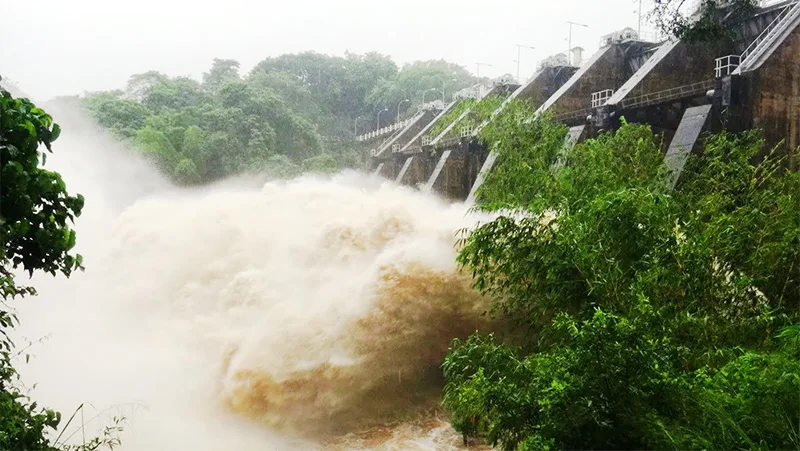
Most reservoirs in Sri Lanka are agriculture and hydropower dominated. Reservoir operators are often unwilling to acknowledge the flood detention capability of major reservoirs during the onset of monsoons. Deviating from the traditional priority for food production and hydropower development, it is time to reorient the operational approach of major reservoir operators under extreme events, where flood control becomes a vital function. While admitting that total elimination of flood impacts is not technically feasible, the impacts can be reduced by the efficient operation of reservoirs and effective early warning systems.
At the very outset, I would like to mention that the contents in this article are based on my personal experience in the Irrigation Department (ID), and there is no intention to disrespect their contributions during the most recent flood event. The objective is to improve the efficiency and the capability of the human resources available in the ID and other relevant institutions to better respond to future flood disasters.
Reservoir operation and flood forecasting
Reservoir management is an important aspect of water management, as water storage and release are crucial for managing floods and droughts. Several numerical models and guidelines have already been introduced to the ID and MASL during numerous training programs for reservoir management and forecasting of inflows.
This article highlights expectations of engineering professionals and discusses a framework for predicting reservoir inflows from its catchment by using the measured rainfall during the previous few days. Crucially, opening the reservoir gates must be timed to match the estimated inflow.
Similarly, rainfall-runoff relationships had been demonstrated and necessary training was provided to selected engineers during the past to make a quantitative (not qualitative) forecast of river water levels at downstream locations, based on the observed rainfall in the upstream catchment.
Already available information and technology
Furthermore, this article highlights the already available technology and addresses certain misinformation provided to the mass media by some professionals during recent discussions. These discrepancies are primarily related to the opening of reservoir gates and flood forecasting.
A. Assessing the 2025 Flood Magnitude
It is not logically sound to claim that the 2025 flood in the Kelani basin was the highest flood experienced historically. While, in terms of flood damage, it was probably the worst flood experienced due to rapid urbanisation in the lower Kelani basin. We have experienced many critical and dangerous floods in the past by hydraulic definition in the Kelani Ganga.
Historical water levels recorded at the Nagalagam Street gauge illustrate this point: (See Table)

In view of the above data, the highest water level recorded at the Nagalagam river gauge during the 2025 flood was 8.5 ft. This was a major flood, but not a critical or dangerous flood by definition.
B. Adherence to Reservoir Standing Orders
According to the standing orders of the ID, water levels in major reservoirs must be kept below the Full Supply Level (FSL) during the Northeast (NE) monsoon season (from October to March) until the end of December. According to my recollection, this operational height is 1.0m below the FSL. Therefore, maintaining a reservoir below the FSL during this period is not a new practice; it explicitly serves the dual purpose of dam safety and flood detention for the downstream areas.
C. Gate Operation Methodology
When a reservoir is reaching the FSL, the daily operation of gates is expected to be managed so that the inflow of water from the catchment rainfall is equal to the outflow through the spill gates (Inflow * Outflow). The methodology for estimating both the catchment inflow and the gate outflow is based on very simple formulas, which have been previously taught to the technical officers and engineers engaged in field operations.
D. Advanced Forecasting Capabilities
Sophisticated numerical models for rainfall-runoff relationships are available and known to subject specialists of the ID through the training provided over the last 40 years. For major reservoirs, the engineers in charge of field operations could be trained to estimate daily inflows to the reservoirs, especially in cases where the simple formulas mentioned in section C are not adequate.
Design concept of reservoir flood gates
Regarding the provision of reservoir spill gates, one must be mindful of the underlying principles of probability. Major reservoir spillways are designed for very high return periods, such as 1,000 and 10,000 years. If the spillway gates are opened fully when a reservoir is at full capacity, this can produce an artificial flood of a very large magnitude. A flood of such magnitude cannot occur under natural conditions. Therefore, reservoir operators must be mindful in this regard to avoid any artificial flood creation.
In reality, reservoir spillways are often designed for the sole safety of the reservoir structure, often compromising the safety of the downstream population. This design concept was promoted by foreign funding agencies in recent times to safeguard their investment for dams. Consequently, the discharge capacities of these spill gates significantly exceed the natural carrying capacity of river downstream. This design criterion requires serious consideration by future designers and policymakers.
Undesirable gate openings
The public often asks a basic question regarding flood hazards in a river system with reservoirs: Why is flooding more prominent downstream of reservoirs compared to the period before they were built? This concern is justifiable based on the following incidents.
For instance, why do Magama in Tissamaharama face flood threats after the construction of the massive Kirindi Oya reservoir? Similarly, why does Ambalantota flood after the construction of Udawalawe Reservoir? Furthermore, why is Molkawa in the Kalutara District area getting flooded so often after the construction of Kukule reservoir?
These situations exist in several other river basins too. Engineers must therefore be mindful of the need to strictly control the operation of reservoir gates by their field staff. The actual field situation can sometimes deviate significantly from the theoretical technology discussed in air- conditioned rooms. Due to this potential discrepancy, it is necessary to examine whether gate operators are strictly adhering to the operational guidelines, as gate operation currently relies too much on the discretion of the operator at the site.
In 2003, there was severe flood damage below Kaudulla reservoir in Polonnaruwa. I was instructed to find out the reason for this flooding by the then Minister of Mahaweli & Irrigation. During my field inspection, I found that the daily rainfall in the area had not exceeded 100mm, yet the downstream flood damage was unbelievable. I was certain that 100mm of rainfall could not create a flood of that magnitude. Further examination suggested that this was not a natural flood, but was created by the excessive release of water from the radial gates of the Kaudulla reservoir. There are several other similar incidents and those are beyond the space available for this document.
Revival of Innovative systems
It may be surprising to note the high quality of real-time flood forecasts issued by the ID for the Kelani River in the late 1980s and early 1990s. This was achieved despite the lack of modern computational skills and advanced communication systems. At that time, for instance, mobile phones were non-existent. Forecasts were issued primarily via the Sri Lanka Broadcasting Corporation (SLBC )in news bulletins.
A few examples of flood warning issued during the past available in official records of the ID are given below:
Forecast issued at 6th June 1989 at 5.00 PM
“The water level at Nagalagam street river gauge was at 9 ft 0 inches at 5.0 PM. This is 1.0 ft above the major flood level. Water level is likely to rise further, but not likely to endanger the Kelani flood bund”.
Eng. NGR. De Silva, Director Irrigation
Forecast issued at 30th Oct 1991 at 6.00 PM
“The water level at Nagalagam street river gauge was at 3 ft 3 inches at 6.0 PM. The water level likely to rise further during the next 24 hours, but will not exceed 5.0 ft.”
Eng. K.Yoganathan, Director Irrigation
Forecast issued at 6th June 1993 at 10.00 AM:
“The water level at Nagalagam street river gauge was at 4 ft 6 inches last night. The water level will not go above 5.0 ft within the next 24 hours.”
Eng. K.Yoganathan, Director Irrigation
Forecast issued at 8th June 1993 at 9.00 AM:
“The water level at Nagalagam Street River gauge was at 4 ft 6 inches at 7.00 AM. The water level will remain above 4.0 ft for the next 12 hours and this level will go below 4.0 ft in the night.
The water level is not expected to rise within next 24 hours.”
Eng.WNM Boteju,Director of Irrigation
Conclusion
Had this technology been consistently and effectively adopted, we could have significantly reduced the number of deaths and mitigated the unprecedented damage to our national infrastructure. The critical question then arises: Why is this known, established flood forecasting technology, already demonstrated by Sri Lankan authorities, not being put into practice during recent disasters? I will leave the answer to this question for social scientists, administrators and politicians in Sri Lanka.
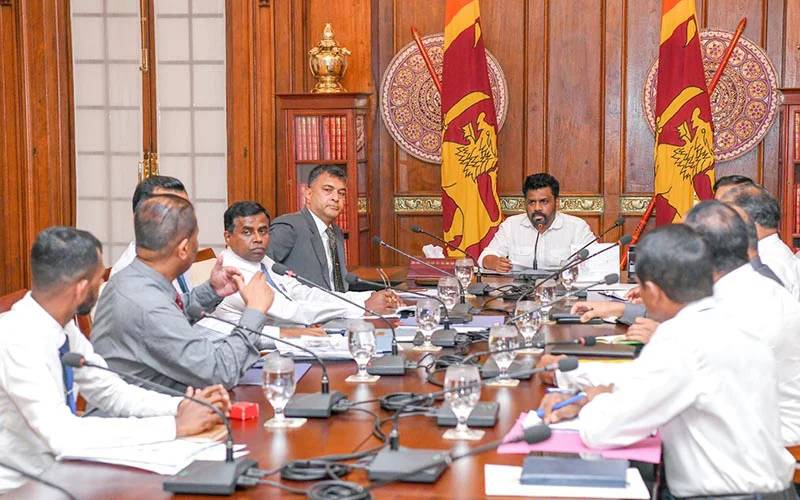
The government is rebuilding the cyclone-devastated lives, livelihoods and infrastructure in the country after the immense destruction caused by Cyclone Ditwah. President Anura Kumara Dissanayake has been providing exceptional leadership by going into the cyclone affected communities in person, to mingle directly with the people there and to offer encouragement and hope to them. A President who can be in the midst of people when they are suffering and in sorrow is a true leader. In a political culture where leaders have often been distant from the everyday hardships of ordinary people, this visible presence would have a reassuring psychological effect.
The international community appears to be comfortable with the government and has been united in giving it immediate support. Whether it be Indian and US helicopters that provided essential airlift capacity or cargo loads of relief material that have come from numerous countries, or funds raised from the people of tiny Maldives, the support has given Sri Lankans the sense of being a part of the world family. The speed and breadth of this response has contrasted sharply with the isolation Sri Lanka experienced during some of the darker moments of its recent past.
There is no better indicator of the international goodwill to Sri Lanka as in the personal donations for emergency relief that have been made by members of the diplomatic corps in Sri Lanka. Such gestures go beyond formal diplomacy and suggest a degree of personal confidence in the direction in which the country is moving. The office of the UN representative in Sri Lanka has now taken the initiative to launch a campaign for longer term support, signalling that emergency assistance can be a bridge to sustained engagement rather than a one-off intervention.
Balanced Statement
In a world that has turned increasingly to looking after narrow national interests rather than broad common interests, Sri Lanka appears to have found a way to obtain the support of all countries. It has received support from countries that are openly rivals to each other. This rare convergence reflects a perception that Sri Lanka is not seeking to play one power against another, and balancing them, but rather to rebuild itself on the basis of stability, inclusiveness and responsible governance.
An excerpt from an interview that President Dissanayake gave to the US based Newsweek magazine is worth reproducing. In just one paragraph he has summed up Sri Lankan foreign policy that can last the test of time. A question Newsweek put to the president was: “Sri Lanka sits at the crossroads of Chinese built infrastructure, Indian regional influence and US economic leverage. To what extent does Sri Lanka truly retain strategic autonomy, and how do you balance these relationships?”
The president replied: “India is Sri Lanka’s closest neighbour, separated by about 24 km of ocean. We have a civilisational connection with India. There is hardly any aspect of life in Sri Lanka that is not connected to India in some way or another. India has been the first responder whenever Sri Lanka has faced difficulty. India is also our largest trading partner, our largest source of tourism and a significant investor in Sri Lanka. China is also a close and strategic partner. We have a long historic relationship—both at the state level and at a political party level. Our trade, investment and infrastructure partnership is very strong. The United States and Sri Lanka also have deep and multifaceted ties. The US is our largest market. We also have shared democratic values and a commitment to a rules-based order. We don’t look at our relations with these important countries as balancing. Each of our relationships is important to us. We work with everyone, but always with a single purpose – a better world for Sri Lankans, in a better world for all.”
Wider Issues
The President’s articulation of foreign relations, especially the underlying theme of working with everyone for the wellbeing of all, resonates strongly in the context of the present crisis. The willingness of all major partners to assist Sri Lanka simultaneously suggests that goodwill generated through effective disaster response can translate into broader political and diplomatic space. Within the country, the government has been successful in calling for and in obtaining the support of civil society which has an ethos of filling in gaps by seeking the inclusion of marginalised groups and communities who may be left out of the mainstream of development.
Civil society organisations have historically played a crucial role in Sri Lanka during times of crisis, often reaching communities that state institutions struggle to access. Following a meeting with CSOs, at which the president requested their support and assured them of their freedom to choose, the CSOs mobilised in all flood affected parts of the country, many of them as part of a CSO Collective for Emergency Response. An important initiative was to undertake the task of ascertaining the needs of the cyclone affected people. Volunteers from a number of civil society groups fanned out throughout the country to collect the necessary information. This effort helped to ground relief efforts in real needs rather than assumptions, reducing duplication and ensuring that assistance reached those most affected.
The priority that the government is currently having to give to post-cyclone rebuilding must not distract it from giving priority attention to dealing with postwar issues. The government has the ability and value-system to resolve other national problems. Resolving issues of post disaster rebuilding in the aftermath of the cyclone have commonalities in relation to the civil war that ended in 2009. The failure of successive governments to address those issues has prompted the international community to continuously question and find fault with Sri Lanka at the UN. This history has weighed heavily on Sri Lanka’s international standing and has limited its ability to fully leverage external support.
Required Urgency
At a time when the international community is demonstrating enormous goodwill to Sri Lanka, the lessons learnt from their own experiences, and the encouraging support they are giving Sri Lanka at present, can and must be utilised. The government under President Dissanayake has committed to a non-racist Sri Lanka in which all citizens will be treated equally. The experience of other countries, such as the UK, India, Switzerland, Canada and South Africa show that problems between ethnic communities also require inter community power sharing in the form of devolution of power. Countries that have succeeded in reconciling diversity with unity have done so by embedding inclusion into governance structures rather than treating it as a temporary concession.
Sri Lanka’s present moment of international goodwill provides a rare opening to learn from these experiences with the encouragement and support of its partners, including civil society which has shown its readiness to join hands with the government in working for the people’s wellbeing. The unresolved problems of land resettlement, compensation for lost lives and homes, finding the truth about missing persons continue to weigh heavily on the minds and psyche of people in the former war zones of the north and east even as they do so for the more recent victims of the cyclone.
Unresolved grievances do not disappear with time. They resurface periodically, often in moments of political transition or social stress, undermining national cohesion. The government needs to ensure sustainable solutions not only to climate related development, but also to ethnic peace and national reconciliation. The government needs to bring together the urgency of disaster recovery with the long-postponed task of political reform as done in the Indonesian province of Aceh in the aftermath of the 2004 tsunami for which it needs bipartisan political support. Doing so could transform a national tragedy into a turning point for long lasting unity and economic take-off.
by Jehan Perera

Pramodya Wickramasinghe to head Sri Lanka’s new selection committee

Ramakrishnan Sridhar appointed Sri Lanka’s fielding coach until T20 World Cup

Carey century keeps Australia afloat as Ashes refuses to find slower gear

Ambidextrous spinner Gimhani named in Sri Lanka’s new-look squad for India T20Is

“The future needs leaders who can adapt, learn, and respond to change without losing ethical direction” – Prime Minister

PM’s attention draws attention to the Salary Issue of the Government Translators’ Service

‘Dates have the highest sugar content to fight Coronavirus’

Sunday Island 27 December – Headlines

#SundayIsland 17th December – Headlines

Sunday Island – 28th March

Sunday Island Headlines – 21 March

Sunday Island – 21st February – Headlines
-
 Business6 days ago
Cabinet approves establishment of two 50 MW wind power stations in Mullikulum, Mannar region
-
 News7 days ago
Gota ordered to give court evidence of life threats
-

 Features7 days ago
Cliff and Hank recreate golden era of ‘The Young Ones’
-
 Features7 days ago
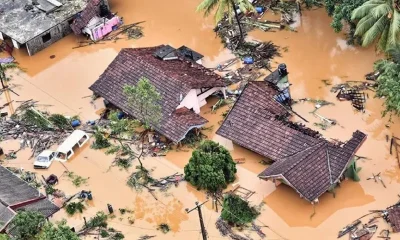
Sri Lanka and Global Climate Emergency: Lessons of Cyclone Ditwah
-

 Editorial7 days ago
Experience vs. Inexperience
-
 News7 days ago
WFP scales up its emergency response in Sri Lanka
-

 Features4 days ago
Why Sri Lanka Still Has No Doppler Radar – and Who Should Be Held Accountable
-
 News7 days ago
Special programme to clear debris in Biyagama