
Business
The Evolving Story of Pure Ceylon Tea

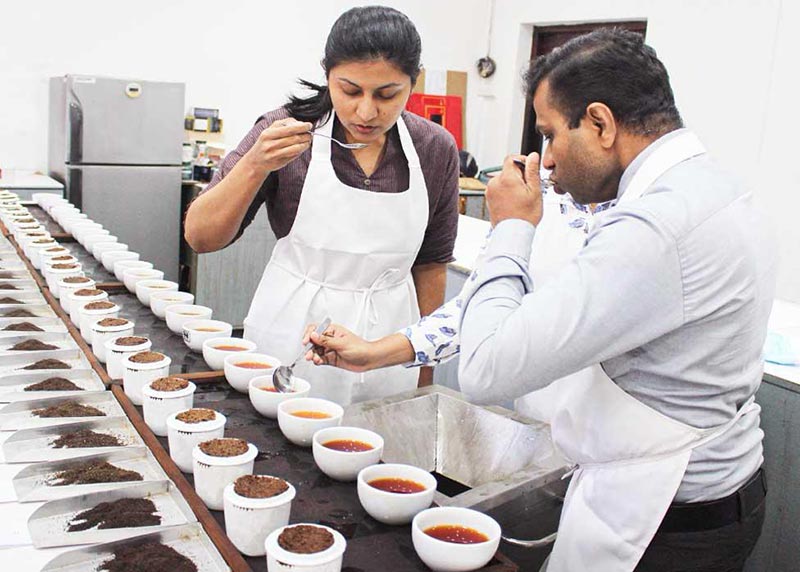
Sri Lanka’s Liquid Gold:
The world recently celebrated International Tea Day on 21 May 2025 under the theme “Bringing people together over a cup of tea.” The day aims to raise awareness of tea’s long history and its deep cultural and economic significance worldwide, promoting collective action for sustainable production and consumption while highlighting tea’s fundamental role in uplifting the Sri Lankan economy.
The origins of tea stretch as far back 4762 years to Emperor Shen Nong. Since then, this beverage has been lauded for its flavor, and its contributions to health, culture and socioeconomic development, a legacy which remains as relevant as ever. Today, tea is grown in many diverse regions across the world, supporting over 13 million livelihoods —including smallholder farmers and their households globally.
Yet of the world’s tea growing regions, none is more unique than Sri Lanka and its famed Pure Ceylon Tea. Synonymous with premium quality, authenticity, sustainable and ethical production, the island’s orthodox black tea has stood out for nearly 160 years as the world’s most sought after brew.
An unlikely global sensation: the ascendency of Pure Ceylon Tea
Sri Lanka’s own journey towards mastery of tea was non-linear. In the mid-19th century, Sri Lanka’s plantation economy teetered on the brink of collapse. Coffee had been the island’s main export, but when a virulent strain of coffee-rust fungus struck in 1869, entire estates were laid waste. Facing financial ruin, enterprising planters turned their gaze toward tea—a crop that, until then, had been little more than an experimental curiosity.

James Taylor, a Scottish planter, who began cultivating tea at the Loolecondera Estate, laying the foundation for the island’s tea industry.
Among those visionaries was James Taylor, a young Scottish planter who in 1867 began cultivating tea on a seven-hectare plot at Loolecondera Estate near Kandy. Taylor’s rigorous trials, conducted with Assam hybrid seedlings from the Peradeniya Botanical Gardens, quickly demonstrated tea’s promise.
By 1872, he had erected a rudimentary factory of his own design, complete with a leaf-cutting machine, and sent the first small consignment of Ceylon tea to London. Overcoming initial skepticism, early tasting reports praised its bright liquor and brisk flavour—qualities that would soon distinguish Ceylon tea on the global stage. The rest as they say is history.
What began as a lifeline for a struggling coffee sector rapidly evolved into a powerful engine of growth in its own right. Within a decade, hundreds of acres of abandoned coffee fields had been replanted with tea, and the landscape of the central highlands was transformed.
Railway lines, initially built for coffee, were extended deeper into the hills to carry the new tea harvests, while Colombo agency houses organized exports to European markets. By the 1888s, Ceylon tea was commanding premium prices. While the cultivated extent of tea exceeded peak coffee cultivation, it’s emergence not only salvaged the island’s plantation economy but laid the foundation for what would become the world’s sole benchmark for a quality cuppa.
An island of diversity: the recipe for global success
Found across the island’s picturesque central mountains and down to its southern foothills, Sri Lanka tea’s shifting elevations, winding valleys and patchwork microclimates combine to shape distinct qualities in every harvest that cannot be found anywhere else in the world.
Sri Lanka’s tea country unfolds across three elevation bands, each imparting its own signature. High-grown gardens above 1,200 meters—like the fog-shrouded slopes of Nuwara Eliya and the undulating heights of Dimbula—thrive in cool, misty air that slows leaf growth and concentrates delicate floral aromas. Their cups are bright and fragrant, with Nuwara Eliya often likened to champagne, while Dimbula brings a mellow sweetness and fine golden hue.
Mid-grown estates between 600 and 1,200 meters—anchored by Uva, Uda Pussellawa and Kandy—experience moderate temperatures and alternating monsoon rains that sculpt versatile flavours. Uva teas carry an aromatic natural bouquet. The famous desiccating ‘kachan’ winds that originate in the arid deserts of North India and sweep across Sri Lanka’s Eastern slopes and through the Malwatte belt between July and September each year, these seasonal valley-grown teas are among Sri Lanka’s most prized produce. Uda Pussellawa yields darker, tangy infusions with liquors of medium body and a rosy character; and Kandy, one of the island’s oldest regions, delivers a sturdy copper brew with spicy, nutty depth.
Below 600 meters, low-grown districts such as Ruhuna and Sabaragamuwa bask in warmth and humidity. Here the long sunshine hours and gentle breezes of the southern plains accelerate leaf growth, producing full-bodied teas with dark liquor—robust and richly flavoured in Ruhuna, softly sweet with caramel hints in sprawling Sabaragamuwa.
An evolving range of premium varietals
Even within a single estate, ridges, hollows and varying exposures create micro-climates that lend subtle nuance to each. It is this intricate interplay of elevation, soil, wind and rain that gives Pure Ceylon Tea its extraordinary diversity and a character which cannot be found anywhere else in the world.
These qualities are further characterized by two dominant distinct wet and dry monsoons; the North East and the South West. The North East monsoon from October to January and the South West monsoon from May to August.
Upholding centuries-old orthodox methods, the majority of Sri Lankan tea bushes are still hand-plucked with “two leaves and a bud” at first light and processed through careful withering, rolling and oxidation to preserve leaf integrity and maximise flavour.
In recent decades, Ceylon’s high-elevation estates have also produced exceptional green and white teas. Sun-withered “Silver Tips” and lightly steamed green leaves showcase delicate floral and grassy notes, commanding premium prices and demonstrating that Sri Lanka’s mastery extends far beyond its black tea heritage. Innovators have also revived heirloom cultivars like “Golden Curls” and introduced single-estate seasonal flushes, each offering a distinct taste of its garden’s terroir.
People & Communities—Stewards of the Leaf
Behind every cup of Pure Ceylon Tea lies the labour and dedication of estate workers and smallholder farmers. While livelihoods in the tea sector have always been a contentious issue, Sri Lanka tea harvesters have continuously earned as much as 50% more than their peers in comparable tea-producing countries.
Smallholders, who now account for almost three-quarters of national production, cultivate tea on family plots that supply a network of tea factories – both independent and connected to Regional Plantation Companies (RPCs). Many of these factories are now global leaders in adoption of rooftop solar, biomass, mini-hydro and other energy efficient mechanisms that are reshaping efficiency in the global plantation industry.
The Planters’ Association of Ceylon has long championed these stewards of the leaf, pioneering training programmes in sustainable agronomy and ethical workplace standards. Through RPC-led certification schemes, global best practices in modernized and precision agriculture have been integrated into daily operations, including integrated pest management, water, soil, flora and fauna conservation techniques that protect both the environment and tea quality.
Crucially, significant portions of revenue generated from tea flows back into rural schools, clinics and infrastructure projects, reinforcing tea’s role as an engine of social development. RPC estates also fund Child Development Centers which provide early childhood education and nutrition.
These initiatives which have resulted in significant improvements in health and overall education outcomes among the 1 million strong community that resides on the estates, as well as the approximately 125,000 strong RPC workforce and their families.
Women’s empowerment initiatives including focused opportunities for professional development and career advancement have opened new avenues in Sri Lanka’s tea industry to rise into positions that under colonial rule were closed off to them.
Community centres double as agricultural extension hubs, blending technical advice with literacy classes and health screenings. These efforts underscore a central truth: the strength of Pure Ceylon Tea rests not only in its soil and climate but in the hands of the people who cultivate it.
As global demand grows, it is this human network of skilled pickers, innovative smallholders and community advocates working in partnership with globally respected RPCs that set standards and continue to drive innovation that ensures Ceylon tea remains a model of quality, sustainability and shared prosperity.
As the industry evolves to cater to traditional demand as well growing value-added innovations including tea concentrates, essences, and ready-to-drink formats —it remains rooted in the hands of dedicated estate workers and smallholder families who uphold standards of quality and sustainability.


In a first for Sri Lanka’s insurance industry, the country will host MDRT Sri Lanka Day 2026, also known as International Insurance Day, bringing together global leaders, professionals and organisations from the international financial services and insurance sectors.
The initiative, organised by the Million Dollar Round Table (MDRT), will mark Sri Lanka’s inaugural MDRT Day and is scheduled to be held on 18 May 2026.
MDRT Country Chair – Sri Lanka, Lahiru Maduranga, said the event would provide a significant opportunity to position Sri Lanka on the global insurance and financial services map.
“This is an excellent opportunity for Sri Lanka to host such a prestigious event and to promote the country’s standing globally,” Maduranga said.
He made these remarks at the official sundown launch announcing the event, held on 26 January at 8 Degrees on the Lake, Cinnamon Lakeside, Colombo.
The launch was attended by the Chairman and Director General of the Insurance Regulatory Commission of Sri Lanka, chief executive officers of insurance companies, and regional and zonal chairs of MDRT, at which the official date of MDRT Sri Lanka Day 2026 was unveiled.
Maduranga said the landmark event aims to bring the spirit and experience of the MDRT Annual Meeting to the Sri Lankan MDRT community. The programme will feature the MDRT President, Executive Committee members and internationally renowned speakers, offering world-class insights, inspiration and professional development aligned with MDRT values.
He noted that many Sri Lankan MDRT members face challenges in attending the Annual Meeting overseas due to foreign exchange constraints and visa limitations. Of more than 1,200 MDRT achievers in Sri Lanka, only around 50 were able to attend the Annual Meeting in the United States.
“This initiative marks a significant step forward in strengthening the MDRT culture in Sri Lanka and in elevating professional standards within the local insurance services sector,” Maduranga said.
The MDRT Membership Communication Committee (MCC) serves as the official liaison between MDRT Headquarters in the United States and the Sri Lankan MDRT community, overseeing communication, engagement and coordination with the local financial services sector.
Founded in 1927 in the United States, the Million Dollar Round Table (MDRT) is the world’s most prestigious association of insurance and financial services professionals. MDRT represents the highest standards of professional excellence, ethics and performance in the industry. Its Annual Meeting, traditionally held in the United States, attracts more than 10,000 top-performing members from around the world each year.
By Hiran H Senewiratne

With the aim of fostering a passion for rugby among students in private universities and higher education institutes across Sri Lanka, ESOFT UNI Kandy has launched a special sports development initiative.
As a part of this program, a series of rugby encounters were recently organized between the ESOFT UNI Kandy rugby team and the SLIIT Kandy Uni rugby team. The matches were held at the Peradeniya University Rugby Grounds.
Two highly competitive matches were played during the event. In the first game, the ESOFT UNI Kandy rugby team secured a victory over SLIIT Kandy Uni with a score of 17-07. They maintained their winning streak in the second match as well, defeating their opponents with a final score of 12-07.
This initiative is seen as a significant step toward building a robust sporting culture within the private higher education sector in the hill capital.
The initiation has been started with Rugby and will soon be extended to Cricket, Football, Martial Arts, Badminton, Hockey, Chess, and other areas of sports as well. ESU believes that the development of soft skills, parallel to higher education, will help shape highly capable, industry-ready, and employable students who can confidently face any personal and professional challenges they encounter during their journey.
Dimuthu Thammitage, General Manager, ESU Central Region said: Today’s job market demands highly employable individuals who possess not only educational qualifications but also strong soft skills, which can be effectively developed through sports. Therefore, we warmly invite other educational institutions to join hands with us in producing highly employable students together through sports.
Lakpriya Weerasinghe, Deputy General Manager, ESU Kandy said: At ESOFT Uni, we believe that sports play a vital role in improving students’ personalities through the development of essential soft skills. Therefore, we encourage our students to actively join our clubs and enhance their soft skills alongside their academic education.
Oshara Chamod Bandara, MIC Rugby Club, ESU Kandy said: Sports are iconic to Kandy. As the MIC of the ESU Kandy Rugby Team, I am truly happy to see the enthusiasm of our students towards sports while actively engaging in their studies. I warmly invite other students to join our clubs and further develop their skills alongside their academic journey.
Text and Pix By S.K. Samaranayake

Altair Residences have, over the past six months, seen more than 100 individual title deeds being executed by apartment owners, providing owners with a clear, registered, legal title to their apartments in accordance with Sri Lankan property law. This has been a key initiative by the new owners and management of Altair to improve governance and will continue in an orderly manner in the coming months.
With the transition of ownership to Blackstone India, Altair’s Management Council has also been formally constituted, enabling owners to play an active and proactive role in the management of the Altair building. In addition, the management council has appointed Realty Management Services (RMS), a subsidiary of Overseas Realty Ceylon PLC, as the new facility manager of Altair.
Commenting on these milestones, Thilan Wijesinghe, Chairman of TWC Holdings, who, together with a team from TWC, represents Blackstone’s interests in Sri Lanka, said, “The issuance of individual title deeds is a critical step in any professionally developed residential asset. Over the past six months, this process at Altair has moved forward in a structured and transparent manner, alongside the formal establishment of owner-led governance. This, combined with the appointment of experienced facility managers are fundamental building block for long-term value-creation for apartment owners and proper asset stewardship.”
With ongoing improvements to the building being undertaken by Indocean Developers Pvt Ltd (IDPL), the owning company of Altair, the issuance of deeds to owners is expected to accelerate over the coming months.

England to bowl first in Pallekelle

No child should be deprived of vocational or higher education due to poverty – PM

Ireland thump Thailand to qualify for 2026 women’s T20 World Cup

National Assessment and Policy Review: The impact of social media on children

Public officials must clearly understand public expectations against corruption and fraud – Secretary to the President

West Indies seal consolation win in ten-over shootout

‘Dates have the highest sugar content to fight Coronavirus’

Sunday Island 27 December – Headlines

#SundayIsland 17th December – Headlines

Sunday Island – 28th March

Sunday Island Headlines – 21 March

Sunday Island – 21st February – Headlines
-
 Business7 days ago
ComBank, UnionPay launch SplendorPlus Card for travelers to China
-
 Business4 days ago
Climate risks, poverty, and recovery financing in focus at CEPA policy panel
-
 Opinion3 days ago
Sri Lanka, the Stars,and statesmen
-

 Business2 days ago
Hayleys Mobility ushering in a new era of premium sustainable mobility
-

 Opinion7 days ago
Luck knocks at your door every day
-

 Business2 days ago
Advice Lab unveils new 13,000+ sqft office, marking major expansion in financial services BPO to Australia
-
 Business2 days ago
Arpico NextGen Mattress gains recognition for innovation
-

 Editorial2 days ago
Govt. provoking TUs