
News
Steps taken by the Government to end the dark rule that dragged society into ruin through the drug trade and the power of arms will not, be reversed under any circumstances – President


President Anura Kumara Dissanayake emphasized that while the Government has undertaken the task of rebuilding the nation’s collapsed economy, it has also assumed the responsibility of restoring a society that has deteriorated on many fronts. The President stressed that the decisive steps taken by the Government to end the dark rule that dragged society into ruin through the drug trade and the power of arms will not, under any circumstances, be reversed.
The President pointed out that the Maha Sangha have been entrusted with a major role in this social renewal, noting that throughout history, whenever the State was challenged, it was always the Maha Sangha who stepped forward in response.
The President made these remarks on Friday afternoon (03) while addressing the religious ceremony held at the historic Magul Maduwa (Audience Hall) in Kandy, to mark the presentation of the Scroll of Appointment (Śrī Sannas Pathra) to the Most Venerable Naranpanawe Ananda Nayake Thero, the newly appointed Anunayake of the Asgiri Chapter of the Siyam Maha Nikaya.
Commending the service rendered by the Most Venerable Naranpanawe Ananda Nayake Thero, a prelate distinguished as a guardian of the Dhamma (Dharmadhara), a custodian of the Vinaya (Vinayadhara) and a pursuer of exemplary learning (Supeshala Shikshakami), the President observed that this is an era in which the country needs thousands of such venerable monks.
The President further stated that the Government intends to launch a national campaign to eradicate drug menace from the country. In this effort, the Maha Sangha will have a significant role to play, particularly in travelling from village to village to raise awareness among the people.
The President also reaffirmed that in developing the tourism sector, it is the Government’s policy to avoid doing anything harmful to the country. The President explained that the Government’s goal is to build the tourism industry upon the nation’s historical heritage, natural beauty, wildlife reserves and the world’s recognition of the warm hospitality of the Sri Lankan people.
At the ceremony, President Dissanayake presented the Scroll of Appointment (Sannas Pathra) to the newly appointed Anunayake Thero and the newly appointed Anunayake Thero, in return, presented a commemorative gift to the President.
President Anura Kumara Dissanayake further stated:
“Our Venerable Naranpanawe Ananda Thero assumes this office of Anunayake at a time when both our society and the Sasana are facing great challenges. I firmly believe that his qualities of patience, compassion and courage will serve as a powerful source of strength in guiding us successfully on this journey.
Our society is confronted with numerous crises. While we may be able to rebuild a collapsed economy, restoring a society that has suffered deep moral degredation is far more difficult. Our society has been fractured on many fronts. People have become insensitive, failing to show empathy towards the suffering of others. Wealth and power have come to be regarded as the ultimate measure of right and wrong. Therefore, what we now need is the re-establishment of a righteous value system.
Buddhism has always taught us a noble framework of values. Today, however, that framework has been eroded and a distorted value system has emerged in society. It is imperative that we re-establish within society a clear sense of what is right and good. As a State, we understand our responsibility in this regard and are committed to fulfilling it. Yet, in the task of healing society, the greatest role will fall upon the Maha Sangha.
At present, our country has a government established by the Constitution. At the same time, however, there exists a parallel dark regime, not as legitimate or powerful, but possessing the trappings of governance, built upon the force of arms. To safeguard the lawful, constitutional government, it is essential to dismantle this dark regime. Our Government has chosen this path and I solemnly pledge here today that the steps we have taken in this regard will never be reversed.
The devastating consequences of that dark regime are evident from recent events. Through drugs, illicit weapons, unlawful assets, amassed wealth, armed groups and a youth culture willing to kill with firearms, a destructive social order has been created. If we are to reform society, this dark regime must be brought to an end and as a Government, we are determined to fulfill that duty with strength and resolve.
However, to prevent such conditions from arising again through successive regimes, our society must be purified and guided towards a new renaissance. In this endeavour, the Maha Sangha has been entrusted with a profound responsibility. Therefore, the guidance and counsel of our Nayake Thero will be of immense importance in the mission to restore our society.
Secondly, as a society, we need spirituality. The foundation for nurturing our spiritual life lies in Buddhist culture. The values and guidance that our spiritual life receives through Buddhist culture cannot be replaced or erased by laws and regulations, they represent a historical bond.
The enduring strength of our Buddhist culture lies in its deep integration into the daily lives of the people. The Maha Sangha has been the guardian of our proud religion and cultural heritage. However, some of the news and events concerning monks, the protectors of this religion, are not consistent with the dignity and continuity of the Buddhist order.
Our Mahanayaka Theros have consistently emphasized the need to establish the necessary legal framework to uphold this. In particular, they have requested amendments to Sections 41 and 42 of the Buddhist Temporalities Ordinance. These amendments have been prepared and returned to the Mahanayaka Theros for their input. Following their guidance, the revisions have now been submitted to the Legal Draftsman’s Department. We will soon enact this law, providing the legal protection required to maintain the discipline necessary for the perpetuation of the order. As a government, we consider this our solemn duty.
However, legal protection alone is not enough. Today’s society requires the guidance of monks like the Most Venerable Naranpanawe Ananda Anunayake Thero, leaders with deep knowledge, extensive education and decades of dedicated service. Over nearly four decades of monastic life, he has contributed significantly to the people, to the preservation of the order and to the protection of the motherland, taking on and accomplishing the most difficult challenges. Monks of such calibre are essential today for the continuation of the Buddhist order and for the betterment of society.
In times of societal disturbance, our Mahanayaka Theros must actively intervene, offering advice and guidance. A government cannot function effectively based solely on the executive powers of the President and a parliamentary majority; it must represent all segments of society. While the government, particularly the Executive President, enjoys certain powers, there are practical and legal limits to governance. This principle underscores that a government is not a place for unrestricted authority.
Historically, our leading monks have provided counsel to strengthen and protect the state. Whenever the nation faced threats, they intervened for its security. This heritage of the Maha Sangha is one we are fully prepared to uphold and respect.
During discussions on the tourism industry, it was emphasized that our historical heritage offers significant potential to strengthen this sector. Additionally, Sri Lanka’s natural beauty, its wildlife, and the hospitality of its people are crucial assets in promoting tourism. These factors, rather than trends alone, form the backbone of a successful tourism industry.
Regarding the Penal Code, although amendments prepared in advance were presented to Parliament, they have not yet been passed. We now have the opportunity to propose further amendments if necessary, or to maintain the current provisions. These laws are not intended for personal gain; their focus is the common good. Our vision is to build a stronger and better state, a goal that can only be realized by recognizing and fulfilling the responsibilities entrusted to us as the ruling party, with significant roles assigned to our Mahanayaka Theros.
We also face the urgent need to combat the drug menace, which is claiming the lives of millions of young people. We call on those involved in drug use and trafficking to cease these activities. This effort requires societal awakening and we urge the Maha Sangha to lead this initiative, raising awareness and guiding communities at the village level.
Venerable Anunayake Theros of the Malwathu and Asgiri Chapters (Maha Viharas), along with the Members of the Karaka Maha Sangha Council, clergy from other religions, Ministers and MPs, foreign Ambassadors and High Commissioners, government officials, and other invited guests, including the Diyawadana Nilame of the Sri Dalada Maligawa (Temple of the Sacred Tooth Relic) in Kandy and Basnayaka Nilames of the Devales, were present at the ceremony.
[PMD]



Admiral of the Fleet Wasantha Karannagoda said that he is still waiting for the government’s response to the UK sanctions imposed on three ex-military officers, including him, and a former member of the LTTE.
The former Navy Chief said so in response to The Island query whether he was aware of the position taken by a three-member ministerial committee, consisting of Foreign Minister Vijitha Herath, Justice and National Integration Minister Harshana Nanayakkara and Deputy Defence Minister Maj. Gen (retd) Aruna Jayasekera.
The government named the committee in the wake of the UK declaration of travel bans and asset freezes in respect of Karannagoda, General Shavendra Silva, General Jagath Jayasuriya and Vinayagamoorthy Muralitharan, also known as Karuna. Maj. Gen. Jayasekera said that they inquired into the issue at hand.
Karannnagoda said that he would like to know the government’s recommendations if the ministerial committee briefed the Cabinet as per a decision taken by the Cabinet of Ministers. Karannagoda said that the issue should have been taken at the highest level as various interested parties continue to humiliate the war-winning military by targeting selected individuals.
Other sources, familiar with the issues at hand, told The Island that the government was yet to announce its stand.
Sources pointed out that the Opposition has been silent on what they called a matter of utmost national importance.
Cabinet spokesman Dr. Nalinda Jayathissa is on record as having described the UK move as a unilateral move and that committee was formed to examine the developments and recommend appropriate measures to the Cabinet.
Foreign Minister Herath told The Island the government was not successful in getting the British to withdraw sanctions. Describing the UK decision as unilateral, the Miniser said that the government conveyed its concerns but the UK didn’t change its stand.
The Island raised the issue with Minister Herath and Admiral Karannagoda in the wake of British MP of Sri Lankan origin, Uma Kumaran requesting the UK Foreign Secretary Yvette Cooper to expand on the government’s sanctions imposed on the four above-mentioned persons.
During a Foreign Affairs Committee meeting on 16 December, the MP for Stratford and Bow highlighted the lack of accountability and political will from the current Sri Lankan government to address war crimes and mass atrocities committed in Sri Lanka.
Sources said that David Lammy, who served as Secretary of State for Foreign, Commonwealth and Development Affairs at the time of the declaration of sanctions, had no qualms in declaring that the action taken against four Sri Lankans was in line with a commitment he made during the election campaign to ensure those responsible wouldn’t be allowed impunity. The UK government statement quoted Lammy as having said that this decision ensured that those responsible for past human rights violations and abuses were held accountable.
By Shamindra Ferdinando
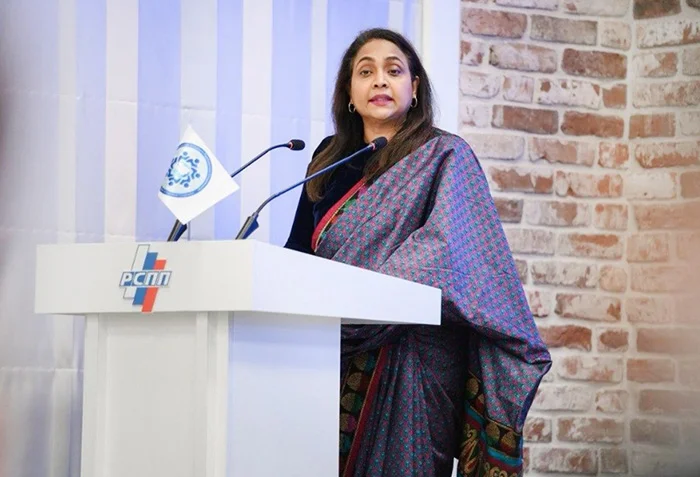
Sri Lankan Ambassador to the Russian Federation, Shobini Gunasekera recently presented a conceptual framework of seven key vectors that defined contemporary international relations and facilitated dialogue among States. She made the presentation at XI Moscow International Financial and Economic Forum held under the theme “Building Bridges: Partnership without Borders”.
In her address, the Ambassador emphasised that these vectors represent the channels through which ideas circulate, trade expands, and peace is strengthened, serving as guiding principles for cooperation amid global uncertainties. The seven key vectors highlighted were economic ties as a foundation for long-term stability; political choice and diplomacy through dialogue and multilateral engagement; security cooperation to address cross-border threats; cultural linkages through education, tourism, and professional exchanges; technological advancement, particularly in digital systems and artificial intelligence; environmental stewardship through collective action on renewable energy and climate change; and humanitarian obligations, including disaster relief and development cooperation.
Drawing on Sri Lanka’s experience, the Ambassador illustrated the practical application of these principles by highlighting the country’s strategic location in the Indian Ocean, its role as a trade and logistics hub, and its active engagement in regional groupings such as BIMSTEC and the Indian Ocean Rim Association, where the Russian Federation serves as a Dialogue Partner.
The potential for enhanced Sri Lanka–Russia bilateral cooperation was underscored, particularly through complementarities between Russia’s technological and energy expertise and Sri Lanka’s logistical capabilities and maritime infrastructure. She noted that such synergies could support joint initiatives in trade, innovation, tourism, and logistics, while cultural and scientific exchanges would further strengthen mutual understanding between the two countries.
Concluding her remarks, the Ambassador stated that sustained progress requires dialogue, mutual respect, and forward-looking partnerships capable of shaping a shared and stable future.
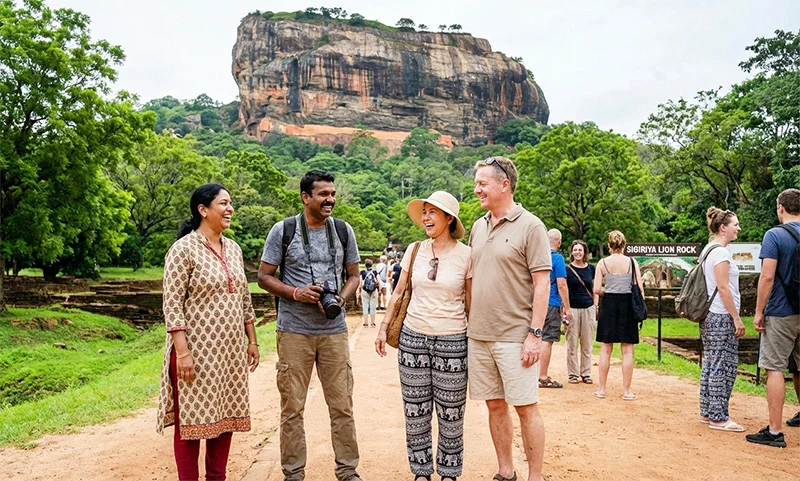
Thailand takes top place
Travel website Make My Trip has named Sri Lanka as the third most booked international destination by Indian travellers for the festive period, following Thailand and the United Arab Emirates (UAE).
According to a report released by MakeMyTrip, an analysis of booking trends between 20 December and January 2026 compared to the same period last year, highlighted a growing interest in Sri Lanka as a preferred destination.
Thailand ranked first, while the UAE secured second place. Vietnam recorded a notable rise, moving from seventh position last year to fourth this year, followed by Malaysia, Indonesia, Singapore, the UK, the US, and Hong Kong.

Mandhana, Shafali and Ghosh help India edge run-fest to go 4-0 up

Showers predicted in several provinces today (29th December)

Delay in govt. response to UK sanctions on ex-military chiefs, and others causes concern

Sri Lanka outlines seven key vectors of international cooperation at Moscow forum

Sri Lanka third most preferred destination for Indians

Ondansetron controversy: Health Minister explores interim measures to address growing concerns

‘Dates have the highest sugar content to fight Coronavirus’

Sunday Island 27 December – Headlines

#SundayIsland 17th December – Headlines

Sunday Island – 28th March

Sunday Island Headlines – 21 March

Sunday Island – 21st February – Headlines
-

 News6 days ago
Members of Lankan Community in Washington D.C. donates to ‘Rebuilding Sri Lanka’ Flood Relief Fund
-

 News4 days ago
British MP calls on Foreign Secretary to expand sanction package against ‘Sri Lankan war criminals’
-

 Features6 days ago
General education reforms: What about language and ethnicity?
-
 News6 days ago
Suspension of Indian drug part of cover-up by NMRA: Academy of Health Professionals
-
 Sports4 days ago
Chief selector’s remarks disappointing says Mickey Arthur
-
 News3 days ago
Street vendors banned from Kandy City
-

 Editorial6 days ago
A very sad day for the rule of law
-

 News6 days ago
US Ambassador to Sri Lanka among 29 career diplomats recalled