
Opinion
Sri Lanka’s new govt., Indo-Pacific debt trap, and struggle for the 21st Century – Part 2

By Shiran Illanperuma
(First part of this article appeared in
The Island yesterday (13 Jan.)
Sri Lanka in the International Sovereign Bond Debt-Trap
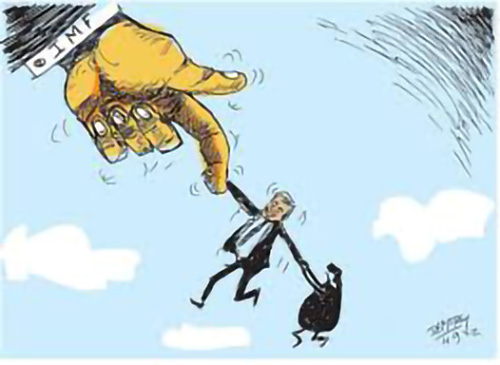
Sri Lanka was the original poster child for the myth of the Chinese debt-trap, which has now been thoroughly debunked by both local and foreign experts. The truth is that the cause for Sri Lanka’s indebtedness can be traced back to the colonial structure of its plantation economy, which has only been augmented through additional dependencies on tourism, remittances, and low-value added manufacturing. Despite attempts by nationalist and left-leaning governments, Sri Lanka has failed to achieve food and energy self-sufficiency, or to set in motion a self-expanding process of industrialisation.
The end of Sri Lanka’s Civil war in 2009 coincided with the Global Financial Crisis (GFC) and the Great Recession. Sri Lanka was relatively insulated from economic downturn as the end of the war brought about a honeymoon period as tourism and property speculation boomed. The Obama administration’s bailing out of the banks through Quantitative Easing unleashed a wave of speculative investments to the Global South, including countries like Sri Lanka. Meanwhile, China’s going out in the wake of the GFC allowed the Sri Lankan government to engage in further fiscal expansion through an ambitious program of infrastructure development, focusing on roads, ports, energy, and not just a few white elephants. However, these shortcomings in the mobilisation of Chinese development finance are more attributable to Colombo’s lack of vision and coherent industrial policy, than any malice on the part of China. As Chinese envoys have often emphasised, all projects were undertaken at the request of the Sri Lankan government, and shortcomings have usually been due to the lack of domestic capacity to manage projects efficiently.
As a lower-middle income country, Sri Lanka found itself increasingly locked out of concessionary finance from multilateral organisations, and so began turning towards private lenders. The country launched its first International Sovereign Bond (ISB) in 2007. However, it is the rightward shift in policy following the change of government in 2015 that completely transformed Sri Lanka’s debt profile, as the government binged on over USD 10 billion worth of ISBs. Therefore, on the eve of Sri Lanka’s default in 2022, only 13.67% of external debt was owed to China. By contrast, 42.43% of external debt was to private bondholders, like Blackrock and Ashmore. To make matters worse, this private debt was of much higher interest rates than bilateral debt from China, accounting for over 70% of interest payments in 2021.
When the COVID-19 pandemic hit, the vulnerabilities of Sri Lanka’s economic structure became painfully apparent. The lack of foreign exchange inflows due to the collapse of tourism and remittances, combined with inflation caused by global supply chain crunches and commodity price booms, brought the economy to its knees. Following the ouster of President Gotabaya Rajapaksa in 2022, the governor of the Central Bank of Sri Lanka announced a ‘pre-emptive default’ on external debt. In the months that followed, the interim President Ranil Wickremesinghe used the chaos to enforce a dizzying array of shock therapy style reforms, unthinkable under conditions of normality. These included:
* Austerity. Withdrawals of fuel subsidies and cost reflective pricing of energy. This contributed to plunging thousands into poverty and off the electricity grid.
* Domestic debt restructuring. A restructuring of domestic debt that singled out the pension funds of the working class while allowing domestic capitalists, bankers, and bondholders to walk away scot-free.
* Central Bank independence. Legislating Central Bank independence, which would prevent the Central Bank of Sri Lanka from purchasing government debt. Concretely, this means that the government is significantly restrained from countercyclical spending in the event of an external shock. Additionally, it could weaken the government’s ability to control interest rates. The act severs monetary sovereignty as it forces the country to rely exclusively on private lenders for financing.
* External debt restructuring. An external debt restructuring agreement negotiated with the mediation of the IMF has been described by local critics as a sell-out. The agreement includes swapping existing bonds for newer bonds, some of them being novel financial instruments.
* Macro-linked bonds – These are bonds, whose interest rates will be linked to Sri Lanka’s economic performance. As GDP growth rates increase, so too do the interest payments. In effect, Sri Lanka must pay its creditors more for growing faster.
* Governance-linked bonds – These bonds tie the interest rate to the government’s implementation of anti-corruption legislation. There is a reasonable concern that this amounts to a kind of blackmail on a sovereign government to adjust its administrative structure according to the whims of international finance capital.
The Rise of the NPP
The NPP coalition includes 21 civil society organisations including trade unions. However, the prime mover within the party is undoubtedly the JVP. The JVP was established by Rohana Wijeweera in 1965, largely through the youth wing of the Ceylon Communist Party (Maoist), which in turn was the result of a 1964 split in the undivided Communist Party of Ceylon that mirrored the tragic Sino-Soviet split.
The JVP was targeted, and its ranks were decimated twice. First, following an attempted youth insurrection in 1971, and again during another insurrection from 1987-1989. The latter resulted in the assassination of Wijeweera along with the entirety of the party’s politburo, except for Somawansa Amarasinghe. Building the party from scratch, Amarasinghe went on to lead the party on the path of reform and was instrumental in taking JVP into electoral politics. During Amarasinghe’s leadership, the JVP dabbled in electoral coalitions, first supporting the SLFP’s Chandrika Bandaranaike Kumaratunga in 1994, then SLFP’s Mahinda Rajapaksa in 2005, and finally joining the UNP in supporting former Army Commander Sarath Fonseka’s bid for Presidency in 2010.
It was in 2014 that the next big shift came, as AKD was made the new leader of the JVP. He has attempted to chart a more independent and centrist path for the party, rejecting coalitions with established political parties and personalities. Following the JVP’s 7th National Congress, the party released a document which proposed a national policy framework for a ‘modernised and industrialised Sri Lanka’. In 2019, the National People’s Power was launched, with the JVP at its core. The broader coalition of NPP helped open JVP’s doors to the middle-class that traditionally was wary of the Party’s radical history. This included professionals, academics, artists, public intellectuals, and even traders and business owners.
The NPP’s success lies in this ability to overcome the JVP’s previous sectarianism and incorporate a broader coalitions of class forces, while at the same time remaining independent of established political parties. For the most part, NPP’s recent electoral campaign avoided a frontal assault that identified the enemy as capitalism, imperialism, or even neoliberalism. Rather, the NPP chose to focus on the vaguer category of corruption, which struck a chord among large portions of the middle-class who felt that the immediate cause of their plight was bad governance. The NPP was able to locate elements of the petty bourgeois that did not have direct access to state power through the established patronage networks of the main parties. This combined with a generational shift in politics helped the JVP construct the NPP as its own ‘civil society’ front. The hunger of this young petty bourgeois to reproduce itself as a class constitutes the strength and weakness of the NPP.
On the election campaign trail, the NPP faced much scrutiny from both the rightist and leftist elements which honed on its lack of an articulate economic plan or strategy. While the NPP platform is explicit about its intention to retain and strengthen public ownership of energy, finance, healthcare and education, questions regarding policy specifics were often dodged with the promise that life would improve with the eradication of corruption. That said, the NPP’s main economic promise was to establish a ‘production-based economy’ that prioritises farmers, fishers and Small and Medium Enterprises (SMEs). Furthermore, the NPP pledged to renegotiate the debt restructuring agreement with the IMF and bondholders in order to ease the tax burden on the people, to establish a development bank, and initiate an expansive science and technology policy to modernise the economy. Concretising these disparate promises into a viable developmental program continues to be the main challenged for the NPP.
One of the most remarkable features of the NPP’s political campaign was its mobilisation of women. This was conducted not in any paternalistic manner but by women party cadres themselves. Rural party meetings often featured women speaking to women, about the specific ways in which economic hardships affected women. This, combined with the party’s sympathies towards people’s economic plights and their sharp vitriol against the perceived corruption of establishment politicians, helped drive an emotive bottom-up campaign. Women in these meetings took the message home, influencing their children, who would go on to popularise the party’s platform on social media platforms, including Tik Tok. In Sri Lanka, where labour force participation for women (FLFPR) is extremely low, 29.6%, they are particularly sensitive to price swings in essential commodities. Meanwhile, the women who work do so predominantly in the public sector, or in export-oriented sectors such as plantations and export processing. This makes political conscious women extremely sensitive to economic shocks, and a powerful political resource once organised.
Struggle for the 21st Century
Sri Lanka’s dilemma is a striking example of the close link between neoliberal debt bondage and subordination to the interests of US-led militarism. In other words, the struggle for sovereignty and development requires a political, economic and even military strategy. In the past, various administrations in Sri Lanka have attempted compromise, thinking that concessions in one area would enable advances in others. The reality is that there is little possibility for negotiation with an increasingly irrational imperialism bent on maintaining US preponderance of power.
The fact is that the NPP governs under conditions favourable to the right. This is to say that the NPP inherits a state that is deeply in debt to Western finance capital, with a military that has been gradually encroached by the US through use of carrot and stick. Moreover, the networks of knowledge production and distribution in Sri Lanka remain downstream of monopoly capital. The JVP itself has only been able to climb into power by moderating rather than dialling up its past socialist and anti-imperialist rhetoric, meaning it does not necessarily have a popular mandate to carry out a revolutionary break from the status quo. Yet even the moderate mandate of the NPP, to improve social welfare and establish a production-based economy, cannot but bring them into confrontation with an imperialism which seeks to stymie the development of the productive forces.
To borrow from the US State Department’s own choice of words, Sri Lanka today stands at the ‘epicentre’ of the struggle for the 21st century. It is a struggle between peaceful development and militarised underdevelopment. Between productive investment for the benefit of the working majority, or debt bondage for the benefit of a ruling minority. While the country appears hemmed in on all sides, entangled in US imperialism both militarily and financially, it would be too simplistic and nihilistic to suggest that there are no alternatives. This struggle for sovereignty and development is today being waged across the darker nations, from the Bolivarian countries in Latin America, to the Sahel region in Africa, and by the Palestinians in West Asia. The struggle of the Sri Lankan people too, will play its role in defining the trajectory of this century.
(This essay was produced by Tricontinental: Institute for Social Research as part of its monthly series Tricontinental Interventions: Conjunctural Analysis from Asia.)



Today, we honour the life and legacy of D.L.O. Mendis, a visionary engineer and philosopher whose contributions defined the standards of our profession. D.L.O. possessed a rare combination of analytical rigor and creative foresight. His numerous technical papers presented here and abroad related to water resources development stand as enduring monuments to his brilliance.
Beyond creating blueprints and technical specifications, D.L.O. presented bold ideas that challenged and strengthened our professional communities. He was a dedicated mentor to junior engineers, and a leader who firmly believed that engineering was, above all, a service to humanity. While we mourn this great loss, we take solace in knowing that his radical influence shaped our careers and the ethical code that governs our profession.
A Career of Integrity and Excellence
Throughout his career spanning more than 70 years, D.L.O. embodied the highest standards of integrity and technical excellence. He was particularly instrumental in advancing our
understanding of ancient irrigation systems, bridging the gap between historical wisdom and modern development.
Academic and Professional Journey
D.L.O.’s educational journey began at Ladies’ College(which accepted boys in lower grades at the time) before he moved to Royal College. He later entered the University of Ceylon as a member of the pioneering first batch of engineering students in 1950, graduating in 1954 in a class of nearly 25 students.
His professional path was distinguished and diverse:
Irrigation Department:
Served for nearly 10 years.
River Valleys Development Board (RVDB):
Contributed during the construction of the Uda Walawe reservoir.
Ministry of Plan Implementation:
Served as Deputy Director under Director M. S. M. De Silva, where his main contribution was the promotion of appropriate technology, particularly the advancement of historical Kotmale ironwork which has existed since the era of Parakrama Bahu the Great, and the South Eastern Dry Zone Project. (SEDZ).
Consultancy:
Served as a freelance consultant.
Leadership:
A prolific contributor of a large number of technical papers to the Institution of Engineers, Sri Lanka (IESL), eventually serving as its President.
Personal Reflections and Anecdotes
My association with D.L.O. spanned more than 50 years. I first saw him riding a bicycle past Akbar Hall while I was an engineering student. I later learned his family was residing at Prof. Paul’s residence nearby while he was serving at Uda Walawe Reservoir Project as a senior engineer for the RVDB.
Through D.L.O., I had the privilege of meeting legendary professionals outside the Irrigation Department, includingthe exceptionally bright M.S.M. de Silva and the international economist, Dr. Lal Jayawardena (Mr. N.U.Jayawardena’s son).
A Tribute to a Legacy
We extend our deepest gratitude for Mr. D.L.O. Mendis’slifelong service and offer our sincerest condolences to his family and colleagues. His monumental work and numerous publications remain a lasting gift to future generations of engineers.
May he attain the supreme bliss of Nibbana!
G.T. Dharmasena,
Former Director General of Irrigation

Now there is no doubt about the phenomenon of global warming, its far reaching effects and its causes. Yet Donald Trump says global warming is con and Europe, too, is dithering about what measures should be urgently taken to save Earth. Deliberations at the COP30 meeting in Brazil did not bring the desired results regarding emission of greenhouse gases. The biggest polluters like the US, who have not met the minimum goals regarding emissions, decided at the 2015 Paris Agreement, failed to provide guarantees that they will correct themselves in the coming years. Cyclones that hit Sri Lanka and other Asian countries last month are the direct result of unrestricted burning of fossil fuel and other activities that cause emission of carbon dioxide and other greenhouse gases. Extreme climate events hit poor countries like the proverbial lightning that strikes the begging bowl.
The last decade has seen some of the worst natural disasters in the history of mankind. The devastating impacts of the climate crisis reached new heights in 2024, with scores of unprecedented heatwaves, floods and storms across the globe, according to the UN’s World Meteorological Organization (WMO). Yet human greed which is the ultimate cause of global warming continues unabated and CO2 emissions reach new records. The WMO’s report on 2024, the hottest year on record, sets out a trail of destruction from extreme weather that took lives, demolished buildings and ravaged vital crops. More than 800,000 people were displaced and made homeless, the highest yearly number since records began in 2008.
The report lists 151 unprecedented extreme weather events in 2024, meaning they were worse than any ever recorded in the region. Heatwaves in Japan left hundreds of thousands of people struck down by heatstroke. Soaring temperatures during heatwaves peaked at 49.9C at Carnarvon in Western Australia, 49.7C in the city of Tabas in Iran, and 48.5C in a nationwide heatwave in Mali.
Record rains in Italy led to floods, landslides and electricity blackouts; torrents destroyed thousands of homes in Senegal; and flash floods in Pakistan and Brazil caused major crop losses.
Storms were also supercharged by global heating in 2024, with an unprecedented six typhoons in under a month hitting the Philippines. Hurricane Helene was the strongest ever recorded to strike the Big Bend region of Florida in the US, while Vietnam was hit by Super Typhoon Yagi, affecting 3.6 million people. Many more unprecedented events will have passed unrecorded.
The world is already deep into the climate crisis, with the WMO report saying that for the first time, the 10 hottest years on record all occurred in the last decade. However, global carbon emissions have continued to rise, which will bring even worse impacts. Experts were particularly critical of the purge of climate scientists and programmes by the US president, Donald Trump, saying that ignoring reality left ordinary people paying the price.
“Leaders must step up – seizing the benefits of cheap, clean renewables for their people and economies – with new national climate plans due this year,” said the UN secretary general, António Guterres.
Extreme climate events like heat waves, intense rainfall, droughts, and severe storms have significantly increased in frequency and intensity over the past decades, driven by global warming, with studies showing a fivefold increase in climate disasters compared to the 1970s, and human influence now clearly linked to many specific events, according to reports from organisations like the UN, WMO, and Intergovernmental Panel on Climate Change. The number of recorded climate-related disasters (storms, floods, droughts, wildfires) surged from 711 in the 1970s to over 3,000 in the 2000s and 2010s.
The intensity of these events is also alarmingly rising. Heatwaves, heavy precipitation events, and sea-level impacts from cyclones are becoming more severe, with phenomena like extreme heat in North America now considered “virtually impossible” without human-caused climate change. Scientists can now more confidently attribute specific extreme events (like heatwaves in Europe or floods in Asia) to climate change, moving beyond general predictions to clear causation. The warming atmosphere holds more moisture, fueling more intense precipitation, while human activities (like burning fossil fuels) continue to warm the planet, loading the dice for extreme weather.
These disasters could have been considerably lessened if the signatories to the Paris Agreement on climate change signed in 2016 had fulfilled their commitment to the agreement. The goal of the UN agreement was to reduce the average global temperature rise well below 2 degrees C above pre-industrial levels. To achieve this, it was necessary to cut down CO2 emission by 20%, increase the renewable energy market by 20% and improve energy efficiency by 20%, the so called 20/20/20 targets. However, the agreement was non-binding for the individual countries.
Despite all this effort, green-house gas emissions reached an all-time record of 37 billion tons in 2018 and 41 billion tonnes in 2024. This has caused havoc all over the world, long dry periods affecting crops, desertification, forest fires alternating with torrential rain, huge floods and storms. Countries like China, the US, EU and India who in that order are the largest emitters of greenhouse gases have a great responsibility in saving the world from total destruction. Though China, EU and India appear to be on course to achieve Intended Nationally Determined Contributions towards emission reduction, they must do more in double quick time if global temperature rise is to be kept at 1.5C. In contrast President Trump in his usual bumbling and foolish attitude is planning to withdraw from the Paris Agreement. .
It has been calculated that if meat consumption is reduced by 20% carbon emission would be reduced by 5%. Cutting down on meat consumption would be good for health also and would lesson cruelty to animals. There are several similar measures that people and governments could do to mitigate this problem. But human greed seems to be uncontrollable. Obviously rich countries have the capacity to deal with extreme weather events and don’t care much about their devastating impact on poor countries.
In a country like Sri Lanka, for instance, when the waters rage, people have nowhere to go. Poor people with limited land resources cannot choose where to live. This is why hawkers whose wayside shops on the Kadugannawa climb were destroyed by recent earth slides are seen reconstructing the shops in the same places. There may not be sufficient land available to relocate all those who live in unsafe places like the foot of unstable hills, in river basins, sea beaches, etc. in a small country like ours. A significant portion of Sri Lanka’s population lives in disaster-prone areas, with nearly 19 million people residing in vulnerable spots like low-lying or landslide-prone regions, including hill slopes, making them highly susceptible to climate impacts. The National Building and Research Organisation (NBRO) has identified over 14,000 specific landslide-prone locations, affecting thousands of rural and estate homes, with thousands more at high or medium risk, especially in districts like Badulla, Kandy, and Kegalle.
To make life safe from extreme weather for at least the most vulnerable and the poorest may be beyond the means of our poor country with all its economic ills. Experts say we have to be prepared to live with climate change. Rather we may have to die with it unless the preventable is prevented ! According to climate scientists, global warming is preventable. The Director of the Penn Center for Science, Sustainability & the Media, Michael Mann is among many scientists who point to the “game-changing new scientific understanding” that global warming would stabilize relatively quickly (within a decade) if emissions were to reach net zero, meaning that the worst outcomes are avoidable if we act swiftly. The authors of the comprehensive IPCC reports emphasize that every fraction of a degree of warming that is prevented will save countless lives and protect vital ecosystems. These reports serve as the authoritative voice on climate science and policy recommendations.
The battle against global warming, it appears, has to be fought by the Global South as the North is not doing enough. It is the poor countries of the Global South that do not have the capacity to absorb the blows that nature delivers, and it is they who have to bear the brunt of the relentless onslaught. As I have mentioned in my earlier letters the Global South has to get together to fight the greed driven neo-liberalism which is the cause of so many ills including global warming. In this regard China, India, South Africa and perhaps Iran with the backing of Russia may have to take the leadership and construct an alternative to the present global economic system which would have to take strong cognition of the need to safeguard the environment and cut down on emissions drastically and quickly. This is not impossible if consumerism, which is the driver of neo-liberalism, could be controlled. To achieve this human greed will have to be restrained, perhaps by means of good morals. Unless the Global South realizes the impending peril and takes necessary measures we are doomed.
by N. A. de S. Amaratunga ✍️

I have no intention of even implicitly commenting on the legality of the ongoing incarceration of Douglas Devananda.
I’ve no legal background, and that’s because having been selected for the Law faculty at the University of Colombo on the basis of my A level results, I opted to study Political Science instead. I did so because I had an acute sense of the asymmetry between the law and justice and had developed a growing compulsion on issues of ethics—issues of right and wrong, good and evil.
However, as someone who has had a book published in the UK on political ethics, I have no compunction is saying that as a country, as a society, there has to be a better way than this.
It is morally and ethically wrong, indeed a travesty, that Douglas, a wounded hero of the anti-LTTE war, should spend New Year 2026 in the dreaded Mahara prison.
Douglas should be honoured as a rare example of a young man, who having quite understandably taken up arms to fight against Sinhala racism and for the Tamil people, decided while still a young man to opt to fight on the side of the democratic Sri Lankan state and to campaign for devolution for the North and East within the framework of a united Sri Lanka and its Constitution.
Douglas was an admired young leader of the PLA, the military wing of the Marxist EPRLF when he began to be known.
Nothing is more ironic than the historical fact that in July 1983 he survived the horrifying Welikada prison massacres, during which Sinhala prisoners, instigated and incentivized from outside (Gonawela Sunil is a name that transpired), slaughtered Tamil prisoners and gauged out their eyes.
Having escaped from jail in Batticaloa, Douglas came back to Sri Lanka in 1989, having had a change of heart after hundreds of youngsters belonging to the EPRLF, PLOT, and TELO had been massacred from 1986 onwards by the hardcore separatist, totalitarian Tigers. He was welcomed by President Premadasa and Minister Ranjan Wijeratne who took him and his ‘boys’ under their wing. There are photos of Douglas in shorts and carrying an automatic weapon, accompanying Ranjan Wijeratne and the Sri Lankan armed forces after the liberation of the islands off Jaffna from the Tiger grip.
It is Douglas who kept those vital islands safe, together with the Navy, throughout the war.
Douglas stayed with the democratic Sri Lankan state, remaining loyal to the elected president of the day, without ever turning on his or her predecessor. He probably still wears, as he did for decades, the fountain pen that President Premadasa gifted him.
During the LTTE’s offensive on Jaffna after the fall of Elephant Pass, the mass base built up by Douglas which gave the EPDP many municipal seats, helped keep Jaffna itself safe, with more Tamil civilians fleeing into Jaffna than out of it. I recall President Chandrika Bandaranaike Kumaratunga giving him a satellite phone. Army Chief Lionel Balagalle gave him a pair of mini-Uzis for his safety.
Douglas was no paramilitary leader, pure and simple. His public speech on the occasion of the 50th anniversary of the founding of the Sri Lanka Freedom Party, delivered without a teleprompter, is an excellent roadmap for the graduated implementation of the 13th amendment and the attainment of maximum devolution within a unitary state.
Like Chandrika, Douglas has had his sight severely impaired by the LTTE. As a Minister he had visited Tamil detainees imprisoned in wartime, and been set upon by a group of LTTE prisoners who had planned for his visit, concealing sharpened handles of steel buckets in the ceiling, and slammed the pointed metal through his skull. Douglas still needs repeated daily medication for his eyes which were miraculously saved by the Sri Lankan surgeons who repaired his skull, but at a subsequent stage, he was also treated by surgeons overseas.
No Sri Lankan, Sinhala or Tamil, civilian politician or military brass, has survived as many attempted assassinations by the Tigers as has Douglas. I believe the count is eleven. There’s a video somewhere of a suicide bomber blasting herself in his office, yards away from him.
Under no previous Sri Lankan administration since the early 1980s has Douglas found himself behind bars. He has served and/or supported seven democratic Presidents: Premadasa, Wijetunga, Chandrika, Mahinda, Sirisena, Gotabaya and Wickremesinghe. He has been a Minister over decades and a parliamentarian for longer.
He was a firm frontline ally of the Sri Lankan state and its armed forces during the worst challenge the country faced from the worst enemy it had since Independence.
During my tenure as Sri Lanka’s ambassador/Permanent representative to the UN Geneva, Douglas Devananda came from Colombo to defend Sri Lanka in discussions with high level UN officials including UN Human Rights High Commissioner Navanethem Pillay. This was in April 23, mere weeks before the decisive battle of the UN HRC Special session on Sri Lanka which we won handsomely. The media release on his visit reads as follows:
A high-level delegation led by the Hon. Minister Douglas Devananda, Minister of Social Services and Social Welfare, which also included the Hon. Rishad Bathiudeen, Minister of Resettlement and Disaster Relief Services, H.E. Dr. Dayan Jayatilleka, Ambassador/ Permanent Representative of Sri Lanka to the United Nations Office in Geneva, Prof. Rajiva Wijesinha, Secretary to the Ministry of Disaster Management and Human Rights, and Mr. Yasantha Kodagoda, Deputy Solicitor General, Attorney General’s Department, represented Sri Lanka at the Durban Review Conference.
“Organized by the United Nations, the Durban Review Conference provides an opportunity to assess and accelerate progress on implementation of measures adopted at the 2001 World Conference against Racism, including assessment of contemporary forms of racism, racial discrimination, xenophobia and related intolerance. On the opening day of this conference, Hon. Douglas Devananda made a statement behalf of the Government of Sri Lanka.
“On the sidelines of the Durban Review Conference which is being held from 20th to 24th of April 2009, the Sri Lankan delegation met with senior UN officials, and a number of dignitaries from diverse countries and updated them on the current situation in Sri Lanka against the backdrop of Sri Lanka’s fight against separatism and terrorism.
Hon. Devananda and Hon. Bathiudeen, along with the rest of the delegation, held meetings with Ms. Navanethem Pillai, UN High Commissioner for Human Rights, Mr. Antonio Guterres, UN High Commissioner for Refugees (and a former Prime Minister of Portugal) and Mr. Anders Johnsson, Secretary-General of the Inter-Parliamentary Union.’
(https://live.lankamission.org/index.php/human-rights/676-minister-devananda-meets-un-high-commissioners-for-human-rights-and-refugees-2.html)
In contemporary world history, a leader from a minority community who defends the unity of his country against a separatist terrorist force deriving from that minority is hailed as a hero. A leader who takes the side of the democratic state, arms in hand, against a totalitarian fascistic foe, is hailed as a hero. Evidently, not so in current-day Sri Lanka.
[Dayan Jayatilleka, Sri Lanka’s former Ambassador to the UN Geneva; France, Spain, Portugal and UNESCO; and the Russian Federation, was a Vice-President of the UN Human Rights Council and Chairman, ILO.]
by Dr Dayan Jayatilleka ✍️

Two people killed in magnitude 6.5 earthquake in Mexico

President Trump says the US has ‘captured’ Venezuelan President Nicolas Maduro and his wife and flown them out of the country

Navy seize an Indian fishing boat poaching in northern waters

US Coast Guard suspends search for survivors of Pacific boat strike

Venezuela’s capital hit by explosions, Caracas blames the US

Tri-Forces donate LKR. 372 million, a day’s pay of all ranks to ‘Rebuilding Sri Lanka’ Fund

‘Dates have the highest sugar content to fight Coronavirus’

Sunday Island 27 December – Headlines

#SundayIsland 17th December – Headlines

Sunday Island – 28th March

Sunday Island Headlines – 21 March

Sunday Island – 21st February – Headlines
-

 Sports6 days ago
Gurusinha’s Boxing Day hundred celebrated in Melbourne
-
 News4 days ago
Leading the Nation’s Connectivity Recovery Amid Unprecedented Challenges
-

 Features5 days ago
It’s all over for Maxi Rozairo
-

 Sports7 days ago
Time to close the Dickwella chapter
-

 News7 days ago
Environmentalists warn Sri Lanka’s ecological safeguards are failing
-
 News5 days ago
Dr. Bellana: “I was removed as NHSL Deputy Director for exposing Rs. 900 mn fraud”
-

 Opinion3 days ago
Remembering Douglas Devananda on New Year’s Day 2026
-
 News4 days ago
Dons on warpath over alleged undue interference in university governance