
Business
Sri Lanka urgently needs ‘National Consensus’ on deepening economic crisis, policy analysts and politicians say

The longer reforms are postponed, the worse the problem becomes which makes remedies even more difficult to implement
The only path out is for all parties, the government and the opposition to work together on a common minimum programme of reforms
The reforms are so difficult that no party will want to even contemplate let alone implement them fearing loss of popularity
Sri Lanka is already in one of the worst economic crises in its history
by Sanath Nanayakkare
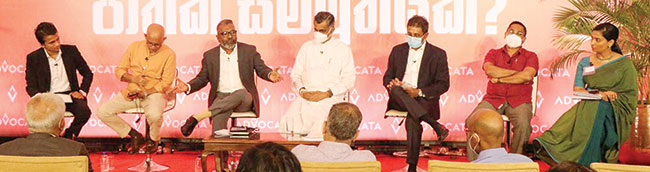
We are no longer talking about a crisis that is about to engulf us. We are now in its midst, though not its depths. The hope that the 2022 Budget would give the right signals, has evaporated, Prof. Rohan Samarajiva, a leading policy analyst and an advisor of the Advocata Institute said, last week.
He made these comments at Advocata’s latest event , “A National Consensus for Economic Reforms or “ආර්ථිකයට ජාතික සම්මුතියක්?”.
Professor Samarajiva provided a breakdown of severe economic and social challenges facing the country. His keynote speech stressed on the importance of building a national consensus to implement immediate reforms to tackle a wide range of issues ranging from unsustainable debt to shortages of essential items in the country.
The present macroeconomic instability lies in the failure of the state to implement deep structural reforms to the economy for nearly twenty years. The COVID-19 pandemic has exposed Sri Lanka’s fundamental weaknesses that have plagued the economy for a long period of time. The event brought together politicians representing the main political parties to discuss the importance of a united course of action, to drive Sri Lanka’s economy towards a path of growth.
Prof. Rohan Samarajiva, explained the seriousness of the crisis. “We cannot get out of the crisis without taking some bitter medicine. It is increasingly becoming clear that debt restructuring in the context of an IMF (International Monetary Fund) programme is essential. Unlike in previous IMF programmes, we cannot afford to abandon discipline at the earliest opportunity. Unless we own the reforms, we will keep falling back”. He said, stressing that what we need is a common minimum program of reform agreed by many. ” We need an attention-grabbing action that will credibly communicate the intentions of the national government. Divesting Sri Lankan Airlines on the same lines as Air India is a good candidate. The objective is to protect the taxpayers of this country from having to continually cover the losses of this technically bankrupt state-owned company”. He said, highlighting the importance of immediate measures to improve public finances. The national carrier Sri Lankan makes a daily loss of LKR 129.03 Million rupees. In the last four years of operation it has cost the economy 137 billion in the form of accumulated losses.
MP Vijitha Herath of the JJB, reflected on the need for a national consensus. He remarked that “the Sri Lankan economy is in the ICU (Intensive Care Unit). We are right now using minor reforms to push back certain death. But we need surgery to help the patient”, highlighting the need for deep structural reforms. He further commented that there is space for all parties to come together and agree on such a programme of action for the benefit of the nation. However, he laid out conditions for this including the President shedding his executive powers for a collectively agreed upon period of time.
Prof. Ranjith Bandara, MP, SLPP commented that “We need to prioritise the issues we need to solve. We need to be policy consistent in the long term”. Highlighting another key aspect of policy reform to achieve long term stabilisation.
Trade reform is another area to boost productivity and achieve growth. Dr. Harsha De Silva elaborated on this aspect. “Import substitution mentality should be abandoned. We need to face and compete in the competitive international economy. We have been excluded from the global value chain because of our narrow mindset of import substitution and complete self sufficiency”.
Patali Champika Ranawakaa- MP, SJB, commented on the importance of energy sector reforms to address the present crisis. ” The power issue is the next crisis. If the rain dries out for 6 weeks then we are certainly headed to a big power crisis. Substitutes to generating electricity ( kerosene) are also scarce. This crisis could lead to a rift in society” highlighting the urgency of reforming the energy sector. Dr. Suren Ragavan- MP, SLPP, was of the opinion that ” We need national consensus which capitalises on the unique competencies and skills of the different communities” further emphasising on the need for national reconciliation to come out of the present economic crisis as one country shedding communal differences.


The Cabinet of Ministers has approved the resolution furnished by the Minister of Industry and Entrepreneurship Development to impose the necessary legal provisions to prevent the export of scrap metal in a manner detrimental to domestic industries.
Business
SriLankan Airlines records revenue increase with AI and ML-powered Revenue Management System

SriLankan Airlines has recorded a revenue increase following the implementation of a next-generation, AI and Machine-Learning (ML) powered Origin and Destination (O&D) revenue management platform. The system enables dynamic pricing and smarter inventory optimisation, while delivering a superior passenger experience across all sales channels through real-time seat availability and predictive analytics.
Kshanaka Saparamadu, Head of Revenue Management at SriLankan Airlines, remarked, “Embracing the latest revenue management technology is a testament to our commitment to continuous innovation and digital transformation. With the introduction of PROS Revenue Management Advantage and Amadeus Revenue Availability and Active Valuation, we are not only refining our current processes but also positioning ourselves for long-term success in modern airline retailing, ensuring we stay ahead in a rapidly changing industry.”
Chamara Perera, Group Head of IT at SriLankan Airlines, added, “This transition to a dynamic, integrated revenue management system reflects our strategic focus on remaining agile in an increasingly competitive and fast-evolving airline industry. As the aviation sector undergoes rapid digital transformation, SriLankan Airlines is enhancing its ability to respond swiftly to market fluctuations and meet the evolving demands of today’s travelers.”
Powered by PROS’ AI-driven Revenue Management Advantage (RMA) and Amadeus Revenue Availability and Active Valuation (RAAV), the platform leverages AI algorithms and ML models to improve alignment of capacity and demand, optimise premium seat allocation and respond swiftly to market shifts. These capabilities deliver unmatched agility and scalability, boost yield and position SriLankan Airlines at the forefront of digital transformation in aviation.
Industry benchmarks show that O&D-based revenue optimisation models typically deliver a 3%-5% increase in passenger revenue, underscoring the new revenue management system as a key driver, among other strategic factors, to the 13% growth recorded by SriLankan Airlines during the first three quarters of the 2025-2026 financial year.
This initiative has not only enhanced SriLankan Airlines’ agility, scalability, and competitiveness in a dynamic global aviation market, but also strengthened collaboration between pricing, demand and flight analyst teams, earning two awards in the process. It was recognised with the Growth Catalyst Award at the Outperformer Customer Awards 2025 in Las Vegas by PROS, as well as the Silver Award in the AI and Data Science category at the National Project Management Excellence Awards 2025 in Colombo by the Project Management Institute Sri Lanka Chapter.
As SriLankan Airlines continues its modernisation journey, the new integrated revenue management platform will significantly improve SriLankan Airlines’ global market position, its ability to attract and retain high value connecting passengers, and competitiveness in the global aviation landscape.(SriLankan Airlines)
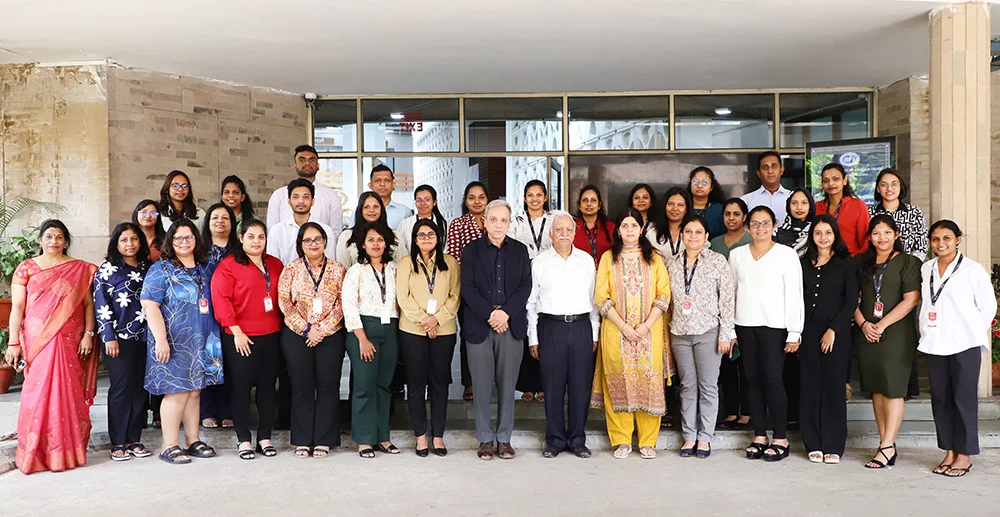
A delegation of 30 professionals from the Ceylon Chamber of Commerce recently completed a specialised residential training programme on International Trade Facilitation at the Indian Institute of Foreign Trade (IIFT) in New Delhi.
Hosted by the Indian Institute of Foreign Trade, a premier institution established under India’s Ministry of Commerce and widely regarded as a leading centre of excellence in international trade education and research, the programme also included engagements with several of India’s most prominent trade and diplomacy institutions. These included the Directorate General of Foreign Trade (DGFT), the government authority responsible for shaping and implementing India’s foreign trade policy; the Sushma Swaraj Institute of Foreign Service, the country’s premier training institution for diplomats; the Federation of Indian Export Organisations (FIEO), the apex body representing India’s exporting community; and the Confederation of Indian Industry (CII), one of India’s most influential industry associations. Together, these engagements offered participants valuable insights into how policy, diplomacy, and industry interact in a robust manner to facilitate trade and economic progress.
Over nine days, participants explored key aspects of global commerce, including the international trading system, trade negotiations, economic intelligence, trade finance, and emerging issues such as AI, cyber risk, and digital transformation.
The programme offered valuable insights into the evolving dynamics of international trade and the systems that support it, while highlighting ways in which chambers of commerce can further leverage their existing role in supporting businesses navigate global markets, contributing to policy discussions, and strengthen the broader trade ecosystem.
The programme was designed and overseen by Dr. Rohit Mehtani, Dean at IIFT and a widely respected expert in international trade diplomacy and negotiations, whose academic work and advisory experience have contributed to international trade discourse.

Payment of Compensation to the people who have lost their cultivable lands in implementing the Uma Oya Multipurpose Development Project
Draft Bill of the Chartered Institute of Media Professionals of Sri Lanka to be Gazzated
Telecommunication Levy Act No. 21 of 2011 to be amended
Management of State Expenditure during the Energy Crisis
Vesak week from 27 May to 02 June
Free Tourist Visas for Passport Holders of 39 Countries

‘Dates have the highest sugar content to fight Coronavirus’

Sunday Island 27 December – Headlines

#SundayIsland 17th December – Headlines

Sunday Island – 28th March

Sunday Island Headlines – 21 March

Sunday Island – 21st February – Headlines
-

 News7 days ago
Senior citizens above 70 years to receive March allowances on Thursday (26)
-

 Features4 days ago
A World Order in Crisis: War, Power, and Resistance
-

 News5 days ago
Energy Minister indicted on corruption charges ahead of no-faith motion against him
-

 News6 days ago
US dodges question on AKD’s claim SL denied permission for military aircraft to land
-

 Business6 days ago
Dialog Unveils Dialog Play Mini with Netflix and Apple TV
-

 News7 days ago
CEB Engineers warn public to be prepared for power cuts after New Year
-

 Sports5 days ago
SLC to hold EGM in April
-
 Latest News5 days ago
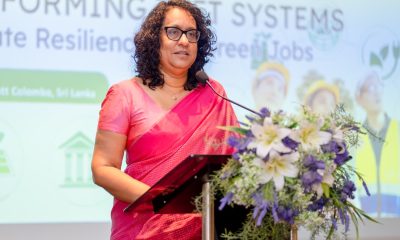
A strong Technical and Vocational Education and Training (TVET) system equips individuals with practical, relevant, and future-oriented skills helping to innovate responsibly towards a greener and sustainable future – PM