
Business
Sri Lanka Tourism facilitates the country’s first cable car project to take off soon

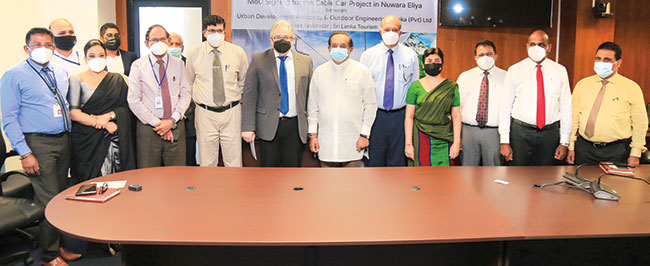
The last few years have seen a united and consolidated effort on all fronts, aimed at transforming Sri Lanka into a truly contemporary tourism destination. This includes positioning the island as a land of wonder and awe, overflowing with magical experiences, yet offering modern facilities and world-class amenities. There is also excellent work being done on the ground to ensure the right infrastructure is in place and the island’s countless delights are easily accessible to all visitors. This includes ease of access for the disabled and mobility challenged, as the island strives towards a more inclusive tourism industry.
The most recent project in this spirit is ‘The Cable Car Project’, an initiative by the Outdoor Engineering Lanka PVT Ltd, facilitated by the Investor Relations Unit (IRU) of Sri Lanka Tourism Development Authority (SLTDA). The project which is a first for Sri Lanka will give the island its first cable car experience, which will span a distance of nearly 4 Kilometers. The Cable Car will connect Nanu Oya, a destination made famous due to its strategically located railway station, with Nuwara Eliya town. This, in turn, will provide an alternative and beautifully scenic route between the two locations.
The location chosen for the project takes advantage of the breathtaking scenery and allows visitors a bird’s eye view of the lush green landscape, rolling hills, numerous tea estates, and of course the montane forests of Nuwara Eliya. This new way of locomotion will reduce the direct impact of tourism on nature, while still allowing visitors to observe, interact and enjoy the surroundings with a minimal environmental impact. The project with an investment value that currently stands at EURO 55 Million (USD 62.15 Mn) will be implemented as a “build, own, operate and transfer” model and thus, this agreement allows the total capital investment to be transferred to the Government of Sri Lanka after a period of 30 years. The project is scheduled to be completed within just 18 months from the date of receiving all approvals. Outdoor Engineers AG of Switzerland and its local representative, Outdoor Engineering Lanka Pvt Ltd are exponents of the project. Outdoor Engineers AG brings over 30 years of experience in the ropeway industry and has been involved in over 30 cable car installations all over the globe, including the famous Sentosa Cable Car in Singapore. The cable car equipment will be supplied and installed by partner organization of Outdoor Engineers AG, Doppelmayr Seilbahnen GmbH of Austria, who is the current world leader in cable car manufacturing and installations, having constructed over 15,100 installations in 96 countries. The Ropeway system used on the project, has a long history of use in the mountainous regions of Europe and has more recently found wide acceptance around the world. What sets them apart from most other forms of transportation is their ease of use, low environmental impact, and sustainable outlook. In fact, cable car systems are ideal for the tourism sector as they have minimal impact on the environment, help drastically reduce emissions, and leave behind no harmful emissions or residue. The project will be built according to the highest global safety standards, reliable, and easy to maintain with cost associated with operation and upkeep.
Speaking about this novel and exciting project, The Chairperson of Sri Lanka Tourism, Ms. Kimarli Fernando had this to say, “It gives everyone at Sri Lanka Tourism immense pride to be involved in this project, which is indicative of the progressive attitude we have adopted towards the future of the island and its tourism sector. The IRU division of the SLTDA together with the respective line agencies enabled a high level of competency and efficiency in keeping with international construction, safety, environmental, and quality standards. As a result of an effective and healthy collaboration of all line agencies involved, it allowed for complete compliance with all necessary regulatory frameworks, allowing for greater efficiency and transparency”
The design of the ‘The Cable Car Project’ ensures that it blends seamlessly with the surrounding landscape so as to not distract from the natural setting. Care has also been taken to preserve the tree line, canopy, and other aspects of the wilderness during construction and implementation. It was shown that the implementation of the project would reduce harmful greenhouse emissions by approximately 180 metric tons per year. As a BOOT project (Build, Own, Operate, Transfer) the operation will create new industries, opportunities, and jobs in the region. This is essential, as Sri Lanka looks to lift the standard of living across the country while providing more new opportunities to rural communities. The project is also indicative of what can be achieved when the many facets of government work together towards a unified vision. Working closely with Sri Lanka Tourism the UDA signed an MoU with Outdoor Engineering Lanka Pvt. Ltd. on the 09th of December to allocate land for this project on a 30-year lease period and did an excellent job clearing the necessary land, while also establishing strict guidelines for its preservation and use. A collective effort of vital government agencies such as the CEA and Forest Department along with nearly 20 other line agencies were also indispensable to the project’s success.
The project is one of several which are underway, under President Gotabaya Rajapaksa’s ‘Vistas of Prosperity and Splendor’ policy initiative. This is a vital step in the right direction as Sri Lanka positions itself as an exclusive destination, for the high-value experiential traveler. The projects will also bolster the island’s reputation in the eyes of the world, showcasing it as a cosmopolitan destination that has just about everything a world traveler could desire.
Sri Lanka Tourism


Sri Lanka’s first and largest coal-fired power complex at Norochcholai is staring at mounting financial losses running into millions of rupees as low-quality coal imports, rejected shipments and unusable stockpiles disrupt operations and expose deep flaws in coal procurement, power sector and environmental experts warned yesterday.
Energy sector sources told The Island Financial Review the economic damage has already begun, with rejected coal stocks, delayed payments and declining plant efficiency forcing the system to absorb losses from under-performance, additional handling costs and the risk of turning to more expensive backup generation.
Insiders estimate that continued reliance on sub-standard coal could result in tens of millions of rupees in losses per day, once reduced output, higher fuel burn and maintenance costs are factored in.
At the centre of the controversy is a recent coal shipment procured by the Lanka Coal Company (LCC), which has come under intense scrutiny after laboratory tests reportedly showed ash content of around 21%, far exceeding the 16% maximum allowed under tender conditions.
While parliamentary debate has focused narrowly on whether the coal meets the required calorific value, experts stress that excessive ash alone is sufficient grounds for outright rejection, regardless of calorific performance.
The situation worsened after coal stocks at the Norochcholai Coal-Fired Power Complex were recently rejected, leaving shipments in limbo and payments withheld. Power sector officials say this has resulted in logistical losses, demurrage risks and operational uncertainty, while existing low-quality coal stockpiles continue to deteriorate in storage.
“Coal that does not meet specifications is not just unusable — it becomes a financial liability, a senior electrical engineer said.
High-ash coal reduces boiler efficiency, increases fly ash generation and accelerates wear on ash handling systems, electrostatic precipitators and boilers — translating into higher maintenance costs and forced outages. Industry analysts warn that these hidden costs ultimately find their way into CEB losses or consumer tariffs.
Environmental Scientist Hemantha Withanage warned that accepting or burning such coal would push Norochcholai into a new environmental crisis, with serious consequences for communities in Norochcholai, Puttalam and surrounding areas.
“This is not just about calorific value. High ash coal means significantly more fly ash, Withanage told The Island Financial Review. “With low moisture and excessive ash, particulate matter spreads easily, contaminating air, soil and water. This is a massive ecological threat that will directly affect public health.”
He stressed that fly ash contains toxic heavy metals and fine particulates linked to respiratory illness and long-term environmental degradation. “If tender conditions are ignored, the cost will be paid by communities, not the suppliers, Withanage said.
Critics say the crisis exposes serious weaknesses in coal procurement oversight, with questions now being raised about supplier selection, quality verification and accountability. They argue that repeatedly importing low-quality coal — only to reject it or burn it at reduced efficiency — amounts to systemic mismanagement of public funds.
By Ifham Nizam

In a groundbreaking initiative, Insurance Regulatory Commission of Sri Lanka (IRCSL), announced an ambitious mission aimed at transforming the insurance industry into a cornerstone of national economic resilience and social stability.
To address this, the IRCSL will launch a nationwide education campaign titled “Insurance for All: For a Secure Future,” focusing on enhancing financial literacy across the country said Dr. Ajith Raveendra De Mel, the newly appointed Chairman IRCSL. Few sample events have already commenced last year in Matara, Jaffna and Kilinochchi that have set a strong precedent for future initiatives. “The positive response from participants highlighted the strong need for direct engagement and community-level awareness,” he said.
The IRCSL has also partnered with the Ministry of Education to integrate insurance literacy into the national curriculum, starting as early as Grade 5. This initiative aims to embed core concepts of risk management and financial protection, preparing students for future roles in the insurance industry. Complementing educational efforts, the IRCSL is also hosting an Inter-University Quiz Competition focused on insurance and financial literacy, aiming to engage university students and cultivate future thought leaders in the sector. Additionally, an e-Newsletter will keep stakeholders informed about industry updates and regulatory developments.
Dr. De Mel emphasized that this transformation it is not just about increasing insurance penetration, currently at a mere 1.1%, but about fostering a financially literate society where every citizen, family, and business is shielded from unforeseen risks. He said “Our mission is to cultivate a fully insured, financially literate, and future-ready society. The journey ahead involves profound regulatory, technological, and educational reform to create a modern, transparent, and robust regulatory environment that earns public trust while promoting innovation and sustainable growth in the industry.”
He pointed out the critical need for awareness, noting that many Sri Lankans perceive insurance as complex or exclusive to the wealthy. “We need to change how people think about insurance. Our goal is to make it simple, relatable, and accessible to everyone, particularly in rural and underserved communities,” he explained. The IRCSL will collaborate closely with the Insurance Association of Sri Lanka (IASL), the Sri Lanka Insurance Brokers Association (SLIBA), and the Sri Lanka Insurance Institute (SLII) to ensure that the message of financial preparedness reaches all corners of the nation. As Sri Lanka stands on the brink of an insurance transformation, Dr. De Mel’s vision promises a secure future driven by informed financial decisions and enhanced protection against life’s uncertainties.
The IRCSL is also focusing on digital transformation, enhancing operational excellence within the insurance sector. Key initiatives include establishing a Centralized Motor Insurance Database to improve transparency and efficiency in motor insurance, and advancing health insurance through digital integration, including standardized disease coding and electronic health records.
To ensure global competitiveness, the IRCSL is benchmarking against international best practices. A recent study tour to India has provided valuable insights into implementing risk-based supervision and capital frameworks, as well as developing accessible insurance products for underserved communities.
As the IRCSL approaches its 25th anniversary, it emphasizes the importance of staff development and alignment with other financial regulatory bodies to maintain high professional standards. The upcoming OECD/ADBI Roundtable on Insurance and Retirement Savings in Asia will further position Sri Lanka as a leader in insurance discussions, fostering regional collaboration and innovation.
by Claude Gunasekera
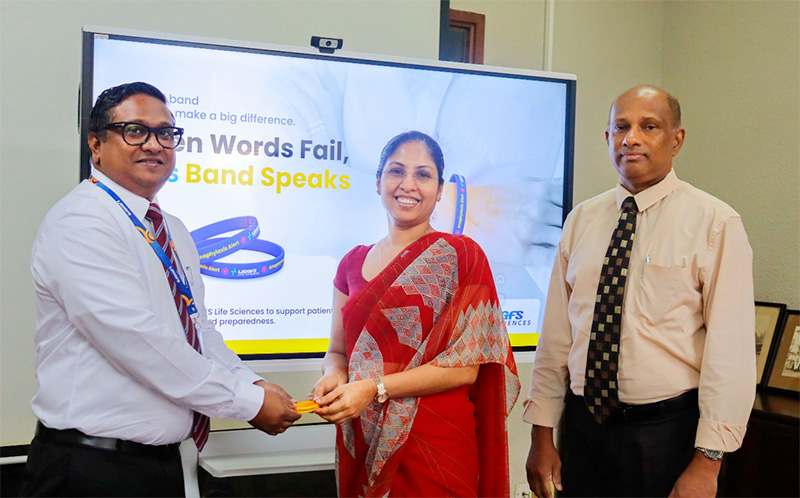
LAUGFS Life Sciences, in collaboration with the Medical Research Institute (MRI), Colombo, has launched Sri Lanka’s first-ever publicly driven allergy awareness wristbands, a groundbreaking initiative aimed at improving patient safety and preparedness in medical emergencies. The wristbands provide essential information about drug sensitivities, allowing healthcare professionals to respond quickly and effectively when time is critical.
The official handover ceremony featured distinguished medical experts, including Dr. Dhanushka Dassanayake, Consultant Immunologist and Head of the Department of Immunology – MRI, Dr. Rajiva De Silva, Senior Consultant Immunologist – MRI and Dr. Prabath Amerasinghe, Deputy Director – MRI, marking a historic milestone in patient care in the country.
Commenting on the initiative, Dr. Rajiv Perera, CEO of LAUGFS Life Sciences, said, we are proud to partner with the Medical Research Institute to launch Sri Lanka’s first-ever publicly driven allergy awareness wristbands. This initiative underscores our commitment to patient-centric healthcare by providing critical information that can save lives during emergencies. We believe that thoughtful collaborations like this can have a meaningful impact on patient safety, and we look forward to expanding the program to cover additional drugs and allergens, further advancing healthcare standards across the country.

Lanka Premier League draft set to take place on March 22

Trump to meet Venezuelan opposition leader Machado at the White House

Festival advance for government officers to be increased
Providing underutilized lands/properties to suitable investors for optimal utilization.
Implementation of the National Fisheries and Aquaculture Policy

Expressions of Interest called to develop selected locations within the Pelawatte Sugar Factory premises

‘Dates have the highest sugar content to fight Coronavirus’

Sunday Island 27 December – Headlines

#SundayIsland 17th December – Headlines

Sunday Island – 28th March

Sunday Island Headlines – 21 March

Sunday Island – 21st February – Headlines
-
 News3 days ago
Sajith: Ashoka Chakra replaces Dharmachakra in Buddhism textbook
-

 Business3 days ago
Dialog and UnionPay International Join Forces to Elevate Sri Lanka’s Digital Payment Landscape
-

 Features3 days ago
The Paradox of Trump Power: Contested Authoritarian at Home, Uncontested Bully Abroad
-

 Features3 days ago
Subject:Whatever happened to (my) three million dollars?
-

 News3 days ago
Level I landslide early warnings issued to the Districts of Badulla, Kandy, Matale and Nuwara-Eliya extended
-

 News3 days ago
National Communication Programme for Child Health Promotion (SBCC) has been launched. – PM
-

 News3 days ago
65 withdrawn cases re-filed by Govt, PM tells Parliament
-

 Opinion5 days ago
The minstrel monk and Rafiki, the old mandrill in The Lion King – II