
Sports
Sri Lanka rugby will cherish the memories of Y.C. Chang


By a Special Sports Correspondent
The rugby fraternity in Sri Lanka moaned the death of Y.C Chang, one of the island’s stalwarts in the sport. He was 82 at the time of his death.
YC, as he was popularly known, served as a rugby administrator in the latter years of his life after hanging up his boots. He was one gentleman who was instrumental in taking the sport of rugby union to the provinces and the strengthening the game at the grassroots level.
YC was an institute in rugby. He had followers and also people who called him sir. He was a no-nonsense rugby administrator and headed Sri Lanka Rugby (Sri Lanka Rugby Football Union then) as its president from 1985-88. He was also the president of Asian Rugby Football Union in 1990, the year that Sri Lanka hosted the Asian Rugby tournament in Colombo.
His rugby playing days were very colourful. This was despite the fact that he was never selected to represent his alma mater Trinity College Kandy, at First XV level. This bitter memory made him pursue the sport with a vengeance after leaving school. He ended up representing top clubs like Havelocks, Kandy SC and CH&FC and went on to captain Sri Lanka at the 1972 Asian Championships (ASIAD).
His parents wanted him to be a doctor, but YC pursued a career in planting. When at his peak he was the epitome of how a prop forward should look like and play in the loose. He once said in an interview with a leading rugby website, “My fitness levels were at the highest at that time and I never felt tired”. That was Y.C Chang; a brutal package in the sport of rugby union and a warrior when at his best!
There is this infamous incident associated with him when playing domestic rugby. A furious YC, unhappy with the standard of refereeing at a domestic rugby encounter, had led his team off the field. He was the captain of CH&FC and the opponents were Havelocks SC. The consequences were terrible for YC. He was suspended by SLRFU for two years.
Some of the great players of yonder who have played under his captaincy at domestic rugby are Noel Brohier, Bryan Baptist, Lanil Tennakoon and Tony Amit.
In latter years of his life as a rugby administrator, he brought much professionalism into domestic rugby. He was a great supporter of campaigning for the cause to bring down Fijians to play in the domestic rugby tournament. Some of these best Fijians played for CH&FC.
He was a regular swimmer and made his swims in the seas near Kingross Beach in Wellawatte. This writer remembers YC coming to the beach, tying up his dog and then swimming horizontally on the seas till exercised his body. Then he would walk ashore, wading through the water; a sight to behold and one that resembled a sea god emerging from afar. After some time, this writer saw another dog that he brought along to the beach, tied it to a fence and then did his swimming. On inquiry he said that the old dog had died and he had cried so much over its demise; adding that he had not cried so much even when his parents passed away. Then his children had presented him with another dog and gradually he had become fond of the new pet in the family. YC also had a soft side to him and a rare few were fortunate to witness that.
There came one day when this writer was at the beach and YC was engaged in his swimming routine. That morning the rugby fraternity came to know of the death of a rugby stalwart whose name this writer would best not mention here. After coming ashore this writer conveyed the sad news to YC. He put his hands on his hips looked out to the sea, thought deep for a few second and said, “The guy didn’t consume liquor, didn’t smoke, was a vegetarian and didn’t indulge in any of the pleasures we seek, so it’s best to die”. That’s YC Chang for you!


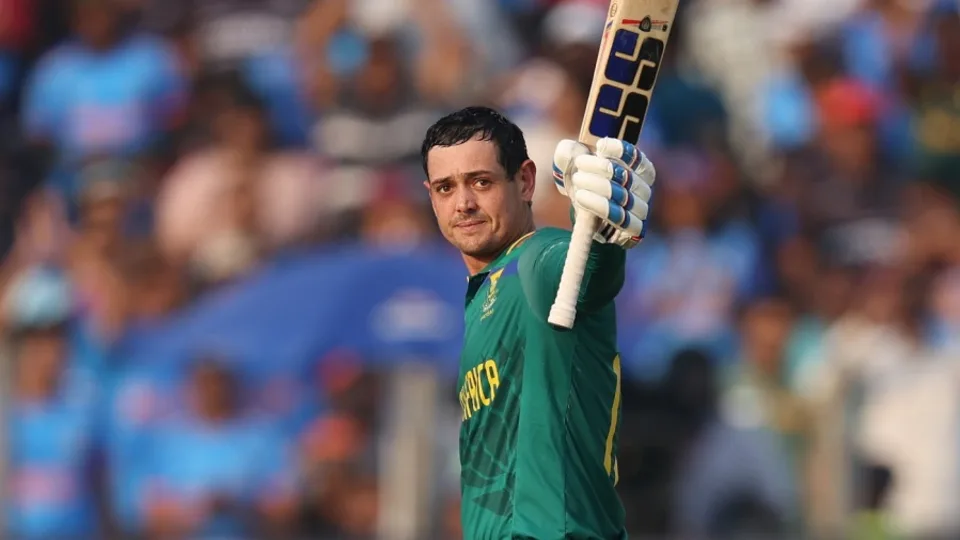
Afghanistan made it till the semi-finals of the 2024 T20 World Cup, but this time, after just one game, they face an uphill task. Their loss to New Zealand in their opening match has put them, in all likelihood, in a do-or-die situation against South Africa: if they lose, even the wins against Canada and UAE may not be enough to qualify for the Super Eight stage.
It will not be easy for Afghanistan. They have faced South Africa three times in T20Is. On all three occasions, they were on the losing side. Their last defeat – in of the 2024 edition – was particularly chastening: South Africa bowled them out for 56 and then chased down the target with nine wickets to spare.
Apart from all that history, too, South Africa will be well primed after their win against Canada, where they ticked most boxes. Their captain Aiden Markram scored a half-century, David Miller and Tristan Stubbs added 75 in an unbroken stand, and the team posted the highest total of the tournament so far. Lungi Ngidi’s four-for was the icing on the cake. A win against Afghanistan will make their path to the Super Eight stage smooth.
It’s a day game, starting at 11am. But as Stubbs said after the Canada match, it may not make much of a difference.
It may feel like Rashid Khan is not the same bowler he once was. But numbers tell a different story. Since the start of 2024, he has taken 52 wickets in 26 T20Is against Full Members. Both his strike rate (11.3) and economy (5.83) in this period are better than his career numbers. If Afghanistan are to qualify for the next round, they will need similar performances from their captain.
Since his return to T20I cricket in October, Quinton de Kock has five single digit scores in 11 innings. But when he gets going, it’s not easy to stop him. He has scored 355 runs in this period, at an average of 32.27 and a strike rate of 181.12. His overall record in India is also impressive, and he will be keen to put behind his 22-ball 25 in South Africa’s opening match against Canada.
Expect Noor Ahmad to replace Ziaur Rahman, who conceded 33 from his three wicketless overs against New Zealand.
Afghanistan (probable): Rahmanullah Gurbaz (wk), Ibrahim Zadran, Gulbadin Naib, Sediqullah Atal, Darwish Rasooli, Azmatullah Omarzai, Mohammad Nabi, Rashid Khan (capt), Mujeeb Ur Rahman, Noor Ahmad, Fazalhaq Farooqi
South Africa could consider bringing in a second spinner in George Linde for one of the many fast bowlers.
South Africa (probable): Aiden Markram (capt), Quinton de Kock (wk), Ryan Rickelton, Dewald Brevis, David Miller, Tristan Stubbs, Marco Jansen, Corbin Bosch, Kagiso Rabada, Keshav Maharaj, Lungi Ngidi
[Cricinfo]
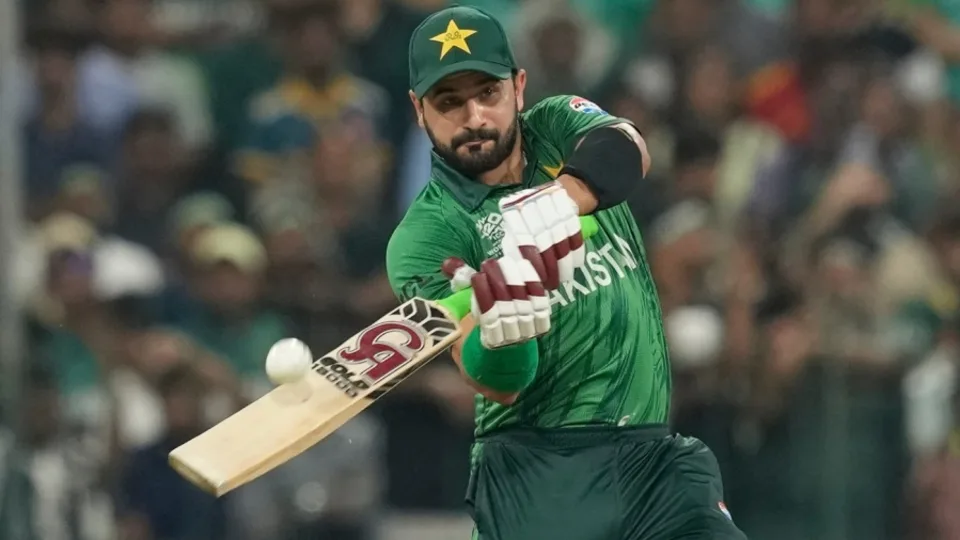
Shadab Khan belted 30 off 12 balls then stifled USA’s chase with 2 for 26 to spearhead Pakistan’s second win of the T20 World Cup. After they snuck past Netherlands in a heart-stopping tournament opener on Saturday, this was a routine victory for Pakistan which highlighted how dangerous their spin-dominated attack might be on Sri Lankan pitches.
Sahibzada Farhan underpinned Pakistan’s total of 190 for 9 – their highest score at a T20 World Cup since the 2016 edition – with 73 off 41 balls, sharing partnerships worth 54 and 81 with Saim Ayub and Babar Azam respectively. But it was Shadab’s late launch from No. 6 that gave them a winning score, despite a chaotic finish to their innings.
Shadley van Schalkwyk USA’s standout bowler when they ran India close on Saturday night, returned identical figures of 4 for 25 as he leaned heavily on his slower balls. But the injured Ali Khan was a big miss, and a repeat of the USA’s famous Super Over victory when the teams met at the 2024 T20 World Cup always felt unlikely.
The run chase started brightly thanks to Shayan Jahangir, one of three Pakistan-born players in the USA side, who made 49 off 34. But Pakistan’s five spinners turned the screw through the middle of the innings, returning combined figures of 7 for 115 in 16 overs as they were backed up by an impressive effort in the field.
Shubnam Ranjane still carrying the injury that he picked up against India, showed some resistance, hauling back-to-back sixes off Shaheen Shah Afridi over the leg side. But by the time he reached a 28-ball half-century – his first in T20Is – the equation was 35 off the last five balls, and he was trapped lbw two balls later.
The result takes Pakistan top of the nascent Group A table with two wins from two; after the withdrawal of the government’s boycott order on Monday night, their next opponents will be India on Sunday.
Ayub made an instant statement of intent by skipping down the pitch and trying to launch the first ball of the match back over Saurabh Netravalkar’s head for six. He only connected with thin air, but successfully cleared the long-on boundary two balls later to kickstart a boundary-laden opening stand with Farhan.
It was Farhan who made most of the running. He hit three fours in the space of four balls from USA debutant – and nine-cap former Pakistan international – Ehsan Adil, and took 16 runs from offspinner Milind Kumar’s over to leave Pakistan 54 for 0 after five overs, despite chewing up 18 dot balls.
Van Schalkwyk’s slower balls proved effective again, producing two wickets in the final over of the Powerplay: Ayub sliced a catch to short third reaching for a wide one, and Salman Agha was tucked up as he looked to give himself room, heaving a cutter straight to deep backward square. It prompted a period of consolidation, with a single boundary in the next five overs.
Babar ground his way to 15 off 17 balls before switching gear in the 13th over, launching Harmeet Singh’s left-arm spin over midwicket for six then hitting back-to-back boundaries, the second a rifled cut shot from a low base. He was well caught by Milind at long-on soon after drinks for 46 off 32, eventually showing signs of rhythm after a scratchy start to the World Cup.
Farhan, who had powered to a 27-ball half-century, was well caught by Sanjay Krishnamurthi on the long-off boundary in Harmeet’s final over, and Pakistan reshuffled their batting line-up after a partnership worth 81 in 53 balls. Usman Khan slid down to No. 8, below Mohammad Nawaz, Shadab and Faheem Ashraf, and Shadab made the most of his promotion.
He belted Netravalkar’s slower ball for six, then took Adil for three consecutive fours on his way to 30 off 12. His dismissal, splicing a catch behind off the impressive van Schalkwyk, was the first of five wickets to fall in the final 10 balls – including two run-outs in the final over – but Shaheen’s late blow dragged Pakistan up to 190.
Jahangir replaced Saiteja Mukkamalla at the top of the order and made a fast start. He whipped Shaheen through midwicket for four, rocked back to heave Ayub over wide long-on, and dumped Abrar Ahmed back over his head to take USA to 50 in the powerplay, for the loss of Andries Gous, caught at mid-off off Nawaz.
But they got bogged down by spin through the middle of the innings, with Monank Patel mistiming a slog-sweep back to Shadab for a painstaking 3 off 10. Jahangir launched Nawaz through long-off for four to end a 28-ball stretch without a boundary, but mistimed Shadab’s wrong ‘un to long-on to fall one run short of a first T20 World Cup half-century.
Milind and Ranjane added 54 off 35 for the fourth wicket, but could not prevent the asking rate spiralling out of control. Usman Tariq, who replaced Salman Mirza to leave Pakistan with a single frontline seamer, had Milind caught on the edge of the ring, then struck twice in two balls to finish with 3 for 27 in his first match at an ICC event.
Brief scores:
Pakistan 190 for 9 in 20 overs (Saim Ayub 19, Sahibzada Farhan 73, Babar Azam 46, Shadab Khan 30; Saruabah Netravalkar 1-40, Shadley van Schalkwyk 4-25, Mohammed Moshin 1-27, Harmeet Singh 1-41) beat USA 158 for 8 in 20 overs (Andries Gouse 13, Shubnam Ranjane 51, Shayan Jahangir 49, Milind Kumar 29; ShaheenShah Afridi 1-42, Abrar Ahmed 1-30, Mohammed Nawaz 1-21, Usman Tariq 3-27, Shadab Khan 2-26) by 32 runs
[Cricinfo]

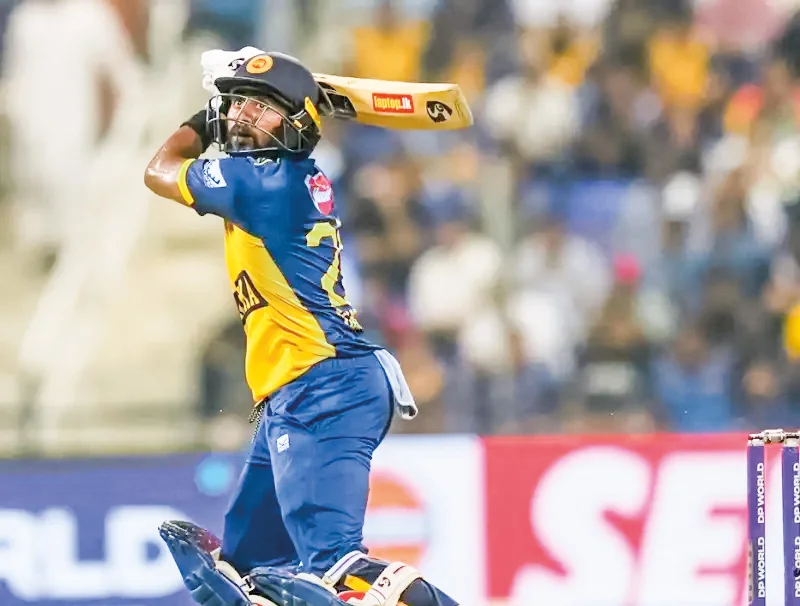
The fall of the once mighty West Indies has been steep across formats, yet in T20 cricket they still land the odd knockout punch. Sri Lanka, too, have slipped from the heady days when they were perennial contenders at ICC events and nowhere is the decline more glaring than in the shortest format. Still, old pros refuse to write them off. Nasser Hussain has tipped the islanders to spring a surprise while Jason Gillespie pencilled them in as semi-final material.
The faith is not blind. Sri Lanka know these conditions like the back of their hand and their bowlers possess enough tricks to put any batting line up in trouble. The worry lies elsewhere, a middle order that resembles a jigsaw with pieces missing.
In the modern game an IPL contract is often a golden ticket to the national side, yet Sri Lanka’s initial move to overlook Kamindu Mendis in favour of Test captain Dhananjaya de Silva raised eyebrows. It betrayed a mindset stuck in a different era.
Sunday’s scare against Ireland rammed home the point. Sri Lanka went 57 balls without a boundary until Kamindu broke the shackles with a cheeky reverse sweep, innovation that is the lifeblood of T20 cricket. How such a weapon was left in the holster in the first place is anyone’s guess.
Sri Lanka remain the only side juggling three captains across formats while playing all three of them in the T20 side.
The team’s top order generally fires out of the blocks, tearing along at more than ten an over in the Power Play, but from the seventh over the wheels begin to wobble. The innings turns into a grind and too often they fail to bat the full 20 overs.
When the field spreads and spinners take centre stage, the basics come into play, “milking the bowling”, running hard between the wickets, pinching “one for the throw”. These old school charms may be out of fashion but they still win matches. Soft hands, using the feet, rotating strike, virtues that have been tossed out in the pursuit of the glory shot.
Even associate sides such as UAE and USA boast thriving franchise leagues. Sri Lanka have the LPL, but it has been a stop start affair and has yet to produce a conveyor belt of finishers. Power hitters are thin on the ground. Kusal Janith Perera remains the cleanest striker in the country yet barely scraped into the squad and appears to be cooling his heels among the reserves.
Most nations pick a squad and then anoint a captain. Sri Lanka appear to have done it the other way round. Of course there have been exceptions. Mike Brearley never managed a Test hundred yet marshalled Botham, Gatting and Willis to Ashes glory; Bob Simpson was hauled out of retirement at 41 to steady an Australia stripped bare by the Packer exodus and did a sterling job.
Dasun Shanaka, however, is neither Brearley nor Simpson. For a side searching for direction, he has begun to look like deadwood rather than driftwood. Sri Lanka need to ask some tough questions.

Afghanistan face mighty South Africa with campaign on the line

Pilot praised after crash-landing faulty Somali passenger plane on seashore

Except for a few showers in the Ampara, Batticaloa, Monaragala and Hambantota districts, mainly fair weather will prevail over the island.

Spinners, Farhan seal comfortable win for Pakistan

Police open fire on speeding van in Jaffna: 17-year-old driver killed

HRCSL employee protests demanding justice, takes swipe at Presidential Secretariat

‘Dates have the highest sugar content to fight Coronavirus’

Sunday Island 27 December – Headlines

#SundayIsland 17th December – Headlines

Sunday Island – 28th March

Sunday Island Headlines – 21 March

Sunday Island – 21st February – Headlines
-

 Features3 days ago
My experience in turning around the Merchant Bank of Sri Lanka (MBSL) – Episode 3
-

 Business4 days ago
Zone24x7 enters 2026 with strong momentum, reinforcing its role as an enterprise AI and automation partner
-

 Business3 days ago
Remotely conducted Business Forum in Paris attracts reputed French companies
-
 Business3 days ago
Four runs, a thousand dreams: How a small-town school bowled its way into the record books
-

 Business3 days ago
ComBank and Hayleys Mobility redefine sustainable mobility with flexible leasing solutions
-

 Business4 days ago
HNB recognized among Top 10 Best Employers of 2025 at the EFC National Best Employer Awards
-

 Editorial6 days ago
All’s not well that ends well?
-

 Business4 days ago
GREAT 2025–2030: Sri Lanka’s Green ambition meets a grid reality check