
News
Sri Lanka big business reaps huge profits during pandemic

By Saman Gunadasa
Sri Lanka’s nine top companies amassed 364 billion rupees ($US1.8 billion) in earnings between April and June, collectively pocketing 21 billion rupees profit in the first quarter of their financial year.
This amount is only a fraction of the wealth secured by the super-rich and also seen in rising profits for the banks and other big companies so far this year.
In the first three months of 2021, listed companies on the Colombo Stock Market recorded 189 percent growth increase compared to the same period last year, with the largest earnings made by companies involved in finance, exports, logistics, liquor, health and stock trading.
Companies allowed to keep operating during the COVID-19 pandemic were some of the highest profit makers, in stark contrast to the devastating economic impact on workers, small entrepreneurs, self-employed and the poor who suffered sharp losses of income and jobs. As of yesterday, COVID-19 has taken the lives of more than 9,000 people in Sri Lanka with total infections climbing to over 425,000.
Among the top nine earners was Expolanka, a major logistics company with branches in 20 countries. It had a turnover of 95 billion rupees and 6.3 billion rupees net profit in the quarter.
In second place was LOLC, a leader in leasing, hire purchase, insurance and other financial activities. It earned 55 billion rupees with a 4 billion rupees net profit. Last year, LOLC pocketed 53 billion rupees after tax profit, the highest ever recorded by a Sri Lankan company. Its owner, Ishara Nanayakkara is one of the country’s top billionaires.
Hayleys and Vallibel One, a finance house owned by Dammika Perera, Sri Lanka’s richest individual, earned almost 90 billion rupees with combined net profit of 6.4 billion rupees in the April to June quarter.
The Hayleys conglomerate is involved in import-export industries related to rubber production and plantations with over 30,000 employees. Last year it generated 242 billion rupees in revenue and 14 billion rupees net profit, the highest ever during the company’s 143 years of existence.
John Keells, another top business firm, earned 38 billion rupees with 1.2 billion rupees net profit in the quarter. Tourism was the only component of the company impacted by the pandemic.
In addition to the top nine conglomerates, NDB, the country’s fourth largest private commercial bank, reported a net interest income of 5 billion rupees—a 15 percent increase from April to June compared to the same time last year. Sampath Bank reported a 34 percent rise in net interest income to 10.8 billion rupees in the same quarter.
Billionaire Dammika Perera was featured in the media last week, arrogantly declaring that Sri Lanka should not be locked down under any circumstances.
“A government cannot run the country in a complete lockdown, can it?” he said, adding that without “dollar income via exports,” it could not import petrol, medicine, milk powder and other necessities. Perera said nothing about the massive export profits being amassed by his companies and other businesses.
Over the past month Sri Lankan President Gotabhaya Rajapakse, speaking on behalf of big business, opposed any lockdown amid rising COVID-19 infections and deaths and urgent calls of independent health experts for stringent health measures.
Limited lockdown restrictions reluctantly imposed on August 20 by Rajapakse, still allow big business to keep operating as essential services. Health experts have voiced their concerns about effectiveness of the government’s restrictions.
Last year President Rajapakse ordered the Central Bank to provide massive concessionary funds—a total of 230 billion rupees—to big businesses. Other financial facilities and more tax concessions were also handed out. Most corporate taxes, for example, were reduced to 14 and 18 percent, the lowest rates in South Asia.
Last December, Rajapakse told a Ceylon Chamber of Commerce conference that investors should “take up the opportunities” provided by the coronavirus pandemic.
Early last year the government, backed by the trade unions, gave businesses the right to retrench workers arbitrarily, ignoring the country’s existing, but limited, labour laws. Under the banner of dealing with the pandemic, employers were also allowed to impose wage cuts, increase workloads and slash working conditions.
Announcing his limited lockdown measures on August 20, Rajapakse called on the population to be prepared to make “more sacrifices.” Government ministers are already campaigning for the salaries of about 1.4 million of state sector workers to be cut by 50 percent.
Last week, the cabinet of ministers announced that they would donate a month’s salary to the COVID-19 Health Care and Security Fund. The “donation,” which has been embraced by government and opposition Samagi Jana Balavegaya MPs, is a media stunt by the ministers who receive more in perks than their monthly salaries. It is a public relations exercise in preparation for the slashing of state employees’ salaries.
The government has said it would provide 2,000 rupees for low-income families to cover the two-week lockdown. This is not even enough for one meal a day during the lockdown.
While big business is thriving, working people are being impacted by increasing prices for essential items. Inflation rates have been climbing since January and, on a year-on-year basis, were 6.1 percent in June and 6.8 percent in July. Food inflation was 11 percent in July, with non-food items 3.2 percent.
The Rajapakse government, which confronts falling foreign reserves—it only has enough for two months of imports—has banned the import of many essential food items and other goods.
Sri Lanka, according to a recent global survey by the Institute of Development Studies , is fourth in a list of countries—after Syria, Nigeria and Ethiopia—where basic food is the least affordable.
Last week, Health minister, Keheliya Rambukwella issued a gazette announcing a maximum price for 60 essential medical drugs. Ceylon Private Pharmacy Owners ’ Association president Chandika Gankanda, however, told the media that the gazette was used to increase the price of many drugs by 9 percent. The drugs listed in the gazette include painkillers given for those infected with COVID-19 or suffering with diabetes and high blood pressure.
Mired in huge foreign debts and falling export income, the Rajapakse regime has turned to the International Monetary Fund (IMF) and received a loan of about $800 million under the bank’s $650 billion program for member states.
Ajit Nivard Cabraal, the state minister for money and capital markets, jubilantly declared last week, that “the inflows we predicted are coming one by one,” adding that a $300 million loan was also being provided by China.
The IMF has insisted that any country receiving its loans must implement “restructuring programs” to overcome its economic difficulties. In other words, these loans will be paid for by even more ruthless austerity attacks on the working class and the poor by the Rajapakse government.


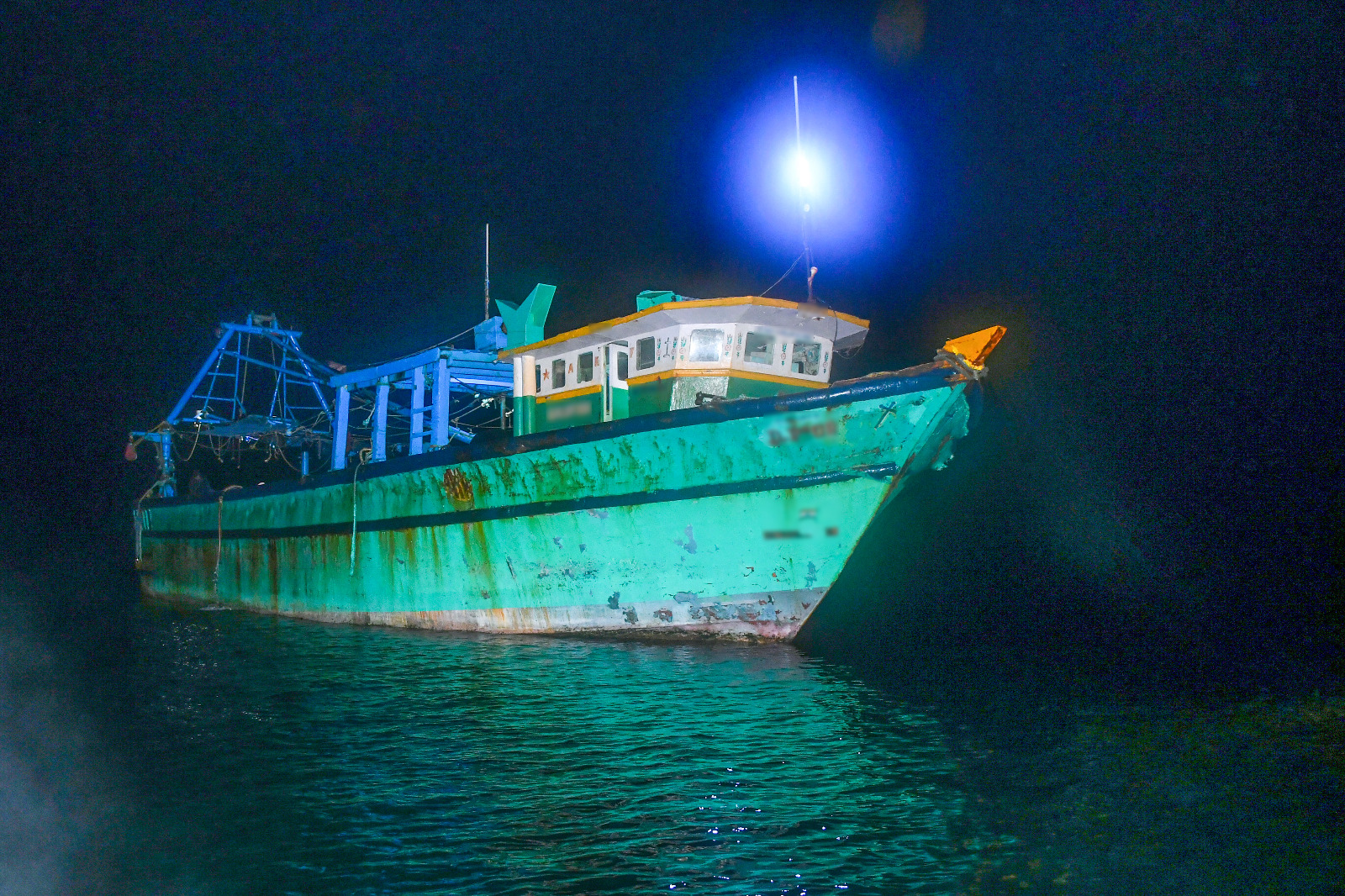
During an operation conducted in the dark hours of 22 Feb 26, the Sri Lanka Navy seized an Indian fishing boat and apprehended twelve (12) Indian fishermen while they were poaching in Sri Lankan waters, in the sea area south of Mannar.
The seized boat and the Indian fishermen were handed over to the Fisheries Inspector of Dikovita for onward legal proceedings.
FSL assures legal backing for them
Families of those sentenced to death by the Three-member Gampaha High Trial-at-Bar, over the killing of SLPP MP Amarakeerthi Atukorale, and his police bodyguard, met a senior official of the Presidential Secretariat, yesterday (23), to seek backing for their move to appeal against the verdict.
Having made representations, they addressed the media, outside the Presidential Secretariat, where they declared their intention to move the higher court against the decision.
The SLPP MP and his security officer were killed by an Aragalaya mob on 09 May, 2022, at Nittambuwa. The same day Aragalaya mobs unleashed violence against the then government MPs across the country, torching dozens of their properties.
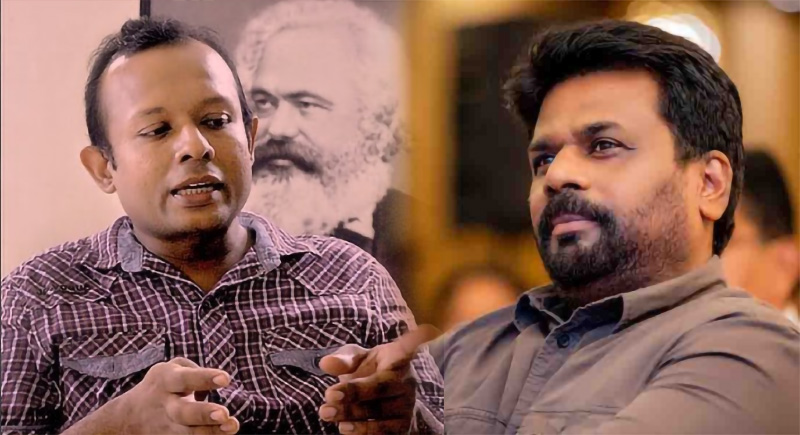
The Frontline Socialist Party (FSP) yesterday said that they would help the families of those sentenced to death to move court against the Gampaha High Court Trial-at-Bar decision. Responding to The Island queries, FSP spokesman Pubudu Jayagoda said that their representatives had already met the families and necessary work was being done to move the Supreme Court. Twenty three persons were acquitted and four handed six-month prison terms, suspended for five years
Jayagoda said that one of the HC judges differed in the ruling. Asked whether they received backing from any other political party and groups that had been involved in the 2022 protest campaign to defend those who had been found guilty, Jayagoda said such support was lacking.
The JVP/NPP played a significant role in the violent protest campaign that forced President Gotabaya Rajapaksa to step down. Pointing out that the Attorney General, too, was appealing against the court decision on the basis that the number of persons sentenced to death should be much higher, Jayagoda said that the Nittambuwa incident couldn’t be examined in isolation without taking into consideration the SLPP goon attack on Galle Face protesters on 09 May, 2022. (SF)
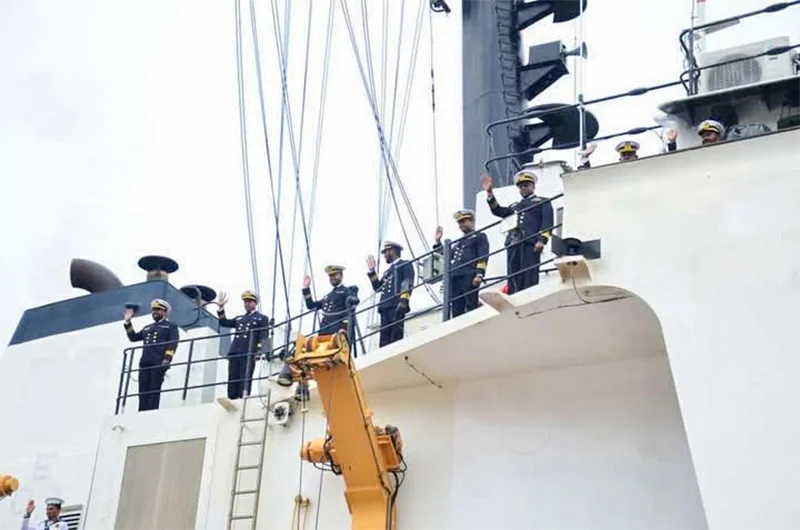
Offshore Patrol Vessel P 628 of the Sri Lanka Navy departed Baltimore, USA, for Colombo, on 20 February.
The ex-United States Coast Guard Cutter, USCGC Decisive was officially handed over to the SLN on 02 December, 2025, as the latest addition to the SLN fleet, under the Pennant Number P 628.
Measuring 64 metres in length, this ‘B-Type Reliance Class 210-foot Cutter’ is equipped with advanced technological systems and facilities, capable of conducting extensive surveillance operations spanning up to 6,000 nautical miles per patrol.
The vessel’s voyage to Colombo is historic, possibly marking the longest-ever passage undertaken by a Sri Lanka Navy ship. Covering approximately 14,775 nautical miles, the journey will see the P 628 navigate from Baltimore through the Atlantic Ocean, the Panama Canal (a first for a Sri Lankan naval vessel), the Pacific Ocean, and into the Indian Ocean, via the Straits of Malacca. The ship is expected to arrive in Sri Lanka during the first week of May, 2026.

Navy seize an Indian fishing boat poaching in Mannar seas

Fair weather will prevail except for showers in the Southern province and in Rathnapura, Monaragala and Kaluthara districts after 2.00 p.m

Families of those sentenced to death for killing MP Atukorale seek AKD’s intervention

OPV leaves Baltimore, expected in Colombo in May

Unions sound alarm over coal procurement and power sector restructuring

MAS Group moving to India: CP asks NPP govt. to act

‘Dates have the highest sugar content to fight Coronavirus’

Sunday Island 27 December – Headlines

#SundayIsland 17th December – Headlines

Sunday Island – 28th March

Sunday Island Headlines – 21 March

Sunday Island – 21st February – Headlines
-
 Features2 days ago
Why does the state threaten Its people with yet another anti-terror law?
-

 Features2 days ago
Victor Melder turns 90: Railwayman and bibliophile extraordinary
-
 Features2 days ago
Reconciliation, Mood of the Nation and the NPP Government
-

 Features1 day ago
LOVEABLE BUT LETHAL: When four-legged stars remind us of a silent killer
-
 Features2 days ago
Victor, the Friend of the Foreign Press
-
 Latest News4 days ago
New Zealand meet familiar opponents Pakistan at spin-friendly Premadasa
-
 Latest News4 days ago
Tariffs ruling is major blow to Trump’s second-term agenda
-

 Latest News4 days ago
ECB push back at Pakistan ‘shadow-ban’ reports ahead of Hundred auction