
Life style
Sri Dalada . Seal of Lanka’s Sovereignty


The 10-day public exhibition of the sacred tooth relic which commenced on April 18 after a respite of 16 years ends today.
Revered by millions and regarded as Sri Lanka’s seal of sovereignty, the sacred tooth relic of the Buddha, since its arrival in the island, had been the insignia of the royalty, shifting to wherever the seat of the government had moved. The most sacred relic had been sheltered in the last Sinhala kingdom of Kandy for the past three centuries in the Dalada Maligawa or the Palace of the Tooth Relic. The sacred tooth relic is revered with a continuum of deeply seated rites and rituals, evolving a tradition of its own which had caught the imagination of many foreign travelers to the island as well.
BY RANDIMA ATTYGALLE
John Davy an English physician who accompanied the Governor of Ceylon, Sir Robert Brownrigg on his tour of the Central and the Uva provinces, documents in his work, ‘An Account of the interior of Ceylon and of its inhabitants with travels in that island’ (1821) his impressions of the Dalada Maligawa and the tooth relic: ‘The Dalada Maligawa, was the domestic temple of the king, and it’s the most venerated of any in the country, as it contains the relic, the tooth of Boodhoo to which the whole island was dedicated and which is considered by good Boodhists as the most precious thing in the world.’
(spelled as in the original writing) Davy who goes onto note that he had the rare opportunity enjoyed by only a few Europeans ‘of seeing the celebrated relic when it was recovered, towards the conclusion of the rebellion (of 1818) and brought back to be replaced in the Dalada Malegawa, from which it had been clandestinely taken,’ provides a detailed description of it and even provides a sketch to give some idea of its size and form. ‘Never a relic was more previously enshrined; wrapped in pure sheet-gold, it was placed in a case just large enough to receive it, of gold, covered externally with emeralds, diamonds and rubies, tastefully arranged.’ Describing the outermost of seven caskets containing the relic, Davy writes: ‘the ornaments attached to it are extremely rich and consists of gold chains and a great variety of gems, suspended from it. The most remarkable of these is a bird hanging by a gold chain and formed entirely of diamonds, rubies, blue sapphires, emeralds and cat’s-eyes, set in gold, which is hid by the profusion of stones.’
Encrusted with gems
Colonial Secretary of Ceylon, James Emerson Tennent in the Volume 2 of his book Ceylon, provides another account of the relic accompanied by a sketch of the shrine in which it is deposited. ‘The apartment in which it is deposited is in the inmost recess of the Vihara, a small chamber without windows, in which the air is stiflingly hot, and heavy with the perfume of flowers. The frames of the doors are inlaid with carved ivory and on a massive silver table stands the bell shaped carandua, the shrine which encloses the relic, encrusted with gems and festooned with jewelled chains. The outer case contains a number of others, similarly wrought, but diminishing in size, till on removing the inner one a golden lotus is disclosed, in the centre of which reposes the mysterious tooth.’
-

- Sacred Tooth Relic
-

- Illustration from James Emerson Tennent’s Ceylon
An American professor of Historical Theology, John F Hurst in his documentation, The Country and the People of India and Ceylon (New York 1891) pens a section under the banner, The Enchanted Road to Kandy. Visiting the Temple of the Tooth, Hurst is impressed by the Kandyan craftsmanship describing it to be of a ‘style well worthy of the early Italian workers.’ He goes on to to provide a detailed account of the temple consisting of several doorways. ‘By this last doorway you enter the dark and mysterious sanctum sanctorum of the whole Buddhist faith. There is first a silver table, which stands before the shrine and await the worshipper’s gifts. You look through iron bars and behold a gilded shrine, shaped like a bell. This is a mere covering for six other shrines of decreasing size, one within the other. All are of solid gold with rubies, pearls, emeralds and other precious stones. Here are Oriental cat’s eyes encrusted into gold and silver. The two smallest of these shrines are covered with squarely cut rubies. The sacred tooth, invisible in these days, is contained in the smallest of all.’
A journey like no other
It is believed that Arahat Kema recovered the fourth left canine of Lord Buddha from the flames after the cremation and handed it over to the King of Kalinga in eastern India. For 800 years it became an object of veneration by Kalinga (present Orissa) kings. King Guhasiva during his reign, fearing that the relic being stolen by his enemy who declared war against him, entrusted it to his daughter Princess Hemamala and her husband Prince Dantha to take it to neighbouring Sri Lanka. King Kirti Sri Megawanna who reigned in Anuradhapura from 300-331 AD made the best of royal pageantry possible to receive the Sacred Tooth Relic of Lord Buddha which Princess Hemamala brought safely hidden amidst her tresses, 800 years after the passing away of Lord Buddha. Sri Lanka’s historic chronicle Mahavamsa records that the King having deposited the sacred relic in Dhammacakka Vihara (built by King Devanampiyatissa), further decreed that the sacred relic should be taken in parade around the city of Anuradhapura once a year. Mahavamsa further notes that the king spent over 900,000 kahapanas in celebrating the festival of the tooth relic. The famous Chinese Buddhist pilgrim traveller Fa Hien who visited Anuradhapura in 399 AD in his travelogue describes witnessing the celebrations replete with processions of jewel-encrusted elephants.
Thus began the tradition of the monarch of Lanka being the guardian of the sacred tooth relic. Its possession alone conferred on its owner a substantial claim to the sovereignty of the island. It was during the reign of King Vimaladarmasuriya I that the sacred tooth relic was deposited in a three-storied shrine near the palace of Kandy. His successors laboured to expand the shrine which came to be known as Dalada maligawa.
Insignia of the royalty
The relic was zealously guarded by our royals shifting its abode to multiple places of safety during foreign invasions. Prof. Lorna S. Dewaraja in her book, The Kandyan Kingdom of Sri Lanka, notes that the possession of the tooth relic alone conferred on its owner a substantial claim to the sovereignty of Sri Lanka and even Nayakkar kings ‘jealously guarded it specially when foreign invasions threatened its safety’. Prof. Dewaraja mentions that in the reigns of Sri Vijaya Rajasimha and Kirti Sri Rajasimha public exhibitions of the relic were held. ‘On both occasions a pavilion was erected in front of the Temple and the king himself exposed the relic to public view placing it on the palm of his hand. The scholar citing, several historical sources says that the practice which persists even today of displaying the relic to distinguished visitors from abroad prevailed even at that time, for Kirti Sri Rajasimha held a special exhibition of the relic for the benefit of the bhikkus and dignitaries who came from Siam. ‘The relic was held in great esteem in Siam, for the king sent a model of it to the Siamese monarch, much to his delight.’
During the 1818 rebellion in the uplands against the British rule, Wariyapola Sri Sumangala Thero smuggled the tooth relic from the Dalada Maligawa, fearing its seizure by the British and went into hiding in Hanguranketa. When the British captured the prelate and recovered the tooth relic, the rebellion too ended. John Davy in his account records that, ‘when the relic was taken, the effect its capture was astonishing and almost beyond the comprehension of the enlightened…after the recovery of the sacred relic, the possessor of which is considered by the natives the master of the country that is dedicated to it, the whole of the interior was speedily tranquilised.’
-

- Dalada exposition of 1828 as illustrated in Jonathan Forbes’ Eleven Years in Ceylon
-

- A painting of Dalada Maligawa in John Davy’s Account of Ceylon
Exposition during the British rule
A descriptive account of the first Dalada exposition during the British rule is provided by Major Jonathan Forbes in Eleven Years in Ceylon. Forbes who was privy to the four-day pageantry in May 1828, replete with ‘Kandyan pipes’ and the ‘din of tom-toms’, notes that, ‘Fifty-three years had elapased since the King Kirti Sri had openly displayed the relic; and from the revolutions which had since taken place in the country, but few people remembered the ceremony, and still fewer had seen the Dalada.’ Further in his observations, Forbes notes: ‘in front of the silver altar on which the tooth was exposed a plain tabled was placed; to this the people approached one at a time and having seen the Dalada and deposited their gifts, they prostrated themselves, then passed on and made room for others. The offerings consisted of things the most heterogenous; gold chains and gold ornaments, gold, silver and copper coins and all denominations, clothes, priests’ vestments, flowers, sugar, ereca-nuts, betel-leaves.’
Exposition as an extended ritual
Ancient texts such as Dalada Siritha offers a comprehensive account of the rituals which need to be followed by kings to pay reverence to the sacred relic as well as a code of conduct associated with it. “Since Anuradhapura times, it had occupied the pride of place with daily rituals governing it. However, a systematic constitution governing Dalada came into being during the Kurunegala era with the compilation of Dalada Siritha,” says Prof. Wimal Hewamanage from the Department of Buddhist Studies, University of Colombo.
According to historical evidence, exposition of the tooth relic had been an extended ritual of the Dalada Perahera and during foreign invasions when perahera was not possible, there had been expositions only, says the scholar. “It is during the Kandyan kingdom that Dalada exposition evolved as a separate event. The first such under the British occupancy in 1828 is believed to have been to invoke the blessings of the sacred relic to induce rain after a prolonged drought as the ancient agrarian community of ours similar to many other Asian counterparts such as India and China strongly believed in the connection between the rains and the Divine.” The tradition of Dalada exposition independent of the Esala Perahera thus continued, says Prof. Hewamanage who says that the first such exposition after independence was held in 1952.

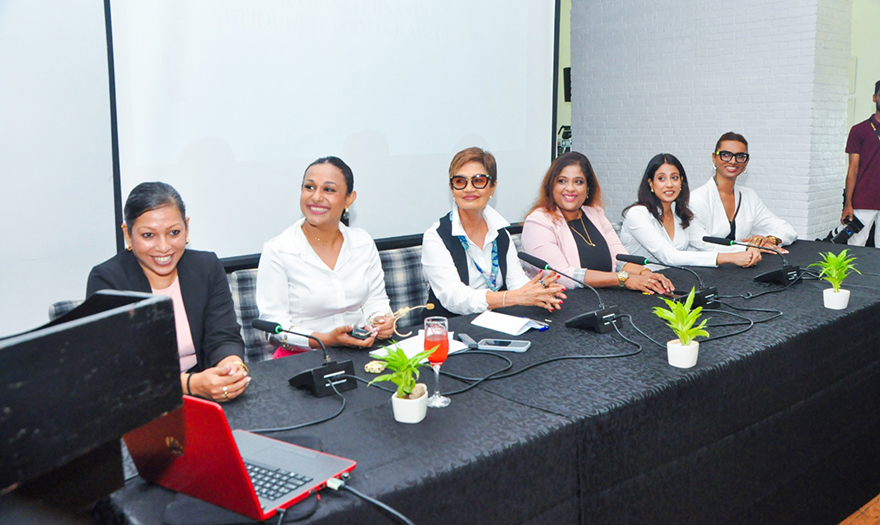
Ramani Fenando’s new Image and Etiquette Academy
In a world where first impressions speak before words, Sri Lanka’s beauty icon Ramani Fernando has taken a bold step beyond the salon chair to shape confidence from within. Her newly launched Etiquette and Image Academy is designed to refine not only appearance, but presence, poise and personal power.
Step into a space where confidence meets sophistication, Ramani Fernando Academy is redefining how Sri Lankans approach personal branding ,offering a unique blend of ettiquette, style and communication mastery.
Her newly launched personal branding and EtiquetteAcademy was unveiled in a simple ceremony at the Galle Face hotel. This marks a bold and timely step into the realm of confidence leadership, presence and modern social grace.
Colombo’s social elite, corporate leaders, fashion insiders and longtime clients gathered in celebration of a vision that seeks to shape not just appearance but cofidence building.
Ramani, in her opening speech, said “our courses are carefully designed to meet with international standards, ensuring participants recieve training that meets both local and global expectations.
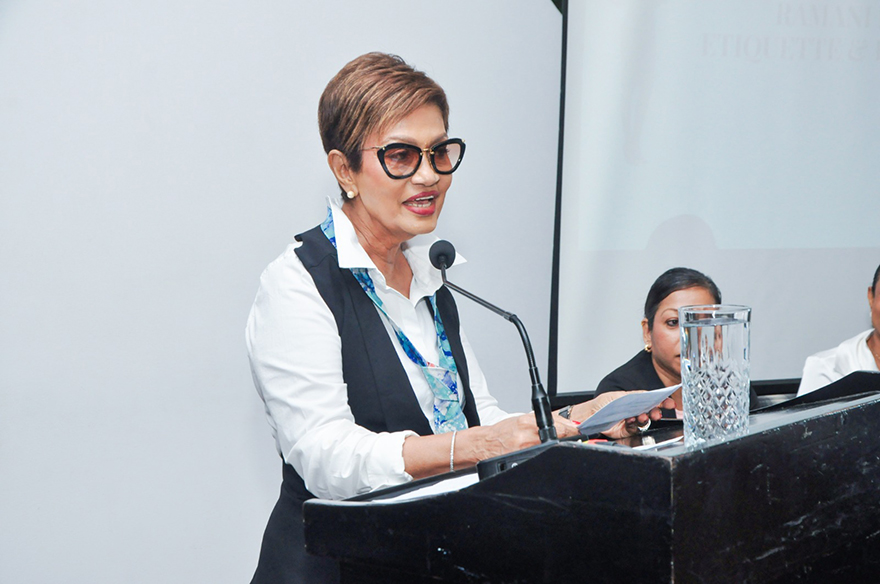
Ramani Fernando – shaping confidence
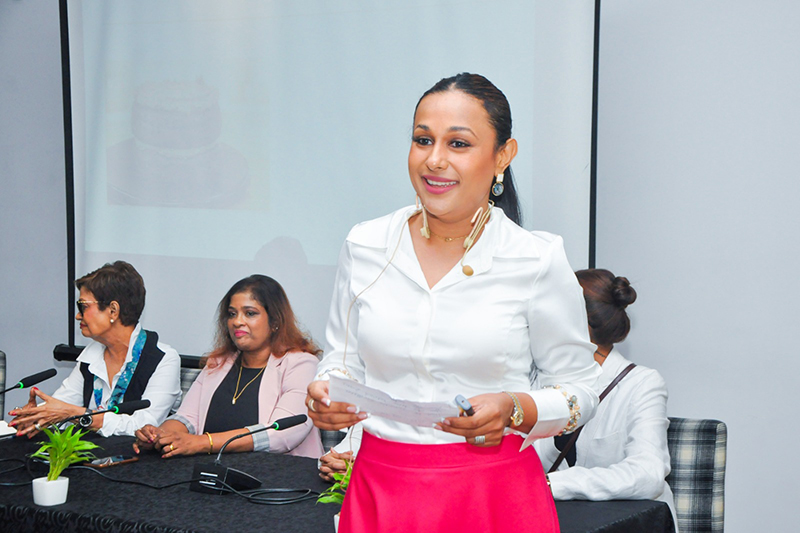
Professional face of etiquette training
Faith Launders who is the Director of Etiquette and Protocol in the Academy pointed out this personal branding and etiquette programmes will help participants cultivate grace, confidence and refined personal style through expert guidance. A former Miss Sri Lanka beauty queen, with experience in aviation, will contribute a creative and professional lens to the Academy’s curriculam.
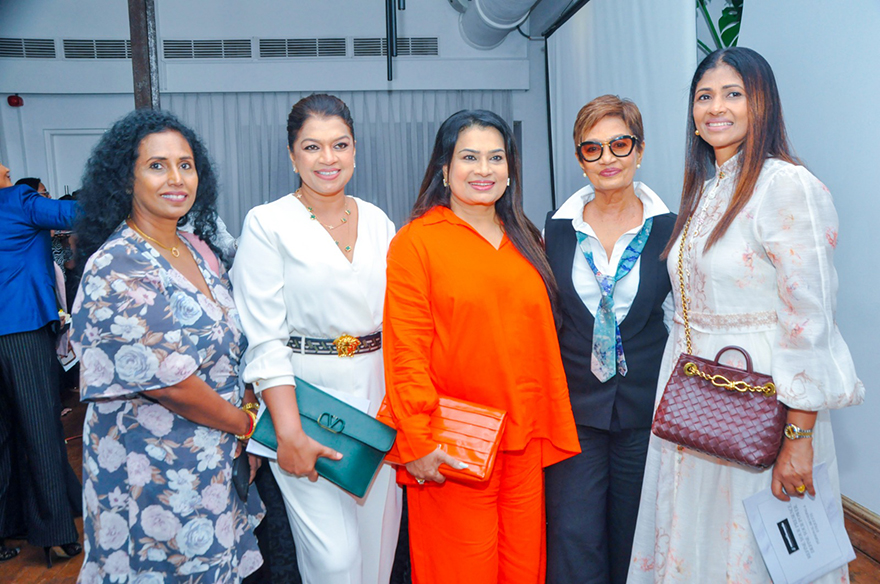
Invitees from the world of fashion gathered to celebrate the occasion
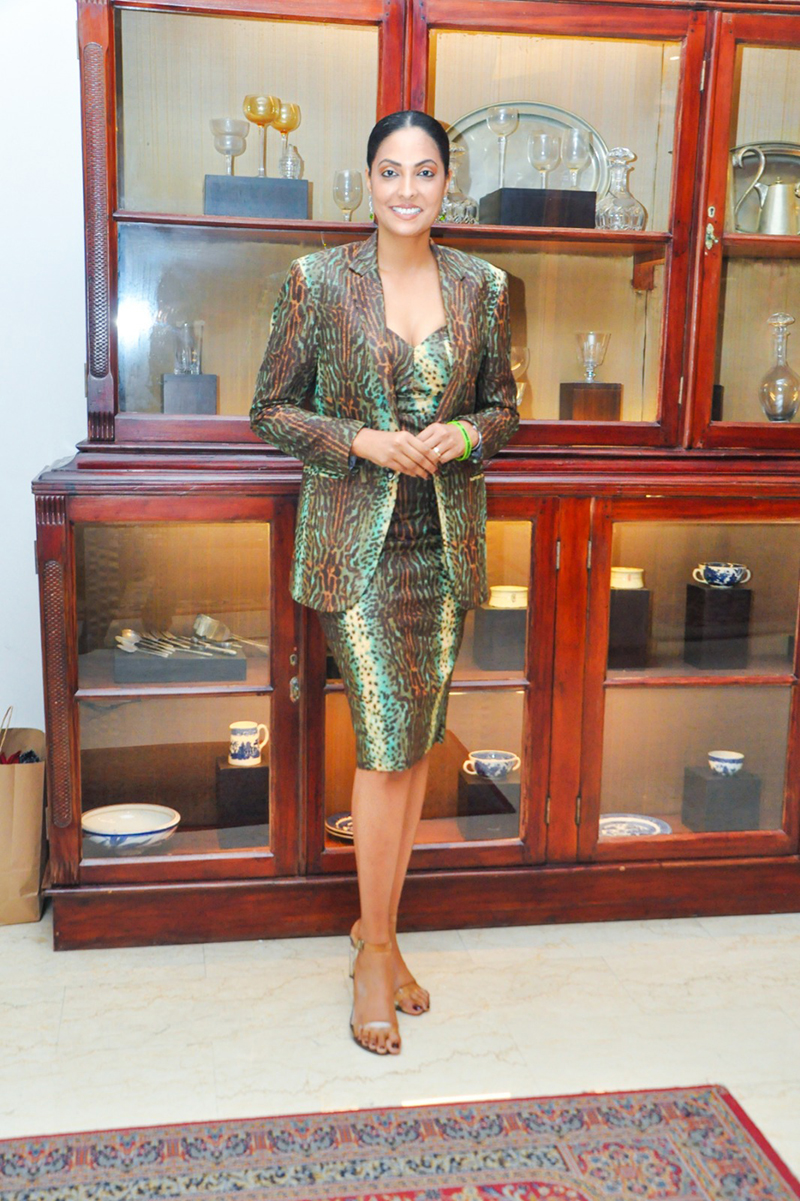
Carolyn Jurie

Chalana at the helm of beauty
She brings professionalism, poise and a strong commitment to cultivate confidence and promote refined social skills among students. Known for her approachable style and inspiring presence, she strives to create an inclusive learning space where students can transform into confident individuals to navigate life with dignity and elegance.
For decades, Ramani has been a transformative force in Sri Lanka’s beauty industry.
and now this venture signals a natural evolution from external refinement to the art of personal distinction.
The programme blends traditional etiquette with contemporary relevance, offering personal branding and professional image building both in social and corporate etiquette. These are some of the programmes:
= Communication skills and body language, grooming, style and wardrobe alignment.
= Digital image and social media conduct.
= Platforms or in social events the ability to command attention with confidence has to become an important tool.
In today’s hyper connected world, impressions are formed in seconds often long before a handshake, whether in boardrooms, diplomatic circles or in the media.
The teaching staff consists of industry experts trainers amd adminitrators led by othe senior professionals
The Managing Director, Lakmini Lenagala, Training and Administrative Manager, Ramono, Navaratnarajah, Personal Assistant, Merisha Aserappa and Chalana Munasinghe are all industry professionals who have experience, theoretical knowledge and practical skills.
They are experienced instructors with hands on expertise in grooming, etiquette, image building and communication.
While the vision of the Personal Branding and Etiquette Academy belongs to Ramani Fernando, its strength lies in the collective expertise of the professionals who bring the programmes to life.
By bringing together specialists from diverse fields, the Academy offers participants a rare opportunity to refine every dimension of their public and private persona under one roof.
Sessions cover skin care, hair, make up, wardrobe planning and colour coordination.
Communication and public speaking recognising that presence is also conveyed though voice and expression, the Academy offers training in articulation tones, posture and body language.
The training also includes table manners, event conduct, professional courtesy and cross cultural awareness. This Etiquette Academy us designed for both women and men offering guidance on grooming, communication, professional conduct and social confidence.
The Academy acts as a transformative space – one that equips individuals not merely to succeed but to stand out with authencity and grace. The institution reflects Ramani Fernando’s belief that true elegance is a way of being not simply a way of dressing!.
By Zanita Careem
Pix by Thushara Athapatu
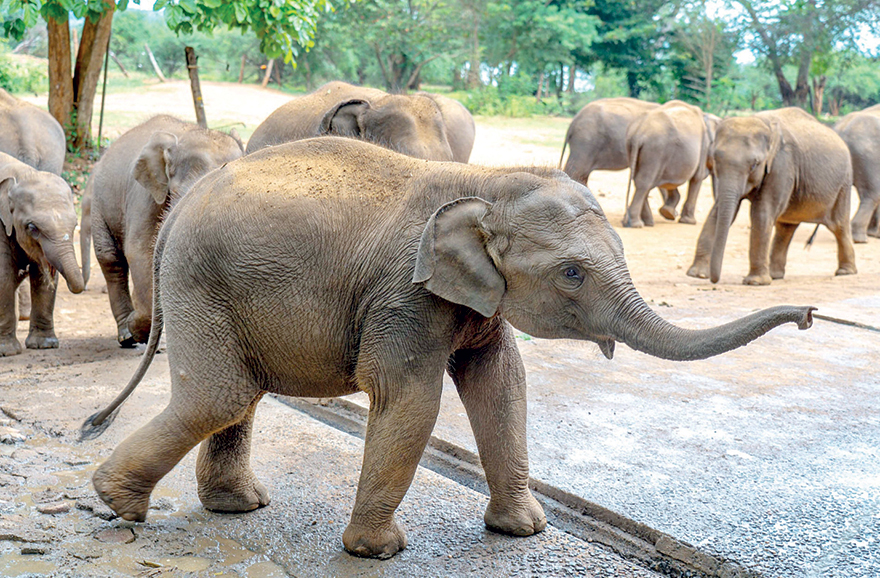
World Wildlife Day 2026:
He arrived at the Elephant Transit Home in Udawalawe on March 23, 2024, barely eight months old. Kalo had spent an unknown number of days trapped at the bottom of an abandoned well near Galenbidunuwewa in Sri Lanka’s Anuradhapura District, separated from the herd he had lost. When wildlife officers from the Department of Wildlife Conservation pulled him out, they found a frightened calf, but also something else: resilience.
Today, nearly two years after his rescue, Kalo is no longer the fragile elephant calf who arrived at the Transit Home alone. He is growing steadily, eating well, and has fully integrated into a group of calves preparing for eventual release. His progress is measured not only in size, but in behaviour like social bonding, herd interaction, and independent foraging skills that will determine his readiness for life beyond human protection. Since his arrival, Kalo has grown from 125 kilograms to over 300 kilograms. The wounds he sustained before rescue have fully healed, and he is no longer on any specific medical treatment instead routine management only. He is, by every measure, active, playful, and thriving.
The Elephant Transit Home, also known as Ath Athuru Sevana, has operated within Udawalawe National Park since 1995. It is not an orphanage in the traditional sense. There are no rides, no performances, no human dependency. Human contact is limited strictly to feeding and veterinary care. The rest of the time, the calves are left to bond with one another.
That philosophy is intentional. Elephants are deeply social animals, and calves that grow too attached to humans struggle to survive in the wild. The daily play, the hierarchy, and the formation of peer bonds are all part of a structured rehabilitation process designed to prepare them for rewilding.
Since its establishment, more than 200 orphaned elephants have passed through the Elephant Transit Home. Over 100 have been successfully released back into the wild. In July 2025 alone, six young elephants were returned to Udawalawe National Park during the facility’s 26th release. If all continues as planned, Kalo will follow that path in 2029.
On May 8, 2024, less than two months after Kalo’s rescue, Sun Siyam Pasikudah formalised its long-term commitment to his care through the CarePhant initiative under Sun Siyam Care. The resort pledged ongoing monthly contributions to support Kalo’s nutrition, veterinary care, and daily rehabilitation needs through to his planned release.
Sun Siyam Care is the group’s overarching sustainability programme that integrates environmental stewardship, biodiversity conservation, community engagement, and long-term socio-economic value creation across all Sun Siyam Resorts in the Maldives and Sri Lanka. Through Sun Siyam Care, we invest in initiatives that protect marine and terrestrial ecosystems, reduce waste and single-use plastics, improve resource efficiency, support renewable energy and local sourcing, and promote awareness and participation among guests and communities alike. Kalo’s journey from rescue to rewilding is one example of how Sun Siyam Care extends beyond hospitality, connecting responsible tourism with meaningful environmental and wildlife conservation impact.
“We are delighted to embark on the CarePhant project and become stewards of Kalo’s well-being. Sri Lanka’s elephants are not just a conservation issue; they are part of the living identity of this island, and we feel a genuine responsibility to play our part in protecting them,” said Arshed Refai, General Manager, Sun Siyam Pasikudah.
For Chaminda Upul Kumara, Sustainability Project Manager at Sun Siyam Resorts, the commitment reflects the deeper purpose of Sun Siyam Care. “Conservation is not a single moment. It is a process that requires patience and consistency. With Kalo, we committed to being part of that journey from rescue to release. Every month of support is an investment in his return to the wild,” said Upul.
In the month that marks World Wildlife Day, observed on 03rd March, Kalo’s story serves as a reminder that conservation is not abstract. It is individual. It is long term. And it depends on partnerships between public institutions and responsible private sector actors. In a landscape where habitat loss and human–elephant conflict continue to threaten Sri Lanka’s wild elephant population, sustained commitments like CarePhant demonstrate how responsible tourism can contribute to tangible, measurable conservation outcomes.
Sun Siyam Pasikudah, which holds Travelife Gold Certification and operates under the broader Sun Siyam Care sustainability framework, integrates conservation, local sourcing, and community engagement into its daily operations. The CarePhant project builds on that foundation by linking responsible hospitality directly to wildlife protection.
Three years from now, in 2029, Kalo is expected to walk beyond the protective boundaries of the Elephant Transit Home and into Udawalawe National Park as a young wild elephant. Every veterinary check, every month of nutritional support, and every bond formed within his herd brings him closer to that moment.
“When Kalo walks back into the forest in 2029, it will mark the completion of a journey that began in crisis but was sustained through commitment,” added Arshed Refai. “We are proud that Sun Siyam Care is part of that long-term promise.”
Until then, Kalo continues doing what young elephants at Ath Athuru Sevana are meant to do: growing, learning, and preparing quietly for a life in the wild.

The High Commission of the Islamic Republic of Pakistan and the Pakistani community based in Sri Lanka celebrated the 86th National Day of Pakistan with traditional flavour and resolve to make Pakistan a strong, vibrant and progressive democratic welfare state.
The day commemorates a defining moment that led the foundation for the creation of Pakistan.
The ceremony commenced with the raising of their national flag, fluttering proudly against the morning sky, symbolising faith, unity and discipline, the ideals upon which the nation was built. Dignitaries, members of the diplomatic corps, community leaders and guests gathered in silence as the national anthem resonated creating an atmosphere charged with emotion and national pride .
Cultural elegance added a distinctive charm to the occasion, with traditional attire and warm exchanges reflecting the rich heritage of Pakistan. Guests were later invited to partake in light refreshments, providing an opportunity for cordial interacton and celebration.
Acting High Commissioner of Pakistan, Zunaira Latif unfurled the Pakistani flag to the tune of Pakistan’s national anthem in a ceremony held at the Pakistan High Commission
The National Day of Pakistan is celebrated on 23rd March every year in remembrance of the historic 1940 resolution passed in Lahore, calling for a separate homeland for Muslims of the subcontinent that ultimately led to the creation of Pakistan on August 14, 1947.
Special messages by the President and the Prime Minister of Pakistan were readout, in which both the leaders highlighted the importance of the day and paid tributes to Quaid-e-Azam Muhammad Ali Jinnah.
The Acting High Commissioner of Pakistan in her message on the occasion said that Pakistan and Sri Lanka continue to maintain their traditionally close and mutually beneficial relations, based on mutual respect and trust. She said that the strength of the Pakistan – Sri Lanka relationship lies in diversified engagement in many fields such as trade, defence, science, culture, and education. She also extended sincere greetings and best wishes on behalf of the government and people of Pakistan to the government and people of Sri Lanka.
-

 Features6 days ago
A World Order in Crisis: War, Power, and Resistance
-

 News3 days ago
Tariff shock from 01 April as power costs climb across the board
-
 News6 days ago
Minister Jayakody indicted in Colombo High Court over alleged corruption
-
 News4 days ago
Inquiry into female employee’s complaint: Retired HC Judge’s recommendations ignored
-
 News7 days ago
Police look for male partner of Chinese woman found stabbed to death at an apartment in Kohuwala
-

 Features4 days ago
New arithmetic of conflict: How the drone revolution is inverting economics of war
-
 Business2 days ago
Hour of reckoning comes for SL’s power sector
-

 Features6 days ago
When seabed goes dark: The Persian Gulf, cable sabotage, and race for space-based monopoly