
Latest News
South Korean president survives impeachment vote

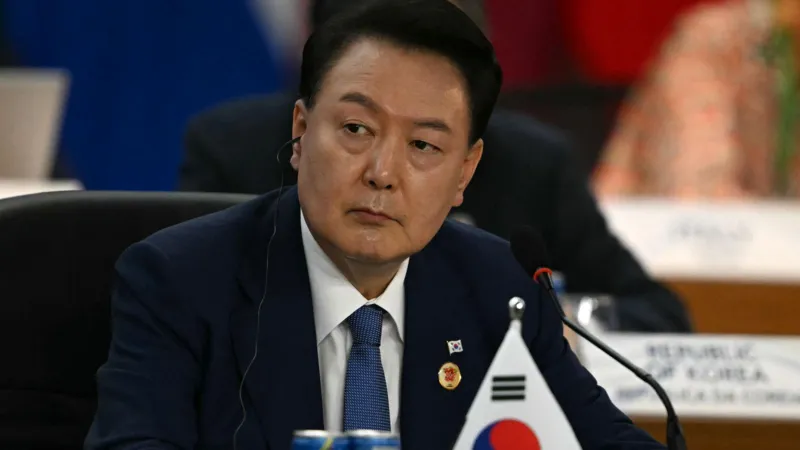
Lawmakers in South Korea have narrowly failed to impeach the nation’s president over his short-lived attempt to declare martial law.
A bill to censure Yoon Suk Yeol fell three votes short of the 200 needed to pass, with many members of parliament in the ruling People Power Party (PPP) boycotting the vote.
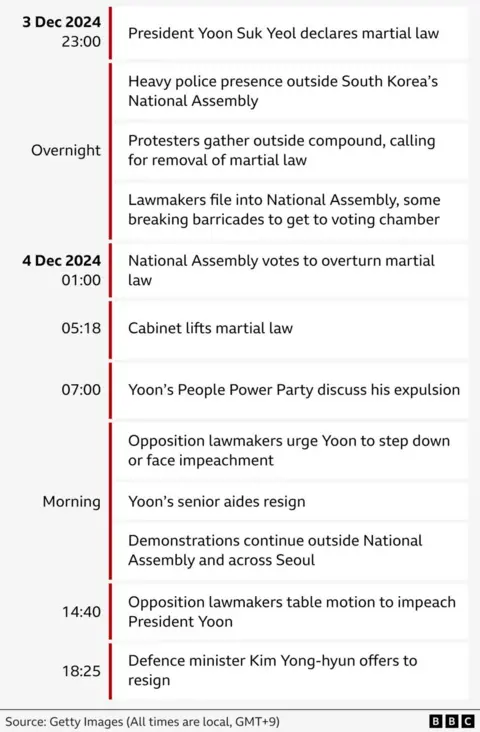
The South Korean premier sparked widespread shock and anger when he declared military rule -associated with authoritarianism in the country – on Tuesday, in a bid to break out of a political stalemate.
Yoon’s declaration was quickly overturned by parliament, before his government rescinded it a few hours later in the midst of large protests.
The impeachment bill needed a two-thirds majority in the National Assembly to pass, meaning at least eight PPP MPs would have to vote in favour.
However, all but three walked out of the chamber earlier on Saturday.
One of those who remained, Cho Kyung-tae, credited Yoon’s apology for the martial law decree on Saturday morning – after three days out of public view – as having influenced his decision not to back impeachment this time.
“The president’s apology and his willingness to step down early, as well as delegating all political agendas to the party, did have an impact on my decision,” he told the BBC ahead of the vote.
Cho said he believed impeachment would hand the presidency to the leader of the Democratic Party of Korea (DPK), Lee Jae-myung.
He added that Yoon’s “irrational and absurd decision” to declare martial law had “overshadowed” what he described as the DPK’s “many extreme actions” while in power.
Following Saturday’s vote, Lee insisted his party “will not give up” with its attempts to impeach Yoon, who he said had become “the worst risk” to South Korea.
“We will definitely return this country to normal by Christmas and the end of the year,” he told a crowd gathered outside the parliament in the capital, Seoul.

Prior to Tuesday, martial law – temporary rule by military authorities in a time of emergency, during which civil rights are usually curtailed – had not been declared in South Korea since before it became a parliamentary democracy in 1987.
Yoon claimed the measures were needed to defeat “anti-state forces” in the parliament and referred to North Korea.
But others saw the move as an extreme reaction to the political stalemate that had arisen since the DPK won a landslide in April, reducing his government to vetoing the bills it passed, as well as Yoon’s increasing unpopularity in the wake of a scandal surrounding the first lady.
The president’s late-night address caused dramatic scenes at the National Assembly, with protesters descending en masse as military personnel attempted to block entry to the building.
Lawmakers tussled with the soldiers, with 190 MPs making it into the building to vote down the order.
In the early hours of Wednesday morning, Yoon’s cabinet rescinded the martial law declaration.
However, the short-lived military takeover has seen daily protests on the streets. Some came out in support of Yoon, though they were drowned out by angry mobs.
Authorities have since revealed more about the events of Tuesday night.
The commander charged with the military takeover said he had learned of the decree on TV along with everyone else in the country.
He said he had refused to make his troops arrest lawmakers inside parliament, and did not give them live ammunition rounds.
The National Intelligence Service later confirmed rumours that Yoon had ordered the arrest and interrogation of his political rivals – and even some of his supposed political allies, such as his own party leader Han Dong-hoon.
These revelations saw some members of Yoon’s own party signal their support for impeachment.
The president’s apology on Saturday morning appeared to be a last-ditch effort to shore up support.
He said the martial law declaration had been made out of “desperation” and pledged he would not make another.
Yoon did not offer to resign, but said he would leave decisions on how to stabilise the country to his party.
Were he to be impeached, it would not be unprecedented. In 2016, then-President Park Geun-hye was impeached after being accused of helping a friend commit extortion.
If South Korea’s parliament passes an impeachment bill, a trial would be held by a constitutional court. Two-thirds of that court would have to sustain the majority for him to be removed permanently from office.
[BBC]

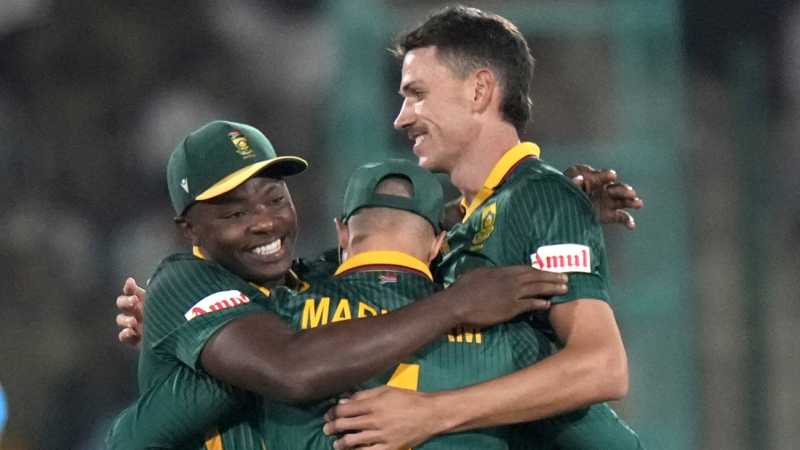
Canada captain Dilpreet Bajwa won the toss and asked South Africa to bat in their World Cup opener in Ahmedabad.
South Africa have opted for a pace-heavy attack. Keshav Maharaj slots in as their only spinner, alongside the speedy quartet of Marco Jansen, Corbin Bosch, Kagiso Rabada and Lungi Ngidi. Tristan Stubbs also begins the tournament at the No. 6 spot – a position Jason Smith had occupied in their last T20I, while Stubbs had slid down to No. 7. Smith is in the World Cup squad but did not find a spot in South Africa’s starting eleven.
South Africa’s pace is expected to get the most out of a characteristically flat Ahmedabad black-soil pitch. But first, their batters will have a hit in a game they begin as overwhelming favourites against Canada, who are their second World Cup.
Canada’s new captain, Bajwa, will lead the side at a global tournament for the first time. He also slots in at the top of the order, alongside Yuvraj Samra, and their batting power will be key to their hopes of causing a massive upset.
Canada have lost both their warm-up games – to Italy and Nepal – but should their batters come off on a friendly pitch, South Africa will look to have the added insurance of a few more runs in the bank before dew takes over when Canada begin their chase at night.
South Africa: Quinton de Kock (wk), Aiden Markram (capt), Ryan Rickelton, Dewald Brevis, David Miller, Tristan Stubbs, Marco Jansen, Corbin Bosch, Kagiso Rabada, Keshav Maharaj, Lungi Ngidi
Canada: Dilpreet Bajwa (capt), Yuvraj Samra, Navneet Dhaliwal, Nicholas Kirton, Shreyas Movva, Harsh Thaker, Saad Bin Zafar, Jaskaran Singh, Dilon Heyliger, Kaleem Sana, Ansh Patel
(Cricinfo)

A Hong Kong court jailed pro democracy tycoon Jimmy Lai for 20 years on Monday after he was found guilty of national security offences last December
This is the harshest sentence under the controversial national security law, which China says is necessary for the city’s stability
Lai, who is a British citizen, was one of the loudest critics of Beijing, often wielding his pro-democracy paper, Apple Daily, as a tool of protest
Six former executives of the paper were also jailed on Monday – from six years and nine months to 10 years
Hailed a hero by the pro-democracy movement, Lai is seen as a traitor by Beijing. He has always denied the charges against him
The UK calls for the Chinese government to release Lai, saying it will “rapidly engage further” with Beijing. But Hong Kong’s chief executive welcomes the sentence, saying Lai used “used Apple Daily to poison the minds of citizens”.
Lai’s son, Sebastien, tells the BBC his father’s punishment is “basically a death sentence”.
(BBC)
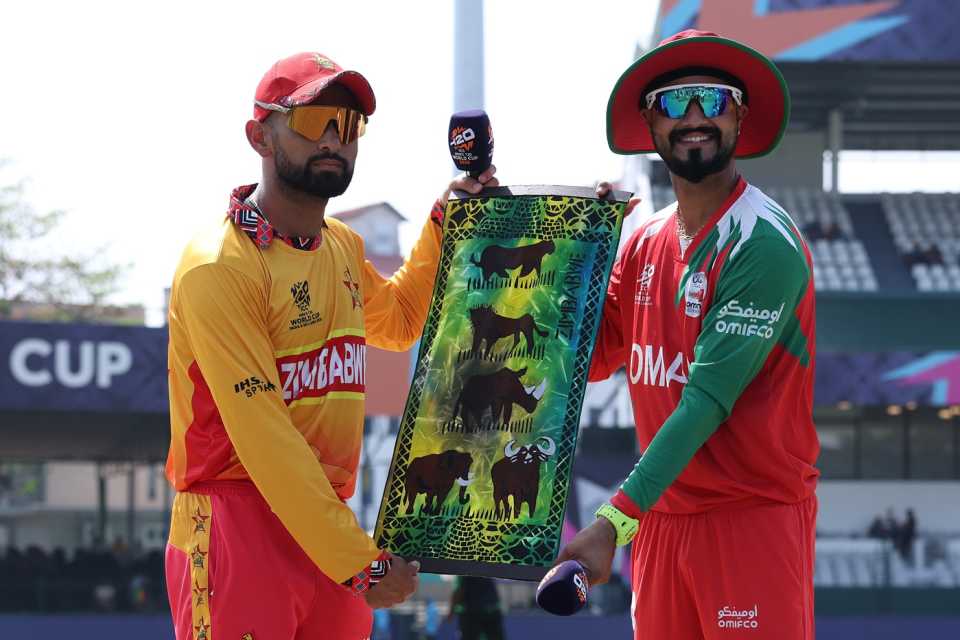
Zimbabwe captain Sikandar Raza decided to field first against Oman in the men’s T20 World Cup match at the SSC in Colombo. Both teams were pleased to arrive in Sri Lanka early to get themselves attuned to the conditions.
Zimbabwe have Blessing Muzarabani back in the squad after he missed the tri-series in Pakistan in November.
Oman, meanwhile, include 44-year-old Aaamir Kaleem the oldest player in the tournament – after he came into the side in place of Hasnain Shah, who was injured after the squad was named.
Zimbabwe return to the tournament after missing out on the previous edition in West Indies and the United States of America. They had made it to the Super 12s of the 2022 T20 World Cup but failed to progress through the qualifiers for the 2024 tournament. They completed qualification alongside Namibia; Brian Bennett was the tournament’s top run-scorer, while Brad Evans and Richard Ngarava were among the leading wicket-takers.
Zimbabwe are bolstered by the return of Graeme Cremer, whose November 2025 comeback marked the longest gap between T20I appearances.
Oman are one of three qualifiers from the Asia-Pacific region, alongside Nepal and the UAE. They have previously appeared in the 2016, 2021, and 2024 editions of the T20 World Cup.
Oman: Jatinder Singh (capt), Aamir Kaleem, Hammad Mirza, Wasim Ali, Karan Sonavale, Jiten Ramanandi, Vinayak Shukla (wk), Sufyan Mehmood, Nadeem Khan, Shah Faisal, Shakeel Ahmad
Zimbabwe: Brian Bennett, Tadiwanashe Marumani, Dion Myers, Brendan Taylor (wk), Sikandar Raza (capt), Ryan Burl, Tashinga Musekiwa, Brad Evans, Wellington Masakadza, Richard Ngarava, Blessing Muzarabani

Canada bowl against pace-heavy South Africa

Hong Kong court jails media tycoon and British citizen Jimmy Lai for 20 years

Muzarabani returns as Zimbabwe opt to bowl against Oman

Munsey and Leask spoil Italy’s T20 World Cup debut2

Italy captain Wayne Madsen injures shoulder in T20 World Cup opener

Canada look for early splash against favourites South Africa

‘Dates have the highest sugar content to fight Coronavirus’

Sunday Island 27 December – Headlines

#SundayIsland 17th December – Headlines

Sunday Island – 28th March

Sunday Island Headlines – 21 March

Sunday Island – 21st February – Headlines
-
 Features2 days ago
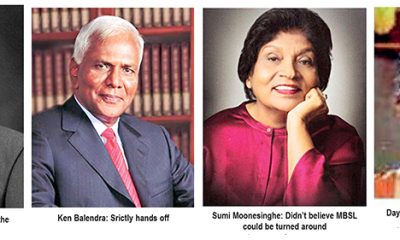
My experience in turning around the Merchant Bank of Sri Lanka (MBSL) – Episode 3
-

 Business3 days ago
Zone24x7 enters 2026 with strong momentum, reinforcing its role as an enterprise AI and automation partner
-

 Business7 days ago
SLIM-Kantar People’s Awards 2026 to recognise Sri Lanka’s most trusted brands and personalities
-
 Business2 days ago
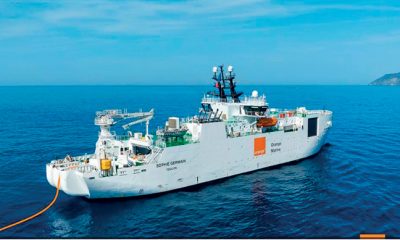
Remotely conducted Business Forum in Paris attracts reputed French companies
-
 Business2 days ago
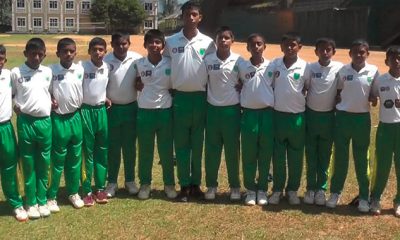
Four runs, a thousand dreams: How a small-town school bowled its way into the record books
-

 Business2 days ago
ComBank and Hayleys Mobility redefine sustainable mobility with flexible leasing solutions
-
 Business7 days ago
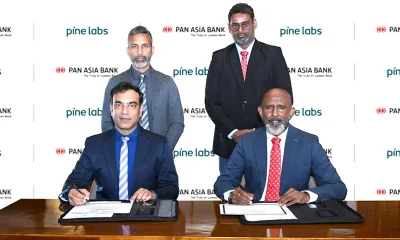
API-first card issuing and processing platform for Pan Asia Bank
-
 Business3 days ago
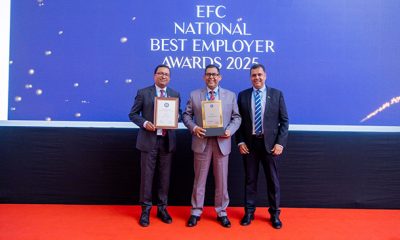
HNB recognized among Top 10 Best Employers of 2025 at the EFC National Best Employer Awards