
News
Sirisena and dissident SLFPers trade fire in Parliament


By Saman Indrajith
SLFP seniors in government and opposition ranks exchanged tirades in Parliament on Tuesday, accusing each other of having created the current crisis.
Participating in the Second Reading debate on Sri Lanka Telecommunications (Amendment) Bill, former President Maithripala Sirisena said that Mahinda Amaraweera, who joined the government and received the Agriculture portfolio had recently told a newspaper that Sirisena would end up either in Welikada prison or Angoda Mental hospital.
“There should be a court order for someone to be sent to prison, and it seems that this minister has powers to manipulate the judicial process. I know that some people want me thrown behind bars. If I am sent to prison, people should understand that it’s his work. MP Dayasiri Jayasekera last week went to the SLFP headquarters to assume duties as the party General Secretary as per a court order. However, there were 300 to 400 policemen armed with batons, tear gas and water cannon preventing him from entering the party office. This, they did in violation of a court order and their action amounts to contempt of court. Crises in political parties are not new to this country, but making use of the ministerial powers to deploy police to interfere in internal party disputes is horrible, Sirisena said.
“On a previous occasion, we lodged a complaint with police against party headquarters being held by force by some rival group members. It was only after 23 days that the police came to investigate it. Today, the police visit the homes of SLFP organisers to intimidate them. Some organisers are summoned to the CID. Threats, intimidation and police are being used to coerce our party men into joining them. The party organisers have been given two choices – either join them or go to prison. People should know that those who left the SLFP to join the government are now trying to destroy the party,” Sirisena said.
Agriculture Minister Mahinda Amaraweera said that he had never said that Sirisena would either end up in Angoda or Welikada. “It is our conduct and behaviour that determines whether we should go to Angoda or not. Those who deserve to go there must go. Those who weep for the SLFP today created this crisis. It is he who handed over the party leadership to a non-SLFPer. It was Sirisena who filed the case against Dayasiri Jayasekera that is before the courts. Who expelled Jayasekera from the party? We did nothing against court orders. Some persons tried to force themselves into the party headquarters, and the police prevented it. Today, we have Nimal Siripala de Silva as our party Chairman and Duminda Dissanayake as our General Secretary, and those were legal appointments, and the court has issued an order that they should not be prevented from carrying out their duties,” Amaraweeera said, adding that when Sirisena took over party leadership there had been 142 MPs but the latter’s conduct had reduced that number to two.
Sirisena said that Amaraweera and others had joined the government to get ministerial posts and that had triggered the SLFP’s crisis. “This group acted against party discipline and joined the government. That was the origin of this crisis. They are now trying to hitch the SLFP to the UNP’s wagon.
Transport State Minister Lasantha Alagiyawanna said that the downfall of the SLFP had been caused by Sirisena by betraying it in 2015. “This started in 2015. There at the party Executive Committee meeting Sirisena proposed Mahinda Rajapaksa’s name as the presidential candidate and ate hoppers with him and later betrayed us all. It was that betrayal which caused the SLFP’s downfall,” Alagiyawanna said.
Amaraweera said that he had information about massive frauds committed by those who had taken moral high ground and it would be made public one day.
Alagiyawanna said Sirisena had resigned from party chairmanship and should let those leading the party now to continue their work.
Sirisena accused both ministers of telling lies.





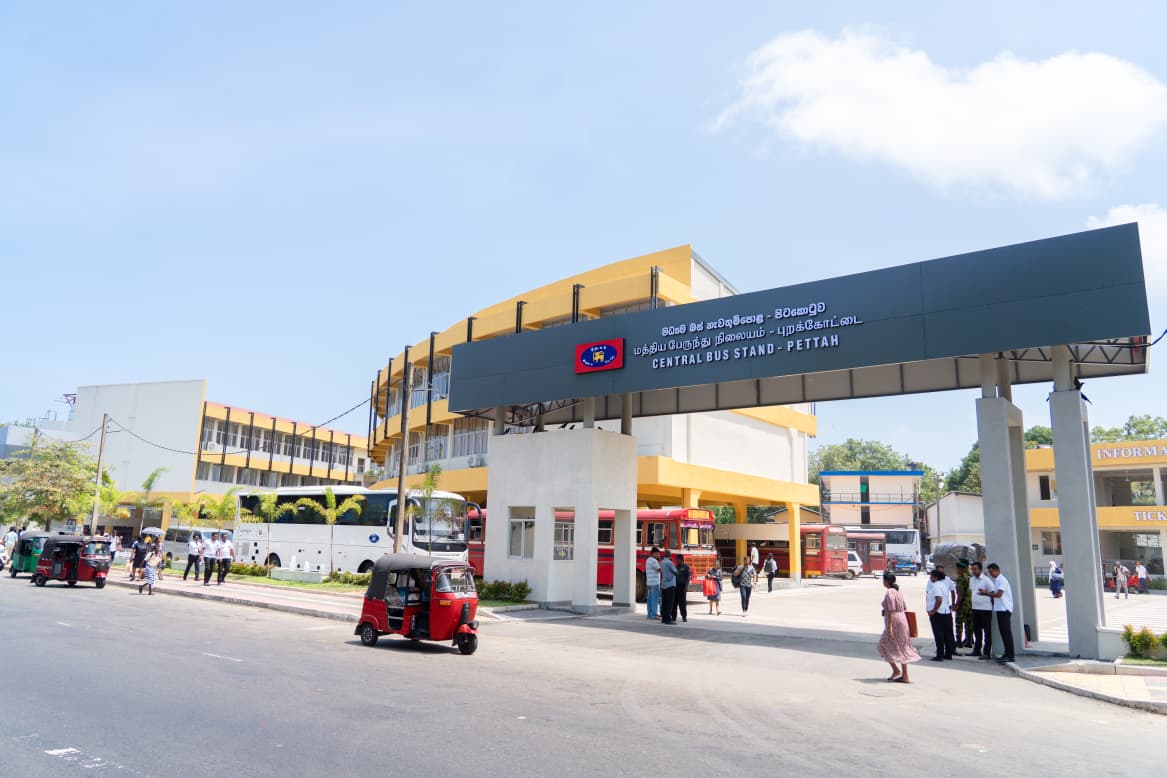
The Colombo Central Bus Stand, which has a history of over six decades and had remained without a proper maintenance for many years, has now been renovated under the current government’s development programme and vested to the public. Following that, the Prime Minister undertook an inspection tour of the newly renovated Colombo Central Bus Stand.
Originally constructed in 1964, the bus stand was refurbished with modern facilities to meet current needs and was officially reopened to the public on April 8. The primary objective of this initiative is to provide passengers with a higher-quality and more comfortable transportation service.
During the renovation process, special attention has been given to the comfort and safety of women, which was commended by the Prime Minister. In particular, a modern rest area designed to ensure privacy for nursing mothers travelling from distant areas received special praise.
The Prime Minister also reviewed the newly introduced passenger seat reservation system and information services established to assist commuters. In addition, the modern surveillance unit and other security measures installed within the premises to ensure passenger safety were also inspected.
During the visit, the Prime Minister engaged in conversations with passengers at the bus stand and inquired about their views on the newly renovated facilities and the quality of transport services.
It was emphasized that the government’s objective is to transform public transportation into a safe, technologically advanced service that can be used with convenience by all citizens.

(Prime Minister’s Media Division)
Latest News
Sun directly overhead Nagawilluwa, Galgamuwa, Sigiriya, Palugasdamana and Mankerni about 12:11 noon today (10)


On the apparent northward relative motion of the sun, it is going to be directly over the latitudes of Sri Lanka from the 05th to 15th of April in this year.
The nearest areas of Sri Lanka over which the sun is overhead today (10th) are Nagawilluwa, Galgamuwa, Sigiriya, Palugasdamana and Mankerni about 12:11 noon.

No-faith motion to be taken up today
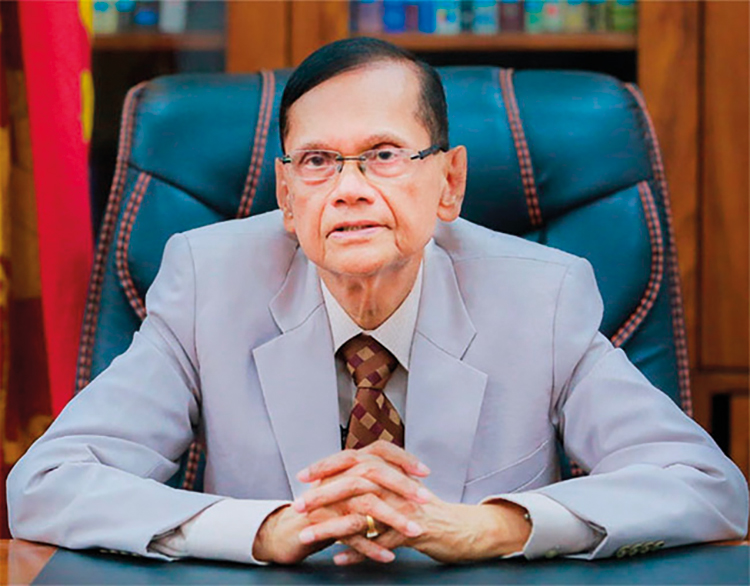
Former Foreign Minister Prof. G. L. Peiris yesterday (9) said that President Anura Kumara Dissanayake should remove Energy Minister Kumara Jayakody unless the minister stepped down on his own.Prof. Peiris, addressing a press conference called by the Opposition, said that Jayakody couldn’t under any circumstance continue to serve as a minister after the Commission to Investigate Allegations of Bribery or Corruption (CIABOC) moved the Colombo High Court against the government member over a previous financial scandal.
Pointing out that Minister Jayakody had been indicted of a corrupt deal struck during the yahapalana regime, Prof. Peiris said it was wrong for the NPP to retain him as a minister, claiming that the offence was not committed during his tenure as a Cabinet minister in the current government.
Prof. Peiris and several other Opposition members dealt with the No-Confidence Motion (NCM) against Jayakody that would be taken up today (10) with the academic calling the vote an acid test for the NPP. Having campaigned on an anti-corruption platform at presidential and parliamentary polls, the NPP couldn’t protect Jayakody though he was widely believed to be close to President Dissanayake.
As the Manager of the Procurement and Import Division of the Ceylon Fertilizer Company, Jayakody is alleged to have committed the offence of corruption, according to CIABOC.
Jayakody has been accused of causing a loss of Rs. 8,859,708 to the State by influencing and exploiting the procurement process.
Following the serving of indictments on 27 March, the judge ordered Jayakody’s release on two personal bail bonds of Rs. 1 million each. The court directed that the defendant’s fingerprints be obtained and a formal report be submitted. The case has been scheduled for a pre-trial conference on 6 May.
Prof. Peiris stressed that the CIABOC action against Jayakody is central to the NCM primarily moved over the irregularities ridden coal procurement process launched in 2025 that caused severe disruption to the power generation. Responding to The Island query after the media briefing, Prof Peiris expressed surprise that the JVP/NPP accommodated a person under investigation by the CIABOC. Having taken an utterly irresponsible decision, the JVP/NPP were now playing down the developing issue, prof. Peiris said.
The entire government parliamentary group faced the prospect of having its image tarnished by defending Jayakody, the former lawmaker said.
Prof. Peiris said that they intended to build a campaign around the issues involving the energy minister to expose the government. With yet another electricity tariff hike in the offing due to the growing demand for thermal generation as a result of coal-fired Lakvijaya power plant’s failure to meet the requirement[RA1] , the energy minister and ministry’s performances have to be examined, Prof. Peiris said.The timely release of the Auditor General’s report on controversial coal procurement should compel the government to decide on the energy minister’s fate or be prepared to face the fallout.
By Shamindra Ferdinando

Zimbabwe Women set for maiden tour of Pakistan

Bangladesh advance match timings to save energy

PM on inspection tour of newly renovated Colombo Central Bus Stand

Israel to hold direct talks with Lebanon but no ceasefire, Netanyahu says

Sun directly overhead Nagawilluwa, Galgamuwa, Sigiriya, Palugasdamana and Mankerni about 12:11 noon today (10)

Showers expected in the Western, Sabaragamuwa, Southern and Uva provinces and in Kandy and Nuwara-Eliya districts after 2.00 p.m

‘Dates have the highest sugar content to fight Coronavirus’

Sunday Island 27 December – Headlines

#SundayIsland 17th December – Headlines

Sunday Island – 28th March

Sunday Island Headlines – 21 March

Sunday Island – 21st February – Headlines
-

 Features5 days ago
Ranjith Siyambalapitiya turns custodian of a rare living collection
-

 News5 days ago
Global ‘Walk for Peace’ to be held in Lanka
-

 News3 days ago
Lankan-origin actress Subashini found dead in India
-

 Features5 days ago
Beyond the Blue Skies: A Tribute to Captain Elmo Jayawardena
-

 News1 day ago
AG: Coal procurement full of irregularities
-

 Features5 days ago
Aspects of Ceylon/Sri Lanka Foreign Relations – 1948 to 1976
-

 Business1 day ago
Hayleys Mobility introduces Premium OMODA C9 PHEV
-

 Sports1 day ago
DS to face St. Anthony’s in ‘Bridges of Brotherhood’ cricket encounter