
Foreign News
Sectarian clashes erupt in Syria despite ceasefire announcement


Sectarian clashes have continued in southern Syria despite an “immediate ceasefire” announced by the country’s president.
Over the past week fighters from the minority Druze community have been battling armed Bedouins in Suweida Province, with both sides accused of atrocities.
Syria’s interim President Ahmed al-Sharaa deployed troops but the government forces were accused of joining in attacks on the Druze. More than 900 people are reported to have been killed in the violence.
Israel declared support for the Druze earlier this week and intervened, hitting government forces and the defence ministry in the capital Damascus.
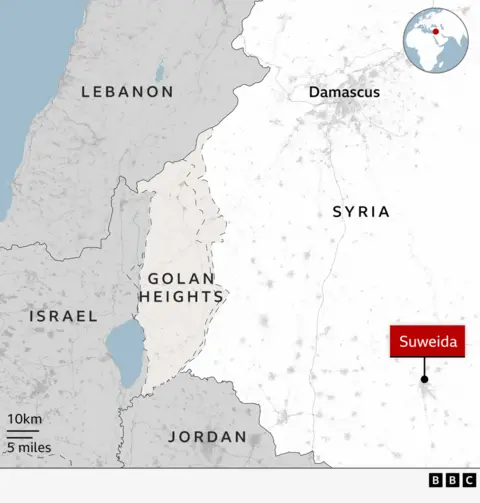
Sharaa announced the ceasefire on Saturday as Syrian security forces were deployed to Suweida to end the clashes. The deal included a halt to Israeli military strikes and was approved by Israel as part of US-brokered pact, as long as the Druze citizens were protected.
Government troops have set up checkpoints to try to prevent more people joining the fighting. But gunfire was reported from inside the city of Suweida later on Saturday.
A correspondent for AFP news agency said they had seen armed men looting shops and setting fire to them.
Also on Saturday, Israel’s foreign minister cast doubt on the renewed pledge by the president to protect minorities and all Syrians.
Suweida’s Druze community follows a secretive, unique faith derived from Shia Islam, and distrusts the current government in Damascus. They are a minority in Syria, as well as in neighbouring Israel and Lebanon.
In a social media post, Gideon Saar said it was “very dangerous” to be part of a minority in Syria, and “this has been proven time and again over the past six months”.
Israel’s Prime Minister Benjamin Netanyahu has pledged to prevent harm to the Druze in Syria because of their ties to those living in Israel.
Long-running tensions between Druze and Bedouin tribes in Suweida erupted into deadly sectarian clashes last Sunday Sunday, following the abduction of a Druze merchant on the highway to the capital, Damascus.
According to the UK-based Syrian Observatory of Human Rights (SOHR), 940 people have been killed since then.
The ceasefire between Israel and Syria on Friday was announced by US special envoy to Syria Tom Barrack on Friday.
“We call upon Druze, Bedouins, and Sunnis to put down their weapons and together with other minorities build a new and united Syrian identity in peace and prosperity with its neighbours,” he said.
The BBC’s Middle East correspondent Lina Sinjab, reporting from Syria, said violence towards the Druze has been spreading across the country.
Earlier this week, UN human rights chief Volker Türk said his office had received credible reports indicating widespread violations and abuses during clashes, including summary executions and arbitrary killings in Suweida.
Among the alleged perpetrators were members of the security forces and individuals affiliated with the interim government, as well as local Druze and Bedouin armed elements, Türk said in a statement. “This bloodshed and the violence must stop,” he warned, adding that “those responsible must be held to account”.
In his comments on Saturday morning, the Syrian leader said that his government “is committed to protecting all minorities and sects in the country and is proceeding to hold all violators accountable from any party. No-one will escape accountability.”
[BBC]

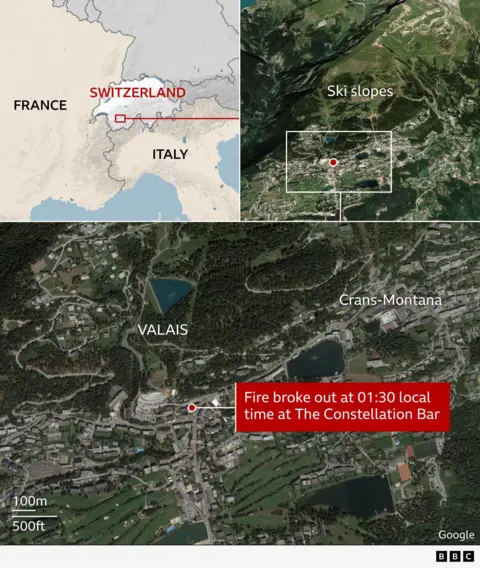
Around 40 people have died after a fire ripped through a bar in a ski resort in southern Switzerland, police have said. A further 115 people are injured, many of them “severely”.
The fire broke out at around 01:30 (00:30 GMT) during new year celebrations in a bar called Le Constellation in Crans-Montana.
Officials investigating the incident have not confirmed any cause, but categorically ruled out an attack.
People from multiple countries have been affected. Regional police commander Frédéric Gisler has said the priority in the coming days is to identify those who have died “so that their bodies can be returned rapidly” to their families.
Thirteen helicopters, 42 ambulances and 150 emergency responders were sent overnight to the scene of the fire in the Valais region, which is popular with tourists.
Most of the injured experienced severe burns and 60 people were sent to Sion hospital in Valais, with a “significant number” in a critical condition, Regional governor Mathias Reynard said.
Its intensive care unit was at full capacity and Reynard said the local community must take extra care to avoid needing hospital treatment unnecessarily.
“We are painfully aware that identifying the bodies, as well as the injured, may still take a terribly long time for the families involved,” Reynard added.
Some people have been taken to hospitals in other Swiss cities including Lausanne and Zurich which have specialist burns units.
A spokesperson for Lausanne University Hospital said they were treating 22 patients with burn injuries, while Zurich University Hospital said it was treating 12 patients for burns.
The Italian Foreign Ministry has told the BBC that 16 Italian nationals are currently missing, and between 12 and 15 others are receiving treatment in hospital.
The French foreign ministry said eight of its citizens were missing and that it could not rule out that French nationals were among the dead.
French media has reported that at least two of the injured are French nationals.
Three Italian nationals are being evacuated to Milan’s Niguarda hospital where there is a major burns unit, Italian councillor Guido Bertolaso has said.
They have burns across “30-40% of their bodies”, he told reporters, and they remain intubated, but “the fact they could be moved is a good sign”.
The precise number of dead and injured is not yet known, nor their nationalities but officials have confirmed that several nationalities were involved.
Speaking at a press conference on Thursday evening, officials said they did not know how many people were in the bar when the fire broke out.
State councillor Stéphane Ganzer described the bar as having a “young festive population” during the New Year’s Eve party.
Attorney General Beatrice Pilloud has said an investigation was under way “to identify the circumstances which caused this dramatic situation to occur”.
She was asked by journalists at the press conference about rumours that bottles of champagne carrying flares might have been the cause of the blaze, and whether the staircases were “very narrow”.
She replied that she could not confirm anything while the investigation is ongoing.
Ms Pilloud said the staircases did appear to be narrow, but investigations would assess whether they were in line with requirements.
She said “several hypotheses” for the cause of the blaze have been put forward, and the favoured theory was a “general fire which caused conflagration” – a large fire that causes a lot of damage, rather than an explosion.
Several witnesses have been interviewed, she said, and phones have also been recovered for analysis.
“At no time is there question of any attack”, she said.
Work is ongoing to identify the victims and return bodies to families as quickly as possible, Ms Pilloud said, adding: “To do that there is significant work which needs to be carried out. And this significant work will require the closure of the district.”
The Italian ambassador to Switzerland, Gian Lorenzo Cornado, said that it would take weeks to identify the dead.
A helpline has been set up for families: +41 848 112 117
The fire was “one of the worst tragedies that our country has experienced,” Swiss President Guy Parmelin told reporters.
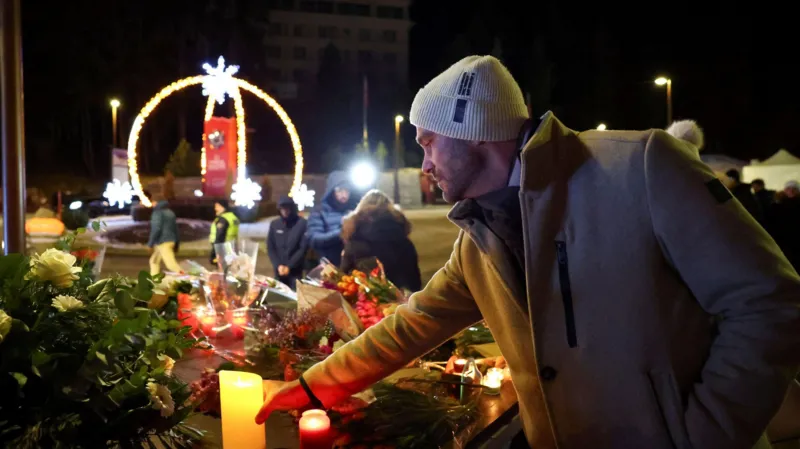
Local people gathered to pay tribute to the dead and injured at a vigil at Montana Station Church on Thursday evening, and floral tributes were laid near the scene of the fire.
Crans-Montana is a luxury ski resort, famous in the 1980s for hosting the World Cup skiing.
Le Constellation, which has been around for decades, has an upstairs with TV screens where people go and watch football matches, and a large bar downstairs for drinking and dancing.
The UK Foreign Office said its “thoughts are with all those injured and killed in the terrible tragedy” and consular staff were on standby to provide support to any British nationals affected.
King Charles said he and his wife Queen Camilla were “greatly saddened” to learn of the fire, and that it was “utterly heartbreaking that a night of celebration for young people and families instead turned to such nightmarish tragedy”.
French President Emmanuel Macron said France was welcoming the injured from Crans-Montana to its hospitals.
European Commission President Ursula von der Leyen said the EU was working with Swiss authorities to get medical help to victims through the EU’s civil protection mechanism.

Israel is to revoke the licenses of 37 aid groups working in Gaza and the occupied West Bank, saying they failed to meet requirements under new registration rules.
Well-known international non-governmental organisations (INGOs) such as ActionAid, the International Rescue Committee and the Norwegian Refugee Council are among those that will have their licenses suspended on 1 January, with their operations to end within 60 days.
Israel said the groups, among other things, had failed to hand over “complete” personal details of their staff.
The move was heavily criticised by foreign ministers from 10 countries including the UK, who said the new rules were “restrictive” and “unacceptable”.
In a joint statement, the foreign ministers of the UK, France, Canada, Denmark, Finland, Iceland, Japan, Norway, Sweden and Switzerland said the forced closure of INGO operations would “have a severe impact on access to essential services including healthcare”.
They added that the humanitarian situation in Gaza remained “catastrophic” and called on Israel’s government to ensure INGOs were able to operate “in a sustained and predictable way”.
Israel’s Ministry of Diaspora Affairs, which is in charge of registration applications, said the new measures would not impact the flow of humanitarian assistance to Gaza.
It added that aid continued to be delivered through “approved and vetted channels”, including UN agencies, bilateral partners, and humanitarian organisations.
It said the primary reason aid groups were having their licences revoked was “the refusal to provide complete and verifiable information regarding their employees,” which it said was critical to preventing “the infiltration of terrorist operatives into humanitarian structures”.
Earlier this month, UN-backed experts said there had been improvements in nutrition and food supplies in Gaza since a ceasefire was brokered between Israel and Hamas in October, but 100,000 people still experienced “catastrophic conditions” the following month.
Israeli military body Cogat, which controls Gaza’s crossings, said the organisations that will be suspended “did not bring aid into Gaza throughout the current ceasefire”.
It added that “even in the past their combined contribution amounted to only about 1% of the total aid volume”.
The Ministry of Diaspora Affairs said that fewer than 15% of organisations providing humanitarian assistance to Gaza were found to be in violation of the new regulatory framework.
That framework includes several grounds for rejection, including:
- Denying the existence of Israel as a Jewish and democratic state
- Denying the Holocaust or the Hamas-led attacks on Israel on 7 October 2023
- Supporting an armed struggle against Israel by an enemy state or terrorist organisation
- Promoting “delegitimisation campaigns” against Israel
- Calling for a boycott of Israel or committing to participate in one
- Supporting the prosecution of Israeli security forces in foreign or international courts
The Humanitarian Country Team of the Occupied Palestinian Territory – a forum that brings together UN agencies and more than 200 local and international organisations – previously warned that the new registration system “fundamentally jeopardises” the operations of INGOs in Gaza and the West Bank.
“The system relies on vague, arbitrary, and highly politicised criteria and imposes requirements that humanitarian organisations cannot meet without violating international legal obligations or compromising core humanitarian principles,” it said.
It added: “While some INGOs have been registered under the new system, these INGOs represent only a fraction of the response in Gaza and are nowhere near the number required just to meet immediate and basic needs.”
According to the Humanitarian Country Team, INGOs currently run or support most of Gaza’s field hospitals and primary healthcare centres, emergency shelter responses, water and sanitation services, nutrition stabilisation centres for children with acute malnutrition, and critical mine action activities.
In a statement, Israel’s Minister of Diaspora Affairs and Combating Antisemitism, Amichai Chikli, said: “The message is clear: humanitarian assistance is welcome — the exploitation of humanitarian frameworks for terrorism is not.”
Other organisations to be suspended include CARE, Medico International and Medical Aid for Palestinians.
[BBC]
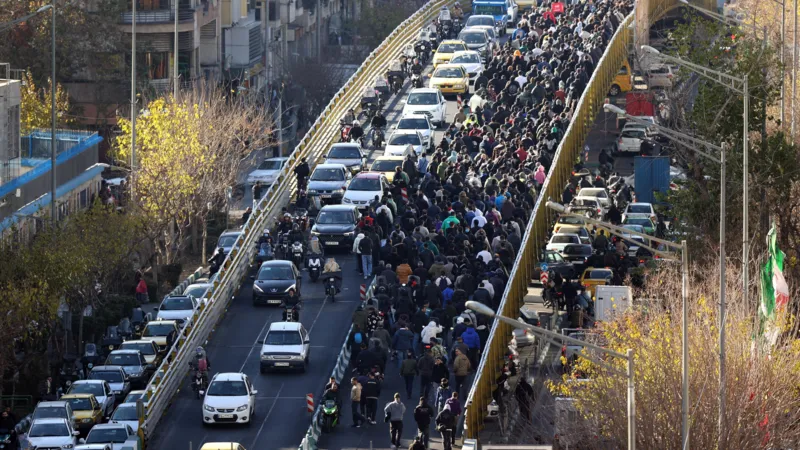
Protests and strikes in Iran over inflation and currency devaluation have spread from the capital, Tehran, to several other cities on a third day of unrest.
The protests began on Sunday after shopkeepers in Tehran’s Grand Bazaar staged a strike when the Iranian rial hit a record low against the US dollar on the open market.
Since then, videos verified by BBC Persian have shown demonstrations in the cities of Karaj, Hamedan, Qeshm, Malard, Isfahan, Kermanshah, Shiraz and Yazd. Police were also seen using tear gas in an attempt to disperse demonstrators.
The Iranian government said it “recognises the protests” and would listen “with patience, even if it is confronted with harsh voices”.
President Masoud Pezeshkian wrote on X late on Monday that he had instructed the interior minister to hold talks with what he described as “representatives” of the protesters so that measures could be taken “to resolve the problems and act responsibly”.
He also accepted the resignation of Iran’s central bank governor, Mohammadreza Farzin, and named former economy and finance minister Abdolnasser Hemmati to replace him.
University students have also joined the protests, chanting anti-government slogans including “Death to the dictator” – a reference to the Supreme Leader, Ayatollah Ali Khamenei, who holds ultimate power in Iran.
Some protesters were also heard chanting slogans in support of the son of the late Shah Mohammad Reza Pahlavi, who was overthrown in the 1979 Islamic Revolution, including “Long live the Shah”.
In response, Reza Pahlavi, who lives in exile in the United States, wrote on X: “I am with you. Victory is ours because our cause is just and because we are united.”
“As long as this regime remains in power, the country’s economic situation will continue to deteriorate,” he added.
The US state department’s Persian-language account on X also expressed support for the protests.
It said the US “praises their courage” and stands with those seeking “dignity and a better future” after years of failed policies and economic mismanagement.
Iran was reportedly high on the agenda of a meeting between US President Donald Trump and Israeli Prime Minister Benjamin Netanyahu in Florida on Monday,
At a joint news conference afterwards, Trump declined to say whether he supported regime change in Iran, but said: “They’ve got a lot of problems: tremendous inflation, their economy is bust, their economy is no good, and I know people aren’t so happy.”
The president also said he might back another round of Israeli air strikes on Iran if the country rebuilt its ballistic missile or nuclear programmes.
During a 12-day war between Israel and Iran in June, the US carried out air strikes on key Iranian uranium enrichment sites. Iran insists its nuclear programme is entirely peaceful.
President Pezeshkian vowed on Tuesday that Iran’s response to “any oppressive act of aggression” would be “severe and regret-inducing”.
Iran’s supreme leader has repeatedly said that Israel’s government hoped mass protests would erupt in Iran during the war and topple the regime.
“They wanted to create sedition on the streets… But people were absolutely not influenced by what the enemy wanted,” Khamenei said in September.
[BBC]

Usman Khawaja to retire after fifth Ashes Test

Around 40 dead in Swiss ski resort bar fire, police say

President pays homage to the Sacred Tooth Relic

Zohran Mamdani sworn in as New York City mayor

In pictures: New Year welcomed around the world

Foreign warships commended for their assistance during weather disaster in Sri Lanka

‘Dates have the highest sugar content to fight Coronavirus’

Sunday Island 27 December – Headlines

#SundayIsland 17th December – Headlines

Sunday Island – 28th March

Sunday Island Headlines – 21 March

Sunday Island – 21st February – Headlines
-
 News7 days ago
Street vendors banned from Kandy City
-

 Sports4 days ago
Gurusinha’s Boxing Day hundred celebrated in Melbourne
-

 News7 days ago
Lankan aircrew fly daring UN Medevac in hostile conditions in Africa
-
 News2 days ago
Leading the Nation’s Connectivity Recovery Amid Unprecedented Challenges
-

 Sports5 days ago
Time to close the Dickwella chapter
-

 Features3 days ago
It’s all over for Maxi Rozairo
-

 Features7 days ago
Rethinking post-disaster urban planning: Lessons from Peradeniya
-

 Opinion7 days ago
Are we reading the sky wrong?