
News
SEC received over Rs 1 bn for unfinished Inland Revenue building project – COPA

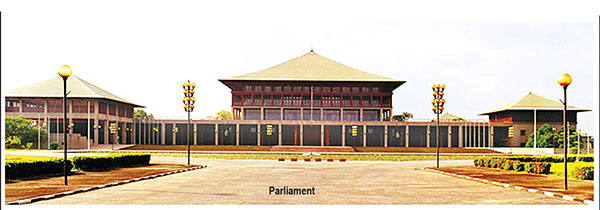
…building rented at over 5 mn not used
By Shamindra Ferdinando
The Committee on Public Accounts (COPA) has questioned the failure on the part of the Inland Revenue Department to use a building at Colpetty rented at a cost of Rs.5.08 mn.
According to the first COPA report handed over to Parliament, on July 20, by the watchdog’s Chairman Prof. Tissa Vitarana, the Inland Revenue Department abandoned plans to set up ‘Tax Services Division’ due to strong objections by employees.
COPA comprises Prof. Vitarana, Udaya Gammanpila, Duminda Dissanayake, Dayasiri Jayasekera, Lasantha Alagiyawanna, Dr. Mrs Sudarshini Fernandopulle, Shehan Semasinghe, Prasanna Ranaweera, Tissa Attanayake, Harin Fernando, Niroshan Perera, Faizal Cassim, Ashok Abeysinghe, Buddhika Pathirana, Kader Masthan, Mohammed Muzammil, Sivagnanam Shritharan, Dr. Upul Galappalaththi, B.Y.G. Ratnasekera, Weerasumana Weerasinghe, Prof. Ranjith Bandara and Dr. Harini Amarasuriya.
In response to COPA inquiries, the Inland Revenue Department has claimed that the building rented to store documents as part of the expansion of the Tax Services Division couldn’t be utilized for want of employees’ cooperation.
Expressing serious concerns over the development, COPA termed the transaction misuse of public funds.
The report dealt with a spate of serious shortcomings, misappropriation of public funds and perhaps some sections of the Inland Revenue Department, Sri Lanka Customs and Excise Department colluding with interested parties.
The report also exposed the utterly irresponsible conduct of the State Engineering Corporation (SEC) as regards a finalized agreement to build a 9 storeyed vehicle park at a cost of Rs 1,430.5 mn for the Inland Revenue. Of that amount, Rs 1,399.7 mn had been paid to the SEC by Dec 31, 2018 without paying attention to progress. The report revealed that the SEC had awarded all work to private sub-contractors although the state enterprise accepted the contract.
The Inland Revenue has taken up the position that a state institution couldn’t initiate legal action for violating an agreement. However, the COPA hasn’t made remedial measures to address the issue at hand. Prof. Vitarana told The Island that the matter needs careful consideration particularly at a time the country was experiencing a severe financial crisis.
The senior LSSPer who received SLPP National List appointment said that since the last parliamentary election the COPA and two other parliamentary watchdogs- COPE (Committee on Public Enterprises) and COPF (Committee on Public Finance) had raised a number of pertinent questions. The Parliament should take tangible measures to rectify inadequacies in the revenue collection systems, curb waste, corruption and irregularities and also negligence, the veteran politician stressed.
The COPA report on the basis of submissions made those responsible for revenue collection acknowledge further complications caused by the raging Covid-19 epidemic. However, closer scrutiny of the report revealed that the entire tax collection system had been in turmoil even before the eruption of the epidemic here in early 2020.
COPA pointed out that in spite of the setting up of a special division in terms of the Default Taxes Payment (Special Provisions) Act No 16 of 2010, recovery of taxes had been unsatisfactory. The watchdog has observed by December 2018, eight years after the setting up of the special division arrears in taxes and fines amounting to Rs 32.5 bn were yet to be collected. Referring to Rs 32.5 bn, COPA largely faulted government institutions for the non –payment of taxes while quoting the relevant Inland Revenue official as having said that an Independent Advisory Committee established to deal with recovery of defaulted taxes directed that defaulters given an opportunity to pay arrears in installments.
Former COPA Chairman Lasantha Alagiyawanna admitted that in spite of disclosures made by not only COPA but other parliamentary watchdogs as well over a period of time corrective measures hadn’t been taken. According to the SLFPer, relevant ministers were answerable for whatever the shortcomings and discrepancies taking place under their watch.



A group of Tamil Progressive Alliance (TPA) members, including its Leader Mano Ganesan, met President Anura Kumara Dissanayake on Thursday (02) morning at the Presidential Secretariat.
Extensive discussions were held on the issues faced by the Malayagam communities, particularly in relation to education, housing and land, as well as on the urgent measures required to address these concerns. The President paid special attention to all these matters.
Attention was also drawn to the recruitment of qualified Tamil-medium teachers to address the teacher shortage in estate sector schools and this too was discussed at length.
Members of Parliament P. Digambaram and V. Radhakrishnan, along with several other party members, were present at the meeting.

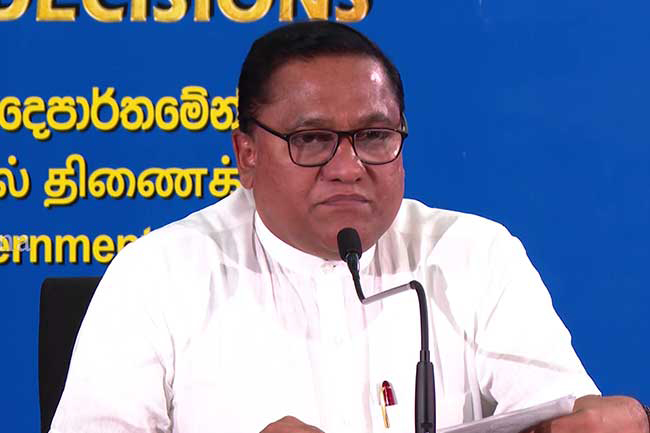
Minister of Foreign Affairs, Vijitha Herath, held talks with Deputy Foreign Minister of Russia Andrey Rudenko at the Foreign Ministry, in Colombo, on Thursday (02), with both sides reaffirming their commitment to strengthening bilateral relations.
The Sri Lanka Ministry of Foreign Affairs said the visiting Russian Deputy Minister noted that Russia regarded Sri Lanka as a long-standing friend.
Rudenko assured that Russia stood ready to support Sri Lanka when required, including in the swift supply of Russian oil to help address the current energy challenges, encouraging Russian investors to explore new opportunities in the country and promoting increased tourist arrivals.
He also expressed Russia’s readiness to provide compensation for Sri Lankan war veterans who had lost their lives in the ongoing conflict between Russia and Ukraine.
Minister Herath welcomed Russia’s willingness to assist, emphasising that Sri Lanka valued the support extended by its “old friend”, particularly at a time when the country was facing pressing energy needs.
He noted that the two countries shared nearly seven decades of diplomatic relations and said the present moment provided an opportunity to further strengthen ties, including through long-term trade agreements.
The discussions focused on enhancing cooperation in the fields of energy, investment, tourism and diplomacy, with both sides reiterating their commitment to further deepen the longstanding friendship between Sri Lanka and Russia.

Police yesterday arrested 157 foreign nationals in connection with an alleged organised online financial scam, conducted from a hotel in the Iranawila area in Chilaw.
The suspects were taken into custody during a raid carried out by the Police while they were staying at the hotel in Iranawila.
Police said the arrested group included 143 nationals from China, 13 from Bangladesh and one from Vietnam.
Investigators suspect the group had been involved in a coordinated online financial scam, targeting victims through digital platforms.
The suspects are being detained for further questioning while investigations are continuing to determine the full extent of the operation and whether additional individuals were involved.Police said further inquiries are underway.
By Norman Palihawadane

Showers above75 mm are likely at some places in the Central, Sabaragamuwa, Uva, North-central and Eastern provinces after 1.00 p.m.

Artemis II crew take ‘spectacular’ image of Earth

White House to ask Congress for record-breaking $1.5 trillion defence budget

Members of the TPA meet with President Dissanayake

Lanka secures Russian support with oil supply amidst energy crunch

157 foreigners arrested for engaging in online financial scam from hotel at Iranawila

‘Dates have the highest sugar content to fight Coronavirus’

Sunday Island 27 December – Headlines

#SundayIsland 17th December – Headlines

Sunday Island – 28th March

Sunday Island Headlines – 21 March

Sunday Island – 21st February – Headlines
-

 News4 days ago
Tariff shock from 01 April as power costs climb across the board
-
 News5 days ago
Inquiry into female employee’s complaint: Retired HC Judge’s recommendations ignored
-

 News2 days ago
2025 GCE AL: 62% qualify for Uni entrance; results of 111 suspended
-
 Features6 days ago
When seabed goes dark: The Persian Gulf, cable sabotage, and race for space-based monopoly
-
 Features5 days ago
New arithmetic of conflict: How the drone revolution is inverting economics of war
-
 Business3 days ago
Hour of reckoning comes for SL’s power sector
-

 Editorial2 days ago
Search for Easter Sunday terror mastermind
-

 Sports5 days ago
Sri Lanka’s 1996 World Cup heroes to play exhibition match in Kuala Lumpur