


Connect with us

News

Sarvajana Balaya strategic plan launched: Need for SL to leverage its civilisational achievements stressed

Published

on

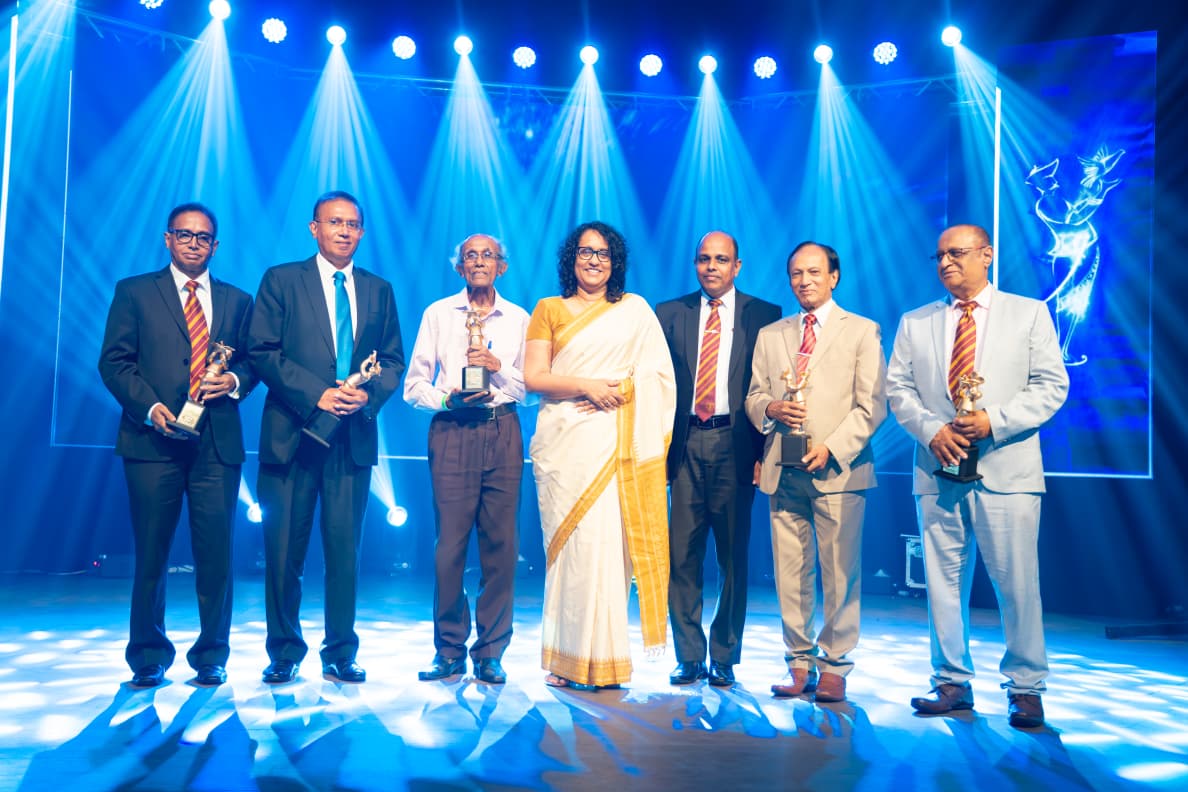
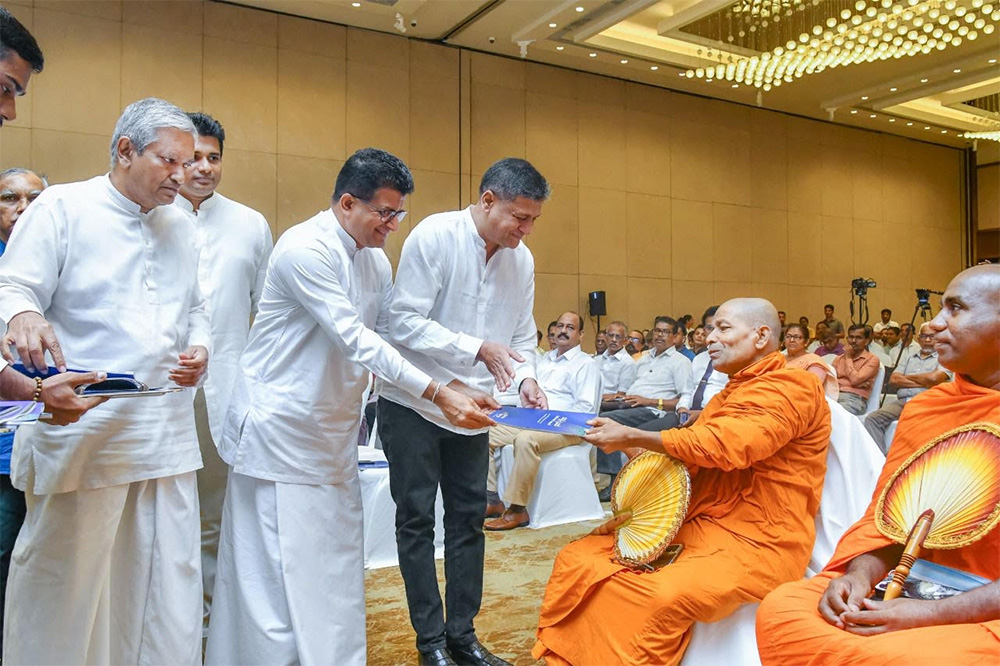
Dilith Jayaweera handing over copy of the first draft of Sarvajana Balaya’s strategic plan for public discourse meant to promote a happy nation and an entrepreneurial State (pic courtesy Sarvajana Balaya)

Sri Lanka should benefit from the rekindled interest in civilisational achievements and diversity of civilizations, MP Gevindu Cumaratunga has said.

The dissident SLPPer and key member of newly formed Sarvajana Balaya said so while underscoring the pivotal importance of unanimous adoption of a resolution proposed by China recently to establish an International Day for Dialogue among Civilisations, at the UN General Assembly (UNGA)

Declaring that Sri Lanka was in a crossroads and need to reexamine the country’s rich past, MP Cumaratunga said that far reaching changes were taking place at global level. The first-time entrant to parliament discussed the challenges faced by Sri Lanka, taking into consideration the Chinese proposal made at the 78th session of the UNGA.

Addressing a gathering Monarch Imperial at Sri Jayewardenepura Kotte, recently, at the launch of the first draft of Sarvajana Balaya’s strategic plan for public discourse meant to promote a happy nation and an entrepreneurial state, MP Cumaratunga pointed out how the breaking up of the Soviet Union in late 1991 influenced a dialogue on civilization.

MP Cumaratunga dealt with Sri Lanka’s civilisation and entrepreneurship in the current context while comparing the Chinese and Western approach to the issue at hand.

The lawmaker compared American political scientist Francis Yoshihiro Fukuyama’s assessment of the breaking up of the Soviet Union in his widely read ‘The end of history and the Last Man’ and the subsequent warning issued by American strategist Samuel P Huntington in ‘The clash of the Civilizations and The Remaking of World Order’ disputed Fukuyama’s declaration of triumph of liberal movement.

Huntington quite rightly stressed that the US shouldn’t give up military preparations at a global level as new challenges were in the making in spite of the breaking up of the Soviet Unio, MP Cumaratunga said.

MP Cumaratunga reminded the role played by Dr. Gunadasa Amarasekera, the late Prof. Nalin de Silva as well as Dr. Ranga Wickramasinghe, the youngest son of pioneering Sinhala writer Martin Wickramasinghe and several others including researchers at the Colombo University and Divaina in influencing a dialogue with the focus on civilisation/Jathika Chinthanaya.

Referring to the intervention made by Dr. Gunadasa Amarasekera by launching ‘Sabhyathwa Rajyak Kara’ (Towards a civilizational State) in 2016, MP Cumaratunga discussed how post-Aragalaya Sri Lanka could benefit from formation of a genuine entrepreneurial state

MP Cumaratunga examined the issue-genuine entrepreneurial state- while referring to crucial role of the state and public in fostering long-run innovation-led economic growth as discussed by author Mariana Mazzucato in ‘The entrepreneurial state: Debunking Public vs Private Sector Myths’ published in near two dozen countries.

The MP emphasized that those who want to achieve American success they should do what the US did not follow their advice how they did it. MP Cumaratunga gave several examples of how in ancient times Sinhala kings utilized everything available for the betterment of the country. The MP said that the country should be re-built on the basis that a not a raindrop should be wasted and the government should have made the required intervention to boost the economic revival.

(SF)


News

Prez seeks Harsha’s help to address CC’s concerns over appointment of AG

Published

on

Chairman of the Committee on Public Finance (CoPF), MP Dr. Harsha de Silva, told Parliament yesterday that President Anura Kumara Dissanayake had personally telephoned him in response to a letter highlighting the prolonged delay in appointing an Auditor General, a vacancy that has remained unfilled since 07 December.

Addressing the House, Dr. de Silva said the President had contacted him following the letter he sent, in his capacity as CoPF Chairman, regarding the urgent need to appoint the constitutionally mandated head of the National Audit Office. During the conversation, the President had sought his intervention to inform the Constitutional Council (CC) about approving the names already forwarded by the President for consideration.

Dr. de Silva said the President had inquired whether he could convey the matter to the Constitutional Council after their discussion. He stressed that both the President and the CC must act in cooperation and in strict accordance with the Constitution, warning that institutional deadlock should not undermine constitutional governance.

He also raised concerns over the Speaker’s decision to prevent the letter he sent to the President from being shared with members of the Constitutional Council, stating that this had been done without any valid basis. Dr. de Silva subsequently tabled the letter in Parliament.

Last week, Dr. de Silva formally urged President Dissanayake to immediately fill the Auditor General’s post, warning that the continued vacancy was disrupting key constitutional functions. In his letter, dated 22 December, he pointed out that the absence of an Auditor General undermines Articles 148 and 154 of the Constitution, which vest Parliament with control over public finance.

He said that the vacancy has severely hampered the work of oversight bodies such as the Committee on Public Accounts (COPA) and the Committee on Public Enterprises (COPE), particularly at a time when the country is grappling with a major flood disaster.

As Chair of the Committee responsible for overseeing the National Audit Office, Dr. de Silva stressed that a swift appointment was essential to safeguard transparency, accountability and financial oversight.

In a separate public statement, he warned that Sri Lanka was operating without its constitutionally mandated Chief Auditor at a critical juncture. In a six-point appeal to the President, Dr. de Silva emphasised that an Auditor General must be appointed urgently in the context of ongoing disaster response and reconstruction efforts.

“Given the large number of transactions taking place now with Cyclone Ditwah reconstruction and the yet-to-be-legally-established Rebuilding Sri Lanka Fund, an Auditor General must be appointed urgently,” he said in a post on X.

By Saman Indrajith

Continue Reading

News

Govt. exploring possibility of converting EPF benefits into private sector pensions

Published

on

The NPP government was exploring the feasibility of introducing a regular pension, or annuity scheme, for Employees’ Provident Fund (EPF) contributors, Deputy Minister of Labour Mahinda Jayasinghe told Parliament yesterday.

Responding to a question raised by NPP Kalutara District MP Oshani Umanga in the House, Jayasinghe said the government was examining whether EPF benefits, which are currently paid as a lump sum at retirement, could instead be converted into a system that provides regular payments throughout a retiree’s lifetime.

“We are looking at whether it is possible to provide a pension,” Jayasinghe said, stressing that there was no immediate plan to abolish the existing lump-sum payment. “But we are paying greater attention to whether a regular payment can be provided throughout their retired life.”

Jayasinghe noted that the EPF was established as a social security mechanism for private sector employees after retirement and warned that receiving the entire fund in a single installment could place retirees at financial risk, particularly as life expectancy increases.

He also cautioned that interim withdrawals from the EPF undermined its long-term sustainability. “Even the interim payments that are given from time to time undermine the ability to give security at the time of retirement,” he said, distinguishing the EPF from the Employees’ Trust Fund, which provides more frequent interim benefits.

Addressing concerns over early withdrawals, the Deputy Minister explained that contributors have been allowed to withdraw up to 30 percent of their EPF balance since 2015, with a further 20 percent permitted after 10 years, subject to specific conditions and documentary proof.

Of 744 applications received for such withdrawals, 702 had been approved, he said.

The proposed shift towards an annuity-based system comes amid broader concerns over Sri Lanka’s ageing population and pressures on retirement financing. While state sector employees receive pensions funded by taxpayers, including EPF contributors, the EPF itself has been facing growing strain as it is also used to finance budget deficits.

Jayasinghe said the government’s focus was to formulate a mechanism that would ensure long-term income security for private sector employees, placing them on a footing closer to a pension scheme rather than a one-time retirement payout.

Continue Reading

News

Sajith accuses govt. of exacerbating people’s suffering to please IMF

Published

on

Opposition Leader Sajith Premadasa yesterday strongly criticised proposals to increase electricity tariffs, warning that the move would deepen the hardships faced by the public already reeling from disasters and rising fuel costs.

Premadasa, who is also the leader of the SJB, told Parliament that the government was considering an electricity price hike at a time when people were struggling to recover from recent crises, while coping with higher fuel prices. He accused the administration of acting contrary to its own election pledges and the expectations of suffering people.

Making a special statement, the Opposition Leader recalled that the government had come to power promising to reduce electricity bills by 30 percent, within three years, by shifting from fuel-based power generation to cheaper renewable sources, such as solar, wind and hydropower. Instead, he said, those commitments had been abandoned.

Premadasa pointed out that the CEB has sought approval from the Public Utilities Commission of Sri Lanka (PUCSL) for an 11.57 per cent tariff increase for the first quarter of 2026 to cover its losses. He questioned whether the government had assessed the impact of such an increase on low- and middle-income households, as well as state institutions.

He also asked why the government had failed to honour its promise to cut electricity tariffs by one-third through a transparent pricing mechanism.

The Opposition Leader further criticised the limited time allocated for public consultations on the proposed new energy policy, saying it was unfair and should be extended, particularly given the prevailing national crises.

Premadasa warned that the removal of competitive tariff structures for industries would be unjust to large-scale consumers using more than five million units of electricity, and called for comparative reports before any subsidies are withdrawn.

He added that despite earlier assurances to reduce electricity bills by 33 percent, the government has once again increased fuel prices, even as global fuel prices decline, continuing, what he described as, a pattern of broken election promises.

Accusing the government of being constrained by International Monetary Fund (IMF) conditions, Premadasa said the simultaneous increases in fuel and electricity prices were exacerbating the economic burden on the public.

By Saman Indrajith

Continue Reading

Trending