
News
Revenue loss of over Rs 5.8 bn: CMC member urges Governor to act on audit report


Colombo Municipal Council (CMC) member Sharmila Gonawela has drawn the attention of Western Province Governor Marshal of the Air Force Roshan Gunathilake to the shocking disclosure made by the National Audit Office (NAO) regarding rampant corruption at the Council, which has cost local authority about Rs 5.8 bn over the past 12 years.
Gonawela yesterday told The Island that she had felt the need to take it up with the former Air Force Commander as the CMC was yet to take tangible measures regarding the forensic audit conducted by the NAO on the management of vehicle parking system.
The National Audit Office has released the report in early April, last year, though those responsible seemed to have turned a blind eye to what was going on, Mrs Gonawela, who also represents the civil society organization, Urban Citizens, said.
The report, issued under the hand of Deputy Auditor General S.M.D.S. Sudeesh Rohitha (Special Investigations and Forensic Audit), has been sent to the Secretary, Local Government, Economic Promotion, Power and Energy, Environmental Affairs, Water Supply and Drainage and Tourism, Western Province and Secretary, State Ministry of Provincial Councils and Local Government et al.
According to the NAO report, that had been sent to the WP Governor, by Mrs. Gonawela, over Rs. 560 mn, that had been collected from the public, by private parties engaged by the CMC to manage parking lots, were not paid to the Council, in addition to Rs 5,250 mn lost due to adoption of wrong procedures et al.
The official pointed out that the Governor of North Western Province Admiral of the Fleet Wasantha Karannagoda had initiated inquiry into corruption at all levels in the Kurunegala MC.
Alleging that the NAO report has exposed members of the Council, who had abused their position and engaged in fraudulent activities, Mrs. Gonawela has asked the WP Governor to officially inform the relevant political parties regarding the conduct of their members.
She has also urged the WP Governor to initiate legal action against them (SF)






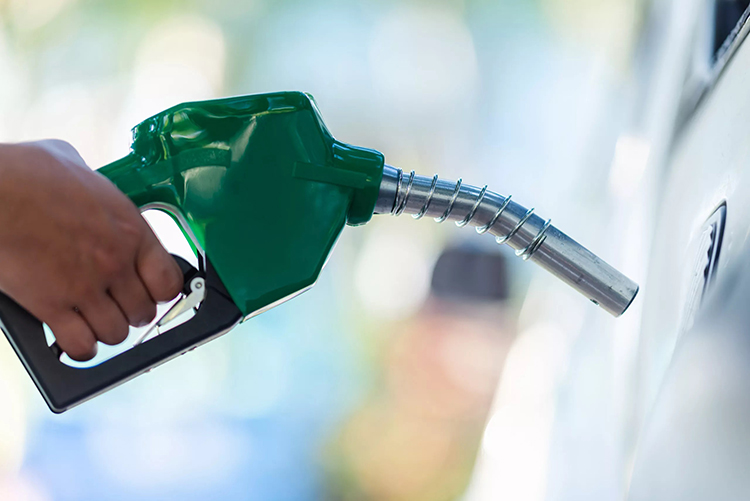
The latest fuel price increases have sparked widespread concern among transport operators and raised questions about the government’s supportive measures. Cabinet Spokesman and Minister Dr Nalinda Jayathissa told a media briefing yesterday that the government was incurring a monthly loss of Rs. 20 billion by maintaining subsidies on fuel. According to the Minister, the state loses Rs. 100 per litre of diesel and Rs. 20 per litre of petrol under the current pricing system, a burden that the Treasury continues to absorb as part of a “supportive mechanism.”
The Ceylon Petroleum Corporation (CPC) revised fuel prices from midnight on March 21, raising the price of a litre of Lanka Auto Diesel by Rs. 79 to Rs. 382, Super Diesel by Rs. 90 to Rs. 443, Octane 95 petrol by Rs. 90 to Rs. 455, and Octane 92 petrol by Rs. 81 to Rs. 398. Lanka Kerosene was increased by Rs. 60,bringing the price to Rs. 255 per litre. Other suppliers, including Sinopec and Lanka IOC, also implemented similar hikes, with Sinopec’s Super Diesel rising sharply by Rs. 219 to Rs. 572 per litre.
The surge in fuel prices has had an immediate impact on public transport. The Chairman of the Lanka Private Bus Owners’ Association, Gamunu Wijerathne, told The Island that 90% of private buses were off the road yesterday (22). He called for a 15% increase in bus fares, raising the minimum fare from Rs. 27 to Rs. 35, warning that services could be suspended if fare adjustments are not approved.
Three-wheeler operators have also pressed for immediate fare revisions. L. Rohana Perera, General Secretary of the National Joint Three-Wheeler and Industrialists’ Association, said the rising fuel costs have made it difficult for drivers to continue operating. The Association has proposed a Rs. 20 increase for the first kilometre fare for all meter-operated three-wheelers and plans to present its concerns to the Presidential Secretariat.
Fuel price monitoring has also intensified amid concerns over potential smuggling. A senior police officer told The Island that intelligence units have been deployed near fuel stations to prevent hoarding. The police suspect that certain fuel station employees and owners could be facilitating stockpiling.
Political leaders have warned that the hikes will ripple across the economy. SJB MP S.M. Marikkar said transport cost increases will drive up the prices of essential goods such as rice and fish, leaving consumers struggling under rising costs.
Import and export container transportation charges will be increased by 20% from midnight yesterday (22) due to the recent fuel price hike, according to the Container Transport Vehicle Owners’ Association.
The latest increases follow two rounds of price hikes since March 9, driven by surging global oil prices amid the Middle East conflict. Since then, Lanka Petrol 92 Octane has risen by Rs. 105 to Rs. 398, Petrol 95 Octane by Rs. 115 to Rs. 455, Auto Diesel by Rs. 101 to Rs. 382, and Super Diesel by Rs. 114 to Rs. 443 representing an overall increase of around 35% across key fuel categories.
by Norman Palihawadane and Pradeep Prasanna Samarakoon
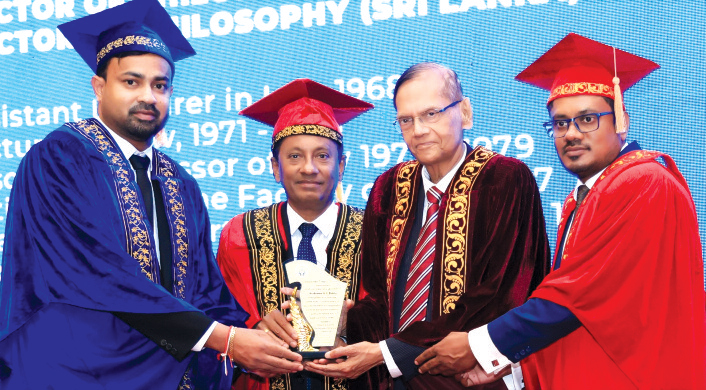
At the award presentation ceremony of the International Rehabilitation Institute last week, Professor G.L. Peiris, as Chief Guest, in his keynote address, dealt with the special relevance of rehabilitation at this time. The traditional criminal law makes provision for punishment after a crime has been committed, and punishment usually takes the form of a prison sentence. It is even more important, however, to explore practical means of prevention and also to have recourse to a custodial sentence as a last resort rather than as the typical response.
The modern approach is that punishment is seen not as retributive but as a means of rehabilitating the offender in society. Prison sentences, bringing a first offender into the prison environment and association with habitual offenders, carries the risk of recidivism, the available statistics indicating the likelihood of return to prison on repeated occasions.
He placed emphasis on the importance of informed social attitudes to ensure that an offender does not carry a permanent stigma, reducing his opportunities for employment and acceptance in society. The importance of religious instruction in early childhood, and the close connection between temple and village, was stressed.
Professor Peiris was honoured with an award of appreciation by academic colleagues.
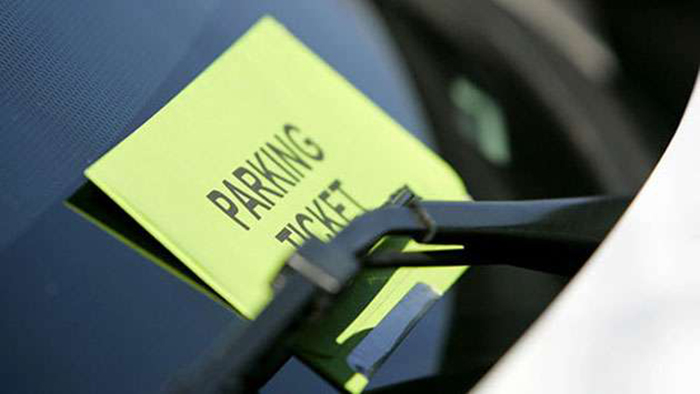
The Colombo Municipal Council (CMC) has resumed parking fees in the city with effect from today (23).
Parking management and fee collection will recommence from 6 am, following a decision by the Finance Standing Committee of the Council.
Charges were temporarily suspended from March 18 due to heavy traffic and long queues near fuel stations. Authorities said the situation had improved with the introduction of the QR code system and odd-even rationing.

Showers may occur at several places in the Western and Sabaragamuwa provinces and in Galle, Matara and Nuwara-Eliya districts after 2.00 pm.

Fuel price hikes trigger transport disruptions and calls for fare increases

Prof. Peiris honoured by International Institute of Rehabilitation

CMC resumes parking fees

Substandard coal deepens energy crisis, warns former CEB Chief

Sri Lanka, ICRC to develop unified national database for missing persons

‘Dates have the highest sugar content to fight Coronavirus’

Sunday Island 27 December – Headlines

#SundayIsland 17th December – Headlines

Sunday Island – 28th March

Sunday Island Headlines – 21 March

Sunday Island – 21st February – Headlines
-

 News5 days ago
CIABOC questions Ex-President GR on house for CJ’s maid
-

 News6 days ago
Sri Lankan marine scientist Asha de Vos honoured at UNGA opening
-

 News6 days ago
Australian HC debunks misleading travel risk claims for Sri Lanka
-

 News4 days ago
Bailey Bridge inaugurated at Chilaw
-

 Latest News6 days ago
Wednesdays declared a government holiday with effect from 18th March
-

 News4 days ago
Pay hike demand: CEB workers climb down from 40 % to 15–20%
-

 News3 days ago
CIABOC tells court Kapila gave Rs 60 mn to MR and Rs. 20 mn to Priyankara
-

 Editorial5 days ago
Couple QR-based quota with odd-even rationing