
News
Resignation of Prez, PM prerequisite for resolution of current crisis – Direction Sri Lanka

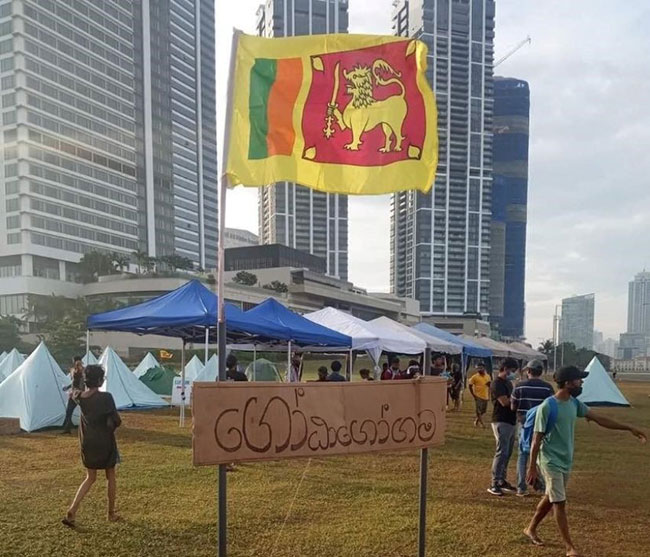
Direction Sri Lanka, consisting of Sri Lankan professionals, has declared that the resignation of President Gotabaya Rajapaksa and Prime Minister Ranil Wickremesinghe is a prerequisite for the resolution of the current political-economic-social crisis
The grouping has made the following proposals:
a) The President should resign forthwith in response to the demands of the People;
b) A successor President should be elected;
c) The Prime Minister should resign forthwith after the election of the successor President;
d) A Caretaker/Interim National Government should be immediately formed comprising a new Prime Minister and a Cabinet, limited to 18 essential portfolios along with an equal number of Deputy Ministers, representing all political parties;
– The Caretaker / Interim National Government to function for a maximum period of one year;
– The persons holding portfolios in the Caretaker / Interim Cabinet to have adequate and appropriate educational qualifications and specialised skills required to hold the respective portfolios and to be persons of the highest integrity;
– Members of Parliament on the National List to be encouraged to resign as necessary to pave the way for professionals / experts of the highest integrity to be represented in the Caretaker / Interim National Government;
e) As a priority during the period of the Caretaker / Interim National Government, action to be taken to rescind the 20th Amendment to the Constitution and to reintroduce the provisions of the 19th Amendment to the Constitution with necessary amendments addressing the democratic way of governance;
f) Immediately upon the reintroduction of the 19th Amendment, steps to be taken to appoint persons with the highest integrity and ability to the Independent Commissions.
Direction Sri Lanka, in addition, called for the holding of early elections subsequent to the envisaged Constitutional amendment reverting to a Parliamentary democracy with independent institutions and processes to ensure the Rule of Law and good governance and to avoid the arbitrary exercise of powers of governance and the excessive reposing of powers in any single individual.
Whilst the proposals of Direction Sri Lanka were publicly disseminated, Direction Sri Lanka also directly engaged with leading political parties / party leaders to advocate and ensure the need for a systemic change.
Direction Sri Lanka also notes that pursuant to the increasing protests and escalating crisis culminating with the attack on peaceful protestors on 9th May 2022 by Government agents and the irresponsible inaction of law enforcement authorities leading to island-wide anarchy no less a person than the President of Sri Lanka made a pledge to the people of Sri Lanka that the long criticised 20th Amendment of the Constitution would be repealed and the 19th Amendment with positive features will be restored.
Direction Sri Lanka also notes that such a pledge came from an Executive President having almost untrammelled powers under the existing 20th Amendment to the Constitution.Yet, events that unfolded since and the actions on the part of the President and those in governance have run contrary to this undertaking and have further eroded democracy and good governance, taking Sri Lanka to the edge and resulting in further erosion of any trust or confidence being placed on those in governance locally and internationally.
Beginning with the cobbling together of ‘a Cabinet’ comprising a Prime Minister and many members of proven failure and some with criminal convictions and credible allegations of corruption, it is now, after what seems deliberate filibustering, an attempt being made to cheat and deceive the people by a purported amendment to the Constitution.
The Twenty Second Amendment Bill published in the Gazette neither reflects the pledges made nor addresses the genuine concerns of the people but is aimed at entrenching and continuing in power by a President and a government that has deplorably failed the nation.The proposed amendment fails to address or in any manner accommodate the following proposals of Direction Sri Lanka, which have been communicated to the Minister of Justice and Constitutional Affairs and the public, which include:
1. Article 41A – Constitutional Council
The original 19th Amendment Bill sought to provide greater representation by appointees from outside Parliament. The present draft provides only for three (3) such persons in a total of seven (10).
The original 19th Amendment Bill proposed a 3:7 ratio between Members of Parliament and appointees from outside Parliament but this was reversed to 7:3 due to the insistence of the then Opposition. The present Bill seeks to continue with the same 7:3 ratio.
An increase of appointees from outside Parliament results in greater citizen participation sand recognises a greater role for the sovereign people and reflects a fair balance between appointees from Parliament and those from outside with a casting vote if necessary in the Speaker.
2. Persons / institutions coming under the purview of the Constitutional Council
The following institutions also to be brought under the purview of the Constitutional Council so that their members would be appointed on the recommendation of the Council:
a) The Right to Information Commission.
b) The Colombo Port City Commission.
c) The University Grants Commission.
d) The Members of the Monetary Board of the Central Bank of Sri Lanka, other than the chairperson and the Secretary to the Ministry of the Minister in charge of the subject of Finance.
3. Article 44 of the Constitution – Minister and their subjects and Secretaries
The President should not hold any portfolio, and hence Article 44(2) of the Constitution to be deleted.
Articles 51 and 52 of the Constitution relate to the appointment of the Secretary to the
Prime Minister and Secretaries of Ministries. These appointments should be on the advice of the Prime Minister for purposes of practicality.
Direction Sri Lanka also proposed that in view of the new structure of governance to be introduced, the appointment and removal of Ministers must necessarily be on the advice of the Prime Minister. Even though provisions to this effect have been included, most unfortunately they come into effect only for the next Parliament which simply does not stand to reason in the present context.
4. Non-applicability of important constitutional provisions to the current Parliament
As stated above, the 22nd Amendment to the Constitution Bill provides that Ministers, Non-Cabinet Ministers and Deputy Ministers be appointed and removed by the President on the advice of the Prime Minister. An important reversion to the 19th Amendment is that the President would not have the power to dismiss the Prime Minister, that power being reposed on Parliament alone.
However, most significantly, in terms of the proposed 22nd Amendment, these changes would not apply to the current Parliament.
It is clear that a pre-condition to international assistance to overcome the present crisis would be a consensus government. However, if the President would retain such powers, other political parties and Members of Parliament who have declared themselves to be independent of the governing party would not be interested in joining the Government.
5. Other matters to be considered
We also submit that in appointing Governors and Heads of Missions Abroad, the President shall act on the advice of the Prime Minister.
The President’s Power to prorogue and dissolve Parliament unless by effluxion of its term as provided by the Constitution “Shall be on the advice of the Prime Minister”
The President’s present powers to prorogue and dissolve Parliament also remain untouched.
In summation, the overall effect of the 22nd Amendment Bill is to perpetuate the continuance of a President and Government that has lost the mandate of the people. The Bill, in many aspects, reflects the 20th Amendment to the Constitution, which has been rejected by the President himself.
The inevitable conclusion is that the present government that has led the country to the present debacle is determined to cling to power purely in its own interests and contrary to the wishes of the people or the good of the nation.
Direction Sri Lanka also notes various ad hoc measures resorted to under the guise of alleviating the immediate economic problems which further confirms incompetence with potentially dangerous and lasting effects for Sri Lanka, such as non-transparent dealing with its assets and reckless undertakings.
Direction Sri Lanka is now of the considered view that unless all aspects of its original proposals set out at (a) to (f) above are implemented, those in governance, including the President, will have visited irreparable and irreversible damage to our country leading to anarchy. Direction Sri Lanka, therefore, demands that even at this late stage, proper course correction by resorting to the above is embarked upon as a matter of urgency.

News
SC finds Keheliya, others, guilty of violating FRs of public through corrupt drug procurement deal
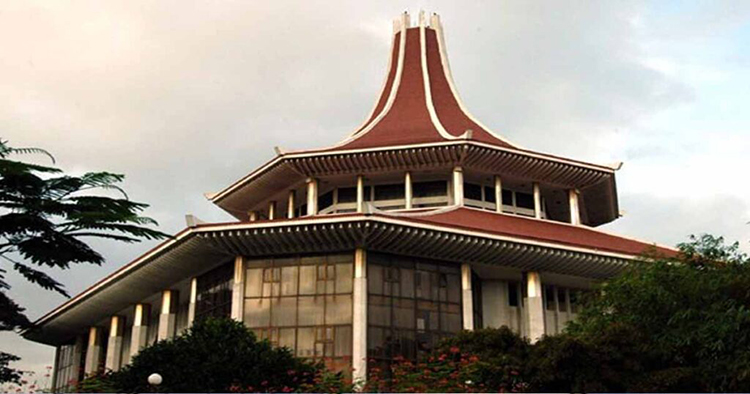
The Supreme Court yesterday held former Health Minister Keheliya Rambukwella and several senior health officials liable for violating the fundamental rights of the public over a controversial drug procurement carried out under the 2022 Indian Credit Line.
Delivering the judgment, a three-judge bench, headed by Chief Justice Preethi Padman Surasena, and comprising Justice Kumudini Wickremasinghe and Justice Janak de Silva, found that the procurement of medical supplies from an unregistered company, in breach of established procedures, had resulted in a serious infringement of public rights.
The Court ruled that the granting of a Waiver of Registration by the authorities was “wrongful, arbitrary and capricious,” and held that the direct procurement carried out on an unsolicited basis was unlawful. The transaction was accordingly declared null and void.
In a significant order, the Court directed Rambukwella to pay Rs. 75 million in compensation to the State from his personal funds.
The then Health Ministry Secretary Janaka Chandragupta and former Chairman of the National Medicines Regulatory Authority (NMRA), Prof. S. D. Jayaratne, were each ordered to pay Rs. 50 million.
The Court further directed NMRA Chief Executive Officer Dr. Wijith Gunasekara and former Director of the Medical Supplies Division Dr. Thusitha Sudarshana to pay Rs. 50 million each as compensation.
The ruling followed the hearing of a fundamental rights petition filed by Transparency International Sri Lanka and two other parties.
The Court also instructed the Commission to Investigate Allegations of Bribery or Corruption to initiate appropriate action under the Anti-Corruption Act against those found responsible.
Senior Counsel Senany Dayaratne, with Nishadi Wickramasinghe, Lasanthika Hettiarachchi, Janani Abeywickrema and Maheshika Bandara, appeared for the petitioners.
News
Sajith nudges govt. to follow India’s example in giving relief to consumers by slashing taxes on fuel
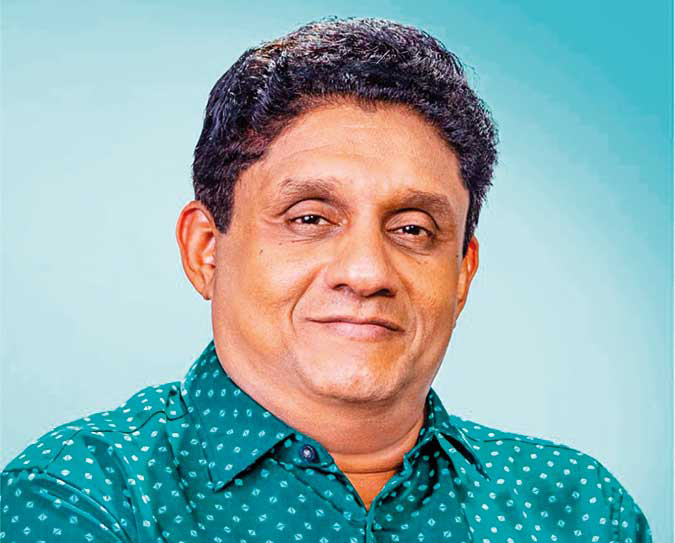
Opposition and SJB Leader Sajith Premadasa yesterday urged President Anura Kumara Dissanayake to reduce taxes on fuel, just as the Indian government has done.
He said in a post on X that “Modi government has decided to reduce the Special Additional Excise Duty on petrol and completely remove it for diesel in order to cushion the hardship on the Indian consumer. High time for Anura Kumara Dissanayake to keep up to his election promise and follow suit.”
Meanwhile foreign media reported that India has slashed excise duties on petrol and diesel to protect consumers and rein in a potential spike in inflation, while imposing windfall taxes on aviation fuel and diesel exports, amid volatile global oil markets, as a result of the Iran war.
Global oil prices have surged past $100 per barrel after the near closure of the Strait of Hormuz, which serves as a conduit for 40% of India’s crude oil imports, since the US and Israel first struck Iran on February 28.
In a government order, released late on Thursday, India’s Finance Ministry reduced the special excise duty on petrol to three Indian rupees ($0.0318) per litre from 13 Indian rupees earlier. It also cut the duty on diesel to zero from INR 10 rupees per litre.
The government did not say how much the duty cuts would cost. The move comes ahead of elections next month in four Indian states and one federal territory, with Indian voters known to be extremely sensitive to higher prices.
“Government has taken a huge hit on its taxation revenues to ensure very high losses of oil companies, approximately 24 rupees a litre for petrol and 30 rupees a litre for diesel, at this time of sky high international prices, are reduced,” Indian Oil Minister Hardeep Singh Puri said in a post on X.
The Met Dept. advises public to avoid outdoors between 11am and 4pm
Sri Lanka is set to experience continued hot weather conditions until May, the Department of Meteorology warned yesterday.
Additional Director General of Meteorology Ajith Wijemanna said the current heatwave is expected to ease only slightly once the southwest monsoon sets in toward the latter part of May.
Wijemanna explained that the country is currently in the first inter-monsoon period, characterised by low wind speeds and shifting wind directions, which contribute to rising temperatures. Reduced cloud cover and the sun’s direct position over the country are causing increased heating of land and sea, generating heat waves and warmer atmospheric conditions.
He cautioned that the hottest period of the day will be between 11:00 a.m. and 4:00 p.m., urging the public to limit outdoor activities during these hours.
Authorities also advised drinking plenty of water, wearing light-colored clothing, and avoiding prolonged exposure to direct sunlight, particularly for children and the elderly.The Meteorology Department further noted that rainfall may remain limited in the coming months, with drier conditions possible due to climate variability.

Three dead after helicopter crash in Hawaii

Woods charged with driving under influence after crash

Showers may occur at a few places in the Rathnapura, Kaluthara, Galle, and Matara districts during the evening or night

SC finds Keheliya, others, guilty of violating FRs of public through corrupt drug procurement deal

Sajith nudges govt. to follow India’s example in giving relief to consumers by slashing taxes on fuel

Expect hot weather until end of May

‘Dates have the highest sugar content to fight Coronavirus’

Sunday Island 27 December – Headlines

#SundayIsland 17th December – Headlines

Sunday Island – 28th March

Sunday Island Headlines – 21 March

Sunday Island – 21st February – Headlines
-

 News3 days ago
Senior citizens above 70 years to receive March allowances on Thursday (26)
-

 Features5 days ago
Trincomalee oil tank farm: An engineering marvel
-

 News1 day ago
Energy Minister indicted on corruption charges ahead of no-faith motion against him
-

 News2 days ago
US dodges question on AKD’s claim SL denied permission for military aircraft to land
-

 Features5 days ago
The scientist who was finally heard
-

 Business2 days ago
Dialog Unveils Dialog Play Mini with Netflix and Apple TV
-

 Sports1 day ago
SLC to hold EGM in April
-

 News3 days ago
CEB Engineers warn public to be prepared for power cuts after New Year