
News
Researchers discover new variant of Sri Lankan aquarium fish

by Ifham Nizam
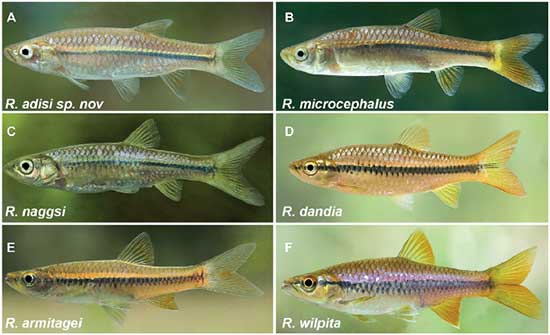
A new variant of a popular Sri Lankan aquarium fish has been discovered by local and foreign researchers.
The freshwater fish, genus Rasbora, (commonly called ‘dandiya’) is one of the most diverse groups of freshwater fishes in tropical Asia.
In Sri Lanka, previous studies have shown that there are five species (Rasbora dandia, R. microcephalus, R. wilpita, R. naggsi, and R. armitagei) of which the last three are endemic to the island. This diversity is remarkable when compared with peninsular India, which is about 25 times the size of Sri Lanka but contain only four species of Rasbora.
Biologists earlier believed there were only five varieties of the popular aquarium fish endemic to Sri Lanka. However, with the discovery of the sixth species, Rasbora has gained a new reputation among Sri Lankan freshwater fish breeders, hobbyists and harvesters.
The researchers carried out multiple analysis using “finer geographic sampling and greater sample sizes”, thereby corroborating the validity of six species of Rasbora (scientifically called as ‘Cyprinidae’) in Sri Lanka.
The team of researchers have combed a sampling of 90 sites across Sri Lanka to identify the new species. The team consisting of Hiranya Sudasinghe of Evolutionary Ecology and Systematics Lab, Department of Molecular Biology and Biotechnology, University of Peradeniya, Rohan Pethiyagoda of Ichthyology Section, Australian Museum, Sydney, NSW, Australia, Ranasinghe Hettiarachchige Tharindu Ranasinghe of Butterfly Conservation Society of Sri Lanka, Malwana, Rajeev Raghavan of Department of Fisheries Resource Management, Kerala University of Fisheries and Ocean Studies (KUFOS), Kochi, India, Neelesh Dahanukar of Indian Institute of Science Education and Research (IISER), Pune, India and Madhava Meegaskumbura of Guangxi Key Laboratory of Forest Ecology & Conservation, College of Forestry, Guangxi University, Nanning, China.
Sudasinghe told The Sunday Island that more extensive sampling of Rasbora in India, and analysis based on multiple markers may reveal “a more complex phylogenetic topology” (diversity).
“The Sri Lankan diversification derives from a common ancestor which arrived from India during a sea-level low-stand in the mid-Miocene (15.1 Ma [95% HPD: 11.5–19.8 Ma]), when the present-day island was sub aerially connected to the Indian subcontinent by a broad isthmus”, he added.
Rasbora is generally believed to have arrived in the island from the Indian sub-continent centuries ago when Sri Lanka stood geographically merged with India. In the latest study, researchers confirm this belief.
“Our analysis suggest that Sri Lankan Rasbora derive from a Mid Miocene, India to Sri Lanka dispersal”, he noted, and added that Sri Lankan Rasbora diversity is higher than that of the Indian peninsula.
The Sri Lankan diversity of Rasbora provides an opportunity to understand the evolutionary and phylogenetic relationships of freshwater fishes in the island. Understanding the bio geography, phylogenetic and the evolutionary relationships of species are pivotal in formulating effective assessments of the conservation status of species as well as to draw up species conservation management plans.
However, such studies are still at very early stages when it comes to the freshwater fishes in Sri Lanka.
The first-ever molecular phylogeny of Sri Lankan Rasbora and reassess the taxonomic identities of the five species of Sri Lankan Rasbora based on an island-wide survey. In this study, based on molecular, morphological and statistical analyses using finer geographic sampling, validate the five putative species of Rasbora previously recognized in Sri Lanka.
In addition, a new species of Rasbora was discovered from eastern Sri Lanka. This new species was named Rasbora adisi. The species name “adisi” means mysterious or enigmatic in Sinhala: an allusion to the cryptic nature of this species.
The new species is found in eastern basins in Sri Lanka such as Gal Oya, Menik River and Kumbukkan River and show the closest resemblance to Rasbora naggsi. However, the new species is different from R. naggsi by a combination of morphological characters in addition to been genetically distinct.

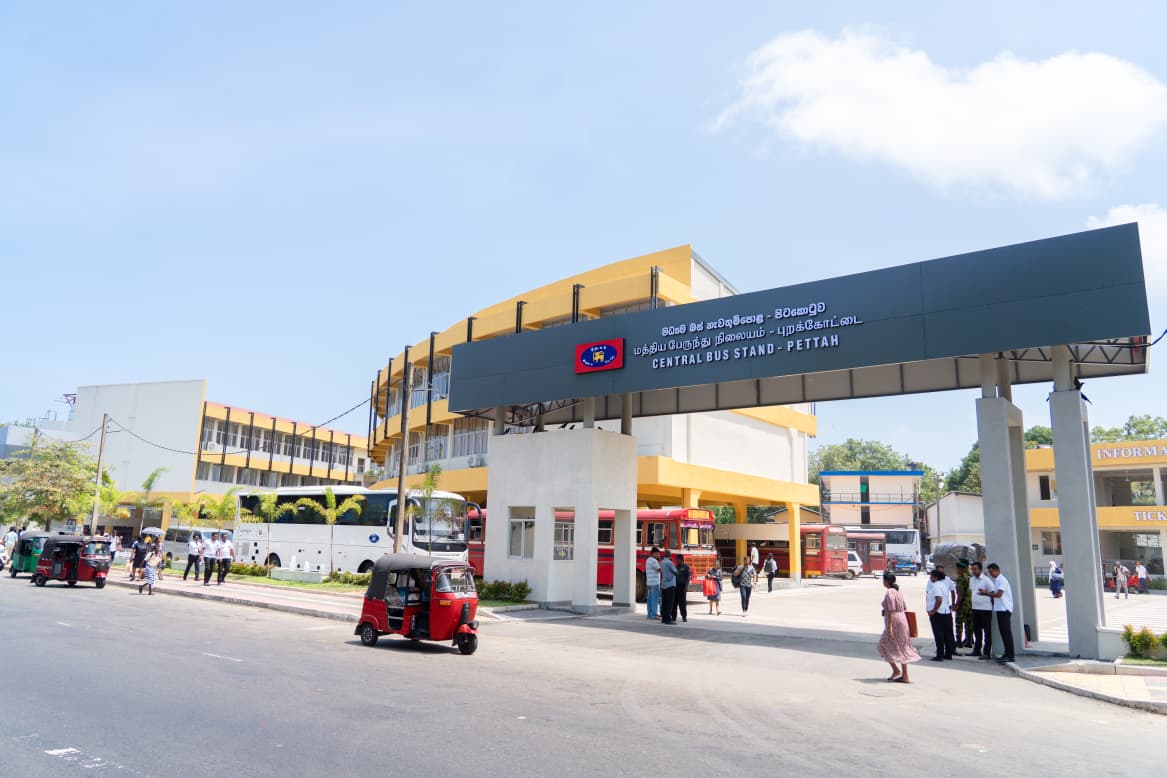
The Colombo Central Bus Stand, which has a history of over six decades and had remained without a proper maintenance for many years, has now been renovated under the current government’s development programme and vested to the public. Following that, the Prime Minister undertook an inspection tour of the newly renovated Colombo Central Bus Stand.
Originally constructed in 1964, the bus stand was refurbished with modern facilities to meet current needs and was officially reopened to the public on April 8. The primary objective of this initiative is to provide passengers with a higher-quality and more comfortable transportation service.
During the renovation process, special attention has been given to the comfort and safety of women, which was commended by the Prime Minister. In particular, a modern rest area designed to ensure privacy for nursing mothers travelling from distant areas received special praise.
The Prime Minister also reviewed the newly introduced passenger seat reservation system and information services established to assist commuters. In addition, the modern surveillance unit and other security measures installed within the premises to ensure passenger safety were also inspected.
During the visit, the Prime Minister engaged in conversations with passengers at the bus stand and inquired about their views on the newly renovated facilities and the quality of transport services.
It was emphasized that the government’s objective is to transform public transportation into a safe, technologically advanced service that can be used with convenience by all citizens.

(Prime Minister’s Media Division)
Latest News
Sun directly overhead Nagawilluwa, Galgamuwa, Sigiriya, Palugasdamana and Mankerni about 12:11 noon today (10)


On the apparent northward relative motion of the sun, it is going to be directly over the latitudes of Sri Lanka from the 05th to 15th of April in this year.
The nearest areas of Sri Lanka over which the sun is overhead today (10th) are Nagawilluwa, Galgamuwa, Sigiriya, Palugasdamana and Mankerni about 12:11 noon.

No-faith motion to be taken up today
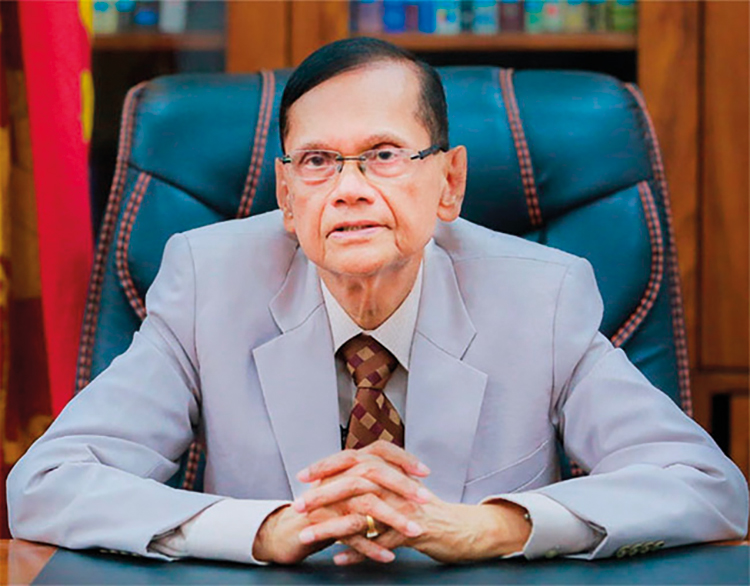
Former Foreign Minister Prof. G. L. Peiris yesterday (9) said that President Anura Kumara Dissanayake should remove Energy Minister Kumara Jayakody unless the minister stepped down on his own.Prof. Peiris, addressing a press conference called by the Opposition, said that Jayakody couldn’t under any circumstance continue to serve as a minister after the Commission to Investigate Allegations of Bribery or Corruption (CIABOC) moved the Colombo High Court against the government member over a previous financial scandal.
Pointing out that Minister Jayakody had been indicted of a corrupt deal struck during the yahapalana regime, Prof. Peiris said it was wrong for the NPP to retain him as a minister, claiming that the offence was not committed during his tenure as a Cabinet minister in the current government.
Prof. Peiris and several other Opposition members dealt with the No-Confidence Motion (NCM) against Jayakody that would be taken up today (10) with the academic calling the vote an acid test for the NPP. Having campaigned on an anti-corruption platform at presidential and parliamentary polls, the NPP couldn’t protect Jayakody though he was widely believed to be close to President Dissanayake.
As the Manager of the Procurement and Import Division of the Ceylon Fertilizer Company, Jayakody is alleged to have committed the offence of corruption, according to CIABOC.
Jayakody has been accused of causing a loss of Rs. 8,859,708 to the State by influencing and exploiting the procurement process.
Following the serving of indictments on 27 March, the judge ordered Jayakody’s release on two personal bail bonds of Rs. 1 million each. The court directed that the defendant’s fingerprints be obtained and a formal report be submitted. The case has been scheduled for a pre-trial conference on 6 May.
Prof. Peiris stressed that the CIABOC action against Jayakody is central to the NCM primarily moved over the irregularities ridden coal procurement process launched in 2025 that caused severe disruption to the power generation. Responding to The Island query after the media briefing, Prof Peiris expressed surprise that the JVP/NPP accommodated a person under investigation by the CIABOC. Having taken an utterly irresponsible decision, the JVP/NPP were now playing down the developing issue, prof. Peiris said.
The entire government parliamentary group faced the prospect of having its image tarnished by defending Jayakody, the former lawmaker said.
Prof. Peiris said that they intended to build a campaign around the issues involving the energy minister to expose the government. With yet another electricity tariff hike in the offing due to the growing demand for thermal generation as a result of coal-fired Lakvijaya power plant’s failure to meet the requirement[RA1] , the energy minister and ministry’s performances have to be examined, Prof. Peiris said.The timely release of the Auditor General’s report on controversial coal procurement should compel the government to decide on the energy minister’s fate or be prepared to face the fallout.
By Shamindra Ferdinando

Brazil bowler Laura Cardoso takes 9 Lesotho wickets in record-breaking T20 win

Zimbabwe Women set for maiden tour of Pakistan

Bangladesh advance match timings to save energy

PM on inspection tour of newly renovated Colombo Central Bus Stand

Israel to hold direct talks with Lebanon but no ceasefire, Netanyahu says

Sun directly overhead Nagawilluwa, Galgamuwa, Sigiriya, Palugasdamana and Mankerni about 12:11 noon today (10)

‘Dates have the highest sugar content to fight Coronavirus’

Sunday Island 27 December – Headlines

#SundayIsland 17th December – Headlines

Sunday Island – 28th March

Sunday Island Headlines – 21 March

Sunday Island – 21st February – Headlines
-

 Features6 days ago
Ranjith Siyambalapitiya turns custodian of a rare living collection
-

 News6 days ago
Global ‘Walk for Peace’ to be held in Lanka
-

 News4 days ago
Lankan-origin actress Subashini found dead in India
-

 News2 days ago
AG: Coal procurement full of irregularities
-

 Features6 days ago
Beyond the Blue Skies: A Tribute to Captain Elmo Jayawardena
-

 Features6 days ago
Aspects of Ceylon/Sri Lanka Foreign Relations – 1948 to 1976
-

 Business2 days ago
Hayleys Mobility introduces Premium OMODA C9 PHEV
-

 Business22 hours ago
Israeli attack on Lebanon triggers local stock market volatility