
News
‘Reconciliation took precedence over national security under yahapalana govt.’

By Rathindra Kuruwita
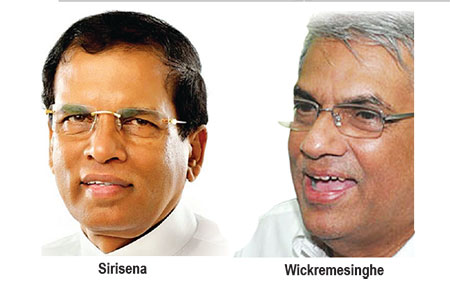
Reconciliation had figured above national security on the Defence Ministry’s list of priorities under the yahapalana government and it was a mistake, former Chief of National Intelligence Sisira Mendis yesterday told the Presidential Commission of Inquiry (PCoI) investigating the Easter Sunday attacks.
The witness said so in answer to a question from one of the Commissioners.
“Yes, reconciliation came first. The previous government was trying to improve the country’s image because Sri Lanka was facing many issues internationally. A lot of foreigners came in to talk about reconciliation and the Defence Secretaries had to sit down with them and have long discussions.”
The witness added that there had been times when he wondered if they were talking about intelligence gathered during weekly intelligence review meetings.
“The government also wanted to release lands in the North that were held by the security forces. This is not an easy thing to do. Releasing land took so much of our time. There were no barriers on the roads and no search operations. People forgot about security. I knew the importance of national security but there wasn’t anything we could do.”
Although representatives of intelligence agencies were to meet on Tuesday every month, those meetings were never held as scheduled between July 2015 and April 2019, he said.
The weekly intelligence review meetings were to be chaired by either the State Minister of Defence or the Secretary to the Ministry of Defence, he said.
“Four meetings should be held each month but the representatives never met four times a month between July 2015 and April 2019,” Mendis said.
During some months only one meeting had been held, he said.
“Although the State Minister chaired some of them initially, he did not attend any meeting in 2019,” he added.


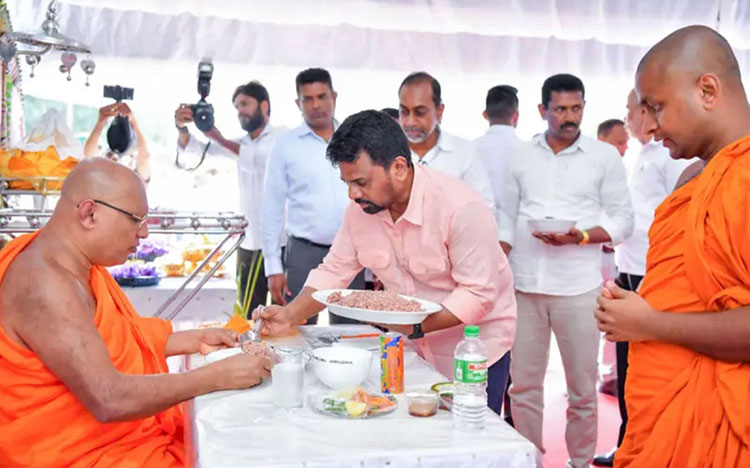
President Anura Kumara Dissanayake, along with several government Ministers, participated in a grand almsgiving ceremony (Maha Sanghika Dana) held on 27 February to invoke merit on the residents of Nelummala village who lost their lives in disasters triggered by Cyclone Ditwah.
The village, located in the Pallegala-Debokka Grama Niladhari Division of the Minipe Divisional Secretariat, in Kandy, was hit by a catastrophic landslide following the torrential rains in November 2025.
The religious ceremony took place at the Pamunupura Batumulla Junior School.
Ven. Dr. Narampanawe Ananda Thera, Anunayake of the Asgiriya Chapter of the Siyam Maha Nikaya together with the members of both the Malwatte and Asgiriya Chapters attended the event.
During the event, President Dissanayake was seen personally offering alms to the Maha Sangha and interacting with the grieving villagers.
By S.K. Samaranayake
* Iran begins 40-day mourning after Khamenei killed in US-Israeli attack
* President Pezeshkian condemns killing as ‘a great crime’
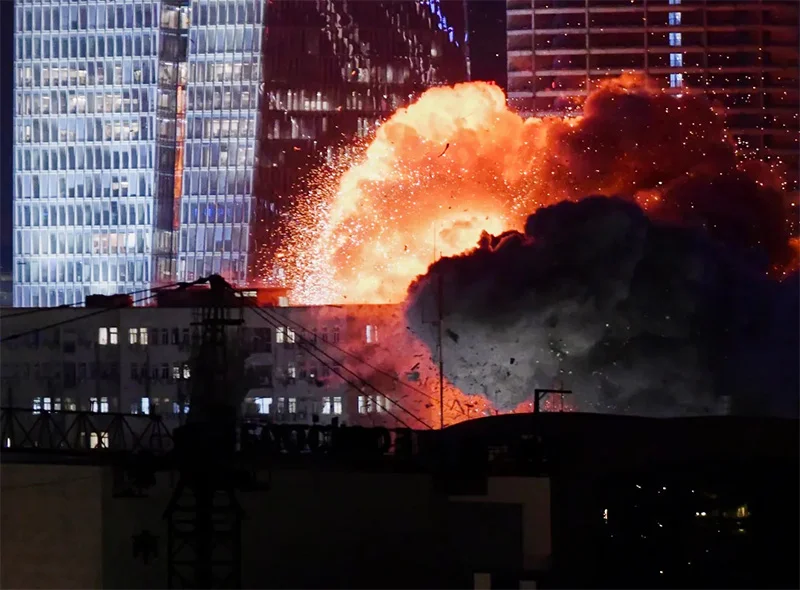
Iran has begun 40 days of mourning after Supreme Leader Ayatollah Ali Khamenei was killed in ongoing attacks by the United States and Israel, according to Iranian state media.
Top security officials were also killed in Saturday’s strikes, along with Khamenei’s daughter, son-in-law and grandson. The killings mark one of the most significant blows to Iran’s leadership since the 1979 Islamic revolution Al Jazeera has reported.
Iranian President Masoud Pezeshkian condemned the killing as “a great crime”, according to a statement from his office. He also declared seven days of public holidays in addition to the 40-day mourning period.
Reporting from Tehran, Al Jazeera’s Tohid Asadi said people were pouring into the streets of the capital following the news of Khamenei’s killing.
“There will be expected ceremonies,” he said, noting they would likely take place amid continuing bombardment across the country.
Protests denouncing Khamenei’s killing were also reported elsewhere, including Shiraz, Yasuj and Lorestan.
“There will be expected ceremonies,” he said, noting they would likely take place amid continuing bombardment across the country.
Footage aired by Iranian state media showed supporters mourning at the shrine of Imam Reza in Mashhad, with several people seen crying and collapsing in grief, according to Al Jazeera.
The killing also led to protests in neighbouring Iraq, which declared three days of public mourning. In Baghdad, protesters confronted security forces in the heavily fortified Green Zone, which houses Iraqi government buildings and foreign embassies.
Videos verified by Al Jazeera showed demonstrators waving flags and shouting slogans, with witnesses saying some were attempting to mobilise towards the US Embassy. Footage also showed protesters blocking vehicles at a roundabout near one of the entrances to the area.
There was also a protest in the Pakistani city of Karachi, where footage, verified by Al Jazeera, showed people setting fire to and smashing the windows of the US consulate.
However, there have also been reports of celebrations in Iran, with the Reuters news agency quoting witnesses as saying some people had taken to the streets in Tehran, the nearby city of Karaj and the central city of Isfahan.
Meanwhile, the official IRNA news agency reported that a three-person council, consisting of the country’s president, the chief of the judiciary, and one of the jurists of the Guardian Council, will temporarily assume all leadership duties in the country. The body will temporarily oversee the country until a new supreme leader is elected.
Ali Larijani, the head of Iran’s Supreme National Security Council, accused the US and Israel of trying to plunder Iran, in an interview aired on state TV.
He also called on Iranians to unite. “Groups seeking to divide Iran should know that we will not tolerate it,” he added.
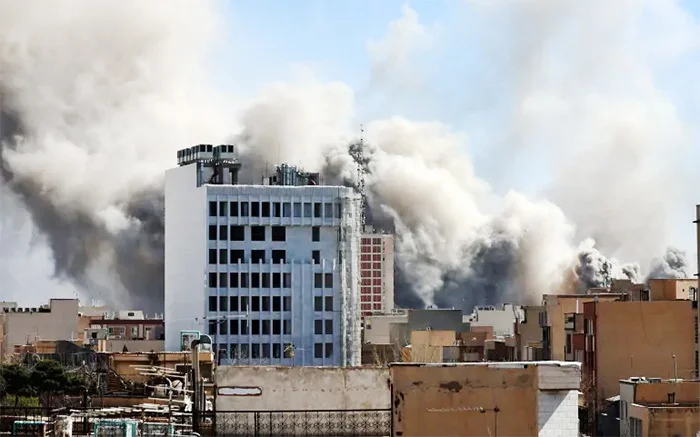
Smoke rises over central Tehran following ongoing U.S.–Israeli strikes on Iran yesterday.[EPA]
Khamenei assumed leadership of Iran in 1989 following the death of Ayatollah Ruhollah Khomeini, who had led the Islamic revolution a decade earlier.
While Khomeini was regarded as the ideological force behind the revolution that ended the Pahlavi monarchy, Khamenei went on to shape Iran’s military and paramilitary apparatus, strengthening both its domestic control and its regional influence.
Meanwhile, the Islamic Revolutionary Guard Corps (IRGC) pledged revenge and said it had launched strikes on 27 bases hosting US troops in the region, as well as Israeli military facilities in Tel Aviv.
Explosions have continued to be reported in Qatar and the United Arab Emirates, while security alerts are in place in several countries across the region.
US President Donald Trump, in a social media post on Sunday, warned Iran that it would be hit “with a force that has ?never been seen before” if it retaliated.
Iran’s retaliatory attacks since Saturday have targeted Israel and US assets across multiple Middle East countries, including Qatar, the UAE, Kuwait, Bahrain, Jordan, Saudi Arabia and Iraq.
Harlan Ullman, chairman of the strategic advisory firm Killowen Group and an adviser to the Atlantic Council in Washington, DC, said the US may have made a “big mistake” by killing Khamenei.
“Decapitation only works when you get all the leaders, and I don’t think that we got all the leaders,” Ullman said, adding that the US should not expect Iran’s leadership to enter negotiations in the immediate aftermath.
Iranian state media reported on Saturday at least 201 people have been killed in the joint US-Israeli attacks across 24 provinces, citing the Red Crescent. In southern Iran, at least 148 people were killed and 95 wounded in a strike on an elementary girls’ school in Minab on Saturday, with the toll continuing to rise, according to state media.
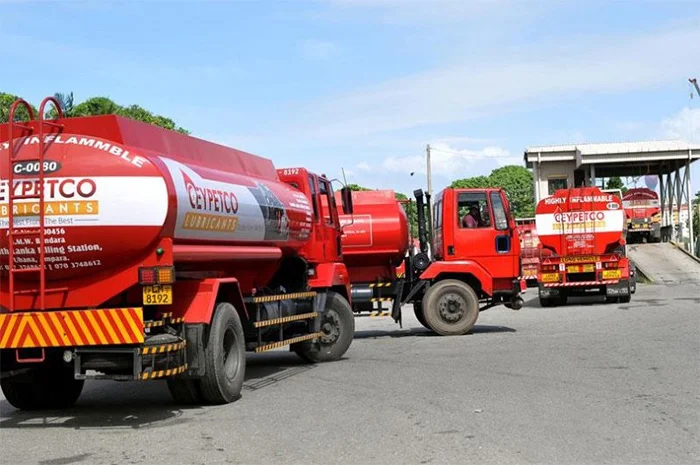
There would be no delay in fuel shipments scheduled for April and May, the Ceylon Petroleum Corporation (CPC) assured yesterday.
Addressing a media briefing in Colombo, CPC Chairman D.J. Rajakaruna said Sri Lanka’s fuel supplies did not originate from the present conflict zone in West Asia and, therefore, supplies to the Corporation would not be disrupted.
He noted that the relevant consignments were due to arrive from India and Singapore as planned.
“We are making this statement responsibly. There is no need for the public to queue up for fuel. Distribution was not originally scheduled for Sunday (01), but due to increased demand, we have deployed all distribution staff to continue fuel issuance. Although Monday (02) is a Poya Day, fuel supplies will continue without interruption,” he said.
The Chairman added that all filling stations had been instructed not to dispense fuel into cans or barrels, warning that legal action would be taken against those attempting to purchase fuel in bulk containers for resale.

Middle East escalation sends oil soaring; Sri Lanka faces price shock despite assurances on supply

How ‘distant wars can quickly arrive at the domestic pump’

President Anura Kumara Dissanayake attends almsgiving for Ditwah disaster victims in Nelummala

Talento … oozing with talent

Sri Lanka Cricket needs a bitter pill

Unable to forget the dead

‘Dates have the highest sugar content to fight Coronavirus’

Sunday Island 27 December – Headlines

#SundayIsland 17th December – Headlines

Sunday Island – 28th March

Sunday Island Headlines – 21 March

Sunday Island – 21st February – Headlines
-

 Opinion4 days ago
Jamming and re-setting the world: What is the role of Donald Trump?
-

 Features4 days ago
An innocent bystander or a passive onlooker?
-

 Features6 days ago
Building on Sand: The Indian market trap
-
 Features5 days ago
Ratmalana Airport: The Truth, The Whole Truth, And Nothing But The Truth
-
 Opinion6 days ago
Future must be won
-

 Business6 days ago
Dialog partners with Xiaomi to introduce Redmi Note 15 5G Series in Sri Lanka
-
 Business5 days ago
IRCSL transforms Sri Lanka’s insurance industry with first-ever Centralized Insurance Data Repository
-

 Sports7 days ago
CEA halts development at Mandativu grounds until EIA completion