
News
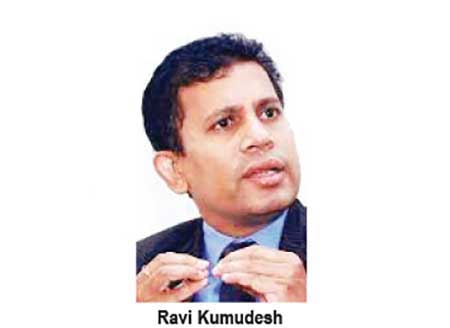
Ravi: No facilities available at MRI to test vaccines

By Rathindra Kuruwita
It was ridiculous that some government officials were saying they would take full responsibility for the COVID-19 vaccines, but not even vaccine producers have given such an assurance”, President of the College of Medical Laboratory Science, Ravi Kumudesh told The Island yesterday.
The government couldn’t take the full responsibly because vaccines were not 100% safe and the person who took the jab did so knowing that there were risks, he said.
“This is a new vaccine and a small number of people might experience side-effects. This is normal and it is not a reason for people to lose faith in vaccines.”
On the other hand, the government should have contingency plans to handle a possible situation where a number of hospital or ward staff could experience side effects after being inoculated.
Given the fact that there were some risks people should be properly educated and their consent obtained prior to vaccination.
Kumudesh urged the people to continue good health practices such as physical distancing, washing hands regularly, wearing masks, etc.
“We need to distribute these vaccines around the country. We need to store them and deploy trained professionals to vaccinate people. We need to test the antibodies created after injecting people and be ready to deal with side effects. We can’t do this overnight. There is also no need to create a crisis by trying to vaccinate people in a hurry.”
Kumudesh also said that the COVID-19 pandemic could not be controlled by vaccinating 300,000 people and that it might take at least two years to complete the vaccination process. He added that although the government said that the vaccines would be tested at the Medical Research Institute (MRI), no scientific study took place at the institution in that regard. MRI officials only checked the documents sent by the donor or manufacturer, he said.
“A little-talked-about fact is that the MRI doesn’t have facilities to test vaccines. This is sad because in the 1980s, MRI even produced vaccines,” Kumudesh added.


Prof. Priyanga Dunusinghe has warned that Sri Lanka could face a catastrophic situation due to a rapid and sharp drop in revenue caused by the escalating Gulf war.
Appearing on Derana ‘Big Focus’ yesterday, the Professor in Economics in the Department of Economics, and Head – Department of Information Technology, University of Colombo, Dunusinghe said that that drop in remittances from the Middle East, as well as exports, should be examined against the backdrop of runaway oil prices.
Dunusinghe said so responding to interviewer Pasan de Silva who sought expert opinion on the crisis. Referring to continuing Iranian retaliatory attacks on Gulf countries hosting US military bases, the academic pointed out that approximately one million Sri Lankans were employed in the region.
Global oil prices rose to over $100 per barrel on 08 March, for the first time since the Russia-Ukraine war erupted in February 2022. By noon prices were around USD 115 per barrel.
If a consensus couldn’t be reached soon, the consequences for Sri Lanka would be devastating, Dunusinghe said, suggesting that the government should seriously consider, what he called, a relatively small but immediate fuel hike to cushion the impact of future fuel price hikes.
Dunusinghe explained that in addition to the drop in remittances from the Middle East, Sri Lanka could lose employment opportunities in the war devastated region. Responding to the interviewer, the Prof said that if the situation further deteriorated the government would have to face the daunting challenge of evacuating Sri Lankans from the Middle East.
Referring to the devastating impact of Cyclone Ditwah, Dunusinghe pointed out that in terms of the agreement with the IMF, finalised in 2023, the debt repayment would have to be recommenced in 2028. The new Middle East war has placed the country in an extremely difficult situation, Dunusinghe said, while emphasising the responsibility on the part of the government to address the issues at hand immediately.
The rapidly changing oil markets indicated that regardless of optimism expressed by the US and Israel of swift victory, the ground realities were quite different, the academic said.
By Shamindra Ferdinando
The NPP governmnet has completed a major restructuring of its power sector, marking one of the most significant transformations in the country’s electricity industry in recent times, Minister of Power and Energy Engineer Kumara Jayakody says.
Addressing directors and senior officials of the newly established institutions in the power sector, while also connecting with employees of the new entities, via Zoom, the Minister said the restructuring programme had now been fully implemented with the objective of strengthening the sector, while ensuring continued state ownership.
Jayakody said the reforms represented a decisive step towards building a stronger and more resilient electricity sector, capable of meeting both present and future challenges facing the country.
“We have completed the restructuring programme that marks one of the biggest transformations in Sri Lanka’s power sector. Let us work together with dedication and commitment, within the newly established institutions, to realise the dream of ‘a prosperous country and a beautiful life,’” the Minister said.
The Minister stressed that the current government had reversed earlier attempts, by the previous administration, to break up the Ceylon Electricity Board (CEB) into 12 entities, as part of a privatisation drive.
Instead, he said, the government had established several new companies that would remain 100 percent state-owned, thereby safeguarding public ownership of the electricity sector, while introducing the structural reforms needed to modernise and strengthen the industry.
According to Jayakody, the restructuring initiative was carefully designed to ensure that the electricity sector would remain under state control while being equipped with the institutional capacity required to address emerging energy demands, technological changes and economic pressures.
He noted that one of the government’s key priorities, during the reform process, had been the protection of employee rights and privileges.
“As a government representing working people, we paid special attention to protecting the rights and benefits of employees. We assure you that the privileges and rights enjoyed by you as CEB employees will continue without even the slightest reduction when you join the new institutions,” the Minister said.
He added that the government had also taken steps to address long-standing grievances raised by employees and trade unions in the power sector.
Jayakody said many of the demands made by workers over the years had now been fulfilled, including some that had not yet been formally requested by unions or employee representatives.
“Many of the issues raised by workers in the past have now been resolved. In some instances, the government moved to address concerns even before they were formally requested by employees or trade unions,” he said.
The Minister also noted that throughout the restructuring process, the government had maintained a regular dialogue with trade unions representing workers in the electricity sector.
He said the authorities had held discussions with union representatives on several occasions and listened to their concerns before finalising key aspects of the restructuring programme.
Jayakody emphasised that the establishment of the new institutions represented a significant milestones in the development of Sri Lanka’s electricity sector.
“At this important moment, when a major step is being taken towards the development of the country’s power sector, I invite all of you to treat this as a national mission and make the fullest use of the opportunities available within these new institutions,” he said.
The Minister also expressed his appreciation to all those who had contributed to the successful completion of the restructuring programme.
He said the transformation of the electricity sector had required the cooperation and commitment of many stakeholders, including officials, employees and policymakers.
Energy sector analysts say the restructuring of the power sector is expected to play a critical role in improving efficiency, governance and long-term planning in electricity generation, transmission and distribution.
Sri Lanka’s electricity industry has faced several challenges in recent years, including rising fuel costs, supply disruptions and the need for increased investment in renewable energy and grid infrastructure.
Officials say the new institutional framework is expected to enhance operational efficiency while ensuring that the strategic assets of the electricity sector remain under state ownership.
The government maintains that the restructuring programme will ultimately strengthen the country’s energy security while supporting broader economic development.
By Ifham Nizam
News
Pilleyan held over Eastern Uni VC’s 2006 disappearance seeks SC intervention: Case to be taken up on 18 March
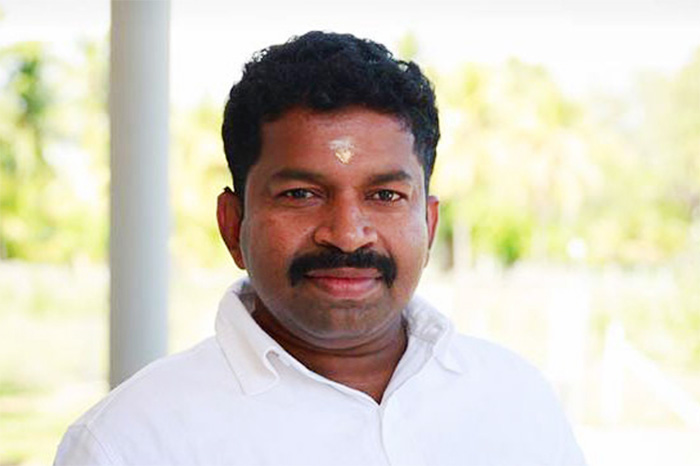
The Supreme Court yesterday declared that the Fundamental Rights (FR) petition filed by former State Minister, one-time Eastern Province Chief Minister, and ex-LTTE combatant Sivanesathurai Chandrakanthan, alias Pilleyan, would be called on 18 March.
The petition has challenged Pilleyan’s arrest and detention by the Criminal Investigation Department (CID) in terms of Prevention of Terrorism Act (PTA). Pilleyan was taken into custody in April last year over his alleged involvement in the disappearance of the Vice Chancellor of the Eastern University Prof. Raveendranath in December 2006. Prof. Raveendranath was on his way to attend a conference of the Sri Lanka Association for the Advancement of Science (SLAAS),
When the petition was taken up yesterday, the three-judge bench considered the facts presented and directed that the matter be called for examination on 18 March.
The Director of the CID, the Inspector General of Police (IGP), and the Attorney General, among others, have been named as respondents in the case.
The petitioner has sought a court ruling declaring that his arrest, and subsequent detention were unlawful and constitute a violation of his fundamental human rights, as they were executed without any justifiable cause.

Prof. Dunusinghe warns Lanka at serious risk due to ME war

Power sector restructuring completed; new state-owned entities established: Govt.

Pilleyan held over Eastern Uni VC’s 2006 disappearance seeks SC intervention: Case to be taken up on 18 March

Lanka takes part in Thai Red Cross Charity Bazaar

India hammer New Zealand to retain T20 World Cup crown

Advocata Institute highlights regulatory barrier limiting women’s overtime earnings

‘Dates have the highest sugar content to fight Coronavirus’

Sunday Island 27 December – Headlines

#SundayIsland 17th December – Headlines

Sunday Island – 28th March

Sunday Island Headlines – 21 March

Sunday Island – 21st February – Headlines
-
 News4 days ago
University of Wolverhampton confirms Ranil was officially invited
-

 News5 days ago
Legal experts decry move to demolish STC dining hall
-

 News4 days ago
Female lawyer given 12 years RI for preparing forged deeds for Borella land
-

 News3 days ago
Peradeniya Uni issues alert over leopards in its premises
-

 Business6 days ago
Cabinet nod for the removal of Cess tax imposed on imported good
-
 News4 days ago
Library crisis hits Pera university
-

 News3 days ago
Wife raises alarm over Sallay’s detention under PTA
-
 Business6 days ago
War in Middle East sends shockwaves through Sri Lanka’s export sector