
News
‘Presidential control over DDO undermines power of Parliament’


By Shamindra Ferdinando
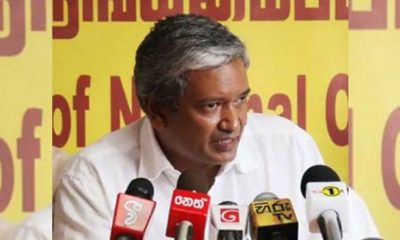
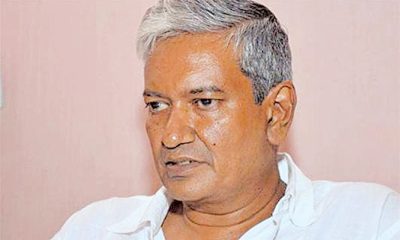
Dissident SLPP MP Gevindu Cumaratunga has strongly opposed the government move to place the debt-restructuring programme under President Ranil Wickremesinghe’s control as the latter does not represent Parliament.
Addressing Parliament on Saturday (01), the leader of civil society group ‘Yuthukama’ pointed out that the Resolution on the Domestic Debt Optimisation (DDO) was meant to bring the whole process under Finance Minister Wickremesinghe’s power. How could Parliament grant such authority to a person not among elected or appointed members of the current Parliament? MP Cumaratunga asked, while stressing public finance was their (Parliament) responsibility
The dissident SLPP MP was among 62 members who voted against the resolution.
MP Cumaratunga reminded Parliament that a massive Rs. 3.5 bn VAT scam took place in 2003 when Wickremesinghe served as the Premier. Recalling the 2015 and 2016 Treasury bond scams, MP Cumaratunga questioned how those who campaigned against Wickremesinghe throughout that period now voted for DDO that was meant to give him unprecedented powers. One hundred and twenty-two MPs voted for the resolution.
Comparing the government debt with the Gross Domestic Product in the recent past during the Yahapalana and Rajapaksha administrations, MP Cumaratunga stressed that President Wickremesinghe couldn’t be entrusted with the DDO process. Finally, the government shamelessly burdened the Employees Provident Fund (EPF) with massive debt, the MP said while attacking the government over its failure to collect taxes amounting to Rs 6 bn from liquor manufacturers.
MP Cumaratunga told The Island that he couldn’t address some issues as he got only five minutes to address parliament. The outspoken MO said that Sri Lanka secured as much as USD 12.5 bn at higher rates from the international money market during the Yahapalana administration. Now, they advised the country how to proceed in DDO operation, MP Cumaratunga said, questioning how Central Bank and Treasury employees were given a staggering 29 percent interest whereas other EPF recipients received just 9 percent interest.
The government owed an explanation as to how a selected group of people received a higher interest rate at a time the economy was under tremendous pressure.
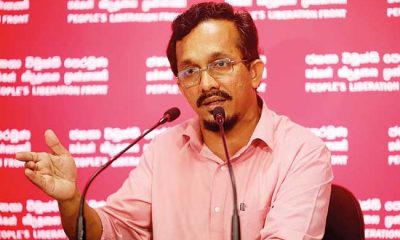
Addressing the media at the Opposition Leader’s Office, former SJB MP and mayoral candidate at the elections for CMC, Mujibur Rahuman said that, in short, the resolution on DDO has effectively transferred the powers relating to public finance from parliament to Finance Minister Wickremesinghe.
Rahuman said that President Wickremesinghe disclosed the move to take up resolution on DDO on Saturday during his recently concluded visit to Paris.The former lawmaker said that the President and the SLPP had been in an indecent hurry to empower President Wickrejemsinghe at the expense of parliament, the parliament was summoned on Saturday regardless of scheduled sittings tomorrow (04).
Rahuman said that the issue should be discussed also taking into consideration a day’s sitting cost the taxpayer as much as Rs 10 mn. Pointing out that parliament staff consisted of nearly 2,000, Rahuman said that workers had to be paid extra payment on that day. Why on earth you squandered money at a time of bankruptcy.
Rahuman said that the executive had now secured powers of the legislation thereby negating parliament. “We are rapidly moving towards a dictatorship,” Rahuman said, warning of further deterioration. The situation has been aggravated by Speaker Mahinda Yapa Abeywardena openly siding with the ruling party, the ex-MP said. One-time UNP MP lambasted the Speaker for blatantly working for the government since the day he received that appointment. Having agreed to continue the debate till 9.30 pm, the Speaker terminated the proceedings at 7.30 pm and called the vote, Rahuman said.
Both MP Cumaratunga and ex-MP Rahuman alleged that the government didn’t really explain how it was going to address the issues at hand. Instead the executive has been granted unprecedented powers that threatened the very basics of democracy here, they alleged.Rahuman said that the absence of the Rajapaksas at the time of voting should be carefully examined.






In terms of the provisions of the Establishments Code on payment of festival advance to government officers, there’s a possibility of obtaining rupees 10,000/- as an advance for celebrating festivals of Theipongal, Ramazan, Sinhala and Hindu New Year, Wesak, Deepavali, and Christmas as well as for pilgrimages (Sri Paada pilgrimage and Hajj pilgrimage).
Provisions have been given to recover the said advance in 08 installments or if required earlier without interest. It has been proposed by the Budget 2026 to increase the said festival advance up to rupees 15,000/-.
Accordingly, the Cabinet of Ministers granted approval to the proposal submitted by the Minister of Public Administration, Provincial Councils and Local governments to revise the relevant provisions so that the festival advance can be increased up to rupees 15,000/- .
As per the approval given by the cabinet meeting held on 02-06-2025, action is being taken at present to offer the underutilized lands/properties of the Sri Lanka State Plantation Corporation, the Janatha Etate Development Board, and the Elkaduwa Plantation Company which are under the Ministry of Plantation and Community Infrastructure which have been identified under stage one to suitable investors.
Accordingly, the Cabinet of Ministers has approved the proposal presented by the Minister of Plantations and Community Infrastructure to provide following lands/properties on a lease basis to the suitable investors for optimal utilization following the prescribed procurement procedure.
• underutilized lands/properties identified under stage two owned by the Sri Lanka State Plantation Corporation, the Janatha Estate Development Board, and the Elkaduwa Plantation
Company,
• The Mawarala watte land and the Tea factory 40.48 hectares in extent, located in Matara District belonging to the Tea Shakthi Fund.
• The underutilized land of 1,541 hectares in extent of Kondachchi Estate is enjoyed by the Sri Lanka Cashew Corporation.
The drafting of the National Fisheries and Aquaculture Policy has commenced with the objective of equitable distribution of the benefits of the fisheries industry and the sustainable management of fisheries and aquaculture. This policy has been updated from time to time according to current requirements. However, steps have not been taken to obtain the approval of the Cabinet of Ministers for that purpose.
According to the policy declaration of the present government, ‘Vistas of Prosperity and Splendor’ the National Fisheries and Aquaculture Policy has been redrafted, updating the aforementioned policy in line with the economic and development objectives of the government.
The recommendations of the Department of National Planning have been received for the drafted policy.
Accordingly, the Cabinet of Ministers has approved the proposal presented by the Minister of Fisheries, Aquaculture, and Marine
Resources to implement the National Fisheries and Aquaculture Policy, integrating it with other relevant policies.

Lanka Premier League draft set to take place on March 22

Trump to meet Venezuelan opposition leader Machado at the White House

Festival advance for government officers to be increased
Providing underutilized lands/properties to suitable investors for optimal utilization.
Implementation of the National Fisheries and Aquaculture Policy

Expressions of Interest called to develop selected locations within the Pelawatte Sugar Factory premises

‘Dates have the highest sugar content to fight Coronavirus’

Sunday Island 27 December – Headlines

#SundayIsland 17th December – Headlines

Sunday Island – 28th March

Sunday Island Headlines – 21 March

Sunday Island – 21st February – Headlines
-
 News3 days ago
Sajith: Ashoka Chakra replaces Dharmachakra in Buddhism textbook
-

 Business3 days ago
Dialog and UnionPay International Join Forces to Elevate Sri Lanka’s Digital Payment Landscape
-

 Features3 days ago
The Paradox of Trump Power: Contested Authoritarian at Home, Uncontested Bully Abroad
-

 Features3 days ago
Subject:Whatever happened to (my) three million dollars?
-

 News2 days ago
Level I landslide early warnings issued to the Districts of Badulla, Kandy, Matale and Nuwara-Eliya extended
-

 News2 days ago
National Communication Programme for Child Health Promotion (SBCC) has been launched. – PM
-

 News3 days ago
65 withdrawn cases re-filed by Govt, PM tells Parliament
-

 Opinion5 days ago
The minstrel monk and Rafiki, the old mandrill in The Lion King – II