
News
Pharmaceutical chamber urges govt. to implement fair, transparent pricing mechanism


The Sri Lanka Chamber of the Pharmaceutical Industry has called on President Anura Kumara Dissanayake and Prime Minister-cum-Minister of Health Dr. Harini Amarasuriya for the implementation of a fair, transparent pricing mechanism that is sensitive to foreign exchange fluctuations and the streamlining of the state health sector institutions.
Such a mechanism would bring enormous benefits to the entire populace and will help to salvage the industry as well, the SLCPI said in a message to congratulate the new administration.
Full text of the SLCPI message: The Sri Lanka Chamber of the Pharmaceutical Industry extends its warmest congratulations and best wishes to the newly elected Anura Kumara Dissanayake, the Executive President of the Democratic Socialist Republic of Sri Lanka upon obtaining the highest people’s mandate in the country. On the same note, we extend our best wishes to Dr. Harini Amarasuriya, the newly appointed Prime Minister who takes up the Ministry of Health among her many other ministerial portfolios.
The pharmaceutical industry is beleaguered by myriad problems carried forward during the tenure-ship of different political terms of governments. It is our fervent hope that the President, as a person who is constantly in touch with the masses and feels the pulse of the multitude, will recognize our industry as one of the lynchpins in providing solace to the people of our country. The implementation of a fair, transparent pricing mechanism that is sensitive to foreign exchange fluctuations and the streamlining of the state health sector institutions that directly interact with our industry, would bring enormous benefits to the entire populace and will help to salvage the industry as well.
The President’s much-repeated principle of getting the intelligentsia of the nation involved in planning future policies would help produce a thriving local pharmaceutical manufacturing industry that will work side by side with importers of high-quality pharmaceuticals in order to provide the people of our country with all their pharmaceuticals needs at affordable price. As such, we assure our steadfast support and complete cooperation in developing a pharmaceutical policy for the country in collaboration with the government Sector Health Administrators and other related fields of academia. We have no doubt that having a scholar of such repute as Dr. Harini Amarasuriya by the side of the President would make the President’s task much easier.
We reaffirm our commitment to the well-being of the people of our country at this hour of transition and as an industry will work tirelessly to fulfil the aspirations by constantly and cordially interacting with the President and the government appointed by them with such high expectations.


NATA to be given more powers
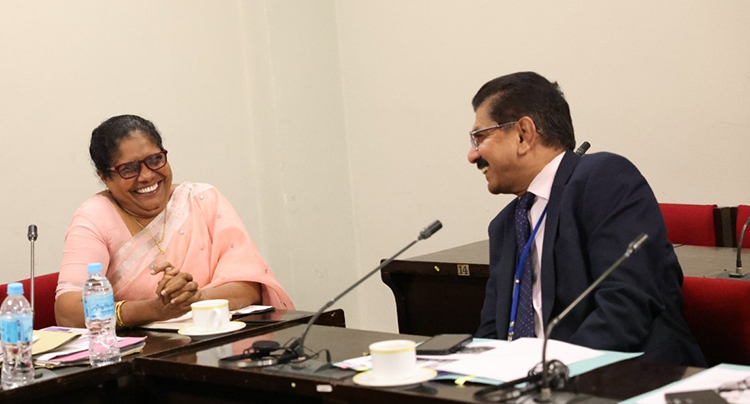
The Parliamentary Sectoral Oversight Committee on Health, Mass Media and Women’s Empowerment has agreed in principle to ban single-stick sales of cigarettes and increase taxes on tobacco products, according to parliamentary sources.
The decision was reached during an institutional review of the National Authority on Tobacco and Alcohol (NATA) held recently in Parliament. The meeting was chaired by MP Dr. Nihal Abeysinghe.
During the review, NATA officials informed the committee that approximately 22,000 deaths occurred annually in Sri Lanka due to tobacco and alcohol consumption. They said the country suffered an economic loss of between Rs. 225 billion and Rs. 240 billion each year due to the consumption of tobacco products and alcohol.
Officials told the committee that steps were underway to amend the National Authority on Tobacco and Alcohol Act to grant it more powers.
Noting that 104 countries had already banned the sale of loose cigarettes, the underscored the need for Sri Lanka to adopt a similar policy. When loose cigarettes were sold, mandatory health warnings on cigarette packets were not visible to consumers, the NATA officials said.
The committee was also briefed on the importance of imposing taxes on cigarettes after determining their retail prices, as part of broader measures aimed at reducing tobacco consumption.
Commenting on the matter, Dr. Abeysinghe said the committee was prepared to extend its full support for the proposed amendments to the Act, as well as for other programmes and initiatives undertaken by the National Authority on Tobacco and Alcohol.
Deputy Chair of the Committees Hemali Weerasekara, committee members MPs Dayasiri Jayasekara, Muneer Mulaffer, Samanmali Gunasinghe, Prof Sena Nanayakkara, Dr S. Sri Bhavanandarajah, Dr Ramanathan Archchuna and with the permission of the Chair, MPs Dr. Janaka Senarathna and Dr Pathmanathan Sathiyalingam were present at the committee meeting.
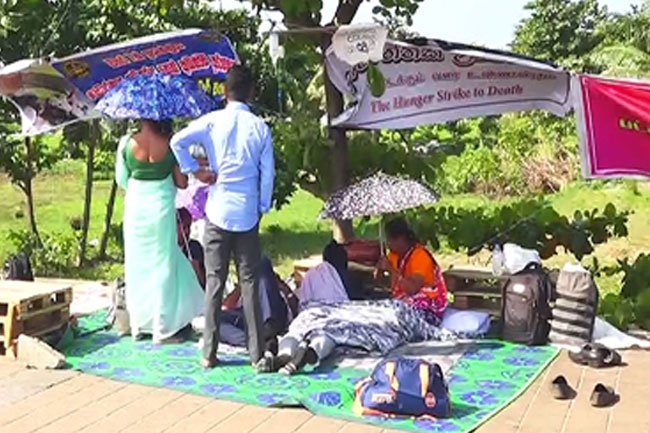
The hunger strike launched by a group of Development Officers demanding their absorption into the teacher service entered its fourth day yesterday (29) outside the Presidential Secretariat Colombo.The protesters, members of the Ceylon School Development Officers’ Union (CSDOU), began their satyagraha on January 26.
One of the four officers participating in the fast-unto-death fell seriously ill on the fourth day and was rushed to hospital for treatment, while the remaining three continued the hunger strike. Earlier, Dr. Chamal Sanjeewa, President of the Doctors’ Trade Union Alliance for Medical and Civil Rights, visited the protest site to examine the health of the protesters and oversaw the administration of saline to those suffering from dehydration.
CSDOU Secretary Viraj Manaranga criticised authorities for refusing to listen to the protestors.
“Not a single official from the relevant authorities has come forward to hear our grievances, which is a matter of serious concern,” he said, accusing the government of negligence and “stepmotherly treatment” of the issue.
The Ceylon Teachers’ Union (CTU) echoed the need for legal and procedural adherence, noting that there are currently 40,000 teacher vacancies nationwide. The union stressed that a significant number of development officers and graduates remain outside the teaching service, despite provisions in the teacher service constitution allowing for their appointments, which fall under the powers of Provincial Councils.
National People’s Power (NPP) MP Chandana Sooriyarachchi said graduate development officers are required to sit a compulsory competitive examination. Former Education Minister Akila Viraj Kariyawasam, who oversaw appointments under the Good Governance administration, also stated that direct appointments are legally not feasible. He added that school development officers were absorbed into the teacher service in 2018 through competitive exams and stressed that appointments must follow established procedures, warning that strikes would not alter this process.
The hunger strike continues to draw attention to the demands of the Development Officers as they urge the government to take immediate steps to address their grievances.
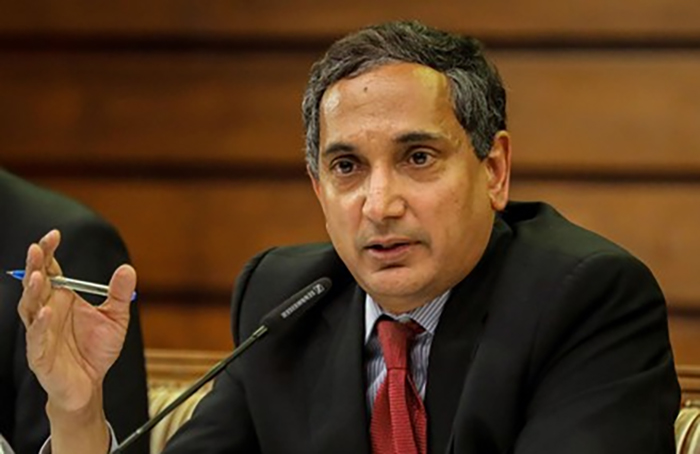
Sri Lanka and other small Asian economies must accelerate trade diversification or face heightened vulnerability to global tariff disputes and shifting supply chains, warned Krishna Srinivasan, Director of the Asia and Pacific Department at the International Monetary Fund (IMF).
Speaking in Colombo on the evolving global trade landscape, Srinivasan highlighted Asia’s growing exposure, particularly in the wake of tariff tensions between the United States and China. “Asia benefited a lot from trade integration, benefited a lot from openness to trade,” he said. “So much so that when tariffs were imposed by the US, Asia was subject to the highest level of tariffs.”
He cautioned that the region that gained most from open markets is now at risk of bearing the brunt of protectionist measures. For countries like Sri Lanka, he said, the message is clear: diversify or be exposed.
Srinivasan also noted that South Asia remains the least integrated sub-region in the continent. “Having greater integration with your partners within the sub-region will take you a long way,” he said. For small economies, he added, building deeper trade ties with neighbours and broadening export and production bases is essential for resilience.
Meanwhile, Sri Lanka has received a strong vote of confidence from the IMF following a high-level meeting between President Anura Kumara Dissanayake and the delegation at the Presidential Secretariat.
The visiting IMF representatives, who arrived on January 22 to assess the damage caused by Cyclone Ditwah, spent a week touring the island, engaging with affected communities and observing the impact firsthand. In a briefing, the delegation praised the government’s swift relief efforts, infrastructure restoration, and commitment to rebuilding lives, noting widespread appreciation among citizens for the administration’s handling of the crisis.

Showers will occur at times in the Eastern, Northern, North-Central and Uva provinces and in Matale and Nuwara-Eliya districts

Tobacco and alcohol claim 22,000 lives annually

Development Officers hunger strike drags on for fourth day

IMF urges Lanka to diversify trade amidst global tariff risks

Shocking 10,455 complaints of Children’s rights violations lodged with NCPA last year

Sea Street gold prices gallop

‘Dates have the highest sugar content to fight Coronavirus’

Sunday Island 27 December – Headlines

#SundayIsland 17th December – Headlines

Sunday Island – 28th March

Sunday Island Headlines – 21 March

Sunday Island – 21st February – Headlines
-
 Business4 days ago
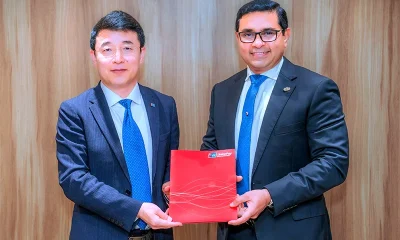
ComBank, UnionPay launch SplendorPlus Card for travelers to China
-

 Business5 days ago
ComBank advances ForwardTogether agenda with event on sustainable business transformation
-
 Opinion5 days ago
Conference “Microfinance and Credit Regulatory Authority Bill: Neither Here, Nor There”
-
 Business1 day ago
Climate risks, poverty, and recovery financing in focus at CEPA policy panel
-
 Opinion4 days ago
Luck knocks at your door every day
-

 Business6 days ago
Dialog Brings the ICC Men’s T20 Cricket World Cup 2026 Closer to Sri Lankans
-

 News5 days ago
Rising climate risks and poverty in focus at CEPA policy panel tomorrow at Open University
-

 Business1 day ago
Bourse positively impacted by CBSL policy rate stance