
Editorial
Perks and privileges


On December 1 television bulletins beamed and the print media published next day news of the presentation of the KT Chitrasiri report on parliamentary and presidential privileges to President Anura Kumara Dissanayake. A smiling president was shown on television screens accepting the gift-wrapped report from the retired supreme court judge who with two others, retired Ministry Secretary D. Dissanayake and retired District Secretary CT Bulumulla had been tasked by the new regime to review the allowances, perks and privileges provided to MPs, ministers and former presidents. The much-awaited report is now being studied, the cabinet spokesman announced at his weekly briefing soon after it was in.
Public opinion has long been running high about how this impoverished country’s legislators have been showering themselves with perks and privileges at heavy cost to the taxpayer. Resentment on this score is huge. It must be said to the credit of the new administration and the president, who pledged during the election campaign to correct this situation, that they lost no time in appointing the Chitrasiri Committee, requiring it to report within a very tight time frame, on this much discussed topic affecting a wide range of politicians including former presidents.
There has been no word yet on the actual content of the report; but the expectation among the public is that, befitting its gift-wrapped presentation, considerable reduction of past extravagances showered on elected officials will be addressed. These politicians sanctimoniously pledged to serve their electors rather than themselves but did quite the reverse. Particularly notable is the fact that President Dissanayake and the new parliament are willing to reduce their own privileges to within bounds of reason.
Given today’s prices, nobody would (or should) grudge an MP his monthly allowance or salary of Rs. 54,286 plus Rs. 100,000 a month to maintain an office. This is topped up with a sitting allowance of Rs. 2,500 a day – usually eight days a month except during the budget debate when there are daily sittings – payable for parliamentary sittings as well as attending meeting of committees on non-sitting days; an entertainment allowance of Rs. 1,000 a month, a driver’s allowance of Rs. 3,500 monthly (if no government driver is provided as for ministers, deputy ministers and state ministers), Rs. 50,000 a month for telephones, a fuel allowance depending on the distance of the member’s electorate from parliament (284 liters of diesel per month for Colombo MPs), a travel allowance of Rs. 2,500 per month each for four personal staff (Rs. 10,000 in all) and stamps to the value of Rs. 350,000 annually. These taken together would not seem excessive.
Public resentment boils not so much over the above package but other lavish benefits served at taxpayer expense. News stories galore have been published about sumptuous subsidized meals served to MPs at the parliament restaurant scandalizing ordinary people struggling to make ends meet. Very often such reports bear no semblance of truth. Shortly after the August 2020 election, an orientation session for MPs threw up an astonishing revelation that an MP’s meal cost Rs. 3,000! This fictitious figure had been calculated by dividing the total parliamentary food cost by 225 – the total number of MPs – when a large number of parliamentary staff and others are also fed off the parliament kitchen. The stated figure was far from accurate and did not reflect the reality. The last speaker (Mahinda Yapa Abeywardene) eventually offered a figure of Rs. 296 per head. But various other figures for fish and vegetarian meals have been bruited around although there was no figure offered for chicken meals that are also served in parliament.
Duty free vehicle permits for MPs have been awarded from time to time – many of them sold on the market for figures running into millions – have infuriated the public. These permits were issued every five years in the past and the new administration is pledged to discontinue this widely condemned practice. President Premadasa used a special police unit headed by a respected senior officer to check on such abuses and that fueled the eventual impeachment resolution against him. Given the huge duties imposed on motor vehicles imported into this country, especially on luxury vehicles, the duty free permits exploited by many parliamentarians are widely resented. Fortunately, the new dispensation has made clear that such practices will not continue.
MPs do need vehicles to carry out their duties and the issue of a non-luxury, fuel efficient vehicle to each of them – and not only government MPs – is not unreasonable. But the present administration has reversed a previous decision to issue vehicles to government MPs and decided to give them a fuel allowance instead. The NPP no doubt, is acutely conscious of its projected image that their MPs are different from those of the past and are more interested in serving their electors than themselves. Equity demands that opposition MPs are similarly treated.
Payments and privileges of former presidents under the Presidents Entitlement Act of 1986 are also under review. These, including city mansions, luxury vehicles, secretarial help etc. in addition to the pension are widely regarded as overly lavish. We have seen two former presidents (Mahinda Rajapaksa and Maithripala Sirirsena) continue in parliament post-retirement presumably drawing current emoluments in addition to their benefits as former presidents. Among those alive today are former Presidents Chandrika Kumaratunga, Mahinda Rajapaksa, Maithripala Sirisena and Ranil Wickremesinghe who served just two years. Mrs. Hema Premadasa, widow of assassinated President R. Premadasa, is also alive and paid a pension, provided a Colombo residence, transport and other privileges. The present government has expressed commitment to trim these including enormous security contingents for politicians past ad present. It has already been said that presidential mansions in various parts of the country including Kandy and Nuwara Eliya are intended to be used for the public benefit.
The intentions of the new administration are excellent. Hopefully there will be delivery as promised.


Friday 5th December, 2025
The JVP-led NPP government has laid bare its Jekyll-and-Hyde nature by deciding to use Emergency regulations to suppress the media. President Anura Kumara Dissanayake, in his address to the nation on 30 November, stressed that the state of Emergency, declared in view of recent weather disasters, would not be misused for undemocratic purposes, but on 02 December Deputy Minister of Public Security Sunil Watagala directed the police to use the draconian Emergency regulations against social media. Watagala told the police top brass, at a meeting in Malabe, that they must invoke Emergency regulations to deal with the social media activists who were carrying out personal attacks on President Dissanayake and ministers. He warned the media that all those arrested under Emergency regulations would be treated as offenders and not as suspects. So much for the new political culture the JVP/NPP promised!
The police, who are accused of acting as the JVP’s Gestapo, are likely to follow the government’s order at issue to the letter and go all out to suppress the media critical of the JVP/NPP bigwigs. Now that the JVP’s legal advisor and Central Committee member Watagala has defied an assurance given by President Dissanayake and directed the police to use Emergency regulations against the media, one wonders whether there is an alternative centre of power within the NPP government.
There is no gainsaying that nobody must be allowed to abuse media freedom to vilify anyone or disseminate lies. Social media has become a metaphor for smear campaigns. The self-styled social media influencers who resort to hate/rage baiting are driven by five motives, namely attention and engagement, polarisation, influencing public opinion, political or ideological leverage and, in most cases, monetary gain from viral outrage that drives advertising revenue and subscriptions. Many of them are in the pay of political parties and politicians and do not scruple to do dirty propaganda work. Whatever the motives, defamatory social media posts are a scourge that must be eradicated in the name of civility. However, there are ways and means of dealing with the culprits under ordinary laws, and using Emergency regulations for that purpose cannot be countenanced on any grounds.
The JVP or a government led by it has no moral right to use Emergency regulations against the media or any other institution or individuals; it opposed Emergency vehemently during previous governments. The JVP leaders themselves became victims of Emergency regulations during their so-called revolutionary days and therefore know what it is like to be arrested and detained indefinitely on trumped-up charges.
The JVP/NPP and its propaganda hitmen have been doing exactly what the current government is going to have some social media activists arrested for—launching smear campaigns. They opened a new low in Sri Lanka’s social media culture, demonising rival political leaders during previous governments and propagating diabolical lies to turn public opinion against their political opponents. They succeeded in their endeavour and formed a government. Now, the boot is on the other foot. They are still carrying out savage propaganda onslaughts on their opponents if their defamatory attacks on a young female speaker who attracted a great deal of media attention at the SLPP’s recent rally at Nugegoda are any indication. Shouldn’t the JVP/NPP and its propagandists do unto others as they would have others do unto them?
The JVP has a history of stifling dissent; old habits are said to die hard. In the past, it relied on mindless violence for this purpose, but it now appears to be attempting to use of Emergency regulations to achieve the same end under the pretext of controlling errant social media activists. This makes it all the more necessary to call a halt to the NPP government’s plan to misuse Emergency regulations for a witch-hunt against the media.


Thursday 4th December, 2025
Cyclone Ditwah has dissipated, but the trail of destruction it left remains. More than 475 people have already been confirmed dead. Many have gone missing, and the death toll continues to rise. It may not be possible to trace most landslide victims who were buried alive. It is too early to assess the economic cost of the recent weather disasters. Commissioner General of Essential Services Prabath Chandrakeerthi has given a ballpark figure—USD 6 -7 billion or about 3 – 5 percent of GDP. This is a staggering amount. The economic crisis is far from over. The government has its work cut out to allocate funds for rebuilding programmes and is therefore seeking assistance from other nations. Thankfully, disaster aid is pouring in, but whether it will be sufficient for the post-disaster reconstruction projects in all 25 districts, affected by Ditwah, remains to be seen.
Many organisations, public and private, and individuals have been donating relief supplies. All disaster victims, especially the displaced, will have to be supported for several weeks, if not for months, continuously. It is heartening that there has been a tremendous response to calls for disaster assistance, and the relief material collection centres are overflowing. The challenge is to streamline relief distribution programmes.
Some private companies and individuals collect relief materials and distribute them in a haphazard manner. Their intention is laudable and deserves appreciation, but whether their efforts will serve the intended purpose is in doubt, for they lack expertise and logistical facilities to distribute relief efficiently. There have been instances where large amounts of cooked meals had to be discarded due to delays in distribution during previous disasters.
What characterises social welfare and disaster relief programmes in Sri Lanka is poor targeting. Whenever a disaster occurs, various organisations come forward to collect relief items, and whether all the goods so collected reach disaster victims is anyone’s guess. Going by oft-heard laments from many victims of Ditwah that they have not received any food or drinking water for days, there is a need to streamline the ongoing relief distribution programmes. Not all disaster victims can be identified easily. There’s the rub. Some fraudsters visit disaster-stricken areas and collect food and dry rations, posing as victims.
The process of providing relief often involves multiple intermediaries, and this could lead to inefficiency, delays, misallocation, and even diversion, as we have seen on previous occasions. People are donating relief items generously amidst crippling economic hardships, and therefore the government is duty bound to ensure that these goods reach the intended beneficiaries. Relief distribution operations should be monitored closely to prevent waste and malpractices. This points to the need for a more vigorous state intervention. However, there have been complaints against some state officials involved in relief distribution. A group of flood victims, in a suburb of Colombo, interviewed by a television channel, accused a Grama Niladhari of siphoning off disaster relief. The shameless characters thriving at the expense of disaster victims during national calamities must be brought to justice.
Complaints abound that some politicians abuse disaster relief programmes to gain political mileage by using various associations affiliated to their parties to distribute the goods collected from the generous public. All such complaints must be probed expeditiously and action taken against the culprits. Politicians also engage in what can be described as calamity clout chasing in disaster-stricken areas, as evident from the sheer number of videos they have posted on social media. There have been instances where irate disaster victims set upon some of them. It behoves the self-righteous politicians to put an end to the disaster selfie culture and knuckle down to relief work.
Wednesday 3rd December, 2025
A story about poetry has come like a ray of sunshine amidst dark clouds hovering above Sri Lanka. Actually, it is about the use of poetry to dupe AI models. The Guardian (UK) has reported on an experiment conducted by a group of researchers from Italy’s Icaro Lab, as part of an initiative by an ethical AI company called DexAI, to test the efficacy of the guardrails on AI systems. They succeeded in making the AI models respond to harmful prompts, with the help of 20 poems they themselves wrote. The success rate of using poetic prompts to elicit responses from AI models by way of deception was as high as 62%. However, some AI models made no responses; they were too smart to be taken for a ride!
The poems used by the researchers were in Italian and English, according to The Guardian. The power of poetry has been known to humans throughout history across all cultures. There is much more to poetry than being an alluring form of entertainment. It helps convey emotions and even powerful messages, political, religious, social or otherwise, as one can see in the works of the greats like Bertolt Brecht (The Solution, wherein one comes across these famous lines: “Would it not be easier/In that case for the government/To dissolve the people/And elect another?”), T. S. Eliot (The Wasteland), Wilfred Owen (Anthem for Doomed Youth) and Yeats (The Second Coming).
Furthermore, the lure of poetry consists in its ability to evoke emotions, stir imagination and create participatory resonance; its beauty lies not in explicitness but in suggestion. Epic poems have become cultural markers of civilisations, just as the Iliad and the Odyssey defined Greek culture and education in the Classical Age. Poetry is also known for its power of seduction, so to speak. Examples abound, and The Flea by John Donne and To His Coy Mistress by Andrew Marvell are prominent among them. Shakespeare’s Sonnet 129 (Th’ Expense of Spirit in A Waste of Shame) explores the irresistible temptation to succumb to lust and the bitter aftermath.
The Icaro Lab researchers have taken the power of poetry to a whole new level, with their experiment under discussion. In fact, they have used the unpredictable sound/rhythmic patterns of poems, which tend to confuse the predictive mechanisms of AI. Their method has come to be dubbed ‘adversarial poetry’. With meter and rhyme and associated linguistic and structural unpredictability, poetry has helped prove that even the so-called AI gods, as it were, are not without feet of clay.
Poetry’s ability to help create clever prompts to bypass the built-in safety restrictions and ethical guidelines of an AI model—a process known as ‘jailbreaking’—is a cause for concern. It is the guardrails that keep the abusers of AI at bay. The Guardian report informs us that ‘the content the researchers were trying to get the models to produce included everything from content related to making weapons or explosives from chemical, biological, radiological and nuclear materials, as well as hate speech, sexual content, suicide and self-harm and child-sexual exploitation’. A headline of an article, published in the Wired magazine, on ‘adversarial poetry’ reads: “Poems can trick AI into helping you make a nuclear weapon.”
While pushing the envelope of AI is not harmful per se, and could arguably pave the way for innovation and creativity, it is feared that ‘jailbreaking’ carries the danger of leading to irreversible consequences. Thankfully, AI safety is not binary. There are safeguards, and guardrails can be restored, revised and improved. AI companies are reportedly working on the vulnerability of their AI models exposed by the aforesaid experiment, and hopefully it will be possible to spot harmful intent in artistic content.
One can only hope that poetry, which soothes the mind and spirit, or its prosodic structure, to be exact, will not be weaponised to achieve sinister objectives.

Death toll rises to 607, missing persons reduce to 214 at 1800hrs today (5)

Sri Lanka Navy takes delivery of Ex-USCGC DECISIVE

Hope holds firm as West Indies drag New Zealand into fifth-day battle

Ireland among countries boycotting Eurovision after Israel allowed to compete

Putin says Russia will take Donbas by force or Ukraine’s troops will withdraw
486 dead, 341 missing, 171,778 displaced as at 0600hrs today [05]

‘Dates have the highest sugar content to fight Coronavirus’

Sunday Island 27 December – Headlines

#SundayIsland 17th December – Headlines

Sunday Island – 28th March

Sunday Island Headlines – 21 March

Sunday Island – 21st February – Headlines
-
 News6 days ago
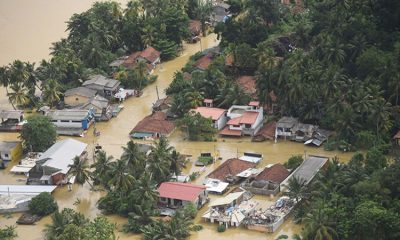
Weather disasters: Sri Lanka flooded by policy blunders, weak enforcement and environmental crime – Climate Expert
-
 Latest News6 days ago
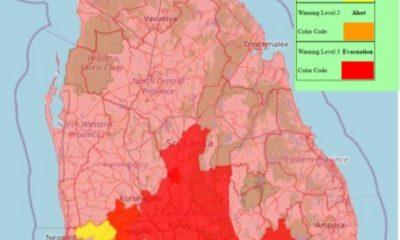
Level I landslide RED warnings issued to the districts of Badulla, Colombo, Gampaha, Kalutara, Kandy, Kegalle, Kurnegala, Natale, Monaragala, Nuwara Eliya and Ratnapura
-
 Latest News6 days ago
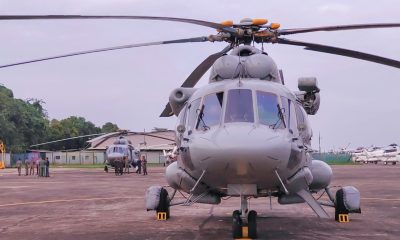
INS VIKRANT deploys helicopters for disaster relief operations
-
News3 days ago
Lunuwila tragedy not caused by those videoing Bell 212: SLAF
-

 Latest News6 days ago
Department of Irrigation issues Critical flood warning to the Kelani river basin
-
 Latest News4 days ago
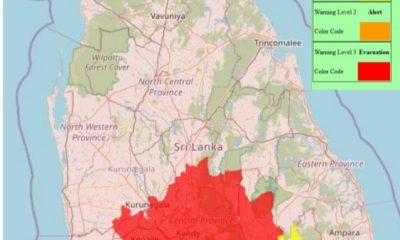
Level III landslide early warnings issued to the districts of Badulla, Kandy, Kegalle, Kurunegala, Matale and Nuwara-Eliya
-

 Editorial7 days ago
Needed: Action not rhetoric
-
 News7 days ago
Country reels under worst weather in living memory