
Opinion
One of best development administrators SL ever had

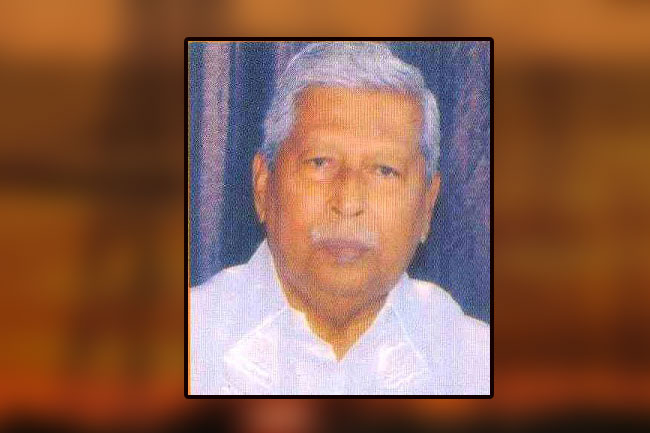
Mr. K. Thayaparan (KT), who retired from the government service after serving as a development administrator for more than thirty years passed away on Jan 05 at the age of 86. He was born in 1937 in Malaya, which was then under the British rule; his father had migrated there in 1916 for employment. His father was employed in the Malayan Railways, and the family was living a happy life. In the late 1940s, there erupted a terrorist movement launched by Communists of Chinese origin. To fight with the terrorists the British Government had issued a conscription order for all school leavers above the age of 17 years to join the military. Many families with male children over 17 years fled to Ceylon to avoid conscription. Since KT’s family also had a male child who had been noticed to report for military duty, his family members too other than his father left Malaya in 1951 and came to live in Ceylon. In Jaffna, KT resumed and completed his school education. In 1958 he entered the University of Ceylon at Peradeniya to undertake studies in geography, economics and history.
During the university days, KT had won university colours in badminton. He graduated in 1961, and served as a school teacher in the Matara district. In 1962, after sitting a competitive examination, KT joined the Government Divisional Revenue Officers’ service. In 1963, together with the other officers of the DROs’ service and comparable services, KT was absorbed into the Ceylon Administrative Service that had been created in place of the Ceylon Civil Service, which had simultaneously been abolished.
Till 1975 KT served in the district administration in the northern districts, first as DRO, then as Asst. Government Agent and as Addl. Government Agent. From 1976 to 1979 he worked in the Ministry of Fisheries as Deputy Director Planning, and contributed to the development of the National Fisheries Development Plan 1979 – 1983. The Fisheries Development Plan, among other activities had concentrated on exploitation of the fish resources in the Sri Lanka’s exclusive economic zone, which was proclaimed in 1977, and utilisation of irrigation reservoirs and village tanks for development of inland fisheries. The Government made a policy decision to implement an accelerated programme to develop inland fisheries and aquaculture. For this purpose, a new Division called the Inland Fisheries Division was set up in the Ministry, and KT was appointed its director.
The accelerated development programme had a number of activities to perform. Establishment of fish breeding stations in different parts of the country, recruitment and training of scientific and technical officers to serve at fish breeding centres, import of exotic fish species suitable for culture in Sri Lankan inland waterbodies, training of youth in inland fishing and aquaculture, promotion of investments in shrimp farming, etc. Funding agencies like UNDP, ADB and individual countries on bilateral basis came forward to support the accelerated inland fisheries development programme by providing funds for development of infrastructure, providing technical assistance, providing foreign training for the scientific and technical staff who were mostly young people without experience, and providing advisory services. It was heavy work for KT, but he managed the Division and its work smoothly.
KT was a firm believer in team work. He knew workers in all outstation inland fisheries or aquaculture establishments by name. He distributed foreign training slots offered by donor countries or agencies to every scientific or technical officer on an equitable basis. He listened to everybody, and was quite loved by his staff. KT was quite neutral in politics. However, in spite of his hard work to develop the inland fisheries sector, he was transferred out of the Ministry in 1985 to the SLAS Pool.
In 1979 when KT took over the responsibility of developing inland fisheries and aquaculture in the country, the total national inland fish production in Sri Lanka was 17,400 tons. During his tenure of nearly six years, the national inland fish production steadily increased and in 1985, the year he was transferred it had increased to 32,700 tons, showing an increase of nearly 90%. Also, there were 4,500 inland fishing craft operating in reservoirs, and the number employed as fishers, fish collectors, fish traders, etc. was over 10,000.
After leaving the Ministry of Fisheries he served different assignments such as Director Regional Development, National Consultant or the World Bank funded Reconstruction, Rehabilitation and Resettlement Project, Secretary to the North-East Provincial Council Ministry of Agriculture, Lands and Fisheries, and Secretary to the State Ministry Hindu Religious and Cultural Affairs. In 1995, he was appointed Addl. Secretary Development of the Ministry of Fisheries, but his stay in this post was brief since the then Minister replaced him with one of his political supporters. His last government assignment was as Addl. Secretary, Ministry of Plan Implementation, National Integration and Ethnic Affairs. In 1997, he retired from the government service, but continued in a few foreign funded projects as institutional development consultant. He once told that his most productive period in the government service was as Director Inland Fisheries. After retirement he authored several books, Reminiscences of Malaya 1937 – 1951, Stories of Some Brave Men and High Achievers, and Introduction to Some Known High Achievers.
Although he was quite suitable to be appointed the Secretary to a Ministry, he was never considered for such a post. In the final years of his career, he was compelled to serve under his juniors. But he carried on regardless and did the best in whatever the capacity he served.
Hettiarachchi


Cyclone Ditwah:
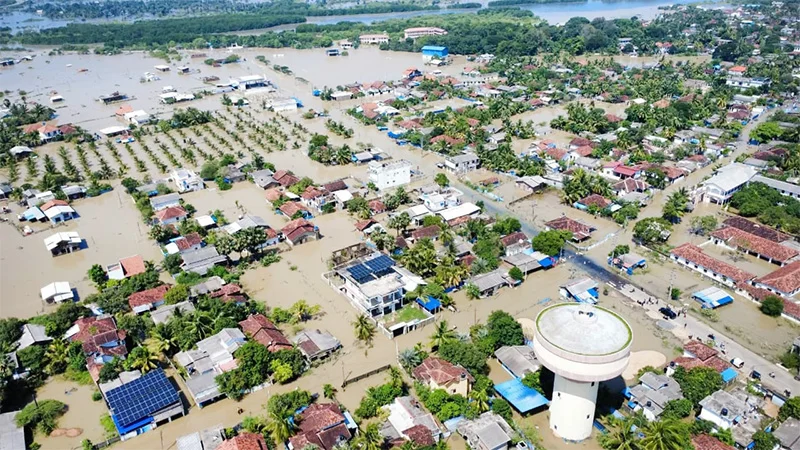
Cyclone Ditwah, which swept across Sri Lanka at the end of November, caused massive damage to the country, the extent of which need not be mentioned here, as all are aware of it by now. Heated arguments went on among many parties with regard to how this destruction could have been mitigated and who should take responsibility. Although there may have been shortcomings in several aspects of how we responded to Ditwah, this article highlights a critical area that urgently requires attention if we are to protect ourselves from similar hazards in the future.
As is common in many situations, it has once again showcased a concerning weakness in the country’s disaster-management cycle, the gap between issuing early warnings and the expected public response. The Meteorological Department, the Irrigation Department, the National Building Research Organization, and other authorities issued continuous warnings to evacuate well in advance of imminent threats of flooding, landslides, and water hazards. However, the level of preparedness and community reaction fell short, leading to far greater personal property damage, including loss of a few hundred lives.
Sri Lanka is not unfamiliar with natural disasters. One of the most devastating disasters in our history could be considered the 2004 Tsunami event, which resulted in over 35,000 deaths and over $1 billion in property damage in the coastal belt. After the event, the concepts of disaster management were introduced to the country, which we have been adhering to since then. Again in 2016, the country faced massive river flooding, especially in western and southern regions, and until recently experienced repeated floods and landslides due to rains caused by atmospheric disturbances, though less in scale. Each of these events paved the way for relevant authorities to discuss and take appropriate measures on institutional readiness, infrastructure resilience, and public awareness. Yet, Cyclone Ditwah has demonstrated that despite improvements in forecasting and communication, well supported by technological advancements, the translation of warnings into action remains critically weak.
The success of early-warning systems depends on how quickly and effectively the public and relevant institutions respond. In the case of Ditwah, the Department of Meteorology issued warnings several days beforehand, supported by regional cyclone forecasting of neighbouring countries. Other organisations previously mentioned circulated advisories with regard to expected flood risk and possible landslide threats on television, radio, and social media, with continuous updates. All the flood warnings were more than accurate, as low-lying areas were affected by floods with anticipated heights and times. Landslide risks, too, were well-informed for many areas on a larger spatial scale, presumably due to the practical difficulties of identifying such areas on a minor scale, given that micro-topography in hill country is susceptible to localised failures. Hence, the technical side of the early-warning system worked as it should have. However, it is pathetic that the response from the public did not align with the risk communicated in most areas.
In many affected areas, people may have underestimated the severity of the hazard based on their past experiences. In a country where weather hazards are common, some may have treated the warnings as routine messages they hear day by day. As all the warnings do not end up in severe outcomes, some may have disregarded them as futile. In the meantime, there can be yet another segment of the population that did not have adequate knowledge and guidance on what specific actions to take after receiving a warning. This could especially happen if the responsible authorities lack necessary preparedness plans. Whatever the case may be, lapses in response to early warnings magnified the cyclone’s impact.
Enforcing preventive actions by authorities has certain limitations. In some areas, even the police struggled to move people from vulnerable areas owing to community resistance. This could be partly due to a lack of temporary accommodation prepared in advance. In some cases, communities were reluctant to relocate due to concerns over safety, privacy, and the status quo. However, it should be noted that people living in low-lying areas of the Kelani River and Attanagalu Oya had ample time to evacuate with their valuable belongings.
Hazard warnings are technical outputs of various models. For them to be effective, the public must understand them, trust them, and take appropriate action as instructed. This requires continuous community engagement, education, and preparedness training. Sri Lanka must therefore take more actions on community-level disaster preparedness programs. A culture of preparedness is the need of the day, and schools, religious institutions, and community-based organisations can play an important role in making it a reality. Risk communication must be further simplified so that people can easily understand what they should do at different alert levels.
Cyclone Ditwah has left, giving us a strong message. Even an accurate weather forecast and associated hazard warnings cannot save lives or property unless the public responds appropriately. As it is beyond doubt that climate change intensifies the frequency and severity of extreme weather events, people in Sri Lanka have to consider preparedness as a routine part of life and respond to warnings promptly to mitigate damage from future disasters.
(The writer is a chartered Civil Engineer)
by Eng. Thushara Dissanayake

Here is what you can do!
Comedy and the ability to have a good laugh are what keep us sane. The good news to announce is that there are many British and American comedy shows posted up and available on the internet.
They will bring a few hours of welcome relief from our present doldrums.
Firstly, and in a class of its own, are the many Benny Hill shows. Benny is a British comedian who comes from a circus family, and was brought up in an atmosphere of circus clowning. Each show is carefully polished and rehearsed to get the comedy across and understood successfully. These clips have the most beautiful stage props and settings with suitable, amusing costumes. This is really good comedy for the mature, older viewer.
Benny Hill has produced shows that are “Master-Class” in quality adult entertainment. All his shows are good.
Then comes the “Not the Nine o’clock news” with Rowan Atkinson and his comedy team producing good entertainment suitable for all.
And then comes the “Two Ronnies” – Ronnie Barker and Ronnie Corbett, with their dry sense of humour and wit. Search and you will find other uplifting shows such as Dave Allen, with his monologues and humour.
All these shows have been broadcast in Britain over the last 50 years and are well worth viewing on the Internet.
Similarly, in The USA of America. There are some really great entertainment shows. And never forget Fats Waller in the film “Stormy Weather,” where he was the pianist in the unforgettable, epic, comedy song “Ain’t Misbehavin”. And then there is “Bewitched” with young and glamorous Samantha Stevens and her mother, Endora who can perform magic. It is amazing entertainment! This show, although from the 1970s was a milestone in US light entertainment, along with many more.
And do not overlook Charlie Chaplin and Laurel and Hardy, and all the Disney films. Donald Duck gives us a great wealth of simple comedy.
The US offers you a mountain of comedy and good humour on Youtube. All these shows await you, just by accessing the Internet! The internet channel, ‘You tube’ itself, comes from America! The Americans reach out to you with good, happy things right into your own living room!
Those few people with the ability to understand English have the key to a great- great storehouse of uplifting humour and entertainment. They are rich indeed!
Priyantha Hettige

After the recent disaster, a great deal of information has been circulating on WhatsApp and YouTube regarding our reservoirs, highways, etc.
In many of these discussions, people have analysed what went wrong and how the damage could have been prevented. My question is this: why do all these knowledgeable voices emerge only after disaster strikes? One simple reason may be that our self-proclaimed, all-knowing governing messiahs refuse to listen to anyone outside their circles. It is never too late to learn, but has any government decision-maker read or listened to these suggestions?
When the whole world is offering help to overcome this tragedy, has the government even considered seeking modern forecasting equipment and the essential resources currently not available to our armed forces, police, and disaster-management centres?
B Perera

Hatton National Bank donates Rs. 100 Million to the ‘Rebuilding Sri Lanka’ Fund

Heavy showers above 100 mm are likely at some places in the Eastern and Central provinces and in the Badulla and Polonnaruwa districts

Post-Ditwah recovery efforts: Rs. 190 bn needed to restore roads and bridges countrywide

Siddhalepa takes authentic Lankan Ayurveda medicine to UK through a collaborative

Prof. G. L. Peiris offers rare insider’s account of Sri Lanka’s peace talks with LTTE

Burnt elephant dies after delayed rescue; activists demand arrests

‘Dates have the highest sugar content to fight Coronavirus’

Sunday Island 27 December – Headlines

#SundayIsland 17th December – Headlines

Sunday Island – 28th March

Sunday Island Headlines – 21 March

Sunday Island – 21st February – Headlines
-

 Business6 days ago
Cabinet approves establishment of two 50 MW wind power stations in Mullikulum, Mannar region
-
 News6 days ago
Gota ordered to give court evidence of life threats
-

 Features6 days ago
Cliff and Hank recreate golden era of ‘The Young Ones’
-
 Features6 days ago
Sri Lanka and Global Climate Emergency: Lessons of Cyclone Ditwah
-

 Latest News7 days ago
Sri Lanka squad named for ACC Men’s U19 Asia Cup
-

 Editorial6 days ago
Experience vs. Inexperience
-
 News6 days ago
WFP scales up its emergency response in Sri Lanka
-
 News6 days ago
Special programme to clear debris in Biyagama