
Features
Natural Reserve over 40 years ago


by Lyn de Alwis
And at last we arrived at Rugamtota! We were on the threshold of Yala’s wonderland beyond the Menik Ganga, with its vast plains from which rose the rock massifs of Banawelkema, Mayagala and Muduntalawa. There had been many a time when I sat on a fallen kumbuk log in front of our Kosgasmankada camp and gazed at the thick jungle across the river, roadless, impenetrable except on foot and with only rock caves to shelter in. I would go there one day! I thought.
Here I was, with the cream of Yala’s fearless men: K. David, W.L.A. Piyadasa and Kirineris led by the most senior Game Ranger and tough leader, G.N.Q. de Silva. We forded the river with much difficulty, our groaning jeep protesting loudly as we revved up the steep bank of Menik Ganga, there being no easy bridges in those days.
Strict Natural Reserve
We had spent many exciting days planning our route march, in collecting our meagre provisions and cutting out any item we thought was a luxury. Yet when the desiderata were assembled at Banawelkema, where the jeeps deposited us, each of us had loads which caused much pain to arms and backs, and tended to fix our necks immovably in one direction.
From Rugantota to Banawelkema is eight and a half miles, with the Strict Natural Reserve on the right and Yala Block 3 on the left. This boundary also separates the Uva and Southern Provinces. At 2.00 pm we began walking, or wading would be a better word, for almost immediately we struck a matted growth of nelu which we had to overcome by doing what in swimming is called the breast-stroke. We could not possibly see through this eight-foot tangle, and lest we patted an elephant on the back, we spoke loudly to each other now and again.
At the first glade, Kottapudaina, we saw our first animals, which were two sambhurs, mother and son. They stopped in their tracks and looked at us unconcerned, or perhaps terribly confused, for clumsily harnessed as we were, we must have looked bizarre. Five adjutant storks took themselves heavily into the air and a lone, aging wild boar with twisted tusks, sauntered across our path. There was something very elemental about this scene, for we felt accepted.
We trundled on through more nelu, now laced with karamba and kukurumang whose vicious thorns tore into our clothes or deftly picked off our hats. I remember turning left at a stream-crossing and continuing our torrid journey. Then quite suddenly, through the forest curtain, there loomed to our right the towering black rock, Lunuatugalge which was our destination. Gone were the fatigue and the anxiety on seeing this fabulous rock, rising 400 feet in a gentle arc sheltering one of the most beautiful caves in Sri Lanka. It is approximately 200 feet long and as much as 30 feet broad in places, and had evidently housed many families in ancient times, for it had been partitioned with brick walls to form about a dozen rooms. The carving of the drip ledge of the cave must have been a stupendous feat, for it is at the upper end of the arc at a height of some 100 feet above ground.
It was a pity the cave was not habitable, for dust lay thickly about, wasps and bambara bees were everywhere and bears appeared to occupy some of the rooms. Going through the cave and climbing its roof, we came upon two reasonably flat rocks where we decided to stay put. While Pat Decker and Ranger de Silva enthused about the view, I looked around with some trepidation. I observed that the rock assigned to the three of us, was not flat but was gently sloping and, at its bottom it just fell away more than I00 feet, with only the branches of a palu tree to hold us if we accidentally fell over. The wind velocity was also not in our favour, making our perch rather precarious.
However, by the time we had unloaded and unpacked and the first round of hot tea came up, I felt I had accomplished something. The view was indeed enchanting. It looked more like a wilderness of rock with a sprinkling of forest. There was Dematagala 1,008 feet high, the highest rockscape in the whole of Yala, and Thalaguruhela on whose summit (800 feet) are the remains of a stupa; and in its shadow the skull-like Pettigala, Mayagala (Wadambuwa) in Block 3 and so on. Our minds were taken back to pre-Christian times when in this belt of jungle between the rivers Menik and Kumbukkan was a flourishing civilisation, going hand in hand with the rise of Kataragama and Mahagama (Tissamaharama).
The shrill trumpet of an elephant close by broadcast our intrusion and the immediate belling of an agitated sambhur told us that beneath the green carpet it was already dusk. We descended to prepare for the night. Almost immediately the full moon appeared, unusually large and clear, behind Dematagala. It was the night of the Poson Poya.
Rathu-walaha
I looked around at my staff and realized they all belonged to Yala. Piyadasa was a nephew of the famous Andiris, the grand old man of Yala, while David was a Kumana stalwart and the son of Karolis, a Range Assistant. Kirineris happened to be the jolly, irrepressible son-in-law of the legendary Menika, ‘chieftain’ of the Kumana village. These then were the ‘jungle graduates’ schooled in the wild and where knowledge, experience and dedication will forever remain unsurpassed.
Among other subjects we hoped to study on this expedition, was the occurrence of rathu-walaha, a species of brown bear recorded only from this part of Sri Lanka. The late Mr. C.W. Nicholas, the first Warden of the Department of Wildlife had alluded to this animal in his Administration Report for 1952. The existence of a brown bear in this Reserve, first reported by Mr. H. Neville in The Taprobanian in 1885 is still believed in and there are men who claim to have seen it in recent years. It is said to be smaller in size than the (normal) sloth bear, dark brown and not black in colour, more gregarious, aggressive and fierce. Its former range is said to have extended as far as Panama.
Neville’s passage and the legends concerning it related round our dying campfire the previous night, haunted me as we plunged through the unrelenting thorny scrub next morning. Every grunt of an unseen pig relayed through the nelu was magnified into the frenzied cough of a charging bear; and every squeal of an infant langur came down from the lofty canopy as the death yells of fleeing Nittaevo. Ahead of me Ranger de Silva had stopped and was showing his men the fresh claw marks of a bear, which had clambered up a neralu tree. Kirineris and David came up with some leaves and flowers which had defied identification even in their experienced hands. The younger watchers asked for water, which was doled out in thimble-like mugs by Piyadasa. When an Oliver Twist among them craved for more, he had only to be sternly reminded by the ranger ‘Nothing more till you find your own water at the next pool, wherever that is’.
The compass, on which we were pinning our faith, showed that we were heading south-east, slightly wide of Dematagala. ‘I remember some interesting plains around here’, said Ranger de Silva grabbing his battle-axe and disappearing through the trees. It was a signal to follow although I would have preferred to sit under a tree and let the jungle talk to me.
The plains were indeed attractive and refreshing after the dense vegetation of the high forest, but what caught my eye was a magnificent sambhur standing at the far end of a glade, dripping mud. We had not seen water for hours now and this was a surprise. ‘Boys’ said Kirineris ‘there’s water in that unawe’. An unawe, if I may explain, is a set-up by which water oozes through the soil from a spring. This is a heaven-sent gift to the animals during the dry season and these are fairly well spaced out in Yala block 3 and the Strict Natural Reserve. The sambhur left, grumbling. The water in the wallow was, of course, undrinkable but a little further up a puddle was dug out and left to settle for 10 minutes. We drank our fill and collected some more for the rest of the day.
Bin-kohomba
At this point we had another surprise, a rather unpleasant one, for there on a shrub close by was the unmistakable jungle sign to show that a person or persons had gone groping before us. The Ranger and Kirineris examined the three distinct slashes one under the other, on a weera tree and declared that they were not more than a week old. Poachers? We began tracking. It was easy following the broken twigs, and we heaved a sigh of relief when we came upon a rambling rock on which the intruders had halted. The signs were those of villagers who stole into this area to collect bin-kohomba, a plant which fetches a high price in Kataragama, from where it is marketed to other parts of the country. Its juice, which is intensely bitter, is said to be a tonic and also a cure for ‘mild’ leprosy.
Wild beasts and bees
The search for new archaeological remains and inscriptions led us to a sizeable water-hole, unnamed and not marked on the map. We approached it cautiously, testing the wind. Piyadasa got there first and beckoned to us excitedly. He showed a buffalo, which as we approached rose suspiciously, swirling round on his own axis till he located our clicking cameras. In the few seconds before he identified us and prepared to charge I saw in him a fearful frown and wildness. Kirineris stepped out with gun in hand, a movement which changed the buffalo’s mind. To Kirineris, a Kumana villager, buffalo is the most unpleasant and feared of all Yala’s inhabitants.
This water-hole was apparently well patronized and having built a ‘hide’ of rock boulders we sat down. It was a hot day with a gusty wind and the time was just after 12 noon. Conditions were ideal to bring animals out for a noonday drink.
They did not disappoint us. A group of unsuspecting, carefree sambhur came first. They virtually frolicked on the edge before plunging happily into the water. The base of the buck’s antlers was as thick as my knee. There they lay until a wild boar spoilt the serenity of the place by coming up behind us, getting our scent and crashing headlong into the bush. Up and out went the sambhur as though they were shot. Throughout the hour spent at this lonely pool several such scenes with different players held us enthralled.
To me, being carefree and undisturbed was the spirit of the Strict Natural Reserve. We wandered several miles scouting round for water-holes and kemas (rock pools) and marking them on a map; collecting samples of unidentified plants, geological specimens, and other items, and all the while trying to return by a circuitous route. This became the pattern of our meandering over the next few days after which all that was new was sifted, weighed and recorded.
Our presence on the rock was attracting undue attention. The night before, too, we heard a leopard sawing close to the kema at which we bathed. And today after we returned from the gruelling trek I felt an uneasiness. The bambara bees, too, resented our intrusion and had sent down a few soldiers to warn us. Fortunately we immediately realized why. The smoke from our camp-fire was eddying up to their hives and causing them distress. We had to reduce our camp-fires to one. The wind was also building up to add to our discomfort, and once it blew the hurricane lamp right off its crude tripod.
Skirmish with a bear
I was disappointed that we had not encountered a normal bear, let alone a rathu-valaha. Pat agreed, between scowls as he scraped off columns of ticks from his shins. The men sensed our disappointment, too, and came round the fire to console us with some delightful folk lore. David was nearest the fire and was relating a particularly complicated story even for a folk tale, when for a moment we thought he had lost the theme, for he said ‘Don’t move or get excited, but I think it’s a bear.’ Someone groaned. But Ranger de Silva was quick on the uptake and peering round rasped to me ‘Sir, it’s a bear, a large one’. Pat and I saw it together not more than four feet from David, behind the red embers. He looked enormous and stood there swinging his head and shoulders as bears usually do.
The situation was an impossible one. I looked anxiously at the 100 foot drop. It was no place to have a serious misunderstanding with a ferocious animal equipped with dreadful claws and teeth. Besides, he could not be seen in the darkness if it came to a showdown. In the meantime he waddled closer. The best thing to do was to keep talking, until we got out the three-celled flashlights. Having the lights on him we all stood up together and swore at him. With a muffled roar, which sounded to us like a deafening charge, he shuffled backwards. We advanced. That shook him a bit and he scurried down to one of the rooms in the cave. By now we were once more calm and sat there watching him many minutes until he got up and faded away into the night.
During the rest of our stay we had more incidents but none to equal this and I made sure of one thing. I cut a stout pole from a wewarana tree and kept it very close to me at all times. On the last night before we were to leave we braved the bambara bees and lit two fires once more, for some jungle message was conveyed to us that we would be visited again.
I wanted to keep awake but not with the kind of fatigue one has after 11 hours of walking. Sleep must have come swiftly and deeply, for when I awoke to some hoarse whispers about me, it was already dawn. David came up, and prodding with the club showed me what the excitement was about. Not two yards from where we all slept and near the hurricane lamp was unmistakable evidence left by ‘our bear’ as he padded down to claim his rightful drink from the rock pool.
Thank God, we had all slept so well!
(The writer, now deceased, was both Director of the National Zoological Gardens and Director of Wildlife Conservation – excerpted from ??????? compiled by CG Uragoda)


(This is the 100th column of the Out of the Box series, which began on 6 September, 2023, at the invitation of this newspaper – Ed.)
A new year is an appropriate moment to pause, not for celebration, but to interrogate what our politics, policies, and public institutions have chosen to remember, forget, and repeat. We celebrate the dawn of another brand-new year. But whose calendar defines this moment?
We hang calendars on our walls and carry them in our phones, trusting them to keep our lives in order, meetings, exams, weddings, tax deadlines, pilgrimages. Yet calendars are anything but neutral. They are among humanity’s oldest instruments of power: tools that turn celestial rhythms into social rules and convert culture into governance. In Sri Lanka, where multiple traditions of time coexist, the calendar is not just a convenience, it is a contested terrain of identity, authority, and fairness.
Time is never just time
Every calendar expresses a political philosophy. Solar systems prioritise agricultural predictability and administrative stability; lunar systems preserve religious ritual even when seasons drift; lunisolar systems stitch both together, with intercalary months added to keep festivals in season while respecting the moon’s phases. Ancient India and China perfected this balancing act, proving that precision and meaning can coexist. Sri Lanka’s own rhythms, Vesak and Poson, Avurudu in April, Ramadan, Deepavali, sit inside this wider tradition.
What looks “technical” is actually social. A calendar decides when courts sit, when budgets reset, when harvests are planned, when children sit exams, when debts are due, and when communities celebrate. It says who gets to define “normal time,” and whose rhythms must adapt.
The colonial clock still ticks
Like many postcolonial societies, Sri Lanka inherited the Gregorian calendar as the default language of administration. January 1 is our “New Year” for financial statements, annual reports, contracts, fiscal plans, school terms, and parliamentary sittings, an imported date shaped by European liturgical cycles and temperate seasons rather than our monsoons or zodiac transitions. The lived heartbeat of the island, however, is Avurudu: tied to the sun’s movement into Mesha Rāshi, agricultural renewal, and shared rituals of restraint and generosity. The result is a quiet tension: the calendar of governance versus the calendar of lived culture.
This is not mere inconvenience; it is a subtle form of epistemic dominance. The administrative clock frames Gregorian time as “real,” while Sinhala, Tamil, and Islamic calendars are relegated to “cultural” exceptions. That framing shapes everything, from office leave norms to the pace at which development programmes expect communities to “comply”.
When calendars enforce authority
History reminds us that calendar reforms are rarely innocent. Julius Caesar’s reshaping of Rome’s calendar consolidated imperial power. Pope Gregory XIII’s reform aligned Christian ritual with solar accuracy while entrenching ecclesiastical authority. When Britain finally adopted the Gregorian system in 1752, the change erased 11 days and was imposed across its empire; colonial assemblies had little or no say. In that moment, time itself became a technology for governing distant subjects.
Sri Lanka knows this logic. The administrative layers built under colonial rule taught us to treat Gregorian dates as “official” and indigenous rhythms as “traditional.” Our contemporary fiscal deadlines, debt restructurings, even election cycles, now march to that imported drumbeat, often without asking how this timing sits with the island’s ecological and cultural cycles.
Development, deadlines and temporal violence
Modern governance is obsessed with deadlines: quarters, annual budgets, five-year plans, review missions. The assumption is that time is linear, uniform, and compressible. But a farmer in Anuradhapura and a rideshare driver in Colombo do not live in the same temporal reality. Monsoons, harvests, pilgrimage seasons, fasting cycles, school term transitions, these shape when people can comply with policy, pay taxes, attend trainings, or repay loans. When programmes ignore these rhythms, failure is framed as “noncompliance,” when in fact the calendar itself has misread society. This mismatch is a form of temporal violence: harm produced not by bad intentions, but by insensitive timing.
Consider microcredit repayment windows that peak during lean agricultural months, or school examinations scheduled without regard to Avurudu obligations. Disaster relief often runs on the donor’s quarterly clock rather than the community’s recovery pace. In each case, governance time disciplines lived time, and the least powerful bend the most.
Religious time vs administrative time
 Sri Lanka’s plural religious landscape intensifies the calendar question. Buddhism, Hinduism, Islam, and Christianity relate to time differently: lunar cycles, solar markers, sacred anniversaries. The state acknowledges these mainly as public holidays, rather than integrating their deeper temporal logic into planning. Vesak is a day off, not a rhythm of reflection and restraint; Ramadan is accommodated as schedule disruption, not as a month that reorganises energy, sleep, and work patterns; Avurudu is celebrated culturally but remains administratively marginal. The hidden assumption is that “real work” happens on the Gregorian clock; culture is decorative. That assumption deserves challenge.
The wisdom in complexity
Precolonial South and East Asian calendars were not confused compromises. They were sophisticated integrations of astronomy, agriculture, and ritual life, adding intercalary months precisely to keep festivals aligned with the seasons, and using lunar mansions (nakshatra) to mark auspicious thresholds. This plural logic admits that societies live on multiple cycles at once. Administrative convenience won with the Gregorian system, but at a cost: months that no longer relate to the moon (even though “month” comes from “moon”), and a yearstart with no intrinsic astronomical significance for our context.
Towards temporal pluralism
The solution is not to abandon the Gregorian calendar. Global coordination, trade, aviation, science, requires shared reference points. But ‘shared’ does not mean uncritical. Sri Lanka can lead by modelling temporal pluralism: a policy posture that recognises different ways of organising time as legitimate, and integrates them thoughtfully into governance.
Why timing is justice
In an age of economic adjustment and climate volatility, time becomes a question of justice: Whose rhythms does the state respect? Whose deadlines dominate? Whose festivals shape planning, and whose are treated as interruptions? The more governance assumes a single, imported tempo, the wider the gap between the citizens and the state. Conversely, when policy listens to local calendars, legitimacy grows, as does efficacy. People comply more when the schedule makes sense in their lives.
Reclaiming time without romanticism
This is not nostalgia. It is a pragmatic recognition that societies live on multiple cycles: ecological, economic, ritual, familial. Good policy stitches these cycles into a workable fabric. Poor policy flattens them into a grid and then blames citizens for falling through the squares.
Sri Lanka’s temporal landscape, Avurudu’s thresholds, lunar fasts, monsoon pulses, exam seasons, budget cycles, is rich, not chaotic. The task before us is translation: making administrative time converse respectfully with cultural time. We don’t need to slow down; we need to sync differently.
The last word
When British subjects woke to find 11 days erased in 1752, they learned that time could be rearranged by distant power. Our lesson, centuries later, is the opposite: time can be rearranged by near power, by a state that chooses to listen.
Calendars shape memory, expectation, discipline, and hope. If Sri Lanka can reimagine the governance of time, without abandoning global coordination, we might recover something profound: a calendar that measures not just hours but meaning. That would be a reform worthy of our island’s wisdom.
(The writer, a senior Chartered Accountant and professional banker, is Professor at SLIIT, Malabe. The views and opinions expressed in this article are personal.)

The recent wave of pharmaceutical tragedies in Sri Lanka, as well as some others that have occurred regularly in the past, has exposed a terrifying reality: our medicine cabinets have become a frontline of risk and potential danger. In recent months, the silent sanctuary of Sri Lanka’s healthcare system has been shattered by a series of tragic, preventable deaths. The common denominator in these tragedies has been a failure in the most basic promise of medicine: that it will heal, not harm. This issue is entirely contrary to the immortal writings of the Father of Medicine, Hippocrates of the island of Kos, who wrote, “Primum non nocere,” which translates classically from Latin as “First do no harm.” The question of the safety of medicinal drugs is, at present, a real dilemma for those of us who, by virtue of our vocation, need to use them to help our patients.
For a nation that imports the vast majority of its medicinal drugs, largely from regional hubs like India, Pakistan, and Bangladesh, the promise of healing is only as strong as the laboratory that verifies these very same medicinal drugs. To prevent further problems, and even loss of lives, we must demand a world-class laboratory infrastructure that operates on science, not just sentiment. We desperately need a total overhaul of our pharmaceutical quality assurance architecture.
The detailed anatomy of a national drug testing facility is not merely a government office. It is a high-precision fortress. To meet international standards like ISO/IEC 17025 and World Health Organisation (WHO) Good Practices for Pharmaceutical Quality Control Laboratories, such a high-quality laboratory must be zoned into specialised units, each designed to catch a different type of failure.
* The Physicochemical Unit: This is where the chemical identity of a drug is confirmed. Using High-Performance Liquid Chromatography (HPLC) and Gas Chromatography-Mass Spectrometry (GC-MS), scientists determine if a “500mg” tablet actually contains 500mg of the active ingredient or if it is filled with useless chalk.
* The Microbiology Suite: This is the most critical area for preventing “injection deaths.” It requires an ISO Class 5 Cleanroom: sterile environments where air is filtered to remove every microscopic particle. Here, technicians perform Sterility Testing to ensure no bacteria or fungi are present in medicines that have to be injected.
* The Instrumentation Wing: Modern testing requires Atomic Absorption Spectrometers to detect heavy metal contaminants (like lead or arsenic) and Stability Chambers to see how drugs react to Sri Lanka’s high humidity.
* The injectable drug contamination is a serious challenge. The most recent fatalities in our hospitals were linked to Intravenous (IV) preparations. When a drug is injected directly into the bloodstream, there is no margin for error. A proper national laboratory must conduct two non-negotiable tests:
* Bacterial Endotoxin Testing (BET): Even if a drug is “sterile” (all bacteria are dead), the dead bacteria leave behind toxic cell wall products called endotoxins. If injected, these residual compounds cause “Pyrogenic Reactions” with violent fevers, organ failure, and death. A functional lab must use the Limulus Amoebocyte Lysate (LAL) test to detect these toxins at the parts-per-billion level.
* Particulate Matter Analysis: Using laser obscuration, labs must verify that no microscopic shards of glass or plastic are floating in the vials. These can cause fatal blood clots or embolisms in the lungs.
It is absolutely vital to assess whether the medicine is available in the preparation in the prescribed amounts and whether it is active and is likely to work. This is Bioavailability. Sri Lanka’s heavy reliance on “generic” imports raises a critical question: Is the cheaper version from abroad as effective as the original, more expensive branded formulation? This is determined by Bioavailability (BA) and Bioequivalence (BE) studies.
A drug might have the right chemical formula, but if it does not dissolve properly in the stomach or reach the blood at the right speed, it is therapeutically useless. Bioavailability measures the rate and extent to which the active ingredient is absorbed into the bloodstream. If a cheaper generic drug is not “bioequivalent” to the original brand-named version, the patient is essentially taking a useless placebo. For patients with heart disease or epilepsy, even a 10% difference in bioavailability can lead to treatment failure. A proper national system must include a facility to conduct these studies, ensuring that every generic drug imported is a true “therapeutic equivalent” to the brand-named original.
As far as testing goes, the current testing philosophy is best described as Reactive, rather than Proactive. The current Sri Lankan system is “reactive”: we test a drug only after a patient has already suffered. This is a proven recipe for disaster. To protect the public, we must shift to a Proactive Surveillance Model of testing ALL drugs at many stages of their dispensing.
* Pre-Marketing Approval: No drug should reach a hospital shelf without “Batch Release” testing. Currently, we often accept the manufacturer’s own certificate of analysis, which is essentially like allowing students to grade their own examination answers.
* Random Post-Marketing Surveillance (PMS): Regulatory inspectors must have the power to walk into any rural pharmacy or state hospital, pick a box of medicine at random, and send it to the lab. This could even catch “substandard” drugs that may have degraded during shipping or storage in our tropical heat. PMS is the Final Safety Net. Even the best laboratories cannot catch every defect. Post-Marketing Surveillance is the ongoing monitoring of a drug’s safety after it has been released to the public. It clearly is the Gold Standard.
* Pharmacovigilance: A robust digital system where every “Adverse Drug Reaction” (ADR) is logged in a national database.
* Signal Detection: An example of this is if three hospitals in different provinces report a slight rash from the same batch of an antibiotic, the system should automatically “flag” that batch for immediate recall before a more severe, unfortunate event takes place.
* Testing for Contaminants: Beyond the active ingredients, we must test for excipient purity. In some global cases, cheaper “glycerin” used in syrups was contaminated with diethylene glycol, a deadly poison. A modern lab must have the technology to screen for these hidden killers.
When one considers the Human Element, Competence and Integrity, the very best equipment in the world is useless without the human capital to run it. A national lab would need the following:
* Highly Trained Pharmacologists and Microbiologists and all grades of staff who are compensated well enough to be immune to the “lobbying” of powerful external agencies.
* Digital Transparency: A database accessible to the public, where any citizen can enter a batch number from their medicine box and see the lab results.
Once a proper system is put in place, we need to assess as to how our facilities measure up against the WHO’s “Model Quality Assurance System.” That will ensure maintenance of internationally recognised standards. The confirmed unfavourable results of any testing procedure, if any, should lead to a very prompt “Blacklist” Initiative, which can be used to legally bar failing manufacturers from future tenders. Such an endeavour would help to keep all drug manufacturers and importers on their toes at all times.
This author believes that this article is based on the premise that the cost of silence by the medical profession would be catastrophic. Quality assurance of medicinal compounds is not an “extra” cost. It is a fundamental right of every Sri Lankan citizen, which is not at all subject to any kind of negotiation. Until our testing facilities match the sophistication of the manufacturers we buy from, we are not just importing medicine; we are importing potential risk.
The promises made by the powers-that-be to “update” the testing laboratories will remain as a rather familiar, unreliable, political theatre until we see a committed budget for mass spectrometry, cleanroom certifications, highly trained and committed staff and a fleet of independent inspectors. Quality control of therapeutic medicines is not a luxury; it is the price to be paid for a portal of entry into a civilised and intensively safe healthcare system. Every time we delay the construction of a comprehensive, proactive testing infrastructure, we are playing a game of Russian Roulette with the lives of our people.
The science is available, and the necessary technology exists. What is missing is the political will to put patient safety as the premier deciding criterion. The time for hollow rhetoric has passed, and the time for a scientifically fortified, transparent, and proactive regulatory mechanism is right now. The good health of all Sri Lankans, as well as even their lives, depend on it.
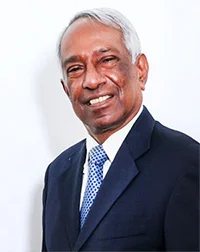 Dr B. J. C. Perera
MBBS(Cey), DCH(Cey), DCH(Eng), MD(Paediatrics), MRCP(UK), FRCP(Edin), FRCP(Lond), FRCPCH(UK), FSLCPaed, FCCP, Hony. FRCPCH(UK), Hony. FCGP(SL)
Specialist Consultant Paediatrician and Honorary Senior Fellow, Postgraduate Institute of Medicine, University of Colombo, Sri Lanka.
Joint Editor, Sri Lanka Journal of Child Health
Section Editor, Ceylon Medical Journal

In the immediate aftermath of Cyclone Ditwah, the government has moved swiftly to establish a Presidential Task Force for Rebuilding Sri Lanka with a core committee to assess requirements, set priorities, allocate resources and raise and disburse funds. Public reaction, however, has focused on the committee’s problematic composition. All eleven committee members are men, and all non-government seats are held by business personalities with no known expertise in complex national development projects, disaster management and addressing the needs of vulnerable populations. They belong to the top echelon of Sri Lanka’s private sector which has been making extraordinary profits. The government has been urged by civil society groups to reconsider the role and purpose of this task force and reconstitute it to be more representative of the country and its multiple needs.
The group of high-powered businessmen initially appointed might greatly help mobilise funds from corporates and international donors, but this group may be ill equipped to determine priorities and oversee disbursement and spending. It would be necessary to separate fundraising, fund oversight and spending prioritisation, given the different capabilities and considerations required for each. International experience in post disaster recovery shows that inclusive and representative structures are more likely to produce outcomes that are equitable, efficient and publicly accepted. Civil society, for instance, brings knowledge rooted in communities, experience in working with vulnerable groups and a capacity to question assumptions that may otherwise go unchallenged.
A positive and important development is that the government has been responsive to these criticisms and has invited at least one civil society representative to join the Rebuilding Sri Lanka committee. This decision deserves to be taken seriously and responded to positively by civil society which needs to call for more representation rather than a single representative. Such a demand would reflect an understanding that rebuilding after a national disaster cannot be undertaken by the state and the business community alone. The inclusion of civil society will strengthen transparency and public confidence, particularly at a moment when trust in institutions remains fragile. While one appointment does not in itself ensure inclusive governance, it opens the door to a more participatory approach that needs to be expanded and institutionalised.
Costly Exclusions
Going down the road of history, the absence of inclusion in government policymaking has cost the country dearly. The exclusion of others, not of one’s own community or political party, started at the very dawn of Independence in 1948. The Father of the Nation, D S Senanayake, led his government to exclude the Malaiyaha Tamil community by depriving them of their citizenship rights. Eight years later, in 1956, the Oxford educated S W R D Bandaranaike effectively excluded the Tamil speaking people from the government by making Sinhala the sole official language. These early decisions normalised exclusion as a tool of governance rather than accommodation and paved the way for seven decades of political conflict and three decades of internal war.
Exclusion has also taken place virulently on a political party basis. Both of Sri Lanka’s post Independence constitutions were decided on by the government alone. The opposition political parties voted against the new constitutions of 1972 and 1977 because they had been excluded from participating in their design. The proposals they had made were not accepted. The basic law of the country was never forged by consensus. This legacy continues to shape adversarial politics and institutional fragility. The exclusion of other communities and political parties from decision making has led to frequent reversals of government policy. Whether in education or economic regulation or foreign policy, what one government has done the successor government has undone.
Sri Lanka’s poor performance in securing the foreign investment necessary for rapid economic growth can be attributed to this factor in the main. Policy instability is not simply an economic problem but a political one rooted in narrow ownership of power. In 2022, when the people went on to the streets to protest against the government and caused it to fall, they demanded system change in which their primary focus was corruption, which had reached very high levels both literally and figuratively. The focus on corruption, as being done by the government at present, has two beneficial impacts for the government. The first is that it ensures that a minimum of resources will be wasted so that the maximum may be used for the people’s welfare.
Second Benefit
The second benefit is that by focusing on the crime of corruption, the government can disable many leaders in the opposition. The more opposition leaders who are behind bars on charges of corruption, the less competition the government faces. Yet these gains do not substitute for the deeper requirement of inclusive governance. The present government seems to have identified corruption as the problem it will emphasise. However, reducing or eliminating corruption by itself is not going to lead to rapid economic development. Corruption is not the sole reason for the absence of economic growth. The most important factor in rapid economic growth is to have government policies that are not reversed every time a new government comes to power.
For Sri Lanka to make the transition to self-sustaining and rapid economic development, it is necessary that the economic policies followed today are not reversed tomorrow. The best way to ensure continuity of policy is to be inclusive in governance. Instead of excluding those in the opposition, the mainstream opposition in particular needs to be included. In terms of system change, the government has scored high with regard to corruption. There is a general feeling that corruption in the country is much reduced compared to the past. However, with regard to inclusion the government needs to demonstrate more commitment. This was evident in the initial choice of cabinet ministers, who were nearly all men from the majority ethnic community. Important committees it formed, including the Presidential Task Force for a Clean Sri Lanka and the Rebuilding Sri Lanka Task Force, also failed at first to reflect the diversity of the country.
In a multi ethnic and multi religious society like Sri Lanka, inclusivity is not merely symbolic. It is essential for addressing diverse perspectives and fostering mutual understanding. It is important to have members of the Tamil, Muslim and other minority communities, and women who are 52 percent of the population, appointed to important decision making bodies, especially those tasked with national recovery. Without such representation, the risk is that the very communities most affected by the crisis will remain unheard, and old grievances will be reproduced in new forms. The invitation extended to civil society to participate in the Rebuilding Sri Lanka Task Force is an important beginning. Whether it becomes a turning point will depend on whether the government chooses to make inclusion a principle of governance rather than treat it as a show of concession made under pressure.
by Jehan Perera

58,454 International aircraft movements in Sri Lanka in first 11months of 2025 – Ministry of Ports and Civil Aviation

Lasith Malinga to work with the Sri Lanka Team in lead up to T20 World Cup

Highest revenue in 93-year history of Inland Revenue Department collected in 2025

Showers or thundershowers will occur at times in the Northern, Eastern, Central, North-central, North-western and Uva provinces

Israel to bar 37 aid groups from Gaza

Protests spread across Iran for third day after currency hits record low

‘Dates have the highest sugar content to fight Coronavirus’

Sunday Island 27 December – Headlines

#SundayIsland 17th December – Headlines

Sunday Island – 28th March

Sunday Island Headlines – 21 March

Sunday Island – 21st February – Headlines
-

 News7 days ago
British MP calls on Foreign Secretary to expand sanction package against ‘Sri Lankan war criminals’
-
 News6 days ago
Street vendors banned from Kandy City
-

 Sports7 days ago
Chief selector’s remarks disappointing says Mickey Arthur
-

 Opinion7 days ago
Disasters do not destroy nations; the refusal to change does
-

 Sports3 days ago
Gurusinha’s Boxing Day hundred celebrated in Melbourne
-

 News6 days ago
Lankan aircrew fly daring UN Medevac in hostile conditions in Africa
-

 Sports4 days ago
Time to close the Dickwella chapter
-

 Sports7 days ago
Royal record crushing innings win against Nalanda