
Opinion
‘Natural cycles’: Perhaps a reason for some optimism!


by Dr B. J. C. Perera
MBBS(Cey), DCH(Cey), DCH(Eng), MD(Paed), MRCP(UK), FRCP(Edin), FRCP(Lon), FRCPCH(UK), FSLCPaed, FCCP, Hony FRCPCH(UK), Hony. FCGP(SL)
Specialist Consultant Paediatrician, Honorary Senior Fellow, Postgraduate Institute of Medicine, University of Colombo, Sri Lanka, and Medical Journal Editor.
There are very many natural phenomena that act cyclically on this planet which are vital to the well-being of mankind. Some of these consist of various components of nature itself; such as carbon, oxygen, water, climate, and environmental temperature, in addition to a whole host of many other things as well. The oceans, the trees, the milieu in which we live, even natural disasters and all other endowments of nature, are all intimately related to these cyclical developments. All these sequences and rotations go in cycles where the alternate cyclical progression is repeated in a recurring fashion within certain confines and limitations imposed by Mother Nature herself.
However, this article attempts to elucidate a somewhat different type of cycles in nature where what goes around, invariably comes around as well. There are many instances of appallingly harmful occurrences that have come about, either through vagaries of nature or as man-made disastrous events, only to be followed by events that benefit mankind. For example, many countries, including Sri Lanka, from time to time, have been devastated by unbearable droughts which have gone on to cause mayhem, only to be followed quite often by periods of torrential rain and even floods. Natural disasters like tsunamis that cause untold misery and destruction are often followed by tremendously committed development of the affected areas. Floods are followed by relative dry weather and serenity that allow measures to undertake repairs to the damage caused. Wars are followed by periods of peace that allow definitive actions to be taken to mitigate the ravages of such combative conflicts. Accidental or inadvertent nuclear disasters are followed by decisive steps being taken to prevent a repetition of such catastrophes. Epidemics and pandemics are followed by medical advances that bring about weapons such as vaccines to fight against them. The list is very long and there is always some light at the end of the tunnels of desolation.
In such a context, it is of crucial importance to contemplate and reflect on the currently prevalent dire status of this pearl of the Indian Ocean. This country has been ravaged by an unprecedented pandemic, an extraordinarily virulent economic disaster, unimaginable public unrest, hitherto unknown electricity crises, crippling fuel shortages, unbearable food scarcities, terrible shortages of medicines and medical equipment, the ominously rising cost of living, as well as a whole host of other problems that appear to threaten the very existence of our nation. Almost all of these have been very definitely and undeniably caused by poor governance, rampant corruption and terribly unwise decisions taken by the powers that be, as well as a sense of indifference and acerbic obstinacy on the part of the legislators. Their stupidity most definitely knows no boundaries. The devaluing of our national currency has led to unbelievable sky-rocketing of prices with inflation going through the roof, threatening the very existence and even the right to life of the poverty-stricken and the marginalised. On the incompetent and shameful advice of certain hangers-on, the decision-makers have jumped in at the deep end without knowing how to swim even in calm shallow waters; disgraceful and dishonourable behaviour, to say the least.
The utterly disgruntled populace has come out onto the streets with protests and demonstrations that demand a political regime change. They are attempting to show very clearly that, people’s power is much more powerful than the people in power. It just might be shown up to be true, clearly and unmistakably, sooner rather than later. Many of our youth, the proverbial gems of our nation, the people on whom our future rests, wish to abandon ship and seek greener pastures in other countries, while others have elected to stay put and protest vehemently. At the present time, there is universal bleakness in the entirety of our beautiful land and the future seems so very uncertain and quite harsh. In effect, there does not seem to be even a remotely hopeful flicker of light at the end of this darkened tunnel of intense despair. We are languishing in a never-ending winter of discontent. For a large proportion of the people in our country, it may appear to be a virtually meaningless struggle for mere survival. Many believe that this is our death knell and that we will never be able to come out of this detestable quagmire.
Yet for all that, is this the end of the story for our lovely Sri Lanka? Surely and perhaps assuredly, this just cannot go on. Even the worm has turned at the moment. According to my theory of cycles, things decidedly have to change and come right back; perhaps quite emphatically for that matter. For that to occur, the necessary processes have to be catalysed and enhanced. Somebody or some people have to take this country and its people under his, her, or their, spread-out wings and turn things around. We need leaders with proven track records, not only in the political arena but much more so in all fields of life in this enchanting isle. They have to be proper leaders in the true meaning of the word itself. We need legislators who would have the wisdom, strength, honesty, courage and capabilities, to make a telling difference. They simply have to be worthy of the honours that would be showered on them, as much as deserving the power that they may wield, just to use those powers judiciously.
Politicians may and do come and they may also go, but we have to remain in our wonderful motherland. We need to get a motley crowd of people who are dedicated and honest to the core, to purposefully drag us away from this abyss of misery. Do we have people like that around? I do not know about statesmen and stateswomen but I know for sure that there are people in our land who are inherently capable, brilliant, honest and patriotic. Here, I am not talking about Sri Lankans who have made it big in other countries. I am referring to the home-grown variety; those who have stayed on in their land of birth, silently worked ever so hard while being in this country, and being neglected as well as being side-lined for all their trouble. This truly refers to the iconic words of Lakshman Kadirgamar, our Foreign Minister of yore, when he graphically implied that the cake was baked at home and only the icing was from elsewhere, far away from the shores of Sri Lanka.
On second thoughts, there perhaps are just a few politicians who might… just MIGHT… fit the bill. These are very definitely not the ones who spit out rhetoric, not those who shout from the rooftops till they are hoarse, not the suave rubbish-talking nincompoops with hidden agendas, not the ones who bask in the glory of family dynasties, not the ones who are criminals of the highest order, not the ones who would shamelessly rob our motherland, and most certainly not the types who are so stubborn and so arrogant that they think they are ‘it’. We do not need a set of worthies with delusions of grandeur nor those with personal crusades and scores to settle. What we desperately need are patriotic Sri Lankans with a futuristic vision and a committed mission, to guide our nation out of this miserable hell on earth, which is what Sri Lanka is today.
It has been said that nothing is ever over till the fat lady sings, and also that hope springs eternal in the human breast. So… be optimistic, people of Sri Lanka, and hold your heads high. We need to remind ourselves of the immortal words of President John Fitzgerald Kennedy of the United States of America in his Inaugural Address to the nation: “Ask not what your country can do for you – ask what you can do for your country“. He, President Kennedy, challenged every American to contribute in some way towards the public good. It is time that we too expectantly dared every Sri Lankan to put their collective shoulder to the wheel of progress in our country, the Motherland that desperately needs us to do such, and even more.
Towards that end, what we desperately need in this resplendent isle is the unstinted support of dedicated unselfish and honest politicians, with zero tolerance for all forms of corruption, harnessing of the positively charged bravado and the innovative spirit of the youth of our land, securing of the devoted commitment of the farmers, promoting the copious duty-consciousness of all the workers of our beloved country, and more than anything, catalysing a complete paradigm shift into a general sense of intense and compelling patriotism right throughout our birthplace.
We do hope and pray that this bountiful country will be able to rise from the ashes, just like the proverbial phoenix. We also hope and pray that in the not-too-distant future, we will be able to put our trials and tribulations far behind us, treat them like a set of ‘really bad dreams’, and sprint forwards to reach a summer of contentment, opulence and magnificence. Once that promised land is reached, we do need to take steadfast steps to look after our own people, especially the farmers who produce food for our populace. We need to put the welfare of the people of our country at the very pinnacle of prioritisation. We need to make absolutely sure that unforgivable and grave mistakes of the past are not repeated.
In such a context, we just cannot afford to leave such crucial endeavours totally to a group of our people known to all and sundry as the politicians. It is entirely up to each and every one of us to strive ever so hard to make all of it, the ever so sacred happenings of our time.
Viva Sri Lanka!


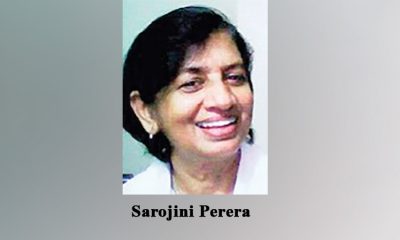
The 6th of December marked the sixth solar cycle since my adored life partner, Dr Malwattage Josephine Sarojini Perera (née Peeris), left this mortal world. Six years have elapsed; a period characterised by a searingly perpetual heartache. However, her inspiring influence is not diminished by the passage of time, and her memory has become more burnished and sublimely potent. It has transformed from a painful void into a sparkling, indestructible legacy that fortifies the hearts of all who were privileged to share her path.
The abyss left by her departure is multitudinous for all of us, including those who benefited from her professional dedication. Nevertheless, the consciousness of her magnificent journey, a spectacular 72 years, 2 months, and 11 days on this planet Earth, remains as a seamless record of a unique chronicle. It was the radiance of her inner spirit that rendered her truly peerless. She epitomised the beautiful words of one of my favourite Sri Lankan lady singers, “Beauty is how you feel inside; you glow from within.” Sarojini was a woman of monumental dignity and benevolence, whose serene, consistent luminosity brought a radiance into every room she entered. Her smile was a glorious spectacle of her lovely inner human nature; a pure expression of her soul’s integrity. That spectacularly radiant smile epitomised the immortal words of the beautiful song by Nat King Cole, “Smile though your heart is aching, smile even though it is breaking, when there are clouds in the sky, you will get by.“
Throughout her tenure on earth, she embodied the highest form of selfless service, dedicating her energies wholly to our family unit, her relatives, and all her acquaintances. She served her patients with an unreserved commitment, functioning as the very milieu of abiding reassurance for them. Her chosen field in medicine was one of profound challenges and pressing needs. She primarily worked ever so tirelessly with individuals afflicted and affected by Sexually transmitted Diseases, HIV and AIDS. They were a cohort frequently marginalised, ostracised, and terribly wounded by societal judgment. Yet, this extraordinary woman approached her work with limitless compassion and an intrinsic, deep-seated sense of humanitarian duty. She held an irrefutable conviction that beyond the stark finality of any medical diagnosis, there was a human being whose entitlement to honour, consideration, respect and warmth was absolute.
Sophocles wisely said: “One word frees us of all the weight and pain of life: That word is love.” Sarojini’s approach to life was built upon this very word ‘love’ as its foundation. She remained steadfastly true to her ethical moorings, never wavering in her commitment to assuage suffering and nurture genuine understanding. Her patients were not mere cases receiving clinical attention; they were embraced into a circle of care that extended beyond the confines of the clinic. Sarojini’s gentle disposition and empathetic spirit captivated all those who came seeking relief and comfort in her ministrations.
She extended not only medical expertise but also essential emotional ballast, serving as a critical beacon of optimism in times of the most profound darkness and utter despair. Her engagement was holistic; she saw the complete person, not just the disease. The philosopher Kahlil Gibran expressed a sentiment that describes the core values of her life: “You give but little when you give of your possessions. It is when you give of yourself that you truly give.” Her affection emanated as a gentle, regenerative anodyne, calming the distressed spirits of those sighing in overwhelming heartache. Her bequest in this vital domain of medicine is not merely a record of treatments, but a register of hearts healed and spirits uplifted by unconditional acceptance and love.
Beyond her professional life, Sarojini was the gravitational centre of our existence; a loving spouse, an undaunted mother, and a precious confidante. The habitat and the canvas of love we built together were a haven of affection and composure, a place where joy thrived, and the air was often vibrant with shared merriment. She cultivated her family with boundless tenderness, sowing and nurturing the essential precepts of benevolence, rectitude, and resilience within us. In return, we never made her cry, but sometimes she cried for others, and some made her cry too.
Her capacity for quiet strength was remarkable; she could maintain perfect equilibrium even when confronted with severe setbacks, always taking deliberate, measured steps to restore serenity and balance. Her affection is a vibrant force that persists in the deepest recesses of our hearts, a covenant that triumphantly surpasses the limitations of physical existence and the transience of life. The deep impact of her role as a matriarch cannot be overstated; she was the silent architect of our moral framework and emotional stability, and the queen of our hearts.
As we reflect on her exceptional life and the vast bounty of goodness she left behind, our determination is not to be subdued by the grief of her physical absence, but rather, to eulogise the radiant splendour of her time amongst us. It is a legacy beyond epithets and the true portrayal of the lilting music of remembrance. We feel the unremitting pain of missing her absolutely and profoundly. She may have transitioned from this worldly realm, but her vital essence remains inextricably bound to ours, steering us with her quiet wisdom and inspiring us with her incomparable dignity. Sarojini’s life stands as an eternal affidavit to the transformative power of enduring love, deep empathy, and sacrificial duty. It remains a boon that richly augments our present and illuminates our future. True beauty, as she demonstrated, is not simply what the eyes can witness, but, more crucially, what the soul can permanently safeguard. What we perceive visually is destined to fade, but the treasures we store within our hearts will remain eternally.
Many, including myself, our daughter Maneesha and our grandchildren, Joshua, Malaika and Jaydon, have endeavoured with every available adjective and hyperbolic utterance to paint a faithful portrait of the superlative person that was Sarojini. Yet, even if we were to compile tomes detailing her excellence, the effort would still fall short of creating a realistic depiction that truly captures her profile. It is simply impossible to confine a description of her magnificence to even a substantial plethora of words.
For my part, I had the wonderful pleasure of the company of that stunning lady for all those blessed years, from the dawn of our courtship in 1973 until her fateful day of final rest. Despite the finality of that separation, memories remain the ultimate constant. I will forever recall her life as an exquisite and enduring strand, a beautiful composition, that will never diminish and will reverberate throughout the balance of my time on this planet Earth.
Sarojini, your loved ones strive daily to revere your memory by actively embodying the virtues you demonstrated so effortlessly: boundless compassion, humane benevolence, unbridled affection, and an unwavering commitment to the welfare of others. This is a matter of seminal importance to us, as it is a pledge towards the continuity of the very matrix of your tapestry of life on Mother Earth.
Darling Sara, I will end with a couple of lines from the 1996 Quadruple Chart Topper, “Because You Loved Me” by Celine Dion, which very concisely sums up what you were to me: –
“You’ve been my inspiration.
Through the lies, you were the truth.
My world is a better place because of you.”
by Dr B. J. C. Perera
(This appreciation appeared in The Island online edition on 06 Dec. 2025)

Sri Lanka is facing one of its worst simultaneous flood and landslide disasters in many decades, with nearly two million people affected and more than 820 reported dead or missing after Cyclone Ditwah unleashed catastrophic flooding and landslides across the island. After 2004 Tsunami tidal wave disaster, this disaster has brought havoc in the life of Sri Lankans.
The human toll of Cyclone Ditwah continues to mount in Sri Lanka, with 481 confirmed deaths and 345 people still missing, according to the latest situation report issued by the Disaster Management Center.
The cyclone has left a trail of devastation across all 25 districts of the country, affecting 509,680 families and 1,814,534 individuals. Matara, Galle, and Hambantota have been less affected by recent heavy rains and flooding in Sri Lanka, with warnings issued and some minor flooding reported in Matara, and landslide risks in all three areas due to heavy downpours from the current monsoon, though some reports suggest they were less severely hit than districts like Kandy, Gampaha and Colombo.
The hardest-hit districts include Kandy, reporting the highest fatalities at 118 deaths and 171 missing, followed by Badulla (83 deaths), Nuwara Eliya (89 deaths), and Kurunegala (56 deaths). Other districts such as Kegalle (30 deaths) and Puttalam (29 deaths) have also suffered significant losses. Beyond the tragic loss of life, the cyclone has caused 1,967 homes to be completely destroyed and 50,173 partially damaged, leaving thousands displaced. Relief efforts are underway, with 1,236 safety centers currently sheltering 48,559 families (171,492 persons).
Infrastructure damage is extensive, with roads, bridges, irrigation systems, and transport networks severely affected or rendered inoperable.
Emergency teams are working tirelessly to restore essential services and prevent secondary crises, such as disease outbreaks.
The people of Sri Lanka have suffered widespread losses and damages in different parts of the country due to the wind and rain associated with Cyclone Ditwah. Stormy winds caused trees to fall and inflicted damage on houses and shops. Hundreds of homes have been partially or completely destroyed due to landslides.
Floodwaters have entered houses, shops, school buildings, hospitals, public buildings, roads, gardens, and agricultural fields, causing extensive damage. Most fatalities resulted from drowning or suffocation caused by injuries sustained in the floods and related landslides. Many people are experiencing trauma and other health impacts.
In addition, floodwaters have rendered mattresses, pillows, and clothing unusable, while electrical appliances and household items, including cooking utensils, have been damaged or destroyed. Thousands of bicycles, motorcycles, cars, vans, trucks, and buses have broken down due to water and mud infiltration, with some vehicles completely lost or missing.
Losses caused by these storms, floods, and landslides are extensive. Accurate information about the affected population and material losses must be collected from reliable local sources, such as mosques, temples, village offices, and community leaders. In many areas, this information is currently unavailable. Data collection must be conducted in such a way assess the immediate requirements and follow up actions and each village wise data collection should include details such as the number of people affected, the extent of material losses, Urgent needs of the affected population, immediate rescue actions to save life.
It is essential to identify measures required to restore communities to their normal state as quickly as possible. The immediate needs of the people must be properly assessed, because rescue and relief operations are the highest priority after a disaster.
Key emergency actions include:
· Saving lives: Injured individuals must receive prompt medical treatment. Survivors trapped in broken houses or collapsed buildings must be rescued.
· Handling the deceased
: The bodies of those who have died should be recovered and cremated according to their respective customs.
· Medical and food support
: Those rescued from rubble should be provided with immediate medical attention and appropriate food and water.
· Rescue operations
: Priority must be given to rescuing people trapped alive inside collapsed or buried buildings.
· Support for the displaced
: Food and water should be provided to individuals displaced by the disaster, whether they are staying in temporary shelters or with friends and relatives. In the early days after the disaster, cooked meals should be prioritised for large numbers of people, continuing as long as they remain in temporary accommodations.
The immediate needs of the people must be properly assessed, because rescue is the priority in the aftermath of a disaster. Saving lives is essential. Providing medical treatment to the injured, rescuing affected individuals, and guiding them to safe areas or shelters must be carried out without delay.
In addition, information must be quickly collected regarding areas where flood levels are dangerously high or above head level, locations affected by landslides, missing persons, the number of houses buried, and the number of people involved. These details should be obtained promptly through places of worship, knowledgeable community members, village officers, and other reliable sources, and then reported to the relevant authorities.
It is the people in the neighbourhood who are the first to be involved in disaster rescue operations. Therefore, essential information must be shared with them so they can act quickly and effectively.
Individuals who are trapped alive in collapsed houses or buildings must be rescued without delay. The bodies of those who have died should be handled and cremated in accordance with their respective religious customs and traditions.
Those rescued from the debris should receive immediate medical attention. While providing food, it is important to avoid giving solid meals to individuals with suspected fractures or injuries that may require urgent surgery. In such cases, only liquids may be given, and even that should be based on medical advice. A qualified doctor must assess the nature of the injury and confirm whether the person can be fed.
Meanwhile, rescue operations must be given top priority during avalanches, with immediate efforts focused on saving people who are trapped alive inside collapsed or buried buildings.
At the same time, food and water should be provided to those who have been displaced by these disasters and are staying in temporary shelters, as well as in the homes of friends and relatives. In the initial days, it is advisable to provide cooked meals, as this is the most practical and efficient way to support large numbers of affected people. Cooked food should continue to be supplied as long as they remain in temporary accommodations.
Once the disaster subsides and the floodwaters begin to recede, people will gradually return to their homes. At this stage too, their health and well-being must be considered. If floodwater has entered their houses, it may take at least three days to clean and restore them. Providing cooked food during these three days will be a considerable relief for the affected families.
If water has entered the homes of returning families, their food supplies, clothing, mattresses, and other items kept at floor level will have become wet and unusable. Therefore mats, pillows, two sets of clothing and adequate dry rations should be provided to those in need. Dry rations should be distributed in quantities sufficient to meet a family’s weekly requirements. If clothing is to be provided, it is best to supply new clothes.
At the same time, houses, schools, and places of worship in disaster-affected areas must be cleaned. Youth groups should take the initiative in assisting with the cleaning of homes. Working in organized teams to clean houses, compounds, and public buildings will help complete the work quickly and efficiently.
Those who participate in cleaning operations must carry proper safety gear such as boots, gloves, soap, adequate drinking water, food items, and adequate number of clothes for their own protection. They should also bring essential tools and equipment, including shovels, pickaxes, hammers, wrenches, garbage pickers, and single-wheel pushcarts. In addition, the use of larger equipment such as small and large backhoe machines, water pumps, wood-cutting tools, knives, garbage collection bags, buckets, and other necessary items will significantly improve the speed and effectiveness of recovery and cleaning efforts.
Carrying a gas cylinder and a portable gas cooker will also be useful for preparing meals during cleaning and recovery operations.
APPRECIATE SUPPORT OF ALL NATIONS
We express our sincere gratitude to all the countries that extended a helping hand during this calamity. India’s immediate relief and rescue assistance is especially commendable. Likewise, on behalf of all Sri Lankans, we convey our heartfelt appreciation to China, the United States of America, Japan, the Maldives, the United Arab Emirates, Qatar, Bangladesh, the Netherlands, and all other nations that stood with us at this critical moment.
We also gratefully acknowledge the contributions of local citizens, volunteers, and foreign nationals who took part in the rescue and recovery operations.
by M. S. M. Jansin
Management Consultant

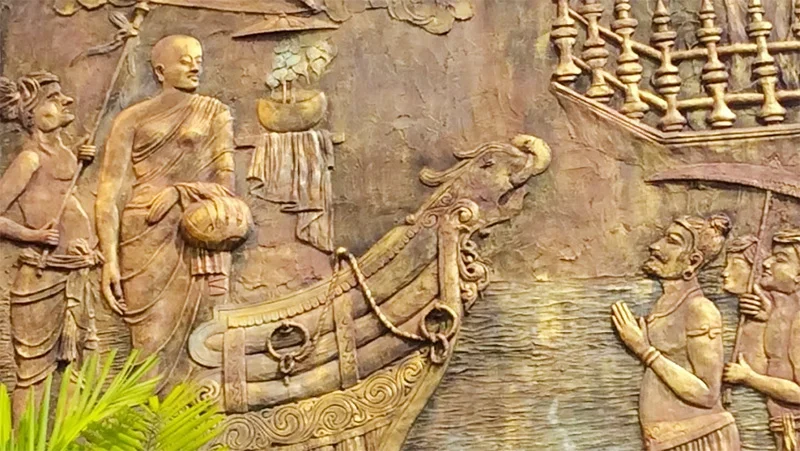
Unduvap Poya, which falls today, has great historical significance for Sri Lanka, as several important events occurred on that day but before looking into these, as the occasion demands, our first thought should be about impermanence. One of the cornerstones of Buddha’s teachings is impermanence and there is no better time to ponder over it than now, as the unfolding events of the unprecedented natural disaster exemplify it. Who would have imagined, even a few days ago, the scenes of total devastation we are witnessing now; vast swathes of the country under floodwaters due to torrential rain, multitudes of earth slips burying alive entire families with their hard-built properties and closing multiple trunk roads bringing the country to a virtual standstill. The best of human kindness is also amply demonstrated as many risk their own lives to help those in distress.
In the struggle of life, we are attached and accumulate many things, wanted and unwanted, including wealth overlooking the fact that all this could disappear in a flash, as happened to an unfortunate few during this calamitous time. Even the survivors, though they are happy that they survived, are left with anxiety, apprehension, and sorrow, all of which is due to attachment. We are attached to things because we fail to realise the importance of impermanence. If we do, we would be less attached and less affected. Realisation of the impermanent nature of everything is the first step towards ultimate detachment.
It was on a day like this that Arahant Bhikkhuni Sanghamitta arrived in Lanka Deepa bringing with her a sapling of the Sri Maha Bodhi tree under which Prince Siddhartha attained Enlightenment. She was sent by her father Emperor Ashoka, at the request of Arahant Mahinda who had arrived earlier and established Buddhism formally under the royal patronage of King Devanampiyatissa. With the very successful establishment of Bhikkhu Sasana, as there was a strong clamour for the establishment of Bhikkhuni Sasana as well, Arahant Mahinda requested his father to send his sister which was agreed to by Emperor Ashoka, though reluctantly as he would be losing two of his children. In fact, both served Lanka Deepa till their death, never returning to the country of their birth. Though Arahant Sanghamitta’s main mission was otherwise, her bringing a sapling of the Bo tree has left an indelible imprint in the annals of our history.
According to chronicles, King Devanampiyatissa planted the Bo sapling in Mahamevnawa Park in Anuradhapura in 288 BCE, which continues to thrive, making it the oldest living human planted tree in the world with a known planting date. It is a treasure that needs to be respected and protected at all costs. However, not so long ago it was nearly destroyed by the idiocy of worshippers who poured milk on the roots. Devotion clouding reality, they overlooked the fact that a tree needs water, not milk!
A monk developed a new practice of Bodhi Puja, which even today attracts droves of devotees and has become a ritual. This would have been the last thing the Buddha wanted! He expressed gratitude by gazing at the tree, which gave him shelter during the most crucial of times, for a week but did not want his followers to go around worshipping similar trees growing all over. Instead of following the path the Buddha laid for us, we seem keen on inventing new rituals to indulge in!
Arahant Sanghamitta achieved her prime objective by establishing the Bhikkhuni Sasana which thrived for nearly 1200 years till it fell into decline with the fall of the Anuradhapura kingdom. Unfortunately, during the Polonnaruwa period that followed the influence of Hinduism over Buddhism increased and some of the Buddhist values like equality of sexes and anti-casteism were lost. Subsequently, even the Bhikkhu Sasana went into decline. Higher ordination for Bhikkhus was re-established in 1753 CE with the visit of Upali Maha Thera from Siam which formed the basis of Siam Maha Nikaya. Upali Maha Thero is also credited with reorganising Kandy Esala Perahera to be the annual Procession of the Temple of Tooth, which was previously centred around the worship of deities, by getting a royal decree: “Henceforth Gods and men are to follow the Buddha”
In 1764 CE, Siyam Nikaya imposed a ‘Govigama and Radala’ exclusivity, disregarding a fundamental tenet of the Buddha, apparently in response to an order from the King! Fortunately, Buddhism was saved from the idiocy of Siyam Nikaya by the formation of Amarapura Nikaya in 1800 CE and Ramanna Nikaya in 1864 CE, higher ordination for both obtained from Burma. None of these Niakya’s showed any interest in the re-establishment of Bhikkhuni Sasana which was left to a band of interested and determined ladies.
My thoughts and admiration, on the day Bhikkhuni Sasana was originally established, go to these pioneers whose determination knew no bounds. They overcame enormous difficulties and obtained higher ordination from South Korea initially. Fortunately, Ven. Inamaluwe Sri Sumangala Thero, Maha Nayaka of Rangiri Dambulla Chapter of Siyam Maha Nikaya started offering higher ordination to Bhikkhunis in 1998 but state recognition became a sore point. When Venerable Welimada Dhammadinna Bhikkhuni was denied official recognition as a Bhikkhuni on her national identity card she filed action, with the support of Ven. Inamaluwe Sri Sumangala Thero. In a landmark majority judgement delivered on 16 June, the Supreme Court ruled that the fundamental rights of Ven. Dhammadinna were breached and also Bhikkhuni Sasana was re-established in Sri Lanka. As this judgement did not receive wide publicity, I wrote a piece titled “Buddhism, Bhikkhus and Bhikkhunis” (The Island, 10 July 2025) and my wish for this Unduvap Poya is what I stated therein:
“The landmark legal battle won by Bhikkhunis is a victory for common sense more than anything else. I hope it will help Bhikkhuni Sasana flourish in Sri Lanka. The number of devotees inviting Bhikkhunis to religious functions is increasing. May Bhikkhunis receive the recognition they richly deserve.” May there be a rapid return to normalcy from the current tragic situation.”
by Dr Upul Wijayawardhana

Jetstar to launch Australia’s only low-cost direct flights to Sri Lanka, with fares from just $315^

Starmer to host Zelensky for Ukraine talks in London

Benin coup thwarted by loyalist troops, president tells nation

Laws to curb unauthorised constructions to be strengthened

Van Niekerk cameo, Tunnicliffe fifty give South Africa series win

627 confirmed dead, 190 persons missing as at 6:00 a.m. today [08]

‘Dates have the highest sugar content to fight Coronavirus’

Sunday Island 27 December – Headlines

#SundayIsland 17th December – Headlines

Sunday Island – 28th March

Sunday Island Headlines – 21 March

Sunday Island – 21st February – Headlines
-
News5 days ago
Lunuwila tragedy not caused by those videoing Bell 212: SLAF
-

 News7 hours ago
Over 35,000 drug offenders nabbed in 36 days
-
 News4 days ago
Level III landslide early warning continue to be in force in the districts of Kandy, Kegalle, Kurunegala and Matale
-
 Latest News7 days ago
Level III landslide early warnings issued to the districts of Badulla, Kandy, Kegalle, Kurunegala, Matale and Nuwara-Eliya
-
 Features6 days ago
Ditwah: An unusual cyclone
-

 Business2 days ago
LOLC Finance Factoring powers business growth
-

 News2 days ago
CPC delegation meets JVP for talks on disaster response
-
 News2 days ago
A 6th Year Accolade: The Eternal Opulence of My Fair Lady