
News
MPLRAG accuses Muslim MPs of stonewalling reforms to protect the rights of their women and children


Muslim Personal Law Reforms Action Group (MPLRAG) on Friday (14) alleged that Muslim MPs continued to thwart attempts made to amend the Muslim Marriage and Divorce Act (MMDA) to protect the rights of women and children.
MPLRAG said in a letter dated 8 June 2023, 18 Muslim MPs had submitted recommendations in response to the Draft Bill on MMDA Reforms to Minister of Justice Wijeyadasa Rajapakshe.
Issuing a press release, it said, “The MPs’ recommendations categorically oppose all progressive reform reflected in the draft Bill, presented by the Ministry of Justice, based on the recent report of the 2021 Advisory Committee on MMDA Reforms. They even regress on progressive positions that were unanimously agreed on by all members of the previous 2009 committee headed by Justice Saleem Marsoof,” MPLRAG said.
The signatories to the MPs’ letter were A. H. M. Fowzie, Rishad Bathiudeen, Kabir Hashim, A. L. M. Athaulla, Naseer Ahamed, M.S. Thowfeek, Ishak Rahuman, Imtiaz Bakeer Markar, S.M. Marikkar, Marjan Faleel, A. H. M. Abdul Haleem, K. Cader Masthan, S.M.M. Muszhaaraff, Faizal Cassim, Ali Sabri Raheem, Imran Maharoof and M. Muzzamil.
MPLRAG alleged that the MPs recommend that the bride’s signature on the marriage register to have no value without a male guardian signing, denying women their autonomy.
The MPs have also recommended to maintain the Quazi system without any changes, including criteria and process for appointing Quazis, MPLRAG said.
“Among other recommendations are; exceptions to minimum age of marriage to allow under 18 year-olds to marry; rejection of equal divorce procedures and retaining the current highly discriminatory divorce system and procedures; rejection of new provisions (introduced in the draft Bill) for sharing of matrimonial property and securing the best interests of children; and maintaining the discrimination between different sects and madhabs (schools of jurisprudence) of Muslims in Sri Lanka,” MPLRAG said.
The organization said that there is a lack of consistency in Muslim MPs’ positions and that views expressed in their recent letter directly contradict the positions taken by many of the very same MPs, publicly, on 11 July 2019, in Parliament, when 12 Muslim MPs agreed that 18 would be the minimum age of marriage without exceptions; that the positions of Quazi and marriage registrar be open to Muslim women; that maintenance be decided by the regular courts; and that Quazis would have a minimum professional qualification of Attorney-at-Law.
“The new recommendations also contradict the endorsement by 13 Muslim MPs of the positions submitted by the predominantly male Muslim Civil Society Alliance, including the All Ceylon Jamiyyathul Ulama (ACJU) to the Ministry of Justice, on 18 November 2022. Again, there was agreement that the minimum age of marriage be 18 years that women may be appointed as Quazi, that signature of wali (guardian) be optional, thereby not invalidating a marriage simply because the wali does not sign, and that Quazis have at minimum the qualification of Attorney-at-Law. It appears that the Muslim MPs’ recent change of heart and mind has been facilitated by highly-private, exclusive deliberations that took place between the MPs and the ACJU in June 2023,” MPLRAG said.
They said the extremely conservative and discriminatory positions taken by the Muslim MP signatories undermine decades of work of women activists working under the harshest of conditions to bring to light the serious and harmful injustices that have occurred under the cover of the MMDA.
It also dismisses the work of six state-appointed committees of experts spanning a period of over 60 years. “The failure to respond to the real issues affecting the intimate lives of Muslim citizens is a reflection of narrow political self-interests rather than the wellbeing of Muslim communities. It is a disservice to the representative responsibility the MPs bear, especially to those most affected and suffering injustice, who are still waiting for relief,” MPLRAG said.




The Royal Navy of Oman Vessel “SADH” which arrived in Sri Lanka for replenishment purpose, departed the island on 12 Feb 26.
In accordance with naval tradition, the Sri Lanka Navy extended a customary farewell to the departing ship.

The Minister of Education, Higher Education and Vocational Education Prime Minister Dr. Harini Amarasuriya stated that aligning with the development activities carried out under the new education reforms, decisions at the rural level will not be taken from Colombo and plans should be sent based on the requirements of the rural level through the District Coordination Committees by structural committees. She further noted that all officials, from the Ministry of Education down to the school level, must commit to working efficiently and with a human-centered approach.
The Prime Minister made these remarks while addressing a discussion held with education authorities of the Hambantota District on Thursday [February 12] at the auditorium of the Hambantota District Secretariat regarding the new education reforms and prevailing issues in the education sector.
During the meeting, the Prime Minister provided an opportunity for education authorities including chief prelates of pirivenas, zonal education directors, teacher advisors, and principals to present the challenges they face and officials raised concerns including salary disparities among principals, developing school infrastructure, issues arising from the division between national and provincial schools, and uplifting pirivena education.
Further elaborating, Prime Minister stated:
“The new education reforms were initiated from 2025 through dialogue, consultations, and the collection of necessary data. As officials, you have extended your support to us during this process. We have embarked on a difficult and long journey, and we look forward to your continued cooperation.
We initiated these reforms in response to a strong social demand. Many have attempted such reforms at different times. Within our political vision, we understood clearly that if this country is to be rebuilt, an educational transformation is essential. The human resource is the most valuable resource of this country and it should be nurtured properly.
Solutions to many of the crises our country faces lie within the education system. Addressing the issues in economic challenges, social issues, drug abuse, violence, the breakdown of political culture, corruption, waste, and even the deterioration of human relationships all lie within the education.
In order to achieve the transformation we envision as a government, that an education transformation is necessary.
This education system should focus on reducing the pressures within the system, minimize school dropouts, increase employability, and instill confidence in children about their future.
There are disparities within the school system, between rural and urban schools, national and provincial schools, and difficult schools. This should not happen. All children must have equal opportunities.
Decisions regarding the establishment of schools or expansion of classes should not be political decisions. They must be decisions taken through Structural Committees. Those representatives understand their divisions, village economies, and population dynamics. Based on your decisions and assessments of needs, prepare the plans, discuss them with the District Coordination Committees, and submit them to us. We will then take steps to provide the necessary allocations and other support. We will not make decisions for the rural level while sitting in Colombo.
We are taking steps to minimize salary disparities. A Cabinet paper regarding the salary anomalies of principals has already been prepared for submission. Steps are also being taken to introduce new reforms in pirivena education through the Pirivena Committee of the Ministry of Education. We require the support of the chief prelates in this regard.
A significant number of teachers turn to human rights due to delays caused by inefficiency. Therefore, all officials from the Ministry of Education down to the schools must commit to working efficiently and in a humane manner”
The discussion was attended by Chief prelates of pirivenas, deputy ministers, Members of Parliament, zonal directors, principals, and other education sector officials.


[Prime Minister’s Media Division]

The Landslide Early Warning Center of the National Building Research Organisation [NBRO] has issued landslide early warnings to the districts of Kandy and Nuwara Eliya valid from 06:00 hrs on 13.02.2026 to 06:00 hrs on 14.02.2026
Accordingly,
Level II [AMBER] landslide early warnings have been issued to the Divisional Secretaries Divisions and surrounding areas of Walapane and Nildandahinna in the Nuwara Eliya district.
Level I [YELLOW] landslide early warnings have been issued to the Divisional Secretaries Divisions and surrounding areas of Pathahewheta in the Kandy district.

Aryansh Sharma, Sohaib Khan power UAE to thrilling win over Canada

Royal Navy of Oman Vessel “SADH” departs island

Muzarabani, Bennett orchestrate famous Zimbabwe win

“We will not make decisions for rural level schools while sitting in Colombo” – PM

USA need to overturn history to beat Netherlands and stay alive

Paul Stirling ruled out of World Cup with knee injury

‘Dates have the highest sugar content to fight Coronavirus’

Sunday Island 27 December – Headlines

#SundayIsland 17th December – Headlines

Sunday Island – 28th March

Sunday Island Headlines – 21 March

Sunday Island – 21st February – Headlines
-
 Features6 days ago
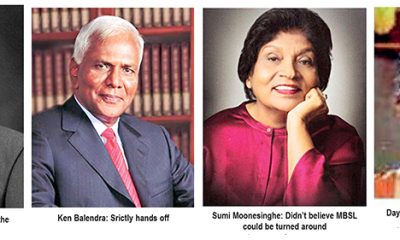
My experience in turning around the Merchant Bank of Sri Lanka (MBSL) – Episode 3
-

 Business7 days ago
Zone24x7 enters 2026 with strong momentum, reinforcing its role as an enterprise AI and automation partner
-

 Business6 days ago
Remotely conducted Business Forum in Paris attracts reputed French companies
-
 Business6 days ago
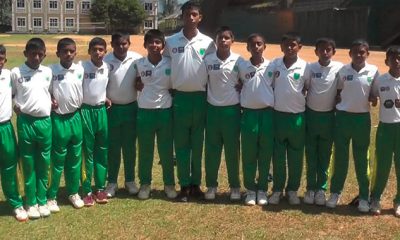
Four runs, a thousand dreams: How a small-town school bowled its way into the record books
-

 Business6 days ago
ComBank and Hayleys Mobility redefine sustainable mobility with flexible leasing solutions
-

 Business3 days ago
Autodoc 360 relocates to reinforce commitment to premium auto care
-
 Midweek Review3 days ago
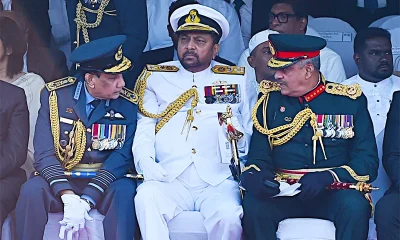
A question of national pride
-
 Business7 days ago
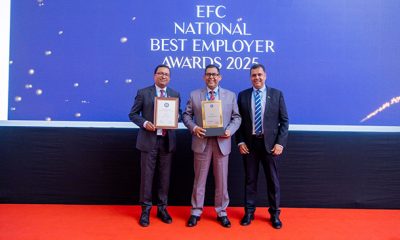
HNB recognized among Top 10 Best Employers of 2025 at the EFC National Best Employer Awards