
News
MoE and UNICEF spearhead national initiative to recover lost learning for 1.6 million primary schoolchildren across Sri Lanka


The Ministry of Education (MoE) and UNICEF spearhead a national initiative to help 1.6 million primary schoolchildren, impacted by prolonged school closures and sporadic disruptions to their education, over the past three years, due to Covid and the economic crisis, to catch up on their learning.
According to an MoE-led national assessment, 85% of Grade 3 children are not achieving minimum proficiency in literacy and numeracy, which is essential in their transition to secondary school and beyond, both in life and work.
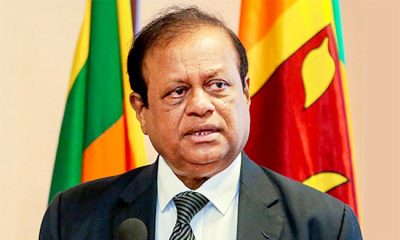
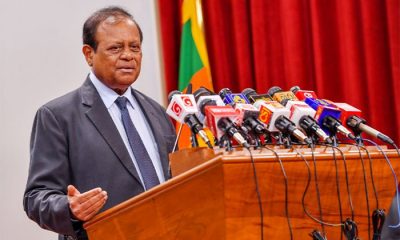
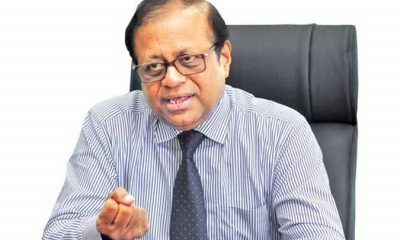
The event was held under the leadership of the Minister of Education, Susil Premajayantha, MP, along with the UNICEF Representative for Sri Lanka, Christian Skoog, and was attended by government and development partners.
Currently, Sri Lanka allocates less than 2% of its GDP on education, which falls well below the international benchmark of 4-6% of GDP and is among the lowest in the South Asia region.
“There is an urgent need to increase the national budget allocation for education, especially for primary grades, where we need to boost foundational learning for children, while also ensuring the implementation of vital Education Reforms so that we can build the solid human resource skills needed to support the country’s development,” said the Minister of Education.
The learning crisis has affected vulnerable children the most, including younger children in primary grades and those in plantation estates in the country.
“The basics of literacy, numeracy, and social economic skills are the platform on which children build their own, their families, their communities, and their country’s future,” said the UNICEF Representative for Sri Lanka. “We commend the MoE for its commitment to undertake urgent efforts to reverse the widening disparities in learning achievement for children who are lagging further behind, including slow learners, and missing out due to the continued hardship the country faces,” he said.
In July, the MoE and UNICEF held a special briefing on ‘Learning Recovery’ to leverage the support of development partners, while more technical-level workshops were held across nine provinces, to identify gaps and prioritize actions.







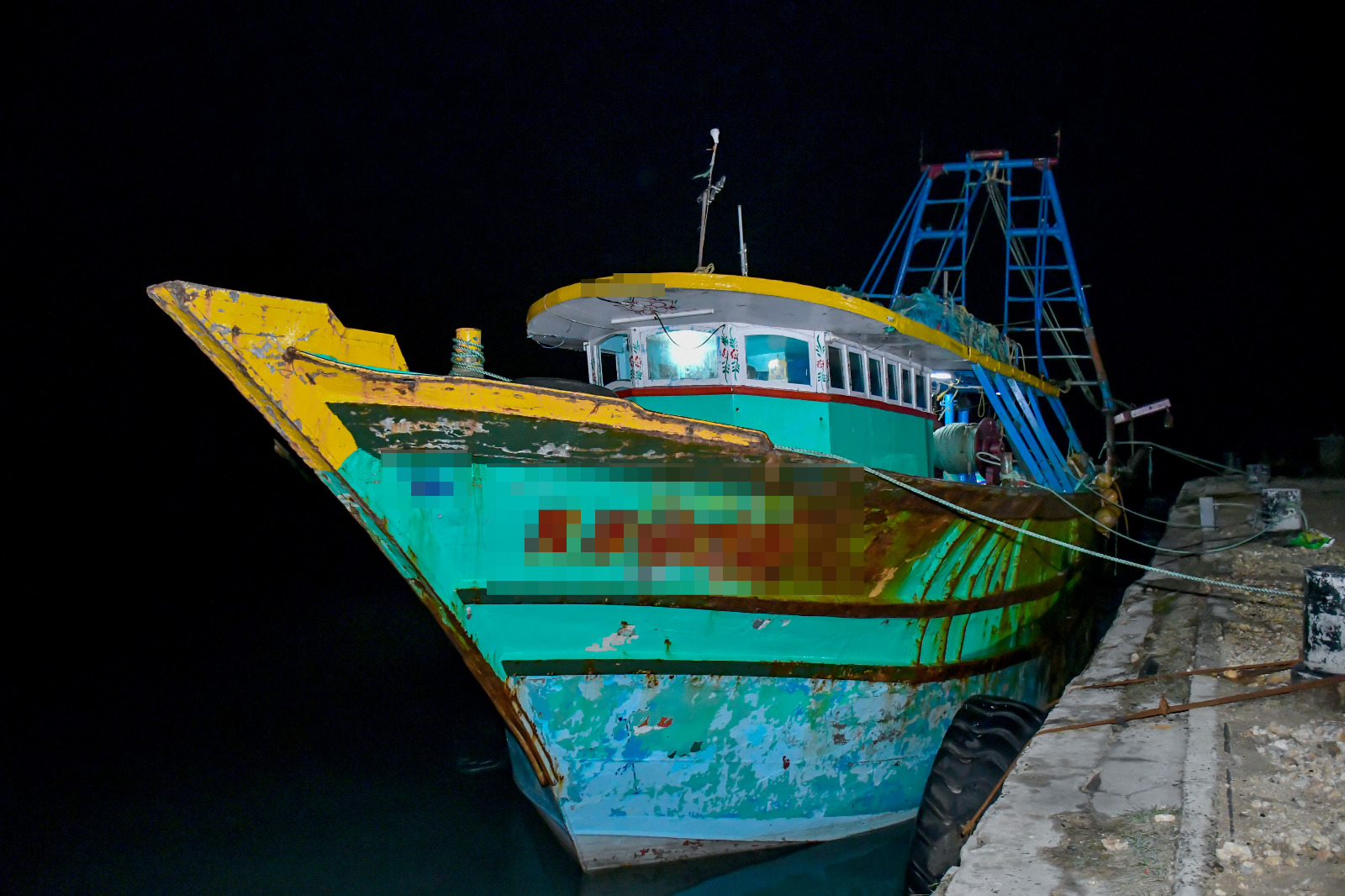
During an operation conducted in the dark hours of 01 Jan 26, the Sri Lanka Navy seized an Indian fishing boat and apprehended 11 Indian fishermen while they were poaching in Sri Lankan waters, off Kovilan of Kareinagar, Jaffna.
The Northern Naval Command spotted a group of Indian fishing boats engaging in illegal fishing, trespassing into Sri Lankan waters. In response, naval craft of the Northern Naval Command were deployed to drive away those Indian fishing boats from island waters off Kovilan.
Meanwhile, compliant boarding made by naval personnel resulted in the seizure of one Indian fishing boat and apprehension of 11 Indian fishermen who continued to engage in illegal fishing in Sri Lankan waters.
The seized boat (01) and Indian fishermen (11) were handed over to the Fisheries Inspector of Myliddy, Jaffna for onward legal proceedings.
Latest News
Tri-Forces donate LKR. 372 million, a day’s pay of all ranks to ‘Rebuilding Sri Lanka’ Fund

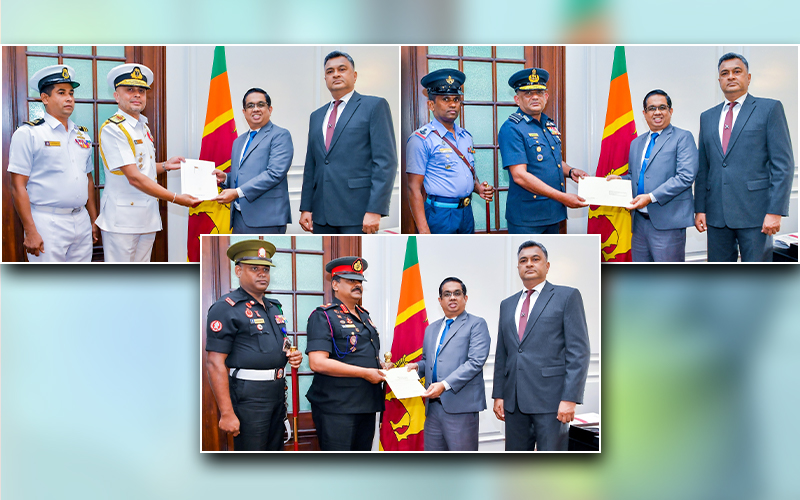
Members of all ranks from the Sri Lanka Army, Sri Lanka Navy and Sri Lanka Air Force have collectively donated a day’s basic salary to the ‘Rebuilding Sri Lanka’ Fund, which was established to restore livelihoods and rebuild the country following the devastation caused by Cyclone Ditwah.
Accordingly, the total contribution made by the Tri-Forces amounts to LKR. 372,776,918.28.
The cheques representing the financial contributions were handed over on Wednesday (31 December) at the Presidential Secretariat to the Secretary to the President, Dr. Nandika Sanath Kumanayake.
The donations comprised LKR. 250 million from the Commander of the Army, Major General Lasantha Rodrigo; LKR. 73,963,879.71 from the Commander of the Navy, Rear Admiral Kanchana Banagoda and LKR. 48,813,038.97 from the Commander of the Air Force, Air Marshal Vasu Bandu Edirisinghe.
Secretary to the Ministry of Defence, Air Vice Marshal Sampath Thuyacontha, was also present on the occasion.
The Ceylon Electricity Board (CEB) has submitted a proposal to the Public Utilities Commission of Sri Lanka (PUCSL) seeking an 11.57 percent increase in electricity tariffs for the first quarter of 2026, citing an estimated revenue shortfall and additional financial pressures, including cyclone-related damages.
According to documents issued by the PUCSL, the proposed tariff revision would apply to electricity consumption from January to March 2026 and includes changes to both energy charges and fixed monthly charges across all consumer categories, including domestic, religious, industrial, commercial and other users.
Under the proposal, domestic electricity consumers would face increases in unit rates as well as fixed monthly charges across all consumption blocks.
The CEB has estimated a deficit of Rs. 13,094 million for the first quarter of 2026, which it says necessitates the proposed 11.57 per cent tariff hike. The utility has noted that any deviation from this estimate whether a surplus or a shortfall will be adjusted through the Bulk Supply Tariff Adjustment (BSTA) mechanism and taken into account in the next tariff revision.
In its submission, the CEB said the proposed revision is aimed at ensuring the financial and operational stability of the power sector and mitigating potential risks to the reliability of electricity supply. The board-approved tariff structure for the first quarter of 2026 has been submitted to the PUCSL for approval and subsequent implementation, as outlined in Annex II of the proposal.
The CEB has also highlighted the financial impact of Cyclone Ditwah, which it said caused extensive damage to electricity infrastructure, with total losses estimated at around Rs. 20 billion. Of this amount, Rs. 7,016.52 million has been attributed to the first quarter of 2026, which the utility said has a direct bearing on electricity tariffs.
The CEB warned that if external funding is not secured to cover the cyclone-related expenditure, the costs incurred would need to be recovered through electricity tariffs in the second-quarter revision of 2026.
Meanwhile, the PUCSL has said that a decision on whether to approve the proposed tariff increase will be made only after following due regulatory procedures and holding discussions on the matter.
By Sujeewa Thathsara ✍️

Two people killed in magnitude 6.5 earthquake in Mexico

President Trump says the US has ‘captured’ Venezuelan President Nicolas Maduro and his wife and flown them out of the country

Navy seize an Indian fishing boat poaching in northern waters

US Coast Guard suspends search for survivors of Pacific boat strike

Venezuela’s capital hit by explosions, Caracas blames the US

Tri-Forces donate LKR. 372 million, a day’s pay of all ranks to ‘Rebuilding Sri Lanka’ Fund

‘Dates have the highest sugar content to fight Coronavirus’

Sunday Island 27 December – Headlines

#SundayIsland 17th December – Headlines

Sunday Island – 28th March

Sunday Island Headlines – 21 March

Sunday Island – 21st February – Headlines
-

 Sports6 days ago
Gurusinha’s Boxing Day hundred celebrated in Melbourne
-
 News4 days ago
Leading the Nation’s Connectivity Recovery Amid Unprecedented Challenges
-

 Sports7 days ago
Time to close the Dickwella chapter
-

 Features5 days ago
It’s all over for Maxi Rozairo
-

 News7 days ago
Environmentalists warn Sri Lanka’s ecological safeguards are failing
-
 News5 days ago
Dr. Bellana: “I was removed as NHSL Deputy Director for exposing Rs. 900 mn fraud”
-

 Opinion3 days ago
Remembering Douglas Devananda on New Year’s Day 2026
-

 News4 days ago
Dons on warpath over alleged undue interference in university governance