
Editorial
May Day and Mayday

Saturday 1st May, 2021
This year’s International Workers’ Day has dawned while the global population is grappling with an unprecedented health emergency, which has taken a heavy toll on the world of work. More than 114 million people reportedly lost their jobs the world over, in 2020, owing to the Covid-19 pandemic. The International Labour Organisation says the working hours lost, last year, were equivalent to 225 million full-time jobs and caused a staggering loss of labour income to the tune of USD 3.7 trillion. It does not expect the global working hours to return to the pre-pandemic levels in the current year. This is an extremely worrisome proposition for workers across the globe. The actual situation may turn out to be far worse than the projections—absit omen!
Sri Lankan politicians who usually steal the limelight and reduce workers to mere spectators and/or cheer leaders at mega political events that pass for labour rallies, on May Day, must be really disappointed. All efforts made in various quarters, during the last so many decades, to convince the Sri Lankan workers that they must discontinue the shameful practice of serving as palanquin bearers for politicians at least on the day dedicated to their cause were in vain. They could not help grovelling before politicians on May Day. Ironically, a virus has succeeded where pro-working-class intellectuals have failed; workers do not have to put on a toe-curling show of servility, today.
Workers will lose nothing owing to the cancellation of the May Day rallies. In fact, they will benefit tremendously therefrom, instead; they will not be exposed to the runaway virus unnecessarily. Mass gatherings, amidst a pandemic, are a recipe for disaster. If the May Day political events had been held, as previously planned, they would definitely have boosted the transmission of Covid-19, and workers and their loved ones would have been the victims. (Their political masters have received both doses of the vaccine to ward off the virus, we are told.)
There are, of course, some political leaders who have fought for the rights of workers, but they are the exception that proves the rule; almost all of them represent leftist parties, which are no longer remembered by the working class for their service. Workers are attracted to patronage-based politics and populist agendas of the main political parties.
The challenge before Sri Lanka is to figure out how to minimise economic losses caused by the health emergency, especially the pandemic control measures that entail huge socio-economic costs such as job losses. The only way out is to enhance national production despite the setbacks the country has suffered on the health and economic fronts. This calls for dedication and commitment on the part of all stakeholders besides innovative thinking plus technological inputs. The virus has turned all existing economic models on their heads and left even the powerful economies disoriented. The US has had to introduce a 1.9-trillion-dollar stimulus package, which is likely to help straighten up the American economy or at least arrest its downward slide. Huge relief packages are a luxury that Sri Lanka cannot afford. Hence the pressing need to explore all other avenues to prevent the further deterioration of its battered economy. The Central Bank of Sri Lanka has reportedly said that in 2020, owing to the pandemic, the country experienced the worst recession since Independence with its economy contracting by 3.6% in real terms.
The Asian Development Outlook 2021, the annual flagship publication put out by the Asian Development Bank, forecasts an economic rebound for Sri Lanka, whose economic growth has been projected to reach 4.1% in 2021, and then drop to 3.6% next year. The ADB projection is somewhat uplifting, but whether the projected growth rate for the current year is attainable is dependent on how effectively the pandemic is tackled. If the country goes into another round of crippling lockdowns with the mortality rate skyrocketing, the growth projections will see a downward revision. Even if the country manages to maintain the present growth momentum, it will be hard put to enhance its economic performance next year to raise the growth rate above 3.6%, which is woefully insufficient.
What is needed at this hour of unprecedented crisis is for the political leaders, employers and workers/trade unionists to put their heads together and plan for the future, which looks bleak, given the ever-worsening pandemic situation and the attendant economic crises. This is an uphill task that requires extraordinary promptitude and foresight. Let this be their May Day resolution.



A shortage of cooking gas has affected several areas, where there are long lines of people near gas sales points. These scenes evoke one’s dreadful memories of winding queues for essential commodities in 2022. The two situations however do not bear comparison in that the country had no forex for petroleum imports in 2022 whereas there is no such problem at present; the gas shortage is mainly due to supply mismanagement.
The LP gas shortage has gladdened the hearts of the Opposition politicians immensely. They have got hold of something to beat the government with. They are making the most of the issue and urging the government to ensure an uninterrupted gas supply. Having failed to secure enough popular support to win elections, they are apparently deriving some perverse pleasure from the people’s predicament. In 2022, the then Opposition, including the JVP, used public resentment, which stemmed from shortages of essentials and long queues, to fuel their political projects and oust President Gotabaya Rajapaksa. The JVP went on to garner favour with the irate public and capture state power.
The JVP-NPP government is taking great pains to deny the obvious. On Friday, the ruling party frontbenchers went ballistic in Parliament, berating the Opposition for making what they termed a false claim that there was a gas shortage. They are far removed from reality. If they care to look around, they will see long lines of people near gas sales points in some areas. They had better come to terms with reality and sort out the gas shortage, which shows signs of worsening.
The Consumer Affairs Authority (CAA) has sought to make light of the gas shortage. It has been making political statements in defence of the government, instead of taking action to safeguard the interests of consumers. It has urged the public not to stock up on cooking gas. It has also claimed that the state-owned gas company, Litro, has had to meet a shortfall in the gas supply caused by the failure of Laugfs to cater to its consumers. The CAA needs to be told that there is no way the public can hoard cooking gas. They cannot store more LP gas than the cylinders in their possession can hold. It is next to impossible to purchase new cylinders to hoard gas. Litro also does not supply gas to Laugfs consumers using yellow cylinders, and therefore it does not have to release more gas into the market to meet a Laugfs gas supply shortfall.
The government insists that Litro has enough gas stocks. If so, why doesn’t it order Litro to increase the supply and end the gas shortage forthwith? The Opposition has said the gas shortage has come about as the government awarded the contract for supplying LP gas to a new company. One may recall that speaking in Parliament in December 2025, Opposition MP Chamara Sampath Dassanayake warned of a possible gas shortage in February. He said the government in its wisdom had contracted a new gas supplier who was not capable of ensuring a reliable supply. Former Minister Champika Ranawaka has said the government had to change the supplier in keeping with the conditions the US laid down for reducing the so-called Trump tariffs on Sri Lankan exports. The government has chosen to remain silent on these claims. An explanation is called for. If it is true that the new supplier is not equal to the task of ensuring a steady supply of LP gas, the government will have its work cut out to eliminate gas shortages and queues and prevent public anger from welling up.
People’s aversion to shortages of essentials and queues knows no bounds. It was one of the reasons for the crushing defeat the SLFP-led United Front government suffered in 1977. It also became the undoing of Gotabaya Rajapaksa’s presidency in 2022. Aragalaya, which developed into a massive protest campaign, started off as a series of agitations against fuel and milk food shortages, in urban areas. People did not have to take to the streets in 2022; they were already there waiting in winding queues. The situation is obviously not so bad at present, but anything is possible in politics. It is a big mistake for a government to take public resentment for granted.

Saturday 21st February, 2026
The JVP-NPP government has appointed another Parliamentary Select Committee (PSC) to study the electoral system under which the Provincial Council (PC) elections are to be conducted and submit proposals and recommendations to Parliament. It is bound to take a month of Sundays to complete that task. In fact, that is exactly what it is intended to do; the government wants the PC elections delayed further as it is not ready for an electoral contest.
Speaker Dr. Jagath Wickramaratne announced in the House that the PSC had been constituted under the chairmanship of Minister Vijitha Herath. Other members are Muneer Mulaffer, Attorney-at-Law Sunil Watagala, Arun Hemachandra, Ranjith Madduma Bandara, Mano Ganesan, Lakshman Nipuna Arachchi, Shanakiyan Rajaputhiran Rasamanickam, Samanmalee Gunasinghe, Darmapriya Wijesinghe, Chandana Sooriyaarachchi and Nizam Kariapper. The PSC is scheduled to commence deliberations shortly. Rasamanickam has already warned that the government is all out to postpone the PC polls further.
The JVP-NPP government, which came to power promising a new political culture, has demonstrated that it does not scruple to stoop to any level to safeguard its political interests. In the run-up to the 2024 presidential election, the JVP/NPP promised to hold the PC elections expeditiously if voted into power. The NPP election manifesto, A Thriving Nation: A beautiful Life, makes a solemn pledge to hold the PC polls within one year of the formation of an NPP government. “Provincial councils and local government elections, which are currently postponed indefinitely, will be held within a year to provide an opportunity for the people to join the governance” (p. 127). It is said that between saying and doing, many a pair of shoes is worn out.
There is no argument about the need for electoral reforms. The Proportional Representation (PR) system has shortcomings, which need to be rectified. The new Mixed Proportional system, under which the local government (LG) elections are held, is seriously flawed. It has led to a two-fold increase in the number of local councillors. There are now more than 8,000 LG members. This increase may have served the interests of politicians and their parties but certainly not those of the public. Why should the people be made to pay through the nose to maintain more than 8,000 councillors when the LG bodies can manage with only half that number as they did in the past.
If the PC elections are also held under the Mixed Proportional system, the number of provincial councillors will double. Currently, about 450 PC members are elected. There is no gainsaying that the Mixed Proportional system has to be changed before being used at the provincial level. The implementation of the new electoral system requires the delimitation of electoral boundaries. Much has been discussed about the flaws in this system and the remedies to be adopted. There is no need to reinvent the wheel.
What the government should do now is to amend the PC Elections Act and hold the long overdue PC elections under the PR system soon while the PSC proceedings are continuing. Future PC elections can be held under a new electoral system. The Opposition has been clamouring for the PC polls, and therefore an amendment to the PC laws can be ratified unanimously. After the PCs are duly elected, the PSC on electoral reforms can take as long as it needs to reinvent the wheel.

Friday 20th February, 2026
The JVP-NPP government finds itself in an unenviable position over the Provincial Council (PC) polls, which have been in abeyance for nearly a decade. In the late 1980s, the JVP plunged the country into a bloodbath in a bid to prevent the establishment of the PCs, which it said would endanger the territorial integrity of the country. Today, it has a two-thirds majority in Parliament and its leader Anura Kumara Dissanayake is the Executive President. It is therefore well positioned to carry out its promise to do away with the PCs. After all, some election monitors have called upon it either to hold the delayed PC polls or to consider abolishing the PCs. It has chosen to do neither. Its leaders who vowed to liberate this country from India, which created the PC system, are seen pressing the flesh with the Indian leaders.
The Tamil National Alliance (TNA) has accused the JVP-NPP government of trying to use a parliamentary select committee (PSC) to delay the PC polls further. TNA MP Shanakiyan Rasamanickam has reportedly opposed a government plan to bring the PCs within the remit of a new PSC. He has pointed out that a PSC on the PCs already exists, and the duplication of the PSC process will only lead to confusion and create conditions for the PC polls to be further delayed.
MP Rasamanickam’s fear is not unfounded. It is obvious that the government is not ready for an election. Otherwise, it would have amended the PC Elections Act, enabling the Election Commission to hold the PC polls under the Proportional Representation system soon. All signs are that it will do everything in its power to avoid an electoral contest this year. Its fear of elections has given the lie to its claim that its approval rating has improved.
The TNA is not alone in urging the government to hold long-delayed PC elections. The SJB, the SLPP, the SLFP and the UNP are also demanding that the PC polls be held immediately. All these political parties facilitated the passage of an extremely bad Bill to amend the PC Elections Act in 2017, thereby helping the UNP-led Yahapalana government postpone the PC polls . They ought to tender an apology for that blatantly undemocratic act.
It may be recalled that the TNA, the SLFP, the JVP and the Joint Opposition, consisting of the SLFP dissidents who subsequently formed the SLPP were prominent among the parties that enabled the ratification of the aforesaid shockingly awful Christmas tree Bill loaded with more committee-stage amendments than its original text. The SJB stalwarts were in the UNP in 2017 and voted for that bad Bill, which was not consistent with Article 78 (3) of the Constitution: “Any amendment proposed to a Bill in Parliament shall not deviate from the merits and principles of such Bill.”
Meanwhile, JVP General Secretary Tilvin Silva has denied reports that the government is under pressure from India to hold the PC polls. He visited India recently and met Indian External Affairs Minister S. Jaishankar. However, one may recall that in April 2025, Indian Prime Minister Narendra Modi himself publicly urged Sri Lanka to hold the delayed PC polls. At the UNHRC session in Geneva in September 2025, an Indian delegation repeated Modi’s call. India has done so under pressure from Tamil Nadu.
Statements made by Tilvin, who is widely seen as the eminence grise of the ruling JVP-NPP coalition, are generally considered authoritative. If the NPP government is not under Indian pressure to ensure that the PCs will have elected representatives soon, the question is whether the Modi government has taken the Tamil Nadu politicians for a ride.
If the NPP government is not afraid of facing the public, it can amend the current PC election laws and hold the PC polls without taking cover behind the delimitation process, which is likely to drag on indefinitely. Mere rhetoric won’t suffice.

Advisory for Heavy Rain issued for the Central, Uva, Sabaragamuwa, Eastern and North-central provinces and in Galle and Matara districts

Sri Lanka opt to chase against England in Pallekele

More than 1,500 Venezuelan political prisoners apply for amnesty

Six races, six golds – Klaebo’s historic Olympics

India, South Africa meet in the final before the final

Matara Festival for the Arts’ inaugurated by the Prime Minister

‘Dates have the highest sugar content to fight Coronavirus’

Sunday Island 27 December – Headlines

#SundayIsland 17th December – Headlines

Sunday Island – 28th March

Sunday Island Headlines – 21 March

Sunday Island – 21st February – Headlines
-

 Business6 days ago
Ministry of Brands to launch Sri Lanka’s first off-price retail destination
-
 Features10 hours ago
Why does the state threaten Its people with yet another anti-terror law?
-
 Latest News2 days ago
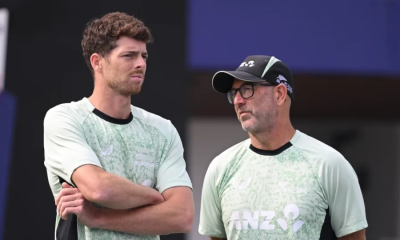
New Zealand meet familiar opponents Pakistan at spin-friendly Premadasa
-
 Latest News2 days ago
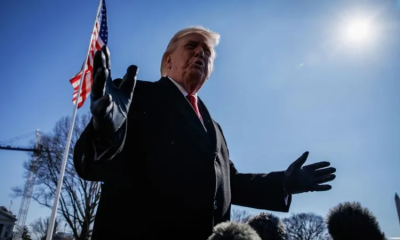
Tariffs ruling is major blow to Trump’s second-term agenda
-

 Latest News2 days ago
ECB push back at Pakistan ‘shadow-ban’ reports ahead of Hundred auction
-

 Features6 days ago
Giants in our backyard: Why Sri Lanka’s Blue Whales matter to the world
-
 Sports3 days ago
Old and new at the SSC, just like Pakistan
-

 News2 days ago
Construction begins on country’s largest solar power project in Hambantota