
News
Market glut relief: Cargills aids Villachchiya pumpkin growers

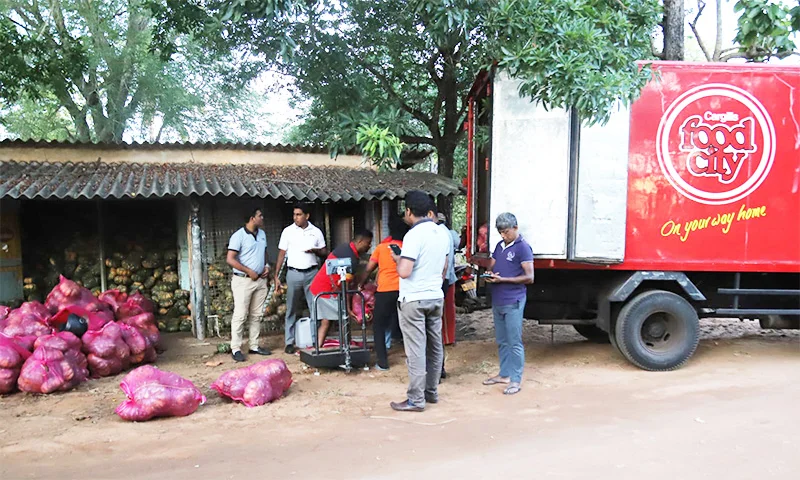
For generations, pumpkin farmers in Villachchiya, and surrounding regions, have relied on seasonal harvests to sustain their livelihoods. However, this year, an unusually abundant yield has triggered a crisis. With local markets flooded, prices have plummeted, leaving farmers unable to cover even basic production costs. The additional expense of transporting surplus produce to major markets, like Dambulla, has rendered profitability impossible.
Recognising the urgency of the situation, Cargills (Ceylon) PLC – a pioneer in Sri Lanka’s retail and agribusiness sector – swiftly intervened to provide critical relief.
In a direct response to broader calls for private-sector collaboration in addressing agricultural challenges, the company mobilised its resources, visited Villachchiya and bought the excess pumpkin harvest at premium prices, unaffected by the depressed local market rates.
And then, leveraging its integrated logistics network, Cargills transported the produce efficiently, maintaining freshness and minimising waste. By linking farmers directly to its nationwide network of over 546 Food City outlets, the company created immediate market access that would otherwise remain out of reach for small-scale growers.
A Cargills PLC spokesman, at Villachchiya, confirmed the company has begun purchasing surplus pumpkins from local farmers, with the initiative expected to continue for several days. The spokesman encouraged customers to support this solidarity effort by choosing pumpkin at Cargills Food City outlets, emphasising that each purchase directly benefits struggling farming communities.
Cargills’ intervention thus underscores the growing role of private enterprises in complementing national efforts, to strengthen agricultural resilience of farmer communities.
Their proactive approach aligns with the government’s need for socio-economic solutions that bridge gaps in the supply chain, demonstrating how private sector organisations, like Cargills, can integrate social economy principles into their core operations.
This initiative is no exception to Cargills’ longstanding commitment to Sri Lanka’s farming communities. Through its farmer-centric programmes, the company has provided training, financial support, and guaranteed markets under the Good Agricultural Practices (GAP) framework, enabling countless farmers to transition from subsistence to sustainable, commercial-scale agriculture.
While alleviating the current crisis, Cargills continues to invest in systemic solutions, including:
Expanding rural collection centres to reduce post-harvest losses
Promoting modern farming techniques to enhance productivity
Facilitating access to low-interest loans through partnerships with financial institutions
Cargills’ decisive intervention has provided Villachchiya’s pumpkin farmers with both an immediate lifeline and proof of ethical capitalism’s transformative power.
This initiative demonstrates how responsible corporate leadership can uplift entire communities while directly supporting national priorities – enabling sustainable agricultural livelihoods and building resilient safety nets from the grassroots up.
By Sanath Nanayakkare



Teachers, principals up in arms against alleged NGO driven education reforms
Teachers, principals and education professionals on Friday vowed to commence a nationwide campaign against the government’s plans to reform the education sector at the expense of what they described as cultural values.
President of the All-Ceylon United Teachers’ Association Ven Yalwala Pannasekera thera addressing a press conference yesterday said that trade unionists would join forces to urge the government to withdraw its educational reforms.
“We are ready to form a common front with education professionals, teachers and principals against this government. We demand that the government withdraw these reforms or get ready to go home,” Ven Pannasekera said.
“Some modules promote homosexuality. Contents in some of the modules being distributed have been copied from Indian text books.
We ask the government to explain why it had paid the National Education Institute curriculum designers,” Ven Pannasekera said.
Meanwhile, representatives of 16 teachers’ and principals’ unions visited the National Child Protection Authority yesterday to lodge a complaint demanding a probe into the inclusion of materials promoting homosexuality in school books.
Concerns were also raised at a National Sangha Council meeting held in Colombo last week at the Colombo Foundation Institute, organised to discuss the objectives of the proposed reforms.
Addressing the gathering, Professor Venerable Induragare Dhammaratana Thera said the reforms required extensive discussion, consultation with subject experts and consideration of the experience of senior administrators.
He warned that the proposed education reforms could trigger the biggest crisis currently facing the country. “Implementing these reforms in this manner will harm future generations and could even destroy the present government,” he said, likening the process to “forcing a round peg into a square hole.”
The Ministry of Education on Friday decided not to extend school hours for the 2026 academic year, citing the ongoing impact of recent disasters on schools and transport systems in several provinces.
According to the Ministry, school hours for Grades 5 to 13 will remain unchanged at 7:30 a.m. to 1:30 p.m. until both education and transport networks are fully restored.
Government schools, government-approved private schools, and pirivenas are set to begin the first term of 2026 on January 5. Students in Grades from 6 to 13 will have seven 45-minute periods a day.
Education reforms will be introduced for Grades 1 and 6 in 2026.
The Ministry confirmed that activity books for Grade 1 and learning modules for Grade 6 will be distributed before lessons begin. Textbooks for all other grades have already been fully handed out.Meanwhile, the remaining sessions of the 2025 G.C.E. Advanced Level examination are scheduled to take place from January 12 to January 20, 2026.
by Chaminda Silva ✍️

The Sri Lanka Red Cross Society will provide relief funds totaling Rs. 2,420 million to assist 20,000 families displaced and 8,000 families who have lost their livelihoods due to cyclone Ditwah.
Accordingly, the Society has arranged to give Rs. 1,620 million to 20,000 displaced families, at the rate of Rs. 85,000 per family, and Rs. 800 million to 8,000 families who lost their livelihoods, at Rs. 100,000 per family, Sri Lanka Red Cross Communications Head Navindra Senarathne told the Sunday Island on Friday.
He said the funds for the 20,000 displaced families would be distributed in three instalments.
A total of 20,000 families across the country, including 1,505 families in the Trincomalee District, have been selected for this relief, with beneficiaries identified by the decision-makers of the Sri Lanka Red Cross Society, he added.
In addition, the Society is preparing to install toilet systems in 400 safe centers and provide 15,000 sets of school equipment worth Rs. 7.5 million, Navindra Senarathne told the Sunday Island.
By Sirimantha Rathnasekera ✍️

Bangladesh look to move T20 World Cup matches from India amid Mustafizur row

Root and Brook shine before afternoon gloom ends play early

Venezuela’s Maduro arrives in New York after ‘capture’

Showers will occur at times in the Eastern and Uva provinces and in Polonnaruwa, Matale and Nuwara-Eliya district

Teachers’ unions ‘ready to bring govt. to its knees’

Education Ministry drops idea of extending school hours

‘Dates have the highest sugar content to fight Coronavirus’

Sunday Island 27 December – Headlines

#SundayIsland 17th December – Headlines

Sunday Island – 28th March

Sunday Island Headlines – 21 March

Sunday Island – 21st February – Headlines
-

 Sports7 days ago
Gurusinha’s Boxing Day hundred celebrated in Melbourne
-

 News2 days ago
Health Minister sends letter of demand for one billion rupees in damages
-
 News5 days ago
Leading the Nation’s Connectivity Recovery Amid Unprecedented Challenges
-

 Features6 days ago
It’s all over for Maxi Rozairo
-

 Opinion4 days ago
Remembering Douglas Devananda on New Year’s Day 2026
-
 News6 days ago
Dr. Bellana: “I was removed as NHSL Deputy Director for exposing Rs. 900 mn fraud”
-
 News5 days ago
Dons on warpath over alleged undue interference in university governance
-

 Features6 days ago
Rebuilding Sri Lanka Through Inclusive Governance